
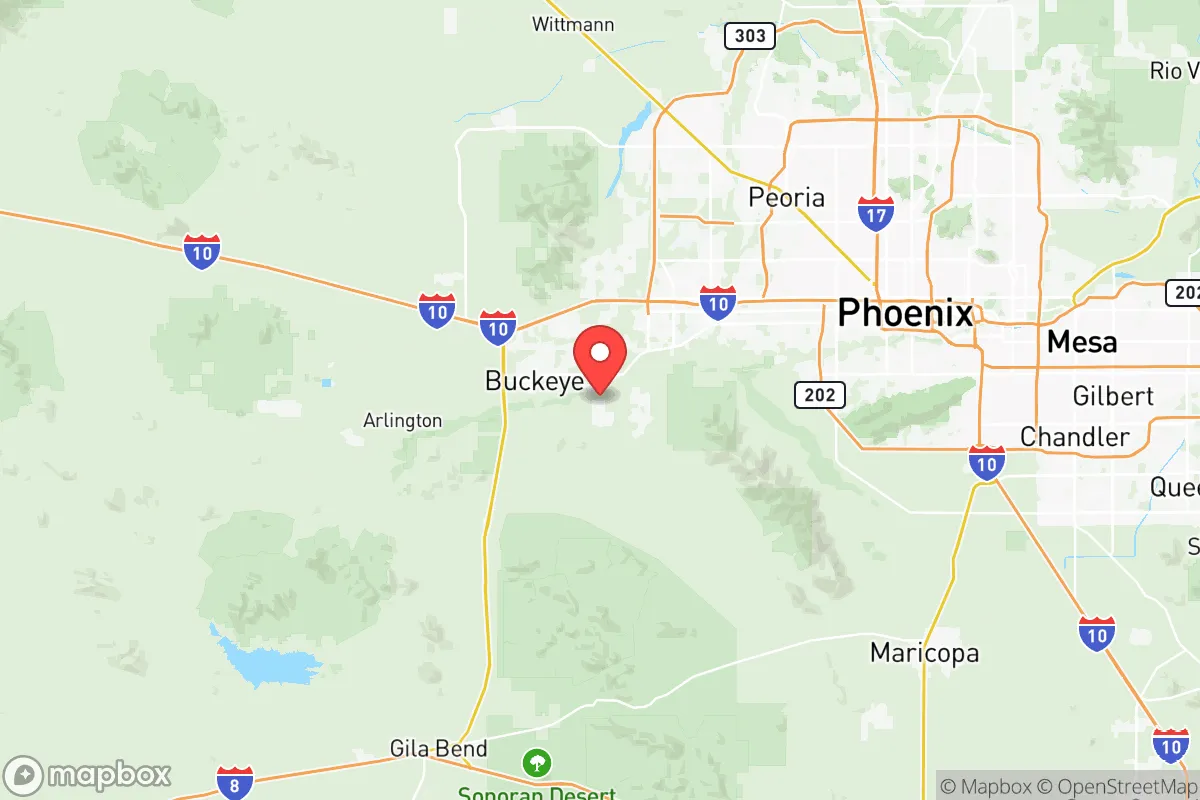
Photo: Wikipedia
Quality of Life in Maricopa County
A livable area that tracks near national norms for affordability, walkability, and neighborhood health.
What does Quality of Life tell us?
Quality of Life measures an area by evaluating factors like cost of living, nearby amenities, country club access, airport proximity, socioeconomic signals and neighborhood character. For large states, this is a general average — quality of life can vary dramatically between metro areas, suburbs, and rural communities within the same state.
What does this tell us?
Quality of Life measures an area by evaluating factors like cost of living, nearby amenities, country club access, airport proximity, socioeconomic signals and neighborhood character. For large states, this is a general average — quality of life can vary dramatically between metro areas, suburbs, and rural communities within the same state.
Cost of Living
41% above national average
72%
The Real Cost of Living in Maricopa County for 2026
| Tier | Individual | Family (4) |
|---|---|---|
| Survival | $25k | $48k |
| Comfortable | $81k | $118k |
| Luxury | $154k+ | $239k+ |
| Elite (Top 5%) | $184k+ | $286k+ |
Quality-of-Life Analysis
Maricopa County, Arizona, offers one of the most dramatic quality-of-life spectrums in the United States, stretching from the hyper-urban core of Phoenix to the remote desert outposts of Tonopah and the mountain-adjacent communities of Cave Creek. This vast county of over 4 million residents draws everyone from high-rise professionals in downtown Phoenix to off-grid homesteaders in the Sonoran Desert, with each zone offering a distinct trade-off in commute time, housing cost, and daily amenities. The county's overall cost of living index sits at 141 (100 being the U.S. average), with a median home value of $414,700 and median rent of $1,587, but these averages mask a wide spread between the county's most expensive enclaves and its most affordable rural pockets.
Largest town(s) & population centers
The dominant population center is Phoenix, the state capital and the fifth-largest city in the U.S., which anchors the county's urban core. Daily life here is defined by a dense grid of freeways, a robust light-rail system, and a 24/7 economy centered on healthcare (Banner Health, Dignity Health), finance (Bank of America, Wells Fargo regional hubs), and technology (Intel, Honeywell). The average commute across the county is 26.1 minutes, but residents in central Phoenix often face 30- to 45-minute drives to suburban job centers in Tempe or Scottsdale. Mesa, the county's second-largest city, offers a more suburban feel with a lower cost of living than Phoenix proper, while Scottsdale and Chandler represent the high-end end of the spectrum, with median home values well above the county average and concentrations of luxury retail, golf resorts, and tech campuses (e.g., Intel's massive Ocotillo campus in Chandler). Glendale and Peoria provide more affordable family-oriented suburbs, with newer housing developments and access to the West Valley's growing employment base.
Smaller towns & rural pockets
Beyond the urbanized Valley, Maricopa County contains distinct smaller towns and unincorporated areas that offer a radically different pace of life. Cave Creek and Carefree, in the county's northern foothills, are known for their equestrian properties, desert preserves, and a Western-themed downtown with saloons and art galleries — a stark contrast to the glass towers of Phoenix. Wickenburg, technically within Maricopa County's northwestern boundary, is a historic ranching town that feels more like Prescott than Phoenix, with a population under 8,000 and a strong cowboy culture. On the county's western edge, Tonopah and Buckeye (the latter rapidly suburbanizing) still contain large tracts of agricultural land and unincorporated desert, where residents live on acre lots with septic systems and well water. Gila Bend, in the county's far southwest, is a small desert community of about 2,000 people, serving as a gateway to the Sonoran Desert National Monument and offering the county's lowest housing costs — but also the longest commutes to Phoenix (over 60 minutes one-way).
Cost & lifestyle range
The cost-of-living spread across Maricopa County is extreme. At the high end, Paradise Valley and Scottsdale's Arcadia neighborhood feature median home values exceeding $1.5 million, with a cost of living index well above 200. These areas offer top-rated schools, gated communities, and proximity to Camelback Mountain and the McDowell Sonoran Preserve. At the low end, Gila Bend and parts of western Buckeye have median home values under $250,000, with a cost of living near the national average — but residents sacrifice access to hospitals, grocery stores, and entertainment, often driving 30+ miles for basic services. The county's median rent of $1,587 is manageable in the West Valley (Glendale, Avondale) but can exceed $2,500 for a one-bedroom in Scottsdale or central Phoenix. The average commute of 26.1 minutes is achievable for those living and working within the same subregion (e.g., Chandler to Tempe), but residents in rural pockets like Tonopah or Gila Bend face commutes of 45 to 75 minutes to reach Phoenix job centers.
This county best suits people who are clear-eyed about their priorities: those who value urban energy, walkable neighborhoods, and career density will thrive in Phoenix, Tempe, or Scottsdale; families seeking good schools and newer housing at a moderate price point find balance in Chandler, Gilbert, or Peoria; and those who prize space, quiet, and a slower pace — and can tolerate a long commute or remote work — will find their niche in Cave Creek, Wickenburg, or the far western desert. Maricopa County's strength is that it offers a genuine choice between these lifestyles, all within a single county boundary, but the trade-offs in commute time, cost, and access to amenities are real and should be weighed carefully before relocating.

Crime in Maricopa County
Crime rates similar to the national median for U.S. locations.
Violent CrimeViolent Crime Analysis
Property CrimeProperty Crime Analysis
Crime Analysis
Maricopa County, Arizona, reports a violent crime rate of 359.9 per 100,000 residents and a property crime rate of 1,453.3 per 100,000, placing it above both the national and state averages for overall crime. While the county contains some of the safest communities in the Southwest, its overall safety picture is heavily influenced by higher-crime urban cores and a justice system that has, in recent years, shifted toward progressive prosecution policies. Residents and prospective movers should carefully weigh neighborhood-level data and the political direction of local law enforcement when assessing safety.
Crime in context
Maricopa County’s violent crime rate of 359.9 per 100K is roughly 25% higher than the national average of approximately 287 per 100K, while its property crime rate of 1,453.3 per 100K exceeds the national average of about 1,950 per 100K by a narrower margin. Compared to Arizona’s statewide violent crime rate of roughly 430 per 100K, the county fares slightly better, but property crime in Maricopa is significantly higher than the state average of about 1,200 per 100K. The disparity is driven by concentrated crime in Phoenix and Mesa, which together account for a disproportionate share of the county’s offenses. In contrast, cities like Scottsdale and Gilbert report violent crime rates below 200 per 100K, while Chandler and Peoria hover near 250 per 100K, illustrating the wide intra-county variation.
What residents experience
Daily life in Maricopa County varies dramatically by jurisdiction. In central Phoenix, particularly areas near the I-17 corridor and parts of South Phoenix, residents report frequent property theft, vehicle break-ins, and gang-related violence. The Maricopa County Attorney’s Office, under progressive leadership, has implemented policies that reduce felony charges for certain drug and property offenses, a shift that critics argue has emboldened repeat offenders. In Tempe and Glendale, property crime—especially package theft and auto burglary—is a persistent nuisance, with rates exceeding 2,000 per 100K in some precincts. Conversely, Fountain Hills and Paradise Valley consistently rank among the safest municipalities in Arizona, with violent crime rates below 100 per 100K, thanks to well-funded police departments and conservative local governance. The county’s Superior Court system, which includes judges elected countywide, has seen a growing number of progressive candidates win seats, leading to lighter sentencing for nonviolent offenders and a higher rate of pretrial release—factors that correlate with increased recidivism in high-density areas.
Neighborhood-level safety is highly granular. Within the same city, a few blocks can separate a low-crime enclave from a high-risk zone. For example, Ahwatukee (a Phoenix neighborhood) has a violent crime rate near 150 per 100K, while nearby South Mountain areas exceed 600 per 100K. Similarly, Surprise and Buckeye in the West Valley have property crime rates around 1,100 per 100K, lower than the county average, but their rapid growth has strained police response times. Prospective residents should consult local police department crime maps and consider that areas with conservative city councils and district attorneys—such as Scottsdale and Gilbert—tend to enforce stricter sentencing and maintain lower crime rates than jurisdictions with progressive prosecutors, like Phoenix and Tempe. The county’s overall safety outlook depends heavily on whether voters continue to support reform-oriented judicial candidates or shift back toward tougher enforcement.
* Values derived from national, state, county, city and local statistics and may differ in a specific area. Last updated: 2026-04-21T19:05:27.000Z
Narrative content on this page is AI-generated and may contain mistakes. Verify any details that matter before acting on them.
ReloMaps may earn a commission from affiliate links at no extra cost to you.

