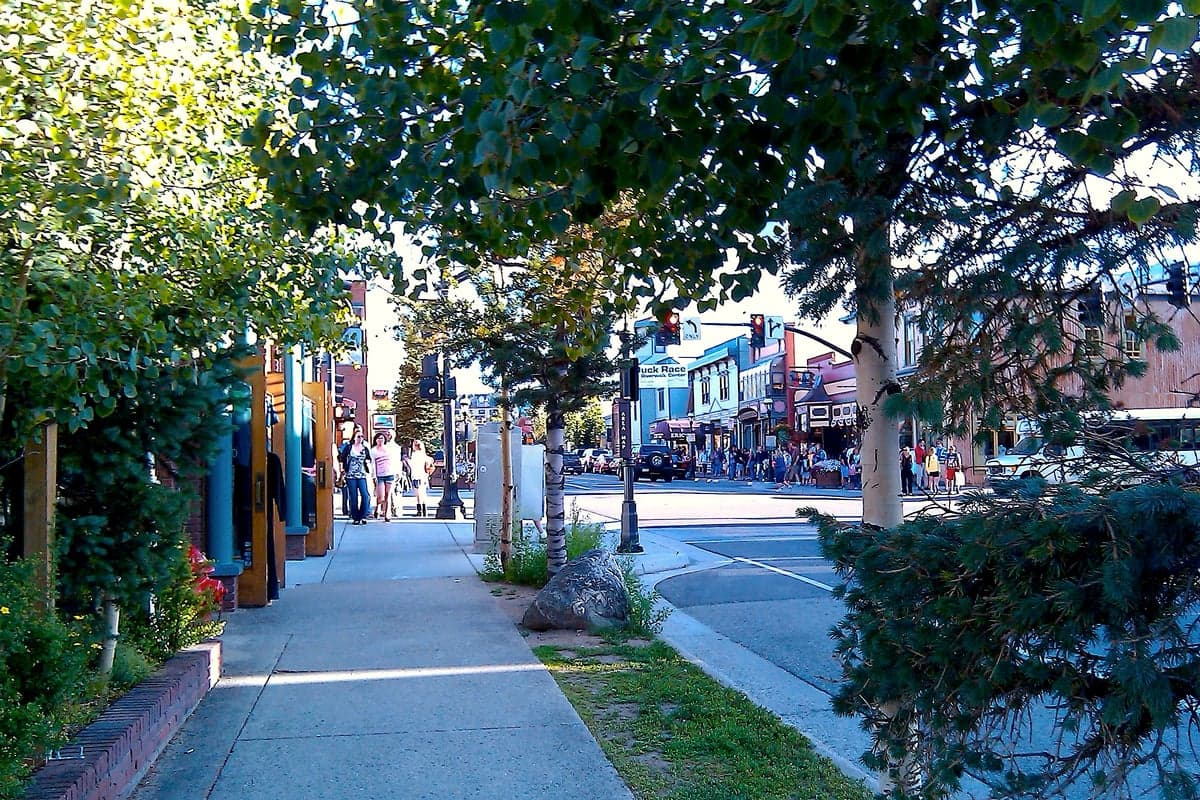
Photo: Wikipedia
Political ClimatePolitical Climate in Breckenridge, CO
District shown is the primary district for this city’s centroid. Cities may span multiple districts.
Local Political AnalysisPolitical Analysis of Breckenridge, CO
Look, I’ve been in Breckenridge long enough to remember when this town was a lot more live-and-let-live. Today, the political climate here is unmistakably progressive, with a Cook PVI of D+20—that’s a solid 20 points more Democratic than the national average. The shift has been steady over the past decade, and it’s not just the tourists; the permanent population has voted increasingly blue in every election since 2016. If you’re coming from a more conservative area, you’ll notice it in everything from local ordinances to the chatter at the coffee shop.
How it compares
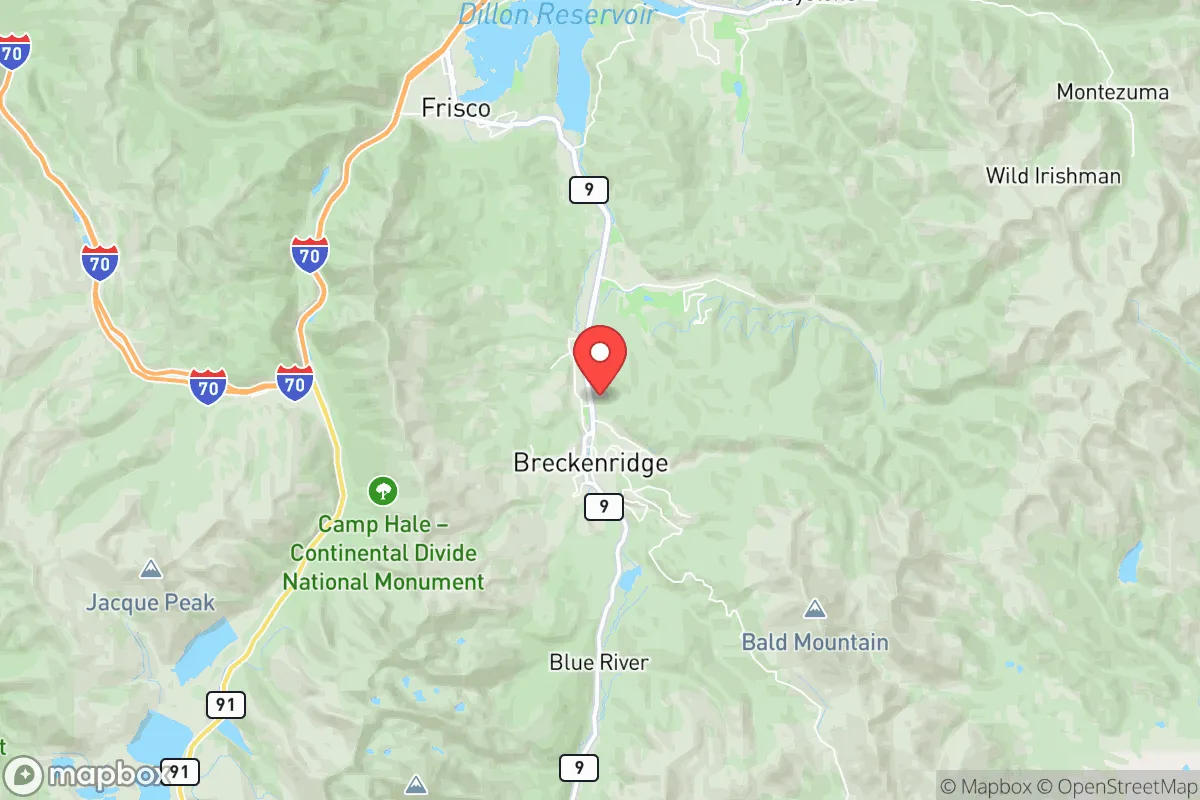
Breckenridge is the deep-blue heart of Summit County, but it’s not the whole story. Drive 15 minutes south to Blue River or 20 minutes north to Silverthorne, and you’ll find a more mixed political landscape—still left-leaning overall, but with a noticeable libertarian streak and more tolerance for property rights and Second Amendment issues. Head over the pass to Fairplay in Park County, and you’re in solidly red territory, where folks look at Breckenridge’s new housing mandates and plastic bag bans like they’re from another planet. Even within the county, the contrast is sharp: the town council here has pushed for density bonuses and short-term rental caps, while unincorporated areas like Dillon have pushed back harder on government overreach. It’s a reminder that Breckenridge isn’t the whole mountain—it’s just the loudest voice.
What this means for residents
For a conservative or even moderate resident, the practical effect is a steady creep of regulations that can feel like a slow squeeze. The town has aggressively pursued affordable housing mandates that require new developments to set aside units for locals, which sounds good until you realize it’s the government dictating who can live where and at what price. There’s also a ban on new single-family homes in certain zones unless they include accessory dwelling units—a policy that prioritizes density over the traditional lot-and-house lifestyle. And don’t get me started on the plastic bag ban and the push for a local sales tax on prepared food to fund child care programs. Each one might seem small, but they add up to a culture where personal choice takes a back seat to government planning. If you value being left alone to run your property or business your way, you’ll feel the weight of that D+20 majority in every town hall meeting.
The cultural and policy distinctions here are real, and they’re accelerating. Breckenridge was one of the first Colorado towns to require paid family leave for town employees and to adopt a climate action plan with net-zero goals by 2035. The local school board has embraced progressive curriculum changes, and the police department has implemented de-escalation training that some residents see as handcuffing officers. Looking ahead, I expect the town to push for ranked-choice voting and maybe even a local public bank—ideas that sound innovative to some but feel like more layers of bureaucracy to others. If you’re thinking of moving here, just know that the political temperature is warm and getting warmer. It’s a beautiful place to live, but you’ll have to decide if you can stomach the direction the town is heading.

State Political ClimatePolitical Climate in Colorado
State Political AnalysisPolitical Environment in the State
Colorado has shifted from a classic purple swing state to a solidly blue-leaning one over the past two decades, with Democrats now controlling the governorship, both U.S. Senate seats, and both chambers of the state legislature. The state voted for Hillary Clinton by 5 points in 2016, Joe Biden by 13 points in 2020, and Kamala Harris by roughly 11 points in 2024, reflecting a durable leftward tilt driven almost entirely by explosive growth in the Denver-Boulder-Aurora metroplex. For a conservative considering relocation, the state’s political trajectory is a cautionary tale of how fast a libertarian-leaning Western state can become a laboratory for progressive policy.
Urban vs. rural divide
The political map of Colorado is a stark study in contrast. The Denver metro area, including Denver County (which voted 80% for Biden in 2020), Boulder County (a national progressive stronghold), and increasingly populous suburban counties like Jefferson, Arapahoe, and Adams, now contains roughly 60% of the state’s population and drives statewide election results. The I-25 corridor from Fort Collins down through Denver to Colorado Springs is the political spine, with Colorado Springs itself being a notable conservative island—El Paso County voted +9 for Trump in 2024, bucking the state trend. Meanwhile, the Western Slope, represented by towns like Grand Junction and Montrose, and the Eastern Plains, including places like Lamar and Burlington, vote heavily Republican but lack the population to counterbalance the Front Range. The rural-urban divide has widened dramatically since 2010, as Denver’s tech and finance boom has attracted a young, college-educated, left-leaning population while agricultural and energy-producing counties have seen relative population decline.
Policy environment
Colorado’s policy environment has become increasingly hostile to conservative values. The state income tax rate is a flat 4.4%, which is moderate, but the Taxpayer’s Bill of Rights (TABOR), once a national model for fiscal restraint, has been systematically eroded by ballot measures and legislative end-runs. Property taxes are relatively low, but sales taxes can exceed 10% in some Denver-area municipalities. The regulatory posture is aggressively green: Colorado has adopted California-style emissions standards for vehicles, mandated a 100% renewable energy grid by 2040, and imposed strict oil and gas setback rules that have effectively halted new drilling on the Front Range. Education policy is dominated by teachers’ unions, with school choice limited compared to states like Arizona or Florida, though charter schools remain legal. Healthcare is heavily regulated, with a state-run reinsurance program that has stabilized premiums but done little to reduce overall costs. Election laws are among the most permissive in the nation: universal mail-in voting, same-day registration, and no voter ID requirement at the polls—a system conservatives view as ripe for fraud, though no major scandals have been proven. The state also has a “red flag” gun law, passed in 2019, allowing courts to temporarily seize firearms from individuals deemed a risk.
Trajectory & freedom
Colorado is unequivocally becoming less free for conservatives, measured by any standard of personal liberty. The most alarming recent legislation is the 2023 “Family and Medical Leave Insurance” (FAMLI) program, which imposes a mandatory payroll tax on all workers and employers for paid leave—a clear expansion of government control over personal finances. Gun rights have been under sustained assault: in 2024, the legislature passed a ban on “ghost guns” and raised the minimum purchase age for all firearms to 21, overriding local sheriffs’ objections. Parental rights took a hit with the 2021 “Protect Our Youth” law, which allows minors to consent to certain medical procedures without parental notification, and the 2023 law codifying abortion access up to viability, with no parental consent requirement for minors. Medical autonomy was further curtailed by the 2022 passage of Proposition 122, which legalized psilocybin therapy but also created a state-regulated licensing board that critics say will lead to overreach. Property rights are under pressure from the aforementioned oil and gas setbacks and from a 2024 law allowing local governments to impose rent control, which had been banned statewide since 1981. The only bright spot for liberty-minded residents is the continued strength of local government in conservative counties, which have used “sanctuary county” resolutions to resist state gun and environmental mandates.
Civil unrest & political movements
Colorado has a history of high-profile civil unrest, particularly in Denver, where the 2020 George Floyd protests turned into weeks of property destruction and clashes with police, leading to a $14 million settlement for excessive force claims. The state is home to organized activist movements on both sides: the left is dominated by groups like Colorado Rising (anti-fracking) and the Colorado Democratic Socialists of America, while the right has seen the rise of grassroots “Moms for Liberty” chapters in Douglas and El Paso counties, and the Colorado Republican Party has been torn between establishment and populist factions. Immigration politics are a flashpoint: Denver is a self-declared “sanctuary city,” and in 2023-2024, the city spent over $100 million sheltering and transporting migrants bused from Texas, causing a backlash among working-class residents in suburbs like Aurora and Thornton. Election integrity remains a live issue: the 2020 election saw minor irregularities in Mesa County, where a clerk was indicted for allegedly allowing unauthorized access to voting machines, fueling ongoing distrust among conservatives. Visible flashpoints for a new resident would include the constant presence of homeless encampments in downtown Denver (despite a 2024 camping ban) and the proliferation of “Black Lives Matter” and “Defund the Police” murals in Boulder and Denver.
Projection
Over the next 5-10 years, Colorado will likely continue its leftward drift, driven by three demographic forces: continued in-migration of young professionals from blue states like California and New York, the aging and out-migration of rural conservatives to lower-cost states like Texas and Idaho, and the naturalization of immigrant populations in Denver and Aurora. The state’s population growth is concentrated in the Front Range, and as these areas densify, they will elect even more progressive legislators. The Republican Party’s best hope is to hold the line in El Paso County and the Western Slope, but statewide races will remain unwinnable without a major shift in messaging or a national realignment. A new resident moving in now should expect to see higher taxes (a progressive income tax is being debated), more gun restrictions (magazine bans and universal background checks are likely), and continued erosion of parental rights in education. The only countervailing force is the state’s strong tradition of direct democracy via ballot initiatives, which could allow conservatives to block the worst excesses—but that tool has been blunted by the legislature’s willingness to refer measures that preempt citizen initiatives.
For a conservative considering Colorado, the bottom line is this: if you want to live in a place where your vote still matters for state-level politics, look to El Paso County (Colorado Springs) or the Western Slope towns like Grand Junction and Montrose. The Denver metro area is a lost cause for conservative governance, and the state as a whole is on a trajectory that will make it increasingly resemble California or Oregon within a decade. If you value low taxes, gun rights, school choice, and limited government, Colorado is no longer the libertarian paradise it was in the 1990s—it’s a blue state with a few red enclaves, and you should move here only if you’re prepared to fight for your values at the local level.
* Values derived from national, state, county, city and local statistics and may differ in a specific area. Last updated: 2026-04-29T00:29:45.000Z
Narrative content on this page is AI-generated and may contain mistakes. Verify any details that matter before acting on them.
ReloMaps may earn a commission from affiliate links at no extra cost to you.

