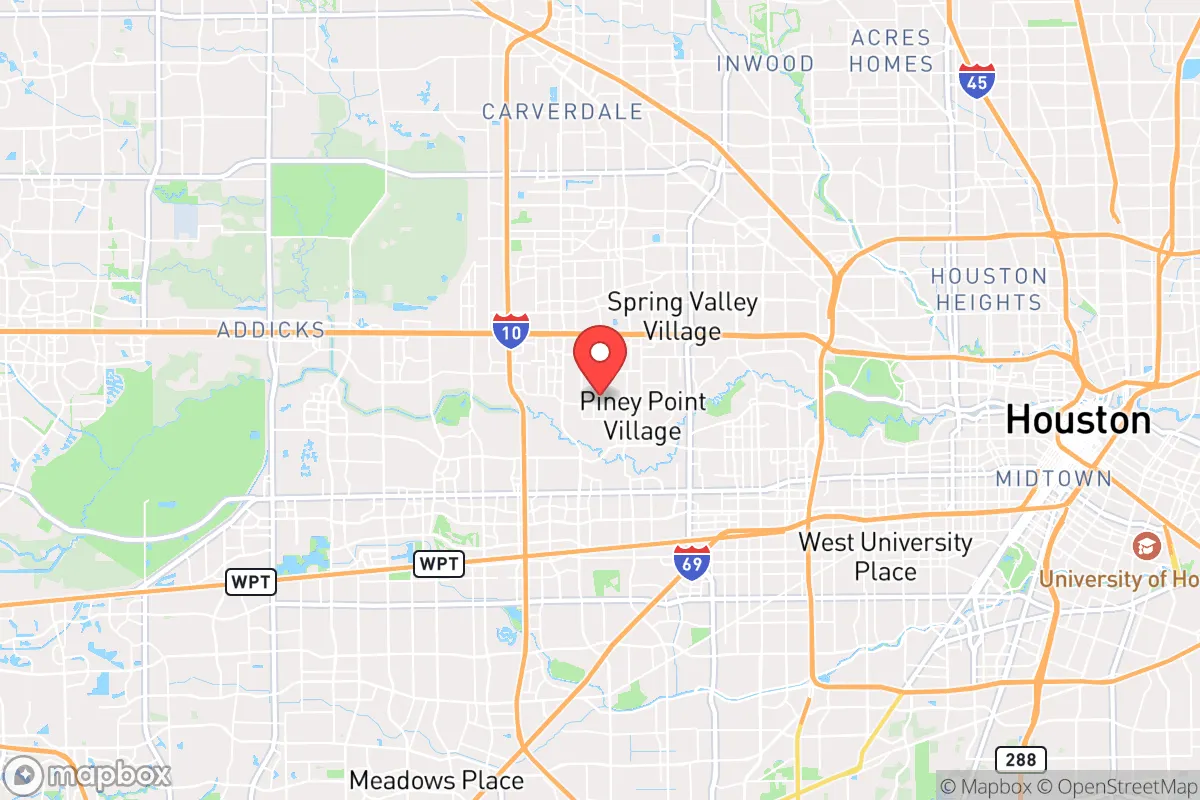
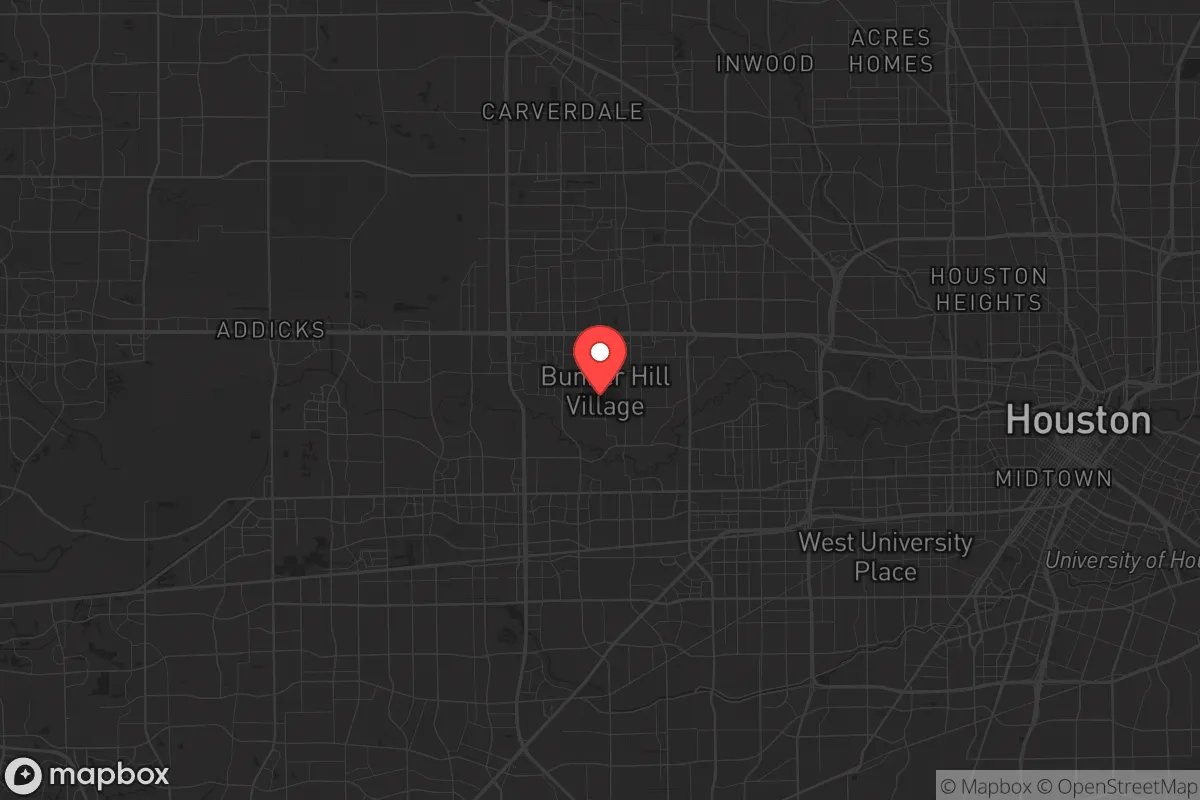
Political ClimatePolitical Climate in Bunker Hill Village, TX
District shown is the primary district for this city’s centroid. Cities may span multiple districts.
Local Political AnalysisPolitical Analysis of Bunker Hill Village, TX
Bunker Hill Village has long been a rock-solid conservative stronghold, and honestly, that’s one of the main reasons a lot of us chose to raise our families here. With a Cook PVI of R+10, this isn’t just a red dot on the map—it’s a place where traditional values and limited government aren’t just talked about at the dinner table; they’re the default setting for local policy. You don’t see the kind of progressive overreach here that’s creeping into places like Bellaire or even parts of West University Place. The trajectory has been steady, with no real signs of a leftward shift, which is a relief when you look at what’s happening in Houston proper just a few miles away.
How it compares
To really understand Bunker Hill, you have to look at the contrast with our neighbors. Head east into the Houston city limits, and you’re dealing with a whole different animal—higher taxes, more regulations, and a city council that seems to think it knows better than you do about your own property. Even compared to other Memorial-area enclaves like Piney Point Village or Hedwig Village, Bunker Hill has held the line on keeping government small and local. While some nearby suburbs like Sugar Land or Katy have seen an influx of more moderate voters, Bunker Hill has stayed remarkably consistent. It’s one of the few places left where you can still have a straightforward conversation about property rights without someone trying to guilt you into a new zoning ordinance or a “community benefit” fee. The contrast with the progressive policies in Montrose or the Heights is night and day—those areas are practically a different country when it comes to personal freedoms.
What this means for residents
For those of us living here, the political climate translates directly into a lighter touch from local government. You’re not going to see the city council micromanaging your landscaping or imposing strict rental caps like you might in some Austin suburbs. Property taxes are still a concern—they’re high across Harris County—but the village council focuses on core services: police, streets, drainage. There’s no appetite for the kind of social engineering experiments you see in larger cities. The school board for Spring Branch ISD, which serves Bunker Hill, has also remained fairly conservative, pushing back against the kind of curriculum overhauls that have caused chaos in districts like Austin ISD or even Katy ISD in recent years. For a family that values the freedom to live without a bunch of bureaucratic nonsense, this is a breath of fresh air. You can pretty much count on your property values staying strong and your neighborhood staying quiet, without some new ordinance telling you what you can and can’t do on your own land.
That said, there’s always a bit of unease when you look at the long-term picture. The demographic shifts in Harris County are real, and the city of Houston’s influence tends to bleed outward. We’ve seen a few younger families move in who don’t always share the same “leave us alone” philosophy, and there’s been some chatter about more regional transit planning and environmental regulations that could trickle down from the county level. So far, Bunker Hill’s village council has been good about keeping those ideas at arm’s length, but it’s something to keep an eye on. The cultural distinction here is that we’re not just conservative by default—we’re conservative by design. People move here specifically to get away from the kind of government overreach that’s become normal elsewhere. As long as that sentiment holds, Bunker Hill will stay the kind of place where your biggest political worry is whether the neighborhood watch is being too chatty, not whether the city is going to tell you how to live your life.

State Political ClimatePolitical Climate in Texas
State Political AnalysisPolitical Environment in the State
Texas remains a solidly Republican state, but the margin has tightened noticeably over the past decade. In 2024, Donald Trump carried the state by roughly 9 points, down from the 15-point margin in 2016 and the 19-point margin in 2008. The dominant coalition is still a mix of rural conservatives, suburban moderates, and business-oriented fiscal conservatives, but explosive growth in the urban cores—especially Austin, Dallas, and Houston—has injected a steady stream of progressive voters. The long-term trajectory is a slow, uneven drift leftward, driven by in-migration from blue states and rapid demographic change, though the state’s constitutional structure and legislative map still heavily favor conservative governance.
Urban vs. rural divide
The political map of Texas is a study in contrasts. The vast rural expanse—places like Lubbock, Amarillo, and the Panhandle—votes overwhelmingly Republican, often by 70-80% margins. Meanwhile, the major metros are increasingly blue. Austin is the state’s most liberal city, with Travis County delivering a 60-point Democratic margin in 2024. Dallas County, once a Republican stronghold, has flipped decisively blue, and Harris County (Houston) is now reliably Democratic. The suburbs are the battleground: Collin County (north of Dallas) and Fort Bend County (southwest of Houston) have shifted from deep red to purple, with Collin County voting for Trump by only 6 points in 2024 after a 20-point margin in 2016. The Rio Grande Valley, historically Democratic, is also trending right, with counties like Hidalgo and Cameron flipping to Trump in 2024, driven by a working-class Hispanic shift toward the GOP. The urban-rural divide is sharper than ever, and the state’s political future hinges on whether the suburbs continue to drift left or hold the line.
Policy environment
Texas’s policy environment is a mixed bag for conservatives. On the plus side, there is no state income tax, a major draw for relocating families and businesses. Property taxes are high—averaging about 1.6% of home value—but the state offers a homestead exemption and a 10% cap on annual appraisal increases. The regulatory posture is generally business-friendly, with minimal zoning in many areas and a right-to-work law that keeps unions weak. On education, the state has expanded school choice through the 2023 passage of a universal education savings account (ESA) program, allowing parents to use state funds for private school or homeschooling. Healthcare is a sore spot: Texas has the highest uninsured rate in the nation, and the state has refused Medicaid expansion under the ACA. Election laws tightened after 2020 with Senate Bill 1, which added voter ID requirements, limited drive-through voting, and banned 24-hour polling places. For conservatives, the policy environment is largely favorable, but the lack of income tax is offset by high property taxes and a growing state budget that has doubled since 2010.
Trajectory & freedom
On personal liberty, Texas has been a mixed bag. The state expanded gun rights significantly in 2021 with permitless carry (HB 1927), allowing most adults to carry a handgun without a license. Parental rights were strengthened in 2023 with the passage of the “Parental Bill of Rights” (HB 900), which requires school libraries to get parental consent before providing sexually explicit materials to minors. Medical autonomy took a hit with the 2021 abortion ban (SB 8), which effectively outlawed abortion after six weeks and created a private enforcement mechanism. However, the state also passed a law in 2023 (SB 14) banning gender-transition procedures for minors, a move that many conservatives view as protecting children from irreversible medical decisions. Property rights remain strong, with no statewide rent control and limited eminent domain abuse. The biggest freedom concern for conservatives is the rapid growth of government spending: the state budget has ballooned to over $300 billion, and property taxes have risen faster than inflation. The trajectory is toward more government intervention in some areas (education, healthcare) but less in others (guns, parental rights).
Civil unrest & political movements
Texas has seen its share of political flashpoints. The 2020 Black Lives Matter protests in Austin, Dallas, and Houston were large and occasionally violent, with Austin seeing over $10 million in property damage. The state’s response was to pass a law (HB 9 in 2021) that increased penalties for rioting and made it a crime to block highways during protests. Immigration politics are a constant flashpoint: Governor Abbott’s Operation Lone Star has deployed state troopers and National Guard to the border, bused migrants to blue cities like New York and Chicago, and installed razor wire along the Rio Grande. The state is in a legal battle with the Biden administration over a new law (SB 4) that allows state and local police to arrest and deport illegal immigrants. Secession rhetoric has cooled since 2021, but the Texas Nationalist Movement still exists and polls show about 20% of Texans support independence. Election integrity remains a hot-button issue: the 2020 election in Texas was relatively smooth, but the 2024 cycle saw allegations of voter roll irregularities in Harris County. For a new resident, the most visible political movement is the growing Hispanic shift to the right, which is reshaping the state’s electoral map.
Projection
Over the next 5-10 years, Texas will likely continue its slow drift leftward, but the pace will depend on who moves in and where they settle. The state is adding about 1,000 new residents per day, many from California and New York, and these newcomers tend to be more moderate or liberal. The suburbs of Dallas, Houston, and Austin will be the key battlegrounds: if they continue to shift left, Texas could become a swing state by 2032. However, the state’s legislative map is heavily gerrymandered, and the Republican-controlled legislature has shown no interest in making it easier for Democrats to win. The rural vote will remain deeply conservative, and the Rio Grande Valley’s rightward shift could offset some urban gains. The biggest wildcard is the Hispanic vote: if the GOP continues to make inroads with working-class Hispanics, Texas could stay red for another generation. For someone moving in now, expect a state that is still conservative but increasingly contested, with a political climate that is more polarized and less predictable than it was a decade ago.
For a new resident, the bottom line is this: Texas is still a good place for conservatives who value low taxes, gun rights, and parental control over education. But the political landscape is shifting, and the state’s future will be shaped by the suburbs and the Hispanic vote. If you’re moving here, expect to pay high property taxes, deal with a growing state budget, and navigate a political environment that is increasingly divided between the urban cores and the rural expanses. The freedom you find here is real, but it’s not guaranteed—it will depend on who shows up to vote and what policies they push for in the next decade.
* Values derived from national, state, county, city and local statistics and may differ in a specific area. Last updated: 2026-04-27T14:17:42.000Z
Narrative content on this page is AI-generated and may contain mistakes. Verify any details that matter before acting on them.
ReloMaps may earn a commission from affiliate links at no extra cost to you.

