Photo: Wikipedia
Demographics of Colorado
Affluence Level in Colorado
A wealthy area with high-earning, well-educated households. Incomes, home values, and educational attainment meaningfully outpace national averages.
People of Colorado
Colorado’s 5.8 million residents today form one of the most educated and physically active populations in the nation, with 44.7% holding a college degree and a culture built around outdoor recreation, craft brewing, and a fiercely independent political streak. The state is 65.7% White, 22.2% Hispanic, 3.8% Black, 2.4% East/Southeast Asian, and 0.8% Indian (subcontinent), with only 5.0% foreign-born — a figure well below the national average, reflecting a population shaped more by domestic migration than international immigration. The state’s identity is a blend of Western ranching heritage, Cold War-era federal investment, and a modern tech-and-tourism economy that has drawn millions of newcomers from the coasts and the Rust Belt. This is a place where the old mining towns of the Rockies sit an hour from sprawling Denver suburbs, and where the fastest-growing communities are not in the core city but along the Front Range corridor from Fort Collins to Colorado Springs.
Settlement & growth (pre-1960)
Long before any European or American settlement, Colorado was home to several Native nations. The Ute people occupied much of the mountainous western half of the state, while the Cheyenne and Arapaho controlled the eastern plains, and the Comanche and Kiowa ranged across the southeastern corner. Spanish explorers and missionaries passed through as early as the 1500s, but permanent Spanish settlement was thin — the San Luis Valley saw the first European-founded town in Colorado, San Luis, established in 1851 by Hispanic settlers from New Mexico. These early Hispano communities, concentrated in the southern counties of Costilla and Conejos, remain the oldest continuous European-descended population in the state, and their descendants still anchor towns like Alamosa and La Junta.
The 1848 Treaty of Guadalupe Hidalgo transferred Colorado to U.S. control, but the population explosion came with the Pikes Peak Gold Rush of 1858-1859. Prospectors poured in from the eastern states, from Missouri, Illinois, and the Ohio Valley, and from the exhausted goldfields of California. The mining camps that became Denver, Central City, and Leadville drew a largely native-born White American population, with a significant minority of Cornish, Irish, and German immigrants who worked the hard-rock mines. By 1870, Colorado Territory had fewer than 40,000 residents; by 1890, statehood year, it had 413,000. The railroad — the Denver & Rio Grande and the Union Pacific — opened the eastern plains to homesteading, drawing farmers from the Great Plains and the Midwest. Pueblo grew as a steel town, attracting Italian, Slavic, and Mexican laborers to the Colorado Fuel and Iron Company mills.
The early 20th century brought two distinct waves. The first was the Hispanic migration from New Mexico and Mexico, accelerating after the Mexican Revolution (1910-1920), which settled in the sugar-beet fields of the South Platte and Arkansas valleys and in Denver’s North Side. The second was the Dust Bowl migration of the 1930s, when tens of thousands of "Okies" and "Arkies" — displaced farmers from Oklahoma, Texas, Arkansas, and Kansas — moved to Colorado’s eastern plains and the Front Range, seeking work in agriculture and the early defense industry. World War II transformed Colorado permanently: the federal government built military bases — Fort Carson near Colorado Springs, Buckley Air Force Base in Aurora, and the Rocky Mountain Arsenal — and the Denver area became a hub for munitions and electronics manufacturing. The postwar boom brought a surge of domestic migrants from the Midwest and Northeast, drawn by the growing aerospace industry and the quality of life. By 1960, Colorado had 1.75 million residents, overwhelmingly White and native-born, with a Hispanic minority concentrated in the south and in Denver.
Modern era (post-1965)
The 1965 Hart-Cellar Act had a relatively modest effect on Colorado compared to coastal states, because the state’s foreign-born share has always been low. The most significant post-1965 immigrant group has been Mexican and Central American migrants, who expanded the existing Hispanic population dramatically. The Hispanic share rose from roughly 11% in 1970 to 22.2% today, driven by both immigration and higher birth rates. These communities are concentrated in Denver’s west-side neighborhoods (Sun Valley, Westwood), in Aurora, and in the agricultural towns of the San Luis Valley and the Eastern Plains, such as Greeley and Fort Morgan.
The post-1965 period also saw the arrival of smaller but notable immigrant groups. East and Southeast Asian communities — primarily Vietnamese, Chinese, and Korean — began settling in the 1970s and 1980s, with the largest concentrations in Aurora and the Denver suburb of Westminster. The Vietnamese population, many of whom arrived as refugees after 1975, is particularly visible in Denver’s Far Northeast and in the Little Saigon commercial corridor on Federal Boulevard. The Indian (subcontinent) community, numbering roughly 46,000 (0.8%), is a more recent arrival, growing rapidly since the 1990s as tech and healthcare employers recruited skilled workers. They concentrate in the tech-heavy suburbs of Broomfield, Superior, and Lone Tree, as well as in the Denver Tech Center area. The Black population, at 3.8%, is relatively small but historically rooted in Denver’s Five Points neighborhood, which was a hub of African American culture in the early 20th century; today, Black residents are more dispersed, with growing populations in Aurora and Colorado Springs.
The dominant demographic force in modern Colorado has been domestic migration. From the 1970s onward, the state became a magnet for Americans leaving the Rust Belt, California, and the Northeast. The 1990s and 2000s saw explosive growth along the Front Range, with Colorado Springs, Fort Collins, and Boulder each doubling in population. This migration was overwhelmingly White and college-educated, drawn by tech jobs, outdoor recreation, and a perceived "Western" lifestyle. The result is a state that is more educated and more White than the national average, but with a large and growing Hispanic minority that is younger and less affluent. Suburbanization has been the dominant pattern: the core cities of Denver and Colorado Springs have grown, but the fastest growth has been in exurban counties like Weld (Greeley), Douglas (Castle Rock), and Elbert (Elizabeth), where new subdivisions have spread across the prairie.
The future
Colorado is becoming more diverse, but slowly. The Hispanic share is projected to rise from 22.2% to roughly 30% by 2040, driven by natural increase and continued migration from Mexico and Central America. The East/Southeast Asian and Indian populations are growing from a small base, concentrated in the Denver Tech Center and Boulder areas, but they remain a small fraction of the total. The White population, while still the majority, is aging and growing more slowly; many of the domestic migrants arriving from California and the Northeast are themselves White and college-educated, so the state’s racial composition is shifting more through Hispanic growth than through White flight.
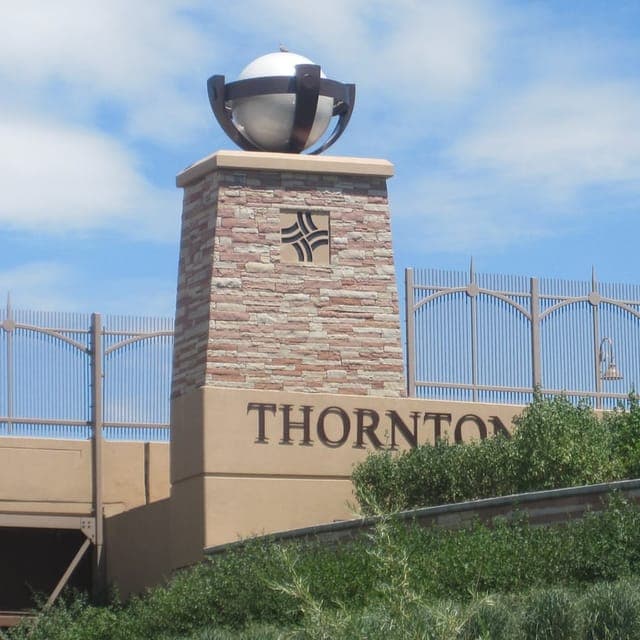
The geographic pattern is one of dispersion and suburbanization. The Hispanic population is spreading beyond traditional enclaves into suburbs like Thornton and Northglenn, while the East/Southeast Asian and Indian communities are following tech jobs into the southern and western suburbs. The rural parts of the state — the Eastern Plains, the Western Slope, the San Luis Valley — are losing population or growing very slowly, as young people leave for the Front Range. The state’s cultural identity is evolving from a "cowboy and miner" image to a "tech and outdoor" one, but the tension between the conservative, rural, ranching Colorado and the liberal, urban, transplant Colorado is a defining political and social fault line.
For someone moving in now, Colorado offers a population that is highly educated, physically active, and politically polarized. The Front Range is increasingly expensive, diverse in a limited way, and dominated by newcomers; the rural areas are older, whiter, and more conservative. The state is not becoming a melting pot in the manner of Texas or California — its foreign-born share remains low — but it is becoming a place where a large Hispanic minority and a small but growing Asian and Indian presence coexist with a White majority that is itself replenished by domestic migration. The bottom line: Colorado is a state of transplants, and the people who thrive here are those who can afford the housing and embrace the outdoor culture, regardless of where they came from.

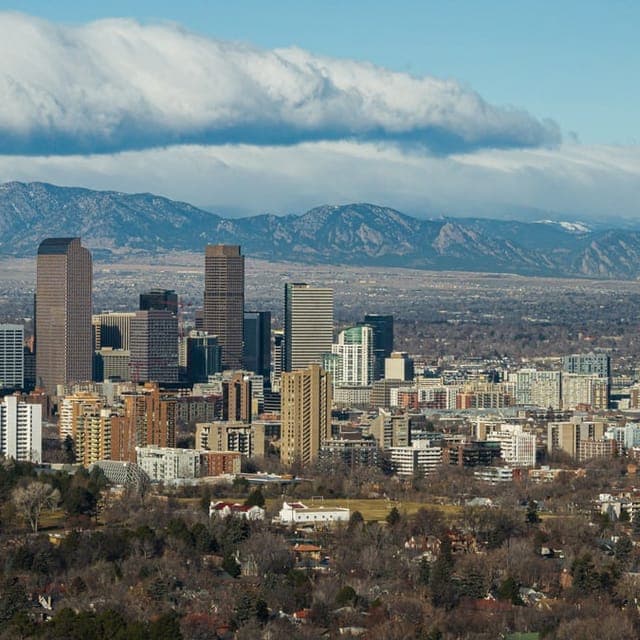
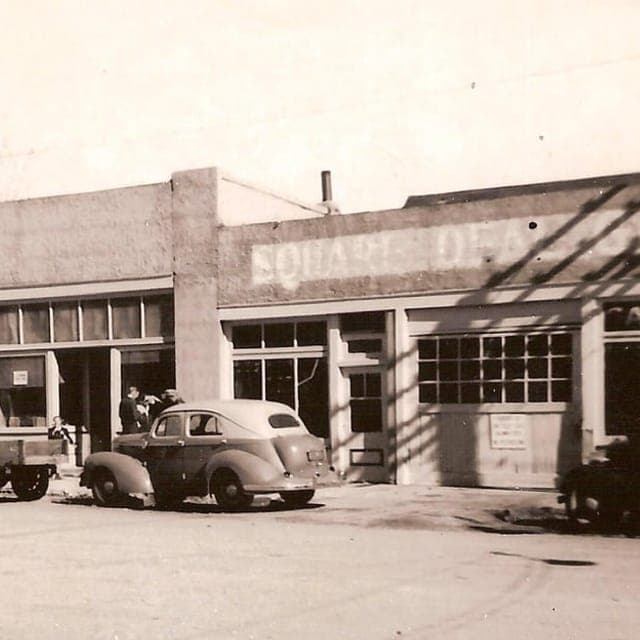
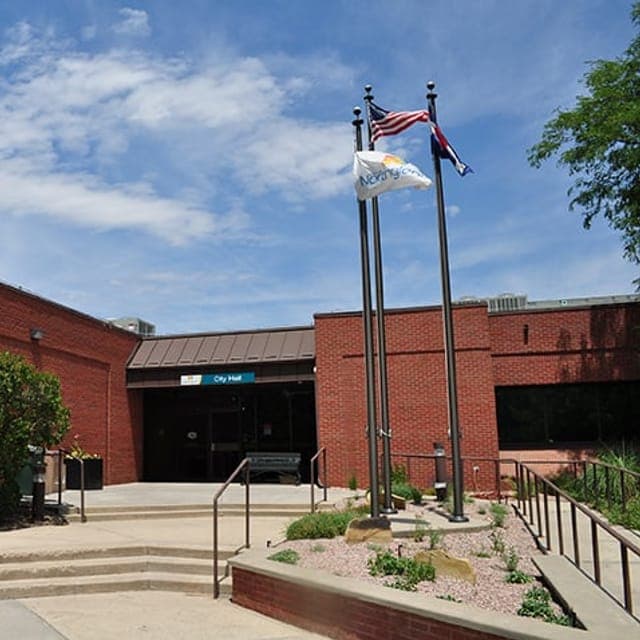
Most Diverse Cities in Colorado
Most Homogenous Cities in Colorado
* Values derived from national, state, county, city and local statistics and may differ in a specific area. Last updated: 2026-08-03T16:05:48.000Z
Narrative content on this page is AI-generated and may contain mistakes. Verify any details that matter before acting on them.
ReloMaps may earn a commission from affiliate links at no extra cost to you.

