Photo: Wikipedia
Political ClimatePolitical Climate in Davidson, NC
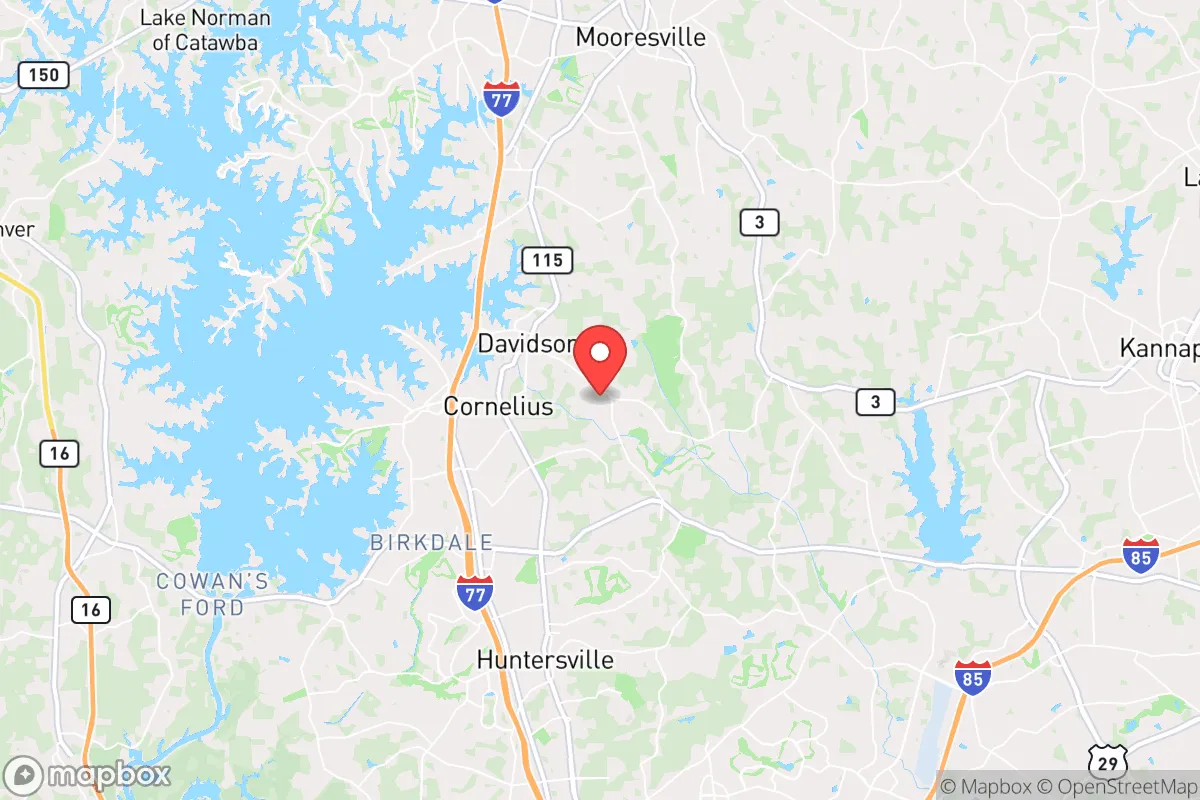
District shown is the primary district for this city’s centroid. Cities may span multiple districts.
Local Political AnalysisPolitical Analysis of Davidson, NC
Davidson, North Carolina, has long been a blue dot in a red county, and that dynamic is only intensifying. While the town sits in Iredell County, which carries a Cook PVI of R+8, Davidson itself votes reliably Democratic in most elections, often by double-digit margins. This puts it in stark contrast with the surrounding area, including nearby Mooresville and Statesville, which lean much more conservative. The state of North Carolina as a whole is a true battleground with a Cook PVI of R+1, meaning Davidson’s local politics are significantly more liberal than the state average, creating a unique tension between town and county governance.
How it compares
Drive ten minutes north to Mooresville, and you’ll find a more mixed but still conservative-leaning electorate, while Statesville to the west is solidly red. Davidson’s political character is shaped heavily by its college town atmosphere—Davidson College brings in a highly educated, younger, and more liberal population that consistently votes blue. This creates a sharp contrast with the rest of Iredell County, where rural and suburban voters lean Republican. In the 2020 presidential election, Iredell County went for Trump by about 18 points, while Davidson’s precincts favored Biden by roughly 15 to 20 points. That kind of split is rare in the Charlotte metro, where most suburbs have trended purple or blue, but Davidson has been doing this for decades. The state-level R+1 rating means North Carolina is competitive in every statewide race, but Davidson’s local elections often feel like they’re happening in a different state entirely.
What this means for residents
For liberal residents, Davidson feels like a safe haven. You can put a Black Lives Matter sign in your yard or a Harris-Walz bumper sticker on your car without worrying about pushback, and the town council tends to lean progressive on issues like affordable housing, environmental sustainability, and public transit. Conservative residents, however, aren’t marginalized—they just have to drive a few miles to find their people. The county commission and sheriff’s office are reliably Republican, so gun rights, lower taxes, and law-and-order policies dominate at the county level. What this means in practice is a kind of live-and-let-live arrangement: Davidson handles its own town business with a progressive bent, while countywide decisions reflect the broader R+8 electorate. School board races can get heated because the district covers both Davidson and the surrounding conservative areas, so you’ll see genuine ideological fights over curriculum and funding.
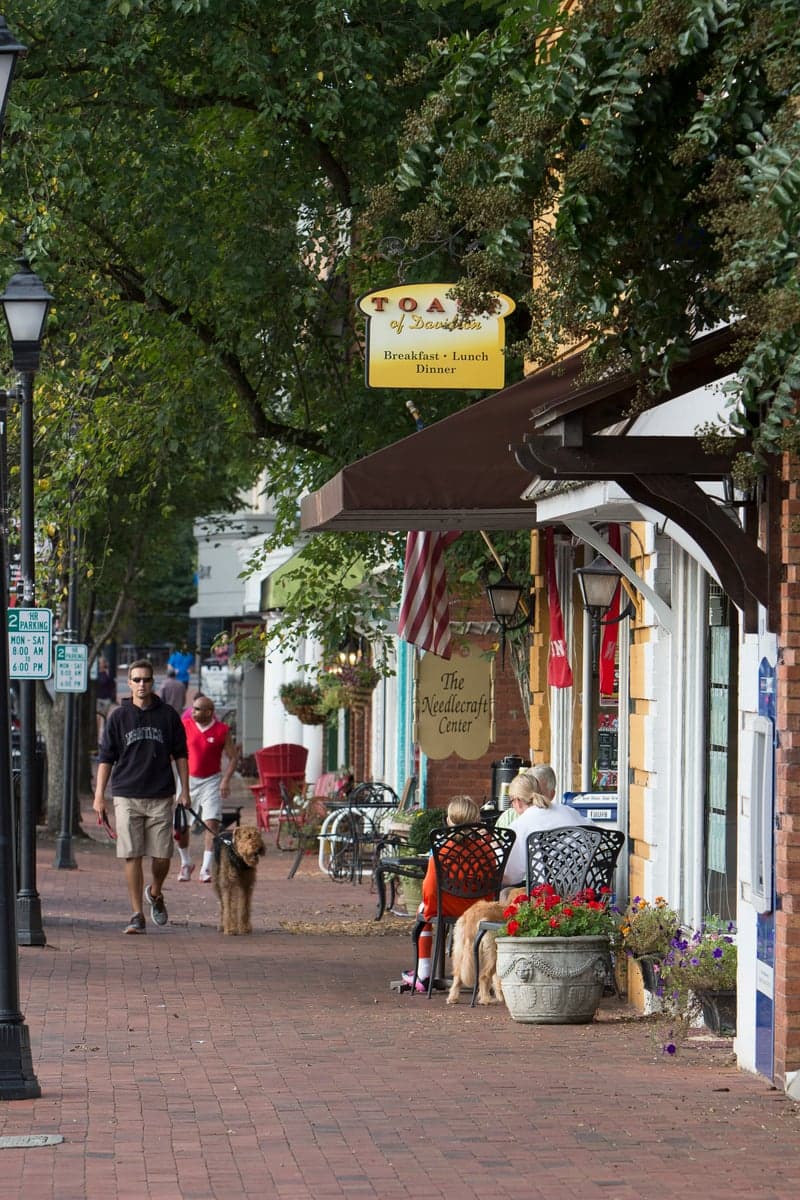
The cultural and policy distinctions are real but rarely hostile. Davidson has its own police department, its own planning board, and a strong sense of local identity that predates the recent political polarization. The town’s historic downtown, its strict tree canopy ordinances, and its emphasis on walkability and bike lanes are all policies that reflect its liberal lean, but they’re also broadly popular with residents regardless of party. The biggest friction point is growth and development: conservatives in the county often see Davidson’s land-use restrictions as anti-business, while liberals in town see them as necessary to preserve character. Looking ahead, Davidson will likely get bluer as the college expands and Charlotte’s northern suburbs continue to fill in with younger, more diverse families. The county will stay red for the foreseeable future, but the gap between town and county will keep widening, making Davidson an increasingly distinct political island in a conservative sea.

State Political ClimatePolitical Climate in North Carolina
State Political AnalysisPolitical Environment in the State
North Carolina is a classic swing state that has been trending rightward in presidential elections, but it remains deeply competitive at the state level. The state’s Cook Partisan Voting Index (PVI) of R+1 reflects a near-even split, but the real story is the widening urban-rural chasm and the steady in-migration that is reshaping the electorate. Over the last 20 years, the state has gone from a reliably Republican stronghold in presidential races to a toss-up, with Democrats winning the governorship in 2016 and 2024, while the GOP has maintained supermajorities in the General Assembly for most of the last decade. This tension between a Republican legislature and a Democratic governor defines the state’s political reality.
Urban vs. rural divide
The political map of North Carolina is a textbook example of the urban-rural split. The major metros—Charlotte, the Raleigh-Durham-Chapel Hill Research Triangle, Greensboro, and Winston-Salem—are Democratic strongholds, driven by a mix of college-educated professionals, younger voters, and growing minority populations. Mecklenburg County (Charlotte) and Wake County (Raleigh) alone account for over a quarter of the state’s vote and lean heavily blue. In contrast, the vast rural and exurban areas—places like Hickory, Fayetteville, and the northeastern coastal counties—vote overwhelmingly Republican. The state’s suburban counties, such as Union (southeast of Charlotte) and Cabarrus, have been trending redder as they absorb conservative-leaning transplants, while the once-purple Buncombe County (Asheville) has become a deep-blue mountain enclave. The result is a state where control of the legislature hinges on a handful of competitive districts in the suburbs of Charlotte and the Triad, while the presidency is decided by turnout in the metros and the ability of Republicans to run up margins in rural areas.
Policy environment
North Carolina’s policy environment is a study in divided government. The state has a flat income tax rate of 4.5%, which is scheduled to drop to 3.99% by 2027 under legislation passed by the Republican supermajority. The corporate tax rate is a low 2.5%, making the state attractive for business relocation. Sales tax is 4.75% at the state level, with local add-ons that can push it to 7.5% in some counties. On education, the state has a robust charter school system and a growing school voucher program (the Opportunity Scholarship Program), which has been expanded to cover all families regardless of income. Higher education is dominated by the UNC system, which remains a point of political contention over DEI policies and academic freedom. Healthcare policy is a mixed bag: the state expanded Medicaid in 2023 under a bipartisan deal, adding over 600,000 residents to the rolls, but abortion access is restricted after 12 weeks (with exceptions for rape, incest, and fetal anomalies), a law passed in 2023 over the governor’s veto. Election laws have been tightened: voter ID is required, early voting has been reduced from 17 to 10 days, and same-day registration during early voting was eliminated in 2023. These changes have been challenged in court but remain in effect.
Recent policy direction
The last three years have seen a clear rightward shift on several fronts. In 2023, the Republican supermajority passed a 12-week abortion ban, overriding Governor Roy Cooper’s veto. The same session saw the expansion of the school voucher program to all families, a move that has drawn criticism from rural districts that fear funding cuts. On gun rights, North Carolina remains a shall-issue state for concealed carry permits, and permitless open carry is legal for anyone who can legally possess a firearm. In 2023, the legislature passed a law allowing teachers to carry firearms on school grounds with principal approval. On parental rights, the state enacted the Parents’ Bill of Rights in 2023, requiring schools to notify parents of any changes to a student’s health or well-being, including gender identity. Property rights are generally strong, with no state-level rent control and a relatively straightforward eminent domain process. On voting access, the 2023 law shortened the early voting window and eliminated same-day registration, which critics argue suppresses turnout in urban areas. The state has also passed a law banning mask mandates in public schools and government buildings. On medical and bodily autonomy, the 12-week abortion ban is the most significant restriction, but the state has not moved to ban gender-affirming care for minors, though such legislation has been introduced. Overall, the direction is toward lower taxes, expanded school choice, and tighter election and abortion laws, while Medicaid expansion shows a willingness to compromise on healthcare.
Civil unrest & political movements
North Carolina has a history of political activism on both sides. The state was a focal point of the 2020 Black Lives Matter protests, particularly in Charlotte and Raleigh, where demonstrations over police brutality led to property damage and curfews. In 2023, the state saw large protests at the legislature over the abortion ban, with activists on both sides turning out. The state has a strong Second Amendment movement, with regular gun rights rallies at the capitol. Immigration politics are less heated than in border states, but there is a growing debate over sanctuary policies: Durham and Orange County have declared themselves sanctuary jurisdictions, limiting cooperation with ICE, while the state legislature has passed laws banning such policies and requiring sheriffs to honor ICE detainers. Election integrity remains a flashpoint: the 2020 election in North Carolina was close but not contested, but the 2023 voting law changes have been met with lawsuits from the Democratic Party and civil rights groups. There is no serious secession or nullification movement, but rural counties have occasionally floated the idea of forming a new state (the so-called "State of Franklin" proposal) in response to urban dominance. A new resident would notice the political polarization in everyday life, especially in the metros where yard signs and bumper stickers are common, but the state remains generally civil compared to more volatile swing states.
Projection
Over the next 5-10 years, North Carolina is likely to remain a competitive swing state, but the trend lines favor the GOP at the presidential level. In-migration from blue states like New York and California is accelerating, but many of these transplants are conservative-leaning retirees and remote workers who settle in exurban counties like Union and Johnston, which are becoming reliably red. The urban cores will continue to grow and vote Democratic, but the state’s rural areas are not depopulating as fast as in the Midwest, and the GOP’s advantage in the legislature is likely to persist due to gerrymandering. The wild card is the growing Hispanic population, which is concentrated in Charlotte and the eastern part of the state and could shift the balance if turnout increases. The state’s political trajectory is toward a more stable Republican lean at the state level, with the governorship remaining competitive. A new resident moving in now should expect a state where the legislature is solidly Republican and the governor is likely Democratic, with policy battles over abortion, education, and voting rights continuing for the foreseeable future.
For a new resident, the bottom line is that North Carolina offers a low-tax, business-friendly environment with a strong economy, but the political climate is polarized and the direction of policy depends heavily on which party controls the legislature. Conservatives will find a state that has moved right on abortion, gun rights, and school choice, while liberals will find a state where their votes matter in close elections but where their policy preferences are often blocked by the legislature. The key practical takeaway is that your experience will vary dramatically depending on whether you live in a blue metro like Raleigh or a red exurb like Hickory, and that the state’s political future is still being written by the people moving in today.
* Values derived from national, state, county, city and local statistics and may differ in a specific area. Last updated: 2026-08-16T20:32:44.000Z
Narrative content on this page is AI-generated and may contain mistakes. Verify any details that matter before acting on them.
ReloMaps may earn a commission from affiliate links at no extra cost to you.

