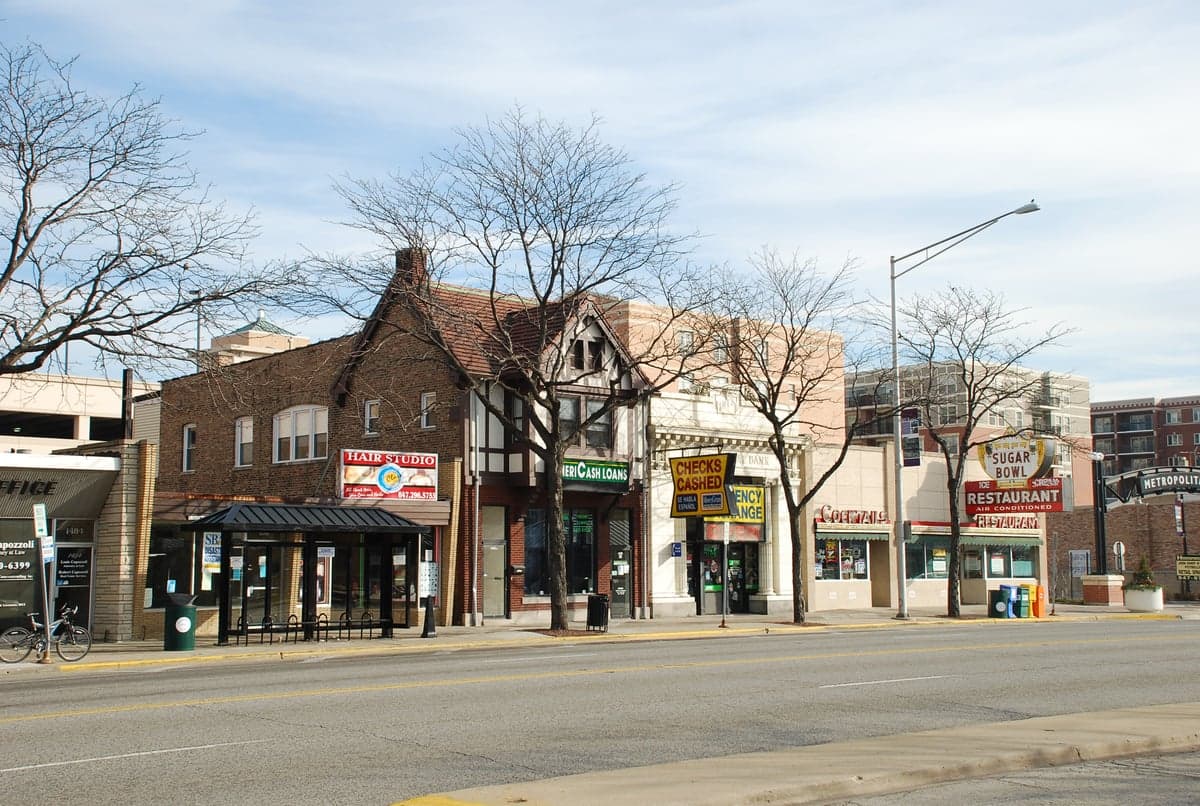
Photo: Wikipedia
Political ClimatePolitical Climate in Des Plaines, IL
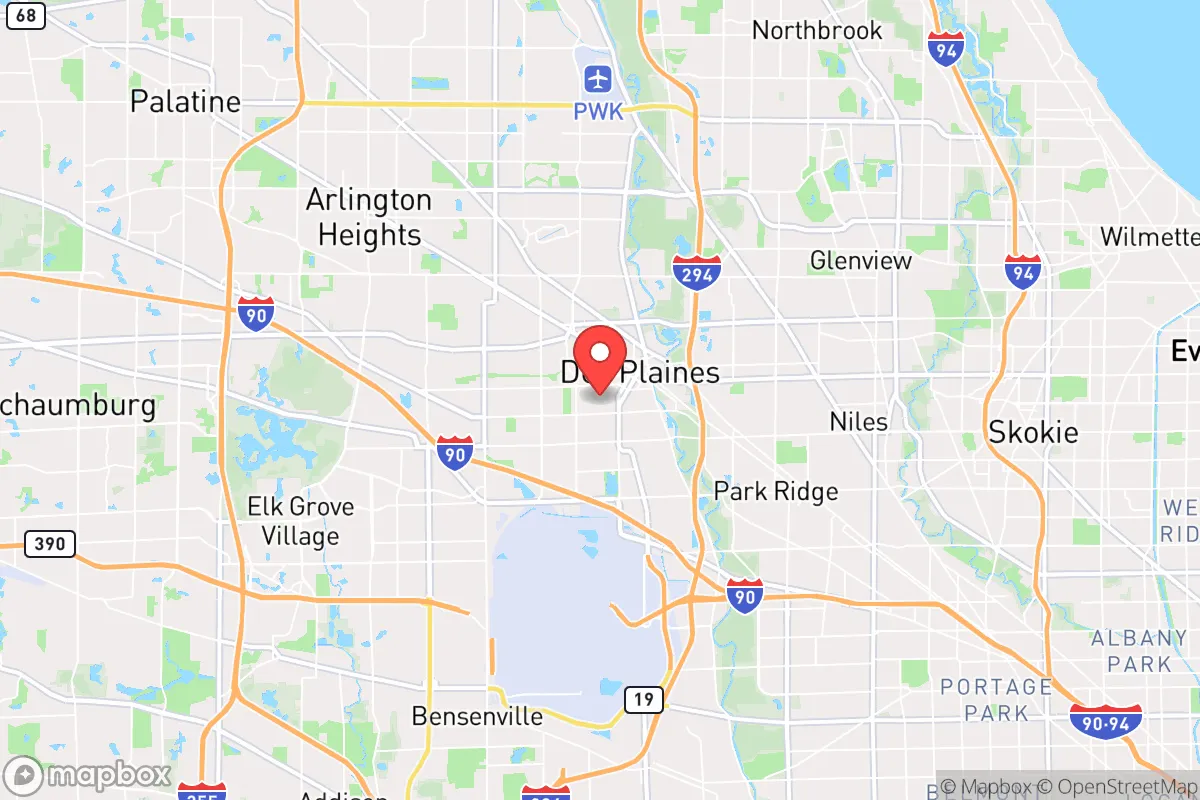
District shown is the primary district for this city’s centroid. Cities may span multiple districts.
Local Political AnalysisPolitical Analysis of Des Plaines, IL
Des Plaines has always been a bit of a mixed bag politically, but the needle has been shifting left for a while now. The Cook PVI rating of D+5 tells you the basics—it leans Democratic by a moderate margin—but that number doesn't capture the full story. Back in the 90s and early 2000s, this was a solidly blue-collar, union Democrat town where folks voted for the person, not the party, and a lot of those voters were socially conservative or at least skeptical of big government. Today, the local Democratic machine is more progressive, and the old-school conservative Democrats have either moved out, passed on, or just stopped voting. The Republican presence is still here, but it's a shadow of what it was, and the local GOP is more of a social club than a real political force.
How it compares
Drive ten minutes west to Arlington Heights or Mount Prospect, and you'll find a similar political vibe—blue-leaning but with a noticeable conservative undercurrent, especially among older homeowners and small business owners. But head north to Park Ridge (home of Hillary Clinton's childhood home) and you're in a deeper blue zone, with more affluent, college-educated liberals. The real contrast is south and west: towns like Elk Grove Village and Schaumburg are more purple, with a stronger small-government streak and a lot of folks who work in trades or run their own shops. Des Plaines sits right in the middle of all that, but it's getting harder to tell the difference between here and the more progressive suburbs. The old "live and let live" attitude is being replaced by a "we know what's best for you" approach from the village board and school district.
What this means for residents
For a long-time resident, the biggest change is the creeping sense that local government is getting more involved in things it shouldn't be. The city council has been pushing zoning changes that make it harder to run a home-based business or keep a classic car in your driveway without a permit. The school board has adopted curriculum materials that emphasize social-emotional learning and equity over traditional academics, and parents who raise concerns are often dismissed as "out of touch." Property taxes are already among the highest in the state, and every new bond referendum or special tax levy is sold as a necessity for "progress." The police department is still professional and responsive, but there's been quiet talk about civilian oversight boards and defunding training programs—ideas that would have been laughed out of the room ten years ago. If you value personal freedom, the ability to make your own choices about your property and your kids' education, and a government that stays out of your way, Des Plaines is becoming a tougher place to call home.
On the cultural side, the city still has a strong Polish and Eastern European heritage, and those communities tend to be more traditional and family-oriented. But the newer arrivals—younger professionals and transplants from Chicago—bring a different set of values. The local library has hosted drag story hours, the city has declared itself a "Welcoming City" for immigrants regardless of legal status, and there's a growing push to install bike lanes and traffic-calming measures that many residents see as a solution in search of a problem. The annual Des Plaines Fest is still a good time, but the political signs in yards now lean heavily toward the progressive side. If the trend continues, Des Plaines will look a lot like Evanston or Oak Park within a decade—well-meaning, expensive, and increasingly restrictive on the kinds of personal freedoms that used to be taken for granted around here.

State Political ClimatePolitical Climate in Illinois
State Political AnalysisPolitical Environment in the State
Illinois has been a reliably blue state for decades, but its political landscape is far more fractured than a simple Democratic label suggests. The state’s overall partisan lean is solidly Democratic in presidential and statewide races—Joe Biden won it by 17 points in 2020—but that margin is almost entirely driven by the Chicago metropolitan area. Over the past 10-20 years, the state has shifted leftward on cultural and economic issues, even as downstate and rural areas have become increasingly Republican. The dominant coalition is a Chicago-centric alliance of union households, suburban professionals, and minority voters, while the rest of the state feels increasingly alienated and underrepresented.
Urban vs. rural divide
The political map of Illinois is a tale of two worlds. Chicago and its inner suburbs—places like Evanston, Oak Park, and Naperville—are the engine of Democratic power, delivering massive margins that swamp the rest of the state. Cook County alone accounts for roughly 40% of the state’s population and votes about 75% Democratic. The collar counties (DuPage, Lake, Kane, Will) have trended blue in recent cycles as well, especially after Trump’s presidency pushed educated suburbanites leftward. Meanwhile, downstate Illinois—everything south of I-80 and west of the Chicago exurbs—is deeply red. Counties like Williamson, Jefferson, and Effingham vote 70-80% Republican. The divide is stark: drive 30 minutes west of Joliet and you go from a district represented by a progressive Democrat to one represented by a conservative Republican. The state’s second-largest metro, the St. Louis suburbs around Belleville and Edwardsville, is a purple battleground, while the Peoria and Rockford areas lean blue but are surrounded by red farmland. The result is a state where one region’s priorities dominate the other’s.
Policy environment
Illinois’s policy environment is a textbook example of progressive governance with a heavy hand. The state has the second-highest property tax burden in the nation (averaging over 2% of home value annually) and a flat income tax of 4.95% that is effectively regressive. In 2020, voters rejected a graduated income tax amendment—a rare win for fiscal conservatives—but the legislature keeps finding ways to raise revenue through fees and surcharges. Education policy is dominated by the Chicago Teachers Union, which has pushed for progressive curricula and defunded school choice. The state mandates a “culturally responsive” teaching framework that critics say elevates critical race theory. Healthcare is heavily regulated, with a state-run exchange and Medicaid expansion that covers about 40% of residents. Election laws are among the most permissive in the country: no-excuse mail voting, automatic voter registration, and same-day registration are all in place. The state also has a sanctuary law (the TRUST Act) that prohibits local law enforcement from cooperating with federal immigration authorities. For a conservative-leaning resident, the policy environment feels like a one-party state where your voice is drowned out by Chicago’s machine.
Trajectory & freedom
Illinois is becoming less free by almost any measure. The state has enacted some of the strictest gun control laws in the nation, including the 2023 “Protect Illinois Communities Act,” which bans the sale of many common semi-automatic rifles and standard-capacity magazines. This was passed despite a federal court ruling that found similar bans unconstitutional. On parental rights, the state has moved aggressively to expand government authority over children: a 2023 law allows minors to receive gender-transition care without parental consent, and the state’s Department of Children and Family Services has been known to investigate parents who resist progressive school policies. Medical autonomy was further restricted when the state mandated COVID-19 vaccines for healthcare workers and school staff, with no religious exemption. Property rights are under assault through the state’s “just cause” eviction requirements and rent control preemption battles. On the tax front, the state’s pension debt (over $140 billion) means that property taxes will only rise. The only area where freedom has expanded is in the realm of cannabis—recreational use was legalized in 2020, and the market is now a major revenue source. But overall, the trajectory is toward more regulation, higher taxes, and less personal liberty.
Civil unrest & political movements
Illinois has been a flashpoint for civil unrest and political movements. The 2020 George Floyd protests in Chicago turned violent, with looting and arson in the Loop and along Michigan Avenue. The city’s response—a mix of curfews and progressive prosecution—left many residents feeling unsafe. On the right, the “Illinois Freedom Caucus” in the state legislature has grown, pushing back against gun bans and vaccine mandates. There have been organized efforts to secede from Cook County, with downstate counties like Iroquois and Kankakee passing symbolic resolutions to form a new state. The sanctuary policy has created friction: in 2022, a Cook County sheriff’s deputy was fired for cooperating with ICE, and the state has seen a surge in illegal immigration from the southern border, with Chicago becoming a sanctuary city for bused migrants. Election integrity is a hot-button issue: the state’s mail-in voting system was expanded without legislative oversight, and there have been reports of ballot harvesting in Chicago wards. The most visible flashpoint for a new resident would be the constant tension between Chicago’s progressive politics and the rest of the state’s desire for self-governance.
Projection
Over the next 5-10 years, Illinois is likely to become even more polarized. Demographic trends favor the Democrats: Chicago’s population is stable, while downstate counties are shrinking. The collar counties will continue to trend blue as educated professionals move in from the coasts. However, there is a counter-trend: conservative families are leaving the state for Indiana, Wisconsin, and Tennessee, taking their tax dollars with them. The state’s pension crisis will force either a massive tax hike or a default, which would accelerate out-migration. The gun ban will likely face a Supreme Court challenge, but if it stands, it will drive more gun owners out. The sanctuary policy will continue to attract migrants, straining Chicago’s resources and creating more friction with the suburbs. The Illinois Freedom Caucus may gain seats in the legislature, but they will remain a minority. The most realistic projection is that Illinois becomes a one-party state where Chicago’s progressive agenda is the law of the land, and the rest of the state is left to fend for itself. A new resident moving in now should expect to see property taxes rise, gun rights further restricted, and the cultural divide widen.
For a new resident, the bottom line is this: Illinois is a state where your personal freedoms are increasingly subject to the whims of a Chicago-dominated legislature. If you value low taxes, gun rights, and local control, you will find yourself fighting an uphill battle. The state’s natural beauty and economic opportunities are real, but they come with a heavy price tag in both dollars and liberty. If you are considering a move here, be prepared to either adapt to the progressive consensus or join the growing exodus of those who feel the state no longer represents them. The inside scoop is that Illinois is a beautiful place to live if you can afford the taxes and tolerate the politics—but it is not getting any freer.
* Values derived from national, state, county, city and local statistics and may differ in a specific area. Last updated: 2026-04-23T09:59:48.000Z
Narrative content on this page is AI-generated and may contain mistakes. Verify any details that matter before acting on them.
ReloMaps may earn a commission from affiliate links at no extra cost to you.

