Photo: Wikipedia
Political ClimatePolitical Climate in Durango, CO
District shown is the primary district for this city’s centroid. Cities may span multiple districts.
Local Political AnalysisPolitical Analysis of Durango, CO
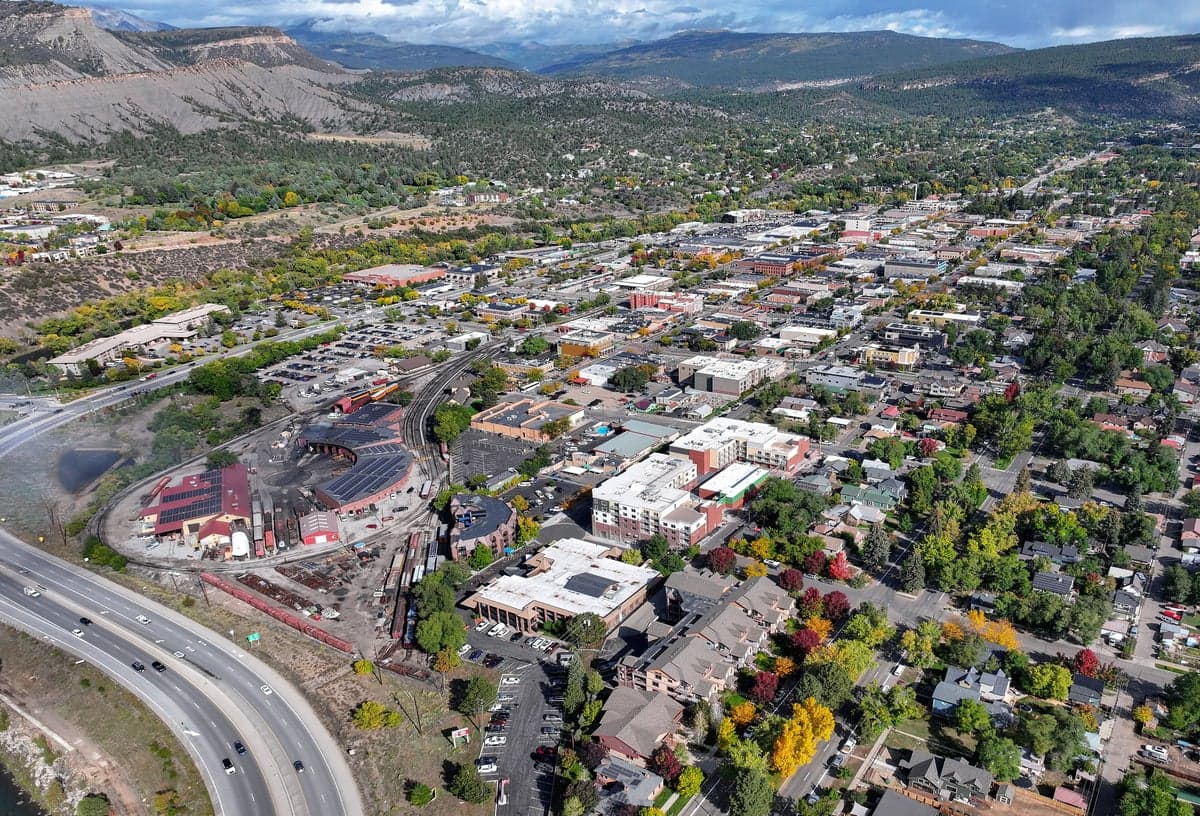
Durango’s political climate has shifted noticeably over the past decade, and if you’ve lived here as long as I have, you’ve watched it go from a reliably conservative mountain town to a place where the old-school values of personal liberty and limited government are increasingly under pressure. The Cook PVI rating of R+5 still gives La Plata County a slight Republican lean on paper, but that number hides a lot of nuance. The city itself—especially around the college and the tourist core—votes more like a blue island, while the outlying ranch communities and areas like Bayfield and Ignacio still hold the line for traditional, freedom-minded politics. The trajectory is concerning: each election cycle brings a tighter margin, and the progressive push feels less like a gentle breeze and more like a steady wind.
How it compares
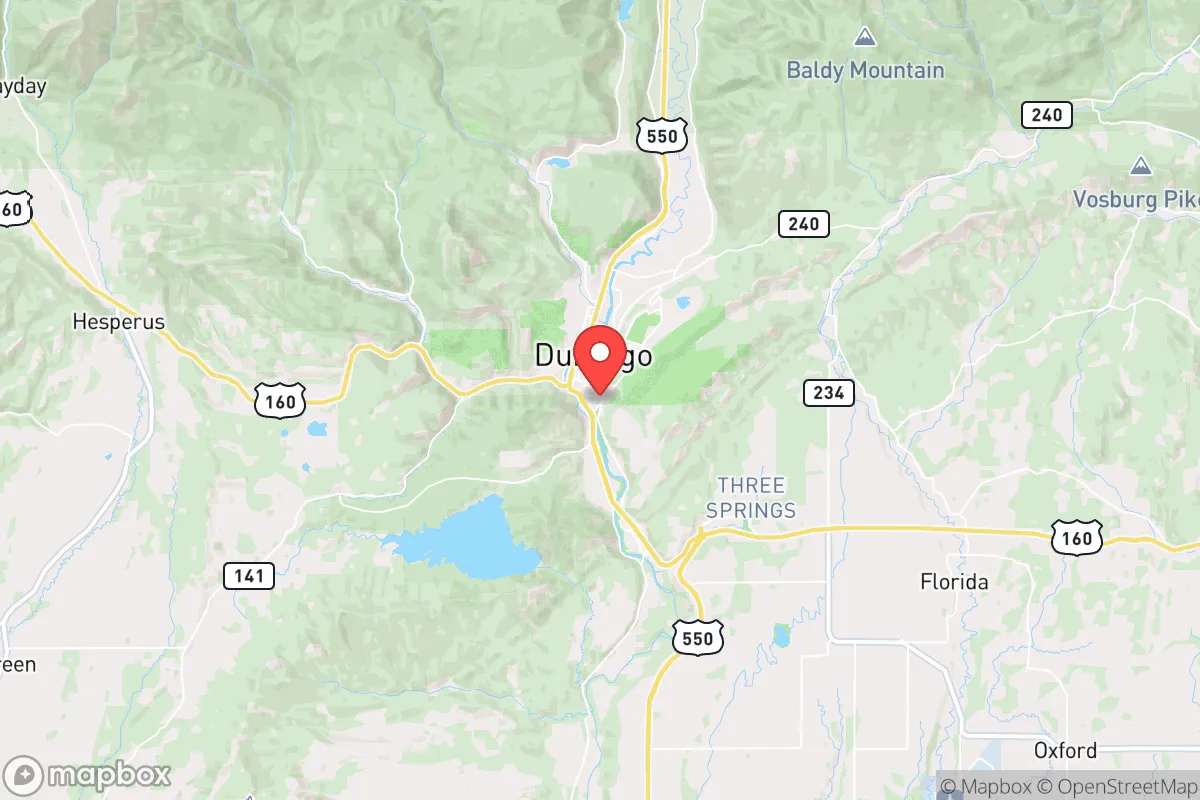
Drive 30 minutes east to Bayfield, and you’ll find a town that still votes solidly red—folks there are more likely to wave the Gadsden flag than a rainbow one. Head south to Ignacio, and the Southern Ute tribal community has its own unique political dynamics, but it’s generally more conservative on economic and property rights issues. The real contrast is with towns like Telluride or Santa Fe, where progressive policies are fully entrenched. Durango sits in the middle, but it’s leaning harder left every year. The surrounding county’s R+5 rating is only holding because the rural precincts turn out reliably; if the city of Durango keeps growing with out-of-state transplants bringing big-government ideas, that number could flip within a decade.
What this means for residents
For those of us who value personal freedoms—like the right to keep and bear arms without endless red tape, or the freedom to run a small business without a dozen new regulations—the shift is real. The city council has flirted with “sustainability” mandates that sound nice but often mean more bureaucracy and less choice. Property taxes have crept up as the local government expands its footprint, and there’s a growing push for land-use restrictions that could limit what you can do on your own acreage. If you’re a hunter, a builder, or just someone who doesn’t want the county telling you how to heat your home, you’ll want to keep an eye on local elections. The school board has also become a battleground, with curriculum debates that mirror national trends—something that didn’t used to be a big deal around here.
Cultural and policy distinctions worth knowing
One thing that still sets Durango apart is the strong libertarian streak that runs through the old-timers and the ranching families. There’s a live-and-let-live attitude that resists both far-left and far-right extremes, but that middle ground is getting squeezed. The city’s push for “affordable housing” mandates, for example, sounds good until you realize it often comes with strings attached—like density bonuses for developers who agree to build “green” or include “equity” components. The county sheriff’s office has been a bulwark against some of the more aggressive state-level gun laws, but that’s a fight that’s not going away. In the long term, if you’re looking for a place where your personal rights are respected and government stays out of your way, the rural areas around Durango are still a good bet, but the city itself is becoming a place where you’ll need to stay politically engaged to protect what’s left of the old Colorado freedom.

State Political ClimatePolitical Climate in Colorado
State Political AnalysisPolitical Environment in the State
Colorado has shifted from a classic purple swing state to a solidly blue-leaning state over the past two decades, with Democrats now controlling the governorship, both U.S. Senate seats, and both chambers of the state legislature. The state voted for Hillary Clinton by 5 points in 2016, Joe Biden by 13 points in 2020, and Kamala Harris by roughly 11 points in 2024, reflecting a durable leftward tilt driven by massive in-migration from coastal states and explosive growth in the Denver metro area. For a conservative considering relocation, the state’s political trajectory is a cautionary tale of how fast a libertarian-leaning Western state can become a laboratory for progressive policy.
Urban vs. rural divide
The political map of Colorado is a stark study in contrast. The Denver-Boulder-Aurora corridor, home to over half the state’s population, is overwhelmingly Democratic — Boulder County gave Biden 78% of the vote in 2020, while Denver County delivered 80%. The Front Range suburbs that were once swing territory, like Jefferson County and Arapahoe County, have moved decisively left; Jeffco flipped from red to blue in 2016 and hasn’t looked back. Meanwhile, the Eastern Plains, Western Slope, and mountain resort counties remain reliably Republican — El Paso County (Colorado Springs) is the state’s conservative stronghold, voting +15 R in 2024, while Weld County (Greeley) and Mesa County (Grand Junction) are deep red. The rural-urban divide is so pronounced that Douglas County, a wealthy Denver suburb, is one of the few remaining purple-to-light-red enclaves near the metro, but even there, Republican margins have shrunk from +20 in 2012 to +5 in 2024. The state’s political future is being written in the sprawling subdivisions of Lone Tree, Castle Rock, and Parker, where new arrivals from California and Texas are reshaping the electorate.
Policy environment
Colorado’s policy environment has become a showcase for progressive governance, with consequences that conservatives find alarming. The state income tax rate was cut to 4.4% under the Taxpayer’s Bill of Rights (TABOR), but Democrats have found ways around TABOR’s revenue limits through fee increases and ballot measures. Property taxes are relatively low, but the state’s regulatory posture is heavy: Colorado has some of the strictest environmental regulations in the West, including a 2024 law requiring 100% renewable energy by 2040 and a 2023 law banning new oil and gas permits within 2,000 feet of homes. Education policy is dominated by the teachers’ unions, with school choice limited compared to states like Arizona or Florida — Colorado’s charter school law is moderate, but the state has resisted voucher programs. Healthcare is heavily regulated, with Colorado’s state-run insurance exchange and a 2024 law capping insulin prices at $50 per month. Election laws have been loosened significantly: Colorado was one of the first states to implement universal mail-in voting (2013), automatic voter registration, and same-day registration, which conservatives argue has eroded election integrity. The state also has a “red flag” gun law (2019) allowing temporary seizure of firearms from individuals deemed a risk, and in 2024, Democrats passed a ban on the sale of semiautomatic firearms to anyone under 21.
Trajectory & freedom
Colorado is becoming less free by any conservative measure of personal liberty. The state’s trajectory accelerated after Democrats won a trifecta in 2018, and the pace has only quickened. On gun rights, the 2024 “assault weapons” ban (HB24-1292) and the 2023 law raising the purchase age to 21 have made Colorado a national leader in firearm restrictions. On parental rights, the 2023 law (SB23-195) requires school districts to adopt policies allowing students to use names and pronouns without parental notification, a direct challenge to family authority. On medical autonomy, Colorado legalized assisted suicide in 2016 and has some of the most permissive abortion laws in the country, including a 2022 law (HB22-1279) codifying abortion access and a 2024 law requiring insurance to cover abortion without cost-sharing. On property rights, the 2023 “land use” bill (SB23-213) preempted local zoning to force higher-density housing near transit, overriding local control. On taxation, while TABOR remains in place, Democrats have used “fee” increases and ballot measures like Proposition HH (2023, defeated) to try to retain surplus revenue. The net effect is a state where the government increasingly dictates how you raise your kids, what you can own, and how you can use your land.
Civil unrest & political movements
Colorado has seen its share of political flashpoints. The 2020 protests in Denver turned violent, with the city’s “autonomous zone” near the state capitol lasting several days and resulting in property damage and a controversial police response. The state has a strong sanctuary policy — the 2019 “Safe Communities Act” (HB19-1124) limits local law enforcement cooperation with federal immigration authorities, and Denver has been a “sanctuary city” since 2017. Immigration politics are a live wire: the 2023 surge of migrants bused from Texas overwhelmed Denver’s shelter system, leading to a $90 million emergency response and tensions between the city and the state. On the right, the Colorado Republican Party has fractured between establishment and populist factions, with the 2024 state convention devolving into a fight over election integrity. The “election integrity” movement is strong in rural counties like Mesa and El Paso, where activists have pushed for hand-count audits and ballot drop box surveillance. Secession rhetoric flares periodically — the “State of Jefferson” movement has some support in the Eastern Plains, and a 2023 proposal to split the state into two was introduced in the legislature but went nowhere. A new resident would notice the “Colorado Way” bumper stickers on pickup trucks in Grand Junction and the “Denver is not Colorado” sentiment in places like Durango and Steamboat Springs.
Projection
Over the next 5-10 years, Colorado will likely continue its leftward drift, but with some caveats. In-migration from blue states is slowing as housing costs rise — the median home price in Denver hit $600,000 in 2024 — and the state’s population growth has cooled from 1.5% annually to under 1%. The rural counties are emptying out, while the Front Range suburbs are filling up with younger, more diverse, and more Democratic voters. The 2024 election results showed that even Douglas County is trending blue, and the state’s 8th Congressional District (northern Denver suburbs) flipped to Democrats in 2022. However, the state’s libertarian streak still runs deep — TABOR, legal marijuana, and a strong outdoor-recreation culture create a unique blend of freedom that even some Democrats respect. The wild card is the 2026 gubernatorial race: if a moderate Republican can win back some suburban voters, the state might slow its leftward march. But the structural trends — demographic change, media environment, and the dominance of the Denver metro — point to a state that will be solidly blue for the foreseeable future.
For a conservative moving to Colorado, the bottom line is this: you can find like-minded communities in Colorado Springs, Grand Junction, or the rural Eastern Plains, but you will be living in a state where your values are increasingly out of step with the government. The state’s tax burden is manageable, the economy is strong, and the natural beauty is unmatched, but you will pay for it with regulatory overreach, erosion of gun rights, and a culture that is hostile to traditional family structures. If you value personal liberty and limited government, Colorado is a state to watch — but not one to move to without your eyes wide open.
* Values derived from national, state, county, city and local statistics and may differ in a specific area. Last updated: 2026-04-28T23:22:11.000Z
Narrative content on this page is AI-generated and may contain mistakes. Verify any details that matter before acting on them.
ReloMaps may earn a commission from affiliate links at no extra cost to you.

