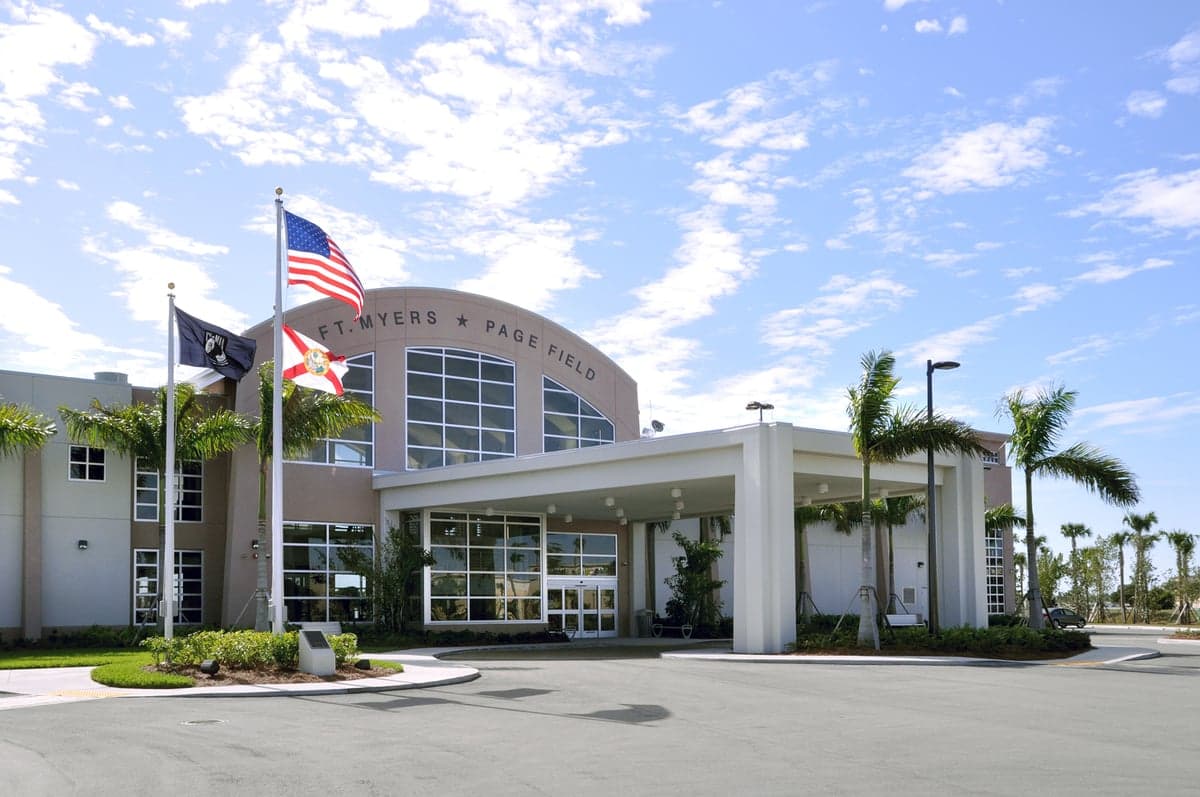
Photo: Wikipedia
Political ClimatePolitical Climate in Lee County
Showing district-level results — no local-only data available.
Local Political AnalysisPolitical Analysis of Lee County
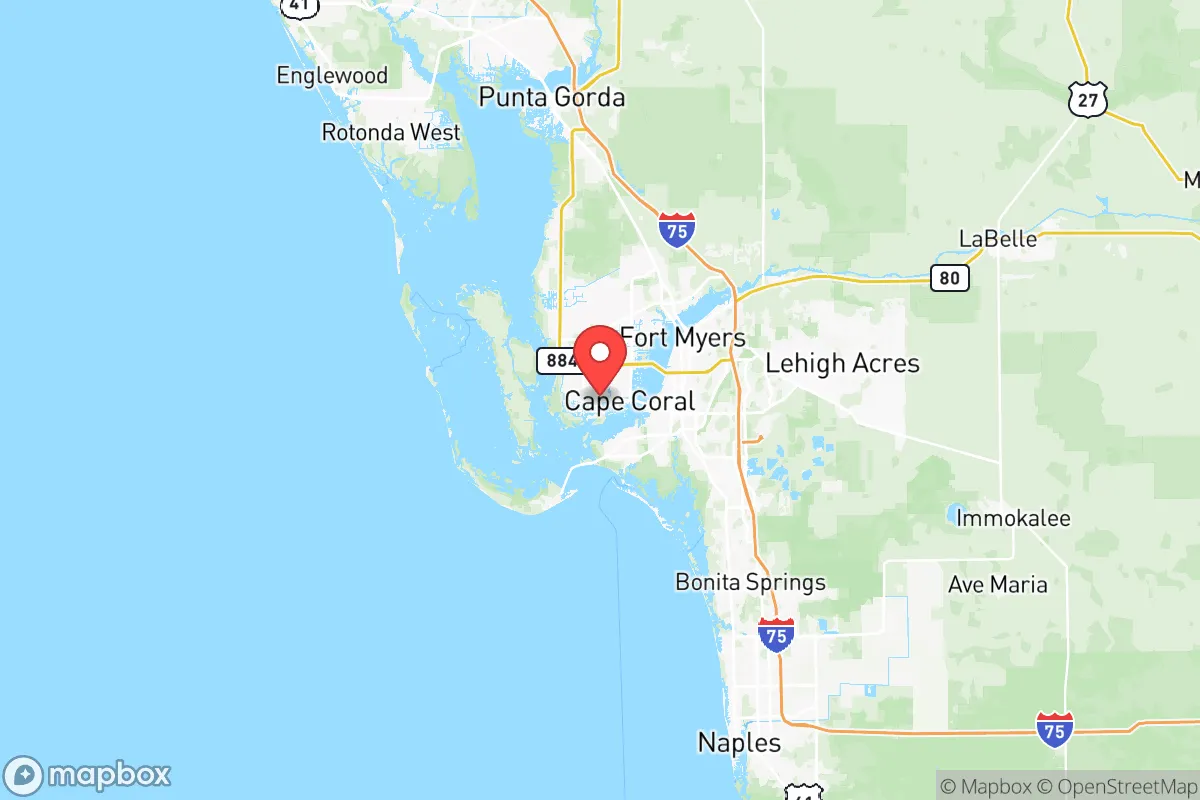
Lee County has long been a solidly conservative stronghold, with a Cook PVI of R+14 that puts it nearly three times more Republican than the state of Florida as a whole. That R+14 rating isn't just a number—it reflects decades of consistent voting patterns where local elections rarely swing left. But if you've been here as long as I have, you've noticed the political landscape shifting beneath our feet. The northern parts of the county, especially around Cape Coral and North Fort Myers, remain deeply red, with precincts routinely delivering 65-70% of the vote to Republican candidates. Down south, though, places like Bonita Springs and Estero are seeing an influx of retirees from blue states, and while they still lean conservative, the margins are tightening. The real outlier is Sanibel and Captiva—those barrier islands have always been more moderate, and in recent cycles they've actually flipped blue in some local races. Meanwhile, the city of Fort Myers itself is a mixed bag: the historic downtown and areas near Florida Gulf Coast University show younger, more progressive tendencies, while the rest of the city votes reliably Republican. The trajectory is clear—Lee County is still red, but the shade is fading, especially along the coast and in growing suburban corridors.
How it compares
Compared to Florida's overall R+5 rating, Lee County is a full nine points more conservative. That gap matters because it means state-level trends—like the 2024 shift toward Democrats in some suburban Florida counties—haven't hit us as hard. While places like Pinellas or Orange County have become battlegrounds, Lee County remains a reliable anchor for Republican candidates. But the comparison also highlights a growing tension: state policies on education, property insurance, and growth management are increasingly influenced by the more moderate swing counties, while Lee County's representatives often push back against what they see as government overreach. For example, the county commission's recent fights over mask mandates and vaccine passports during the pandemic were far more aggressive here than in the state capital—a reflection of a local electorate that views any expansion of government power with deep suspicion. That R+14 isn't just a voting statistic; it's a cultural firewall against the progressive drift we see in Tallahassee and Miami-Dade.
What this means for residents
For those of us who value personal freedoms and limited government, Lee County still feels like a refuge. You won't find the same level of zoning overreach or business regulation that plagues other parts of Florida. Property taxes remain relatively low, and the county has resisted adopting the kind of inclusionary zoning or rent control measures that are popping up in Broward and Palm Beach. But the warning signs are there. The influx of new residents from high-tax states is slowly diluting the local political culture. I've watched precincts in south Lee County that used to vote 70% Republican now hover around 55-60%. That's still a win, but it's a shrinking one. The real concern is school board races and local commission seats—those are where the progressive agenda gets a foothold. If you care about keeping government out of your backyard and your wallet, pay attention to those down-ballot races. They're the canary in the coal mine.
Culturally, Lee County still holds onto its old Florida character—a place where people wave from their boats, where the Fourth of July parade in Cape Coral is a bigger deal than any election, and where the biggest political fights are about water quality and growth management, not social issues. That's changing, though. The policy distinctions that set us apart from the rest of Florida are eroding as the state legislature preempts local control on everything from short-term rentals to building codes. For now, Lee County remains a place where conservative values aren't just tolerated—they're the norm. But if you're thinking of moving here, understand that the political climate is not static. The next five to ten years will determine whether we stay a redoubt of personal liberty or become just another Florida suburb with the same old government overreach problems. Keep an eye on those precinct maps—they'll tell you everything you need to know.

State Political ClimatePolitical Climate in Florida
State Political AnalysisPolitical Environment in the State
Florida has transformed from a quintessential swing state into a solidly Republican-leaning powerhouse, now carrying a Cook PVI of R+5 after a decade of steady rightward movement. The dominant coalition combines conservative retirees in places like The Villages and Naples, rural voters across the Panhandle, and a growing share of Hispanic voters in Miami and Tampa who have shifted sharply toward the GOP. Over the last 20 years, the state flipped from narrowly blue in 2008 to reliably red in 2020 and 2022, with Governor Ron DeSantis winning by nearly 20 points in his re-election — a margin unthinkable a generation ago.
Urban vs. rural divide
The political map of Florida is a patchwork of deep red rural counties and blue-leaning urban cores, but the urban strongholds are shrinking. Miami-Dade County, once a Democratic fortress, has trended red as Cuban-American, Venezuelan-American, and Nicaraguan-American voters abandoned the Democratic Party over socialism rhetoric and economic concerns. In 2020, Trump improved his margin there by double digits. Orlando (Orange County) remains blue, but the surrounding suburbs of Lake and Seminole counties are reliably red. Tampa Bay is a microcosm: Hillsborough County is purple, Pinellas leans blue, but Pasco and Hernando counties to the north are deeply conservative. Jacksonville (Duval County) has flipped from blue to purple and is trending red as suburban growth outpaces the urban core. The rural Panhandle — Pensacola, Panama City, and the interior — is as red as any place in the country. The most conservative enclave per capita is The Villages, a massive retirement community where GOP turnout routinely exceeds 70%.
Policy environment
Florida’s policy environment is a deliberate contrast to high-tax, high-regulation states. There is no state income tax, and property taxes are capped by the Save Our Homes amendment, making it attractive for families and retirees. The regulatory posture is business-friendly, with streamlined permitting and right-to-work laws. On education, Florida has been a national leader in school choice: the Family Empowerment Scholarship and Tax Credit Scholarship programs allow parents to direct funds to private or homeschool options. The Parental Rights in Education Act (HB 1557), often called “Don’t Say Gay,” prohibits classroom instruction on sexual orientation and gender identity in early grades — a major draw for conservative parents. Healthcare policy has focused on medical freedom: the state banned vaccine passports and mask mandates in schools, and limited Medicaid expansion. Election integrity was tightened via SB 90 (2021), which restricted drop boxes, required voter ID for mail ballots, and banned third-party ballot collection. These policies have made Florida a laboratory for conservative governance, but critics argue they concentrate power in the governor’s office.
Trajectory & freedom
On balance, Florida has become more free over the last five years in areas that matter most to conservatives. The passage of constitutional carry (HB 543) in 2023 eliminated the need for a permit to carry a concealed firearm, expanding Second Amendment rights. The Stop WOKE Act (HB 7) restricted critical race theory training in schools and workplaces, aiming to protect free speech from compelled ideological speech. Property rights were strengthened with limits on HOA overreach and a new law curbing squatters’ rights. However, there are warning signs for limited-government advocates: the state’s aggressive use of power against The Walt Disney Company over the “Don’t Say Gay” law — dissolving the Reedy Creek Improvement District — raised concerns about government retaliation against private businesses. Similarly, the governor’s office has used its authority to suspend elected prosecutors and school board members, which some see as overreach. The trajectory is toward more freedom in traditional conservative areas (guns, taxes, school choice) but with a muscular executive that does not hesitate to wield state power against perceived ideological opponents.
Civil unrest & political movements
Florida has seen its share of political flashpoints. During the 2020 Black Lives Matter protests, Miami, Orlando, and Tampa experienced demonstrations, but they were smaller and less destructive than in many northern cities. The state’s strong law-and-order posture — including the creation of the Office of Election Crimes and Security — has kept organized unrest in check. On the right, Moms for Liberty has been highly active in school board races, particularly in Brevard County and Pasco County, pushing for curriculum transparency and parental rights. Immigration politics are a constant flashpoint: Florida passed SB 168 (2019) banning sanctuary cities, and more recently SB 1718 (2023) requiring businesses with 25+ employees to use E-Verify and making it a felony to transport undocumented immigrants into the state. The governor’s migrant flights to Martha’s Vineyard and Sacramento generated national controversy but were popular with the base. Election integrity remains a live issue: the 2020 and 2022 cycles saw no major scandals, but the state’s aggressive voter roll maintenance and drop box restrictions continue to draw legal challenges. A new resident would notice a palpable sense of political engagement — yard signs, bumper stickers, and local activism are common, especially in suburban and exurban areas.
Projection
Over the next 5–10 years, Florida is likely to become more Republican at the state level, but with internal tensions between libertarian-leaning conservatives and those who favor an active government enforcing cultural norms. In-migration from blue states — particularly New York, California, and Illinois — has been massive, but these newcomers are often moderate or conservative themselves, seeking lower taxes and fewer mandates. The Hispanic electorate, especially in Miami-Dade and Osceola County, will continue trending right, potentially flipping more local offices. However, the suburban ring around Orlando and Tampa could become more competitive if the state overreaches on issues like book bans or property insurance regulation. Expect continued battles over school boards, growth management, and property taxes. A new resident moving in now should anticipate a state where conservative policies are the norm, but where the political climate is dynamic and often contentious — especially in local races that directly affect daily life.
For a conservative-leaning individual or parent, Florida offers a policy environment that aligns with many core values: low taxes, school choice, Second Amendment rights, and a government that pushes back against federal overreach. The practical takeaway is to research not just the state but your specific county and city — politics in
* Values derived from national, state, county, city and local statistics and may differ in a specific area. Last updated: 2026-05-14T21:35:40.000Z
Narrative content on this page is AI-generated and may contain mistakes. Verify any details that matter before acting on them.
ReloMaps may earn a commission from affiliate links at no extra cost to you.

