 Popular
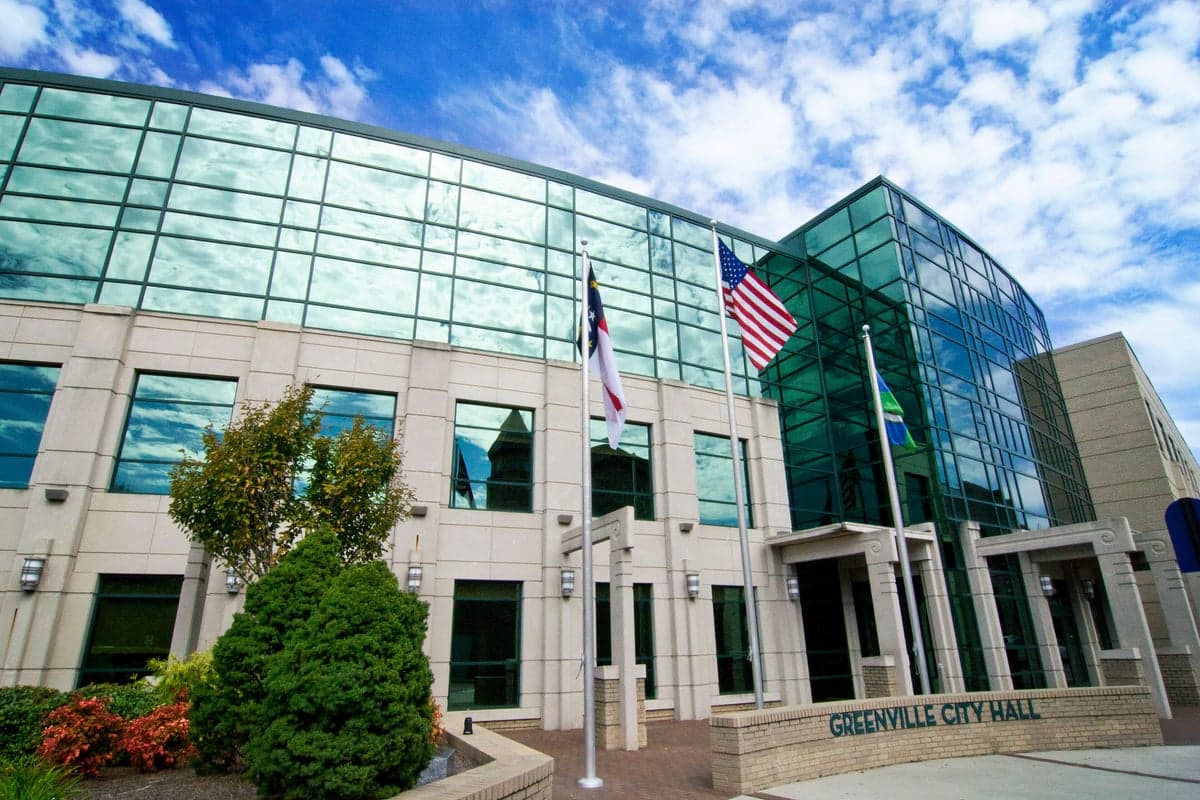
Photo: Wikipedia
Personal Sovereignty in Greenville, NC
Viable for self-reliance. Generally workable, though some barriers may limit total independence.
What does Personal Sovereignty tell us?
Personal Sovereignty measures your capacity for self-reliance and independence with minimal government friction. Higher scores mean fewer barriers between you and the way you want to live... but it assumes you have the space you need and good neighbors.
What does this tell us?
Personal Sovereignty measures your capacity for self-reliance and independence with minimal government friction. Higher scores mean fewer barriers between you and the way you want to live... but it assumes you have the space you need and good neighbors.
State Policy
Energy independence: Importer (15% of energy produced in-state)
Personal Liberty
Homesteading

Personal Liberty Analysis
Greenville, North Carolina, offers a mixed but generally favorable environment for personal sovereignty, particularly when measured against the accelerating erosion of freedoms seen in many urban centers and coastal states. While no location is a perfect fortress against federal overreach or cultural drift, Greenville’s position in a right-to-work state with a Republican-controlled legislature provides a meaningful buffer. The city itself leans more moderate than the surrounding rural counties, but the legal framework of North Carolina—from its preemption laws on firearms to its tax structure—gives residents a tangible degree of autonomy that is increasingly rare in 2026. For a single individual or parent evaluating where to plant roots with a survivalist or prepper mindset, Greenville represents a pragmatic middle ground: not a libertarian utopia, but a place where the state government still largely respects the line between public safety and personal liberty.
Tax burden and regulatory posture: how North Carolina compares to high-control states
North Carolina’s tax and regulatory environment is a significant draw for those seeking to keep more of their own resources and face less bureaucratic interference. The state’s flat income tax rate, which has been steadily declining and is scheduled to hit 3.99% by 2027, is a direct contrast to the progressive, high-rate systems in states like New York or California. For a family or individual, this translates to thousands of dollars retained annually—money that can be redirected toward supplies, land, or self-sufficiency projects. Sales tax in Pitt County is 7%, which is moderate, and property taxes are assessed at a county rate of roughly 0.72% of assessed value, well below the national average. Critically, North Carolina has strong state preemption laws that prevent local governments from enacting their own wage, benefit, or zoning regulations that exceed state standards. This means Greenville cannot unilaterally impose a local minimum wage hike or ban gas-powered leaf blowers—a real concern in cities like Asheville or Durham. The regulatory posture is business-friendly, with a right-to-work law that weakens union power, and occupational licensing requirements are less onerous than in many states. For the prepper, this means fewer hurdles to starting a side business, building a workshop, or operating a small farm without drowning in permits. The state’s energy policy also leans toward reliability over ideology, with natural gas and nuclear providing a stable grid—a non-trivial consideration for anyone planning for grid-down scenarios.
Self-defense and gun law specifics: what North Carolina’s preemption means for you
North Carolina is a shall-issue state for concealed carry, and as of 2023, permitless concealed carry is legal for adults 18 and older who are legally allowed to possess a firearm. This is a foundational liberty for anyone serious about self-defense. Greenville itself is subject to state preemption on firearms, meaning the city council cannot pass its own magazine bans, assault weapon restrictions, or waiting periods—a critical safeguard against the kind of local gun control seen in places like Raleigh or Charlotte. Open carry is legal without a permit for anyone who can legally possess a firearm. The state also has a Castle Doctrine law with no duty to retreat in one’s home, vehicle, or workplace. Stand Your Ground protections extend to any place where the individual is lawfully present. For a parent, this means the legal framework supports the right to defend your family without fear of prosecution for using force. The only notable restriction is that concealed carry is prohibited in certain locations like schools (with some exceptions for permit holders picking up/dropping off), and the state does not have a reciprocity agreement with every other state—though it honors permits from many. For the survivalist, the key takeaway is that North Carolina’s legal code treats the firearm as a tool of personal sovereignty, not a privilege to be managed by local bureaucrats. The political climate in the state legislature remains strongly pro-Second Amendment, and any future attempts to weaken these protections would face significant opposition.
Self-reliance and homesteading viability: lot sizes, zoning, and off-grid feasibility
Greenville’s position as a regional medical and educational hub means that truly rural homesteading is not available within city limits, but the surrounding Pitt County and adjacent counties like Greene, Lenoir, and Wilson offer viable options. Within Greenville’s city limits, standard residential lots are typically 0.25 to 0.5 acres, and zoning codes generally require connection to municipal water and sewer. Raising chickens is allowed in most residential zones with a permit, but larger livestock like goats or pigs is restricted to agricultural zoning. For a serious homesteader, the move is to look at properties 15–30 minutes outside Greenville, where land prices are still reasonable—$5,000 to $10,000 per acre for raw land, depending on proximity to paved roads and utilities. Off-grid feasibility is moderate. North Carolina has no statewide ban on rainwater collection, but the state does have regulations on well drilling and septic systems that require permits and inspections. Solar panels are legal and encouraged by state tax credits, but homeowners associations (HOAs) in some subdivisions can restrict their installation—so avoiding HOA-controlled properties is essential for the prepper. The climate is forgiving for year-round gardening, with a growing season from April to October, and the soil in the coastal plain is sandy loam that drains well. The biggest regulatory hurdle for off-grid living is the requirement for a permitted septic system if you want to occupy a dwelling legally. Composting toilets are not recognized as a primary sanitation method under state code, so a traditional septic system is essentially mandatory. For those willing to work within the system, the area offers a realistic path to semi-self-sufficiency without the extreme isolation of the mountain counties.
Personal liberties: parental rights, medical autonomy, speech, and property
North Carolina has been a battleground for parental rights, and the current legal landscape is favorable. The state’s Parents’ Bill of Rights, enacted in 2023, requires schools to notify parents of any changes in a student’s health or well-being and prohibits instruction on gender identity and sexual orientation in grades K-4. This law has withstood legal challenges and gives parents a statutory basis to push back against school overreach. Medical autonomy is more mixed. North Carolina did not expand Medicaid under the Affordable Care Act until 2023, and the state has relatively few vaccine mandates compared to the Northeast. However, the state does require certain immunizations for school attendance, with a religious exemption available but not a philosophical one. For the prepper concerned about medical freedom, the state’s stance on alternative medicine is permissive—naturopaths and herbalists operate with minimal regulation. Speech protections are strong under the state constitution, and Greenville’s city council has not attempted to create “misinformation” ordinances or speech codes, unlike some progressive cities. Property rights are generally respected, with no statewide rent control and a strong eminent domain statute that requires just compensation. The biggest threat to property sovereignty in the area is the potential for future environmental regulations on agricultural land, particularly related to hog farm runoff, which is a contentious issue in eastern North Carolina. For now, a landowner can generally build a fence, plant a garden, and store supplies without interference from the county.
Overall, Greenville offers a level of personal sovereignty that is solidly above the national average, especially when compared to the regulatory nightmares of the West Coast or the Northeast. The state’s preemption laws, flat tax trajectory, and strong Second Amendment protections create a foundation that allows an individual or family to live with a degree of autonomy that is becoming rare. The trade-offs are real: you are still subject to federal overreach, the city itself has a moderate political tilt, and true off-grid living requires moving outside the urban growth boundary. But for a survivalist or prepper who wants access to a regional medical center, a university, and a decent job market while retaining the legal ability to defend themselves, keep their earnings, and raise their children without government interference, Greenville is a pragmatic and defensible choice. It is not a sovereign citizen’s paradise, but it is a place where the state government still largely remembers that it works for the people, not the other way around.

* Values derived from national, state, county, city and local statistics and may differ in a specific area. Last updated: 2026-04-21T15:14:21.000Z
Narrative content on this page is AI-generated and may contain mistakes. Verify any details that matter before acting on them.
ReloMaps may earn a commission from affiliate links at no extra cost to you.

