 Popular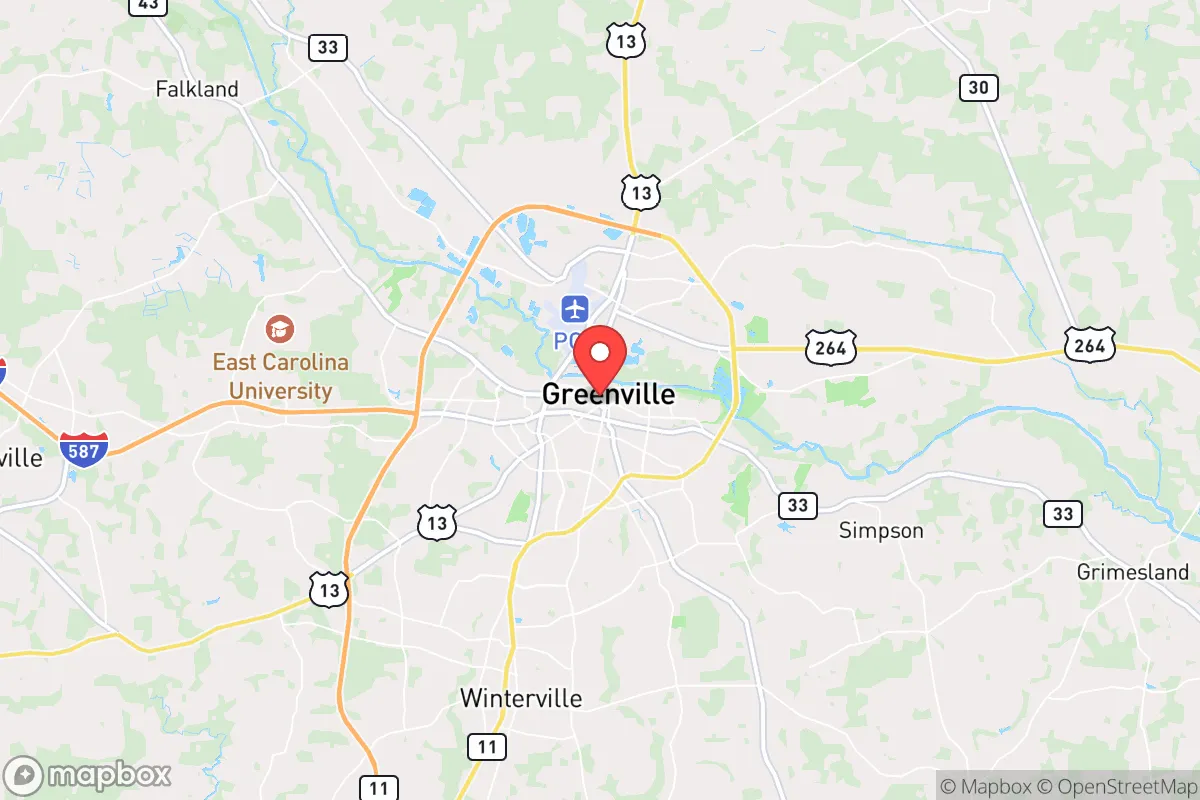
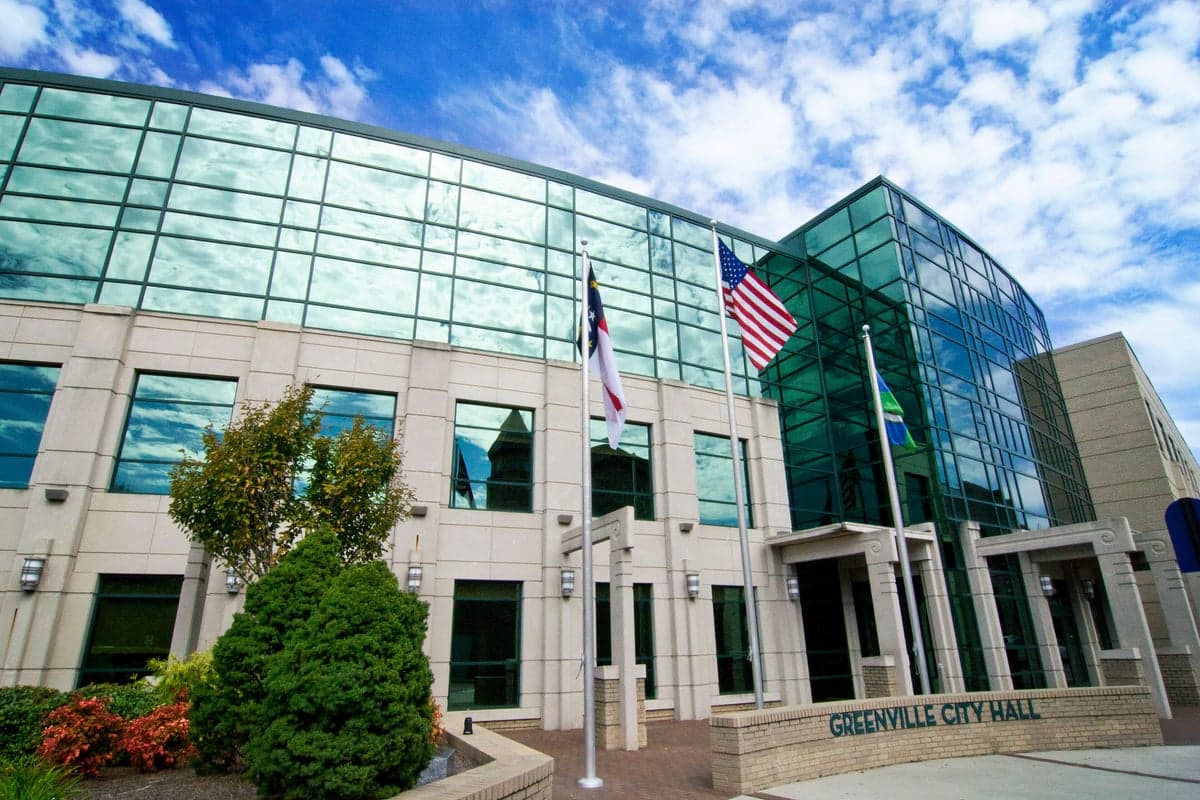
Photo: Wikipedia
Political ClimatePolitical Climate in Greenville, NC
District shown is the primary district for this city’s centroid. Cities may span multiple districts.
Local Political AnalysisPolitical Analysis of Greenville, NC
Greenville, North Carolina, has long been a reliably conservative stronghold in the eastern part of the state, but like many college towns, it’s starting to feel the pull of progressive influence. The Cook Political Report gives the area a PVI of R+10, which means it leans Republican by a solid ten points compared to the national average. That’s a pretty clear signal that most folks here still value limited government, personal responsibility, and the Second Amendment. But if you’ve lived here as long as I have, you’ve noticed the shift—especially around East Carolina University, where younger voters and out-of-state transplants are pushing for policies that feel a lot more like what you’d see in Raleigh or Chapel Hill.
How it compares
Greenville sits in a bit of a political bubble compared to the surrounding towns. Drive twenty minutes south to Ayden or thirty minutes west to Farmville, and you’ll find communities that are even more conservative—places where the local government stays out of your business and property taxes are low. Head north to Washington, and it’s a similar story. But Greenville itself is the regional hub, and that means it’s where the county commission and city council make decisions that affect everyone. The contrast is sharpest when you look at the university’s influence: ECU brings in faculty and students from more liberal areas, and that’s started to show in local elections. In 2024, the city council saw a narrow vote on a resolution supporting diversity initiatives, which wouldn’t have even been proposed a decade ago. Meanwhile, the surrounding rural counties voted overwhelmingly for the Republican ticket, with margins closer to R+20 in some precincts. It’s a reminder that Greenville’s conservative reputation is still intact, but it’s being tested.
What this means for residents
For those of us who moved here to escape the overreach you see in bigger cities, the trend is worth watching. The biggest concern is how the city handles growth and regulation. Greenville’s population has been climbing steadily—up about 8% since 2020—and with that comes pressure to adopt policies that sound good on paper but often lead to more government control. Things like zoning changes that make it harder to build single-family homes, or proposals to raise the minimum wage locally, which can drive up costs for small businesses. The county’s tax rate is still reasonable at around 0.75 per $100 of assessed value, but there’s chatter about increasing it to fund public transit and bike lanes—projects that benefit a small group but cost everyone. If you value keeping your property rights and your paycheck, you’ll want to keep an eye on who’s running for city council. The good news is that the R+10 lean means most residents still push back against big-government ideas, but it’s a fight that requires staying informed.
One thing that sets Greenville apart is its cultural identity. It’s not a place that’s lost its roots yet—you still see American flags on porches, and the local churches are full on Sunday. The annual Pirate Festival and the Eastern Carolina BBQ showdown are reminders that this is a community that values tradition. But there’s a growing divide between the old guard and the newcomers. The university’s push for “equity” initiatives and the city’s recent discussions about removing historical markers have raised eyebrows among long-time residents. It’s not that people here are against change—it’s that they want change that respects individual freedom, not mandates from the top down. If the current trajectory holds, Greenville could become a battleground in the next decade, but for now, it’s still a place where a handshake matters more than a hashtag.

State Political ClimatePolitical Climate in North Carolina
State Political AnalysisPolitical Environment in the State
North Carolina has long been considered a quintessential swing state, but over the last decade it has settled into a reliably red-leaning posture, voting for Donald Trump in both 2016 and 2020 by margins of roughly 1.3% and 1.4% respectively. The state’s political center of gravity is driven by a coalition of rural conservatives, suburban moderates, and a growing exurban population fleeing high-tax states like New York and California. However, the rapid in-migration into the Charlotte and Raleigh-Durham metros is slowly shifting the needle, and the 2024 presidential race saw the margin tighten to under a point, signaling that the state’s conservative dominance is not guaranteed.
Urban vs. rural divide
The political map of North Carolina is a textbook study in geographic polarization. The state’s three major urban centers—Charlotte, Raleigh, and Durham—are deep blue islands in a sea of red. Mecklenburg County (Charlotte) and Wake County (Raleigh) together cast over 1.2 million votes in 2020, with both counties going for Biden by double digits. Durham County is even more lopsided, delivering over 80% of its vote to Democrats. In contrast, the rural eastern counties like Robeson, Columbus, and Duplin vote Republican by 20-30 point margins, as do the mountain counties in the west like Watauga and Buncombe—though the latter is a notable exception, with Asheville acting as a progressive enclave. The real battleground is the exurban ring around Charlotte and Raleigh: counties like Union, Cabarrus, and Johnston have flipped from purple to solid red over the past two cycles, driven by families seeking lower taxes and better schools. Fayetteville, home to Fort Liberty (formerly Fort Bragg), leans conservative due to its large military population, but its transient nature makes it less predictable.
Policy environment
North Carolina’s policy environment is a mixed bag that leans conservative but with notable progressive holdovers. The state has a flat income tax rate of 4.5% (down from 5.25% in 2019) and is on a glide path to 3.99% by 2027, making it increasingly attractive for high-earners. The corporate tax rate is a low 2.5%, one of the lowest in the nation. However, the sales tax is relatively high at 4.75% state-level, with local add-ons pushing it to 7% or more in some counties. On education, the state has a robust school choice program: the Opportunity Scholarship Program provides vouchers of up to $7,468 per student for low- and middle-income families, and in 2023 the legislature expanded eligibility to all families regardless of income. This has made North Carolina a national leader in educational freedom. Healthcare is a sore spot: the state did expand Medicaid in 2023 under a Republican-led compromise, which many conservatives view as a step toward government overreach, though it did include work requirements and a sunset clause. Election laws have been a flashpoint: the state requires photo ID to vote (upheld by the courts in 2023), has strict absentee ballot verification, and bans ballot harvesting—measures that have drawn lawsuits from progressive groups but have withstood legal challenges. The state also has a Republican supermajority in the legislature, which has been able to override Democratic Governor Roy Cooper’s vetoes on key issues like abortion restrictions (12-week ban with exceptions) and permitless carry of handguns.
Trajectory & freedom
On balance, North Carolina has been moving in a more freedom-oriented direction over the past five years, but the trend is not uniform. The most significant expansion of personal liberty came in 2023 with the passage of permitless carry (HB 189), which allows any law-abiding adult to carry a concealed handgun without a permit—a major win for Second Amendment advocates. The same year, the legislature passed a parental rights bill (HB 755) that requires schools to notify parents of any changes to a child’s health or well-being, including gender identity or sexual orientation, and prohibits instruction on gender identity and sexuality in K-4 classrooms. This has been a rallying point for conservative families. On the economic freedom front, the state has eliminated the franchise tax for most businesses and is phasing out the corporate income tax entirely by 2030. However, there are concerning signs: the Medicaid expansion, while limited, represents a growth in government healthcare spending. Additionally, the state’s Certificate of Need (CON) laws remain on the books, restricting the opening of new hospitals and clinics—a form of regulatory capture that limits healthcare competition. On medical autonomy, North Carolina has not passed any broad vaccine mandates, but local governments in Durham and Orange counties imposed mask and vaccine requirements during the pandemic that were later struck down by the legislature. Property rights are generally strong, with no state-level rent control and relatively low property taxes (average effective rate of 0.78%), though some counties like Wake and Mecklenburg have seen reassessments that have pushed taxes higher for new homeowners.
Civil unrest & political movements
North Carolina has seen its share of political turbulence, but it has largely avoided the widespread civil unrest seen in states like Oregon or Minnesota. The most notable flashpoint was the 2020 protests in Charlotte and Raleigh following the death of George Floyd, which included some property damage and clashes with police, but were relatively contained compared to other cities. The state has a strong and organized conservative grassroots movement, particularly around the John Locke Foundation and local Tea Party groups, which have been effective at pushing school board and county commission races to the right. On the left, the Moral Monday movement, led by the NAACP, has staged regular protests at the state legislature since 2013, focusing on voting rights, Medicaid expansion, and racial justice. Immigration politics are less heated than in border states, but there is a growing concern about the influx of migrants through the state’s major airports and highways. In 2024, the legislature passed a bill requiring local law enforcement to cooperate with ICE detainers, which was vetoed by Governor Cooper but is likely to be revived under the next governor. Sanctuary city policies exist in Durham and Orange counties, where local ordinances limit cooperation with federal immigration authorities—a point of tension with state lawmakers who have threatened to withhold funding. Election integrity remains a hot-button issue: the 2020 election in North Carolina was relatively smooth, but the state’s 9th congressional district race in 2018 was overturned due to absentee ballot fraud, leading to stricter laws. There has been no serious secession or nullification rhetoric, though some rural counties have floated the idea of joining neighboring states in response to urban-dominated policies.
Projection
Looking ahead 5-10 years, North Carolina is at a tipping point. The state is gaining roughly 100 new residents per day, with the vast majority settling in the Charlotte and Raleigh metros. These newcomers are a mixed bag: many are conservatives fleeing high-tax states, but a significant portion are young professionals and tech workers who lean left. The 2024 election results suggest the state is becoming more competitive, and if current trends hold, it could flip blue in a presidential election by 2032. However, the Republican legislature has been proactive in gerrymandering congressional and state legislative districts to maintain their advantage, and the state’s rural areas are not depopulating as fast as in the Midwest. The key battleground will be the exurbs: if counties like Union and Johnston continue to grow and stay red, the state will remain conservative. But if they start to shift purple, as Mecklenburg and Wake did in the 2000s, the entire political landscape changes. For a new resident, the next decade will likely see continued Republican control of the legislature, but with increasingly narrow margins, leading to more veto fights and potential policy gridlock. The state’s freedom trajectory will depend on who wins the governorship in 2024 and 2028—a Democrat could slow or reverse some of the recent gains in school choice and gun rights.
For someone moving to North Carolina today, the bottom line is this: you are choosing a state that is still broadly conservative, with low taxes, strong gun rights, and a growing economy, but it is not immune to the cultural and political shifts affecting the rest of the country. If you settle in a rural or exurban county, you will likely find a community that shares your values. If you move to Charlotte or Raleigh, you will encounter a more diverse and progressive environment, but the state’s laws still protect your freedoms. The key is to get involved locally—school boards, county commissions, and city councils are where the real battles are being fought, and your vote matters more here than in a deep blue or deep red state. North Carolina is still a place where one person can make a difference, but that window is closing as the state grows. Act now, or watch it become another Virginia.
* Values derived from national, state, county, city and local statistics and may differ in a specific area. Last updated: 2026-04-21T15:14:21.000Z
Narrative content on this page is AI-generated and may contain mistakes. Verify any details that matter before acting on them.
ReloMaps may earn a commission from affiliate links at no extra cost to you.

