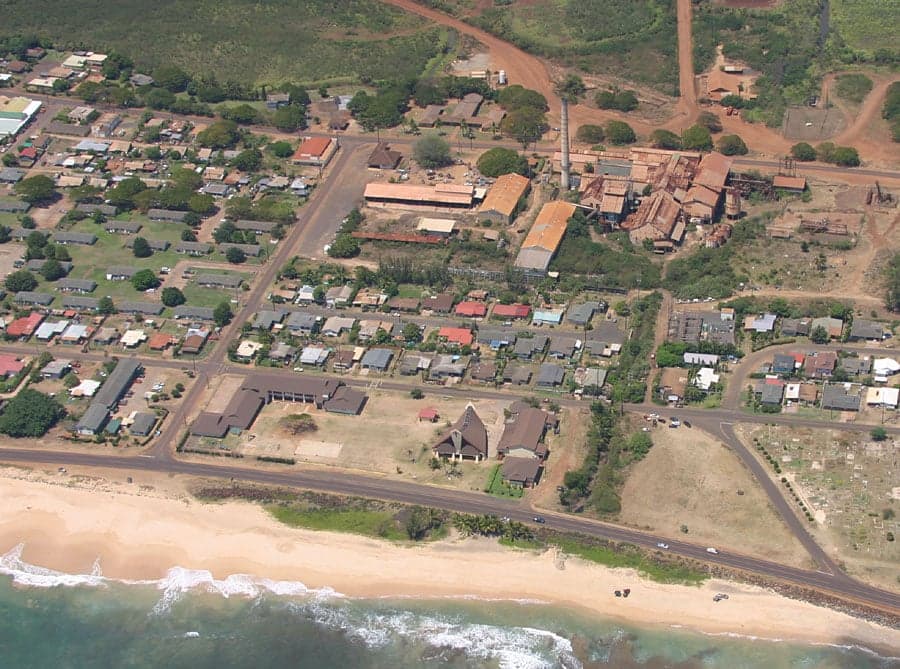
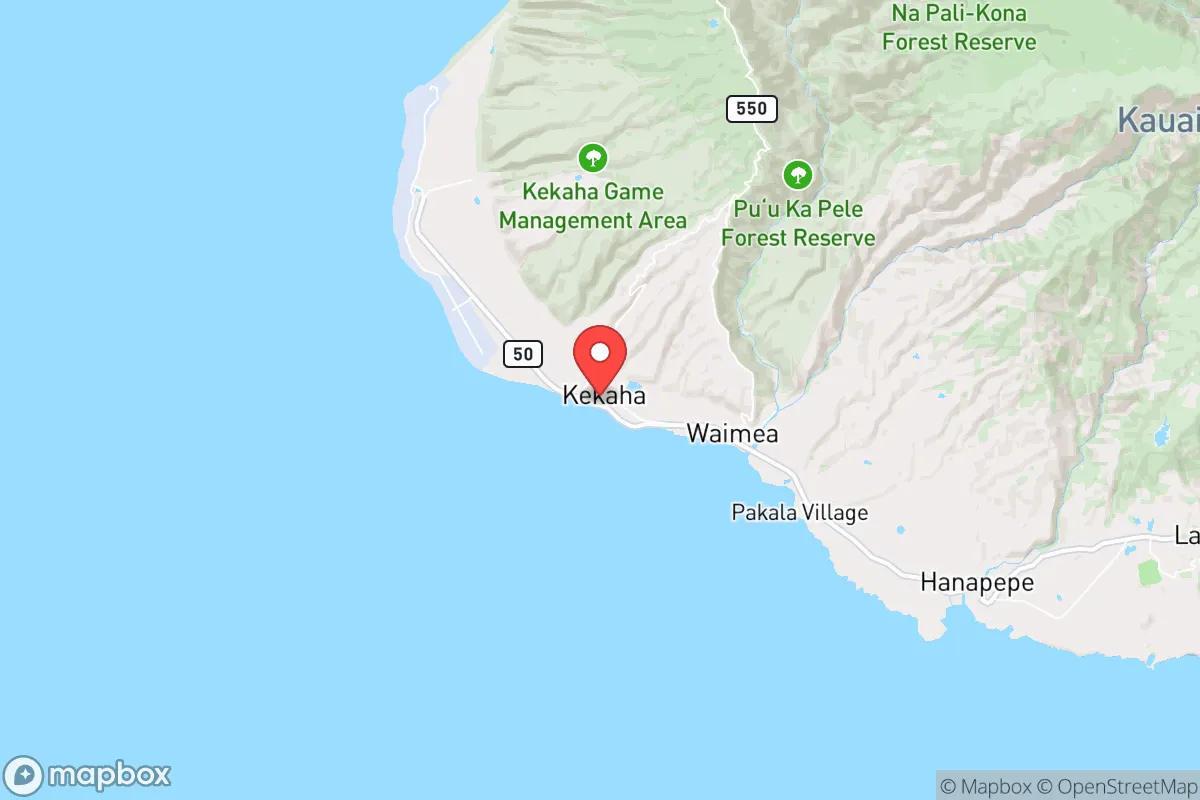
Photo: Wikipedia
Political ClimatePolitical Climate in Kekaha, HI
District shown is the primary district for this city’s centroid. Cities may span multiple districts.
Local Political AnalysisPolitical Analysis of Kekaha, HI
Kekaha, on Kauai’s west side, has historically been a quiet, working-class town where folks value their privacy and self-reliance. Politically, it leans Democratic on paper—Cook PVI D+12—but the reality on the ground is more nuanced. The local vibe is less about progressive activism and more about keeping the government out of your backyard, your fishing spot, and your business. Over the past decade, you’ve seen a slow drift toward the same coastal liberal politics that dominate Honolulu, but there’s still a stubborn streak of independence here that makes Kekaha feel different from the rest of the state.
How it compares
On paper, Kekaha and the state of Hawaii share the same Cook PVI of D+12, but that number masks a world of difference. In Honolulu or even Lihue, you’ll find dense populations, heavy tourism dollars, and a political class that’s comfortable with zoning restrictions, plastic bag bans, and vaccine mandates. Kekaha, by contrast, is a town of about 1,700 people where the nearest Walmart is a 30-minute drive. The local politics here are more about potholes, water rights, and the Navy’s presence at the Pacific Missile Range Facility—a major employer that brings in federal dollars and a more conservative, pro-military mindset. Neighboring Waimea and Hanapepe lean slightly more moderate, but Kekaha’s isolation and reliance on the base give it a distinct “leave us alone” character. You won’t find the same enthusiasm for carbon-neutral goals or equity task forces that you’d see in Kailua or Hilo.
What this means for residents
For someone living here, the political climate translates into a lighter touch from the state. Property taxes remain among the lowest in Hawaii, and there’s less pressure to conform to the latest progressive mandates coming out of Honolulu. The county council in Lihue does push for things like short-term rental restrictions and agricultural land use rules, but enforcement in Kekaha is spotty—folks here tend to ignore what they don’t agree with. That said, the long-term trend is concerning. State-level housing bills and environmental regulations are creeping in, and the same coastal commission that shut down beach access on Oahu could easily set its sights on Kauai’s west side. If you value the ability to hunt, fish, or park your truck near the shore without a permit, Kekaha is still one of the last holdouts—but it won’t stay that way forever.
Culturally, Kekaha is a mix of Native Hawaiian families, military retirees, and a handful of mainland transplants who came for the quiet and stayed for the lack of HOA rules. There’s no farmers market hype or artisanal coffee scene—just a general store, a few food trucks, and a lot of open space. The biggest policy distinction from the rest of the state is the relationship with the military: while anti-base sentiment runs high in Honolulu, Kekaha largely supports the Pacific Missile Range Facility as a source of stability and jobs. If you’re looking for a place where the government stays out of your way and the biggest political debate is whether to pave a dirt road, Kekaha fits the bill. Just keep an eye on the ballot box—because the same progressive wave that reshaped the rest of Hawaii is lapping at the shores of the west side, and it’s only a matter of time before it reaches your front door.

State Political ClimatePolitical Climate in Hawaii
State Political AnalysisPolitical Environment in the State
Hawaii is a deep blue state with a Cook PVI of D+12, meaning it votes about 12 points more Democratic than the national average in presidential elections. The dominant coalition is a mix of unionized public sector workers, Native Hawaiian activists, and a growing progressive base on Oahu, but the state has shown some subtle shifts toward the center in recent years, particularly on economic issues. Over the last 10-20 years, the Democratic grip has tightened, but a quiet conservative undercurrent persists in rural areas and among military families, making the political landscape more complex than the registration numbers suggest.
Urban vs. rural divide
The political map is starkly divided between Oahu and the neighbor islands. Honolulu, the state’s population center, drives the Democratic lean with its dense urban core, university influence, and large government workforce. The city consistently votes 70-80% Democratic, with precincts in Waikiki and Manoa being the most progressive. In contrast, the Big Island’s Puna district and parts of Maui’s Upcountry have seen a rise in libertarian-leaning and conservative voters, especially among those fleeing Oahu’s high taxes and regulations. Kauai and Molokai remain reliably Democratic but with lower turnout. The most politically distinct suburb is Mililani on Oahu, a master-planned community with a mix of military and professional families that often votes more moderately than the rest of the island. Hilo on the Big Island is a progressive stronghold, while Kailua-Kona leans more conservative, reflecting a broader split between the wet and dry sides of the island.
Policy environment
Hawaii’s policy environment is heavily interventionist. The state has the highest combined tax burden in the nation, with income taxes topping 11% and a general excise tax that applies to nearly all transactions, including rent and groceries. Property taxes are relatively low, but the cost of living is crushing. The regulatory posture is aggressive: building permits can take years, and the state’s land use commission controls development tightly. Education policy is dominated by a single statewide school district, the only one in the country, which means local control is virtually nonexistent. Homeschooling is legal but requires annual notification and testing, which some conservative families find intrusive. Healthcare is heavily regulated, with a state-run insurance exchange and mandates that drive up premiums. Election laws are mixed: same-day registration and mail-in voting are standard, but voter ID requirements are minimal, which has raised concerns about election integrity among conservatives.
Trajectory & freedom
Hawaii is becoming less free by most measures. Recent legislation has expanded government control in several areas. In 2023, the state passed Act 1, which enshrined abortion access as a constitutional right, and Act 2, which created a "safe harbor" for gender-affirming care providers, overriding parental consent in some cases. Gun rights have been steadily eroded: in 2022, the legislature passed a ban on carrying firearms in most public places, including beaches and parks, which was later partially blocked by courts but remains a flashpoint. The state also passed a "red flag" law in 2023, allowing family members or police to petition for temporary firearm removal without a criminal conviction. On the positive side for conservatives, the state has resisted some federal overreach on vaccine mandates, and there is a growing movement for property tax reform, though it hasn’t gained traction. The overall trajectory is toward more regulation and higher taxes, with no serious pushback from the dominant Democratic supermajority.
Civil unrest & political movements
Hawaii has a history of civil unrest tied to land rights and sovereignty. The most visible flashpoint in recent years was the Thirty Meter Telescope (TMT) protests on Mauna Kea in 2019, which drew thousands of Native Hawaiian activists and their allies, effectively shutting down construction for years. This movement has evolved into a broader push for Hawaiian sovereignty, with some factions advocating for secession or a return to a independent nation. On the right, the Hawaii Republican Party is small but active, with a strong presence in military-heavy areas like Wahiawa and Ewa Beach. Immigration politics are less contentious than on the mainland, but the state has a sanctuary policy that limits cooperation with federal immigration enforcement, which frustrates conservatives. Election integrity has been a minor issue, with some Republicans questioning the security of the all-mail voting system, but no major scandals have emerged. The most visible political movement is the "Aloha First" coalition, which pushes for local control and against development, often aligning with both left-wing environmentalists and right-wing property rights advocates.
Projection
Over the next 5-10 years, Hawaii is likely to remain solidly Democratic, but the margin may narrow slightly due to out-migration of younger, progressive-leaning residents and in-migration of remote workers and retirees from the mainland, many of whom are more moderate or conservative. The state’s population has been declining since 2016, and the demographic shift is toward an older, whiter population on the neighbor islands, which could create more competitive races in districts like the Big Island’s 3rd congressional district. However, the state’s high cost of living and regulatory environment will continue to suppress economic growth, and the political establishment shows no appetite for major reform. A new resident moving in now should expect to find a state where government plays a large role in daily life, taxes are high, and personal freedoms are increasingly constrained by progressive legislation, but where a strong sense of community and local culture can still provide a high quality of life for those who can afford it.
Bottom line for a new resident: If you value low taxes, gun rights, and local control, Hawaii will be a challenge. The political climate is overwhelmingly progressive, and the cost of living is punishing. But if you’re willing to trade some personal freedom for natural beauty and a tight-knit community, the neighbor islands offer a slower pace and a more conservative vibe than Oahu. Just be prepared for a state that is not trending in a direction friendly to traditional values.
* Values derived from national, state, county, city and local statistics and may differ in a specific area. Last updated: 2026-05-15T21:57:28.000Z
Narrative content on this page is AI-generated and may contain mistakes. Verify any details that matter before acting on them.
ReloMaps may earn a commission from affiliate links at no extra cost to you.

