 Popular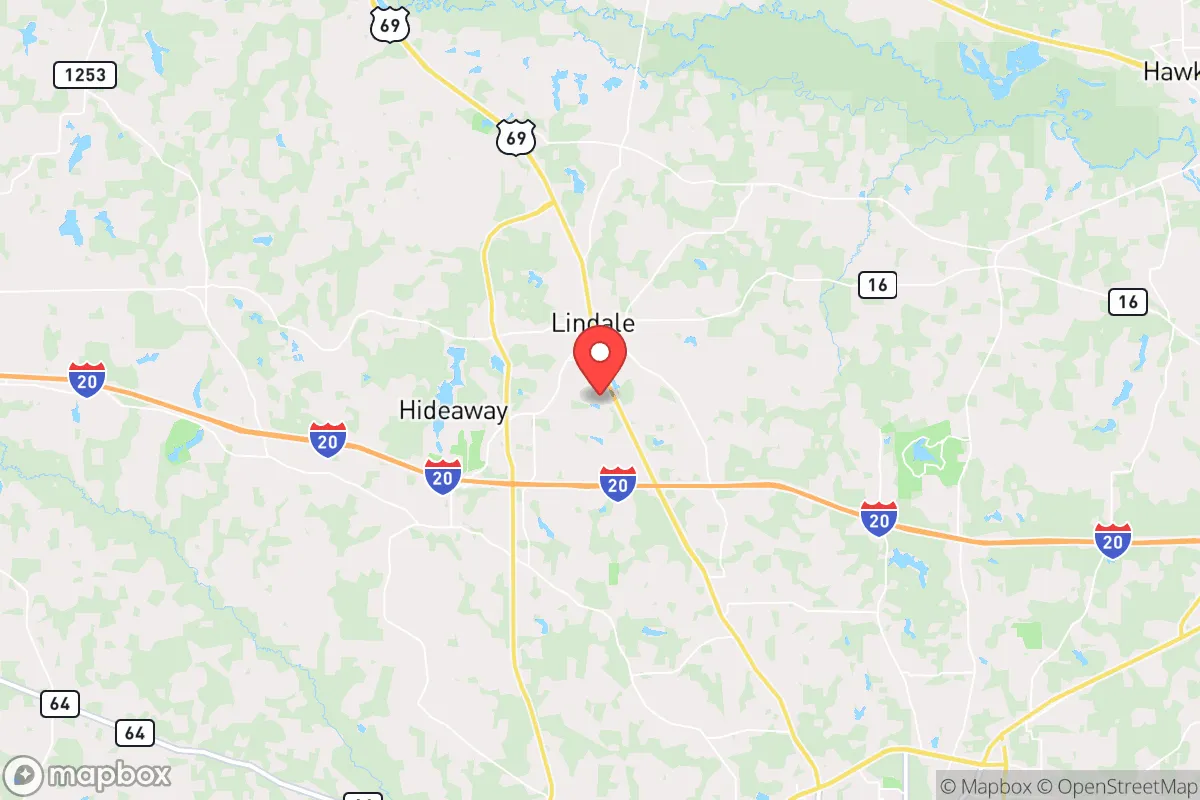
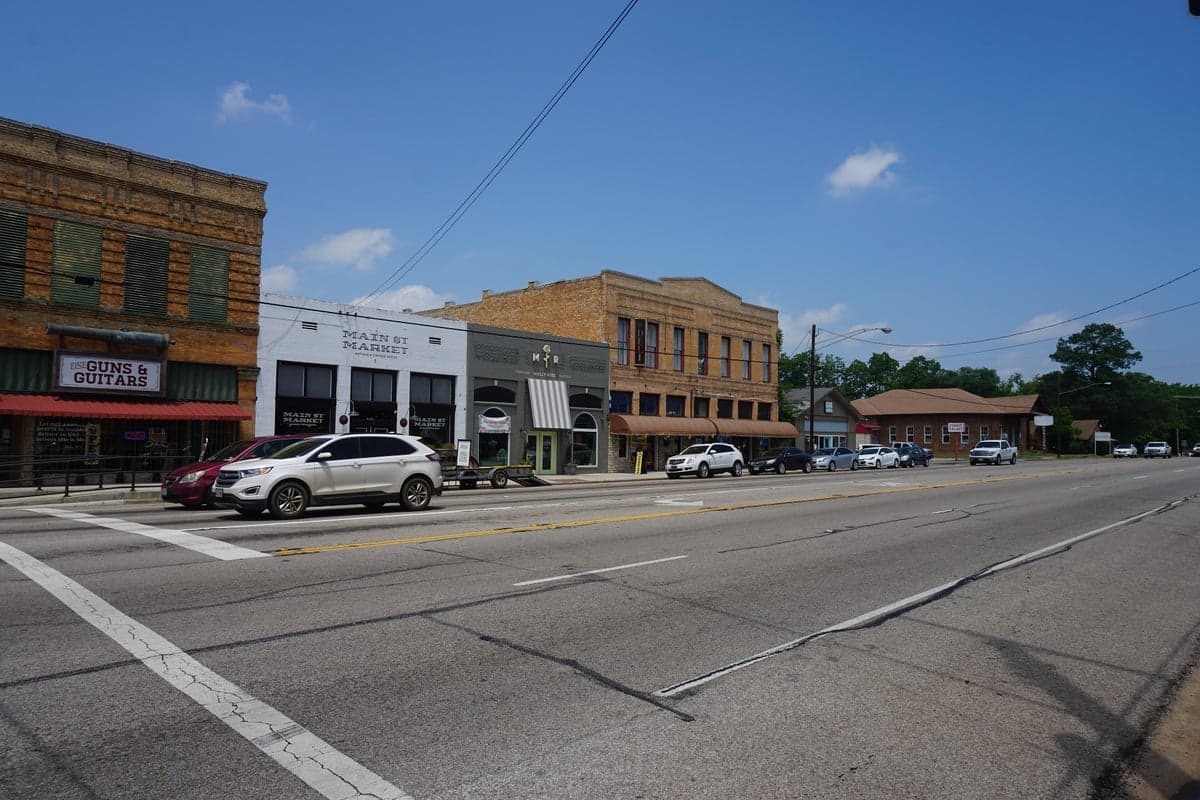
Photo: Wikipedia
Political ClimatePolitical Climate in Lindale, TX
District shown is the primary district for this city’s centroid. Cities may span multiple districts.
Local Political AnalysisPolitical Analysis of Lindale, TX
Lindale, Texas, is about as solidly conservative as it gets, and that’s not changing anytime soon. The Cook PVI rating of R+25 tells you everything you need to know—this area votes Republican by a massive margin, and it’s been that way for as long as anyone can remember. You won’t find much political hand-wringing here; folks tend to agree on the basics: limited government, personal responsibility, and keeping the federal government out of local affairs. If you’re looking for a place where the political winds don’t shift with every national news cycle, Lindale is it.
How it compares
Drive twenty minutes south to Tyler, and you’ll notice a slightly different vibe. Tyler is still conservative, but it’s a bit more purple around the edges—you’ll see more Harris signs mixed in with the Trump flags during election season, and the city council debates can get lively on things like zoning and development. Lindale, by contrast, is a straight red line. Head west to Mineola or north to Hawkins, and you’re in similar territory, but Lindale feels more insulated from the progressive drift you see in bigger Texas cities like Austin or Dallas. The contrast is stark: while Austin is busy debating bike lanes and homeless encampments, Lindale is focused on keeping property taxes low and schools focused on basics. That R+25 isn’t just a number—it reflects a community that actively resists the kind of government overreach that’s creeping into other parts of the state.
What this means for residents
For someone moving here, the political climate means a few practical things. First, you won’t have to worry about your local government getting creative with new regulations or mandates. The city council and county commissioners are all about keeping things simple—low taxes, minimal red tape, and a hands-off approach to how you run your home or business. Second, the schools reflect that same philosophy. Lindale ISD is known for focusing on core academics and local control, not pushing national political agendas. Third, if you value your Second Amendment rights, you’ll feel right at home. There’s no talk of restrictive gun laws here, and the local sheriff’s office is clear about not enforcing any federal overreach. The downside? If you lean left, you’ll be in a small minority, and local political conversations might feel a bit one-sided. But for most residents, that’s a feature, not a bug.
One thing that sets Lindale apart is how the community handles cultural shifts. While larger cities are embracing progressive policies on everything from policing to land use, Lindale has held the line. The local churches are still central to community life, and there’s a strong sense of “we take care of our own” that doesn’t rely on government programs. You see it in how neighbors help each other after a storm or how the local volunteer fire department is supported. That said, there’s a quiet concern among long-time residents about the growth coming from the Tyler area. As more people move in from blue states, there’s a worry that some of those “big city” ideas might follow. For now, though, Lindale remains a place where personal freedom and local control are the rule, not the exception. If that’s what you’re after, you’ll fit in just fine.

State Political ClimatePolitical Climate in Texas
State Political AnalysisPolitical Environment in the State
Texas has been a reliably Republican state for decades, with the GOP holding every statewide office and both legislative chambers, but the margin has been shrinking. In 2024, Donald Trump won Texas by about 9 points, down from 11 points in 2020 and 16 points in 2016, signaling a slow but steady shift driven by explosive growth in the blue-leaning metros of Austin, Dallas, Houston, and San Antonio. The dominant coalition remains a mix of rural conservatives, suburban moderates, and a growing evangelical and business-class base, but the state’s political future is increasingly contested as millions of new residents arrive from blue states.
Urban vs. rural divide
The political map of Texas is a stark checkerboard of deep red rural counties and deep blue urban cores. The big four metros—Houston, Dallas-Fort Worth, San Antonio, and Austin—are the Democratic engine, with Harris County (Houston) alone delivering over 800,000 votes for Biden in 2020. Austin’s Travis County is the bluest in the state, voting +50 points Democratic, while Dallas County and Bexar County (San Antonio) are reliably blue. The suburbs, however, are the real battleground: Collin County (north of Dallas) and Denton County have been trending purple, with Collin County flipping to Trump by only 8 points in 2024 after being +20 points in 2016. Meanwhile, the vast rural expanse—places like Lubbock, Midland, and the Panhandle—votes 80%+ Republican, with counties like Loving and King routinely hitting 95% GOP. The Rio Grande Valley, once a Democratic stronghold, has shifted right, with Zapata County flipping to Trump in 2020 and staying red in 2024, driven by conservative Hispanic voters on economic and cultural issues.
Policy environment
Texas operates under a low-tax, low-regulation model that conservatives admire. There is no state income tax, and property taxes are high (averaging 1.6% of home value) but capped by a 2023 law that limits appraisal increases to 10% annually. The regulatory posture is business-friendly, with no state-level minimum wage above the federal $7.25 and right-to-work laws that weaken unions. Education policy is a flashpoint: the 2023 school voucher bill (SB 8) failed in the House but remains a top priority for Governor Greg Abbott, while the 2021 “critical race theory” law (HB 3979) restricts how race and history are taught in public schools. Healthcare is a mixed bag: Texas refused Medicaid expansion, leaving 18% of residents uninsured (the highest rate in the nation), but the state has expanded telehealth and loosened scope-of-practice laws for nurses. Election laws tightened in 2021 with SB 1, which banned drive-through voting, restricted mail-in ballot access, and empowered poll watchers—a move that drew national criticism but was defended as election integrity. On social issues, Texas passed a near-total abortion ban (SB 8, 2021) and a trigger law (HB 1280) that took effect after Dobbs, making abortion illegal from conception with no exceptions for rape or incest.
Trajectory & freedom
On balance, Texas has expanded personal freedom in several key areas over the last five years, but there are worrying signs of government overreach. Gun rights are stronger than ever: permitless carry (HB 1927) became law in 2021, allowing any legal gun owner to carry a handgun without a license. Parental rights were bolstered by the 2023 “Parents’ Bill of Rights” (HB 900), which requires school libraries to get parental consent before giving kids access to sexually explicit material. Medical autonomy took a hit with the abortion ban, but the state also passed a 2023 law (SB 25) protecting doctors who refuse to perform gender transition procedures on minors. Property rights are generally strong, with no state-level rent control and a 2023 law (HB 2127) that preempts local ordinances on everything from labor to agriculture—a move that limits city-level overreach. However, the state’s heavy-handed approach to immigration enforcement—Operation Lone Star, launched in 2021, has deployed thousands of National Guard troops and state troopers to the border—has raised civil liberties concerns, including reports of racial profiling and unlawful detentions. The biggest threat to freedom is the growing power of the state government to override local control, as seen in the preemption law and the 2023 fight over Harris County’s election administration, which the state took over via a new law (SB 1750).
Civil unrest & political movements
Texas has seen its share of political flashpoints. The 2020 Black Lives Matter protests in Austin, Dallas, and Houston were large and occasionally violent, with Austin alone seeing over 100 consecutive days of demonstrations. The 2021 power grid collapse during Winter Storm Uri sparked widespread anger, but the political fallout was muted—no major officials lost their jobs. Immigration politics are a constant: the 2023 “show me your papers” law (SB 4) allows state and local police to arrest people suspected of being in the country illegally, and it’s currently tied up in court. The “sanctuary city” ban (SB 4, 2017) remains in effect, prohibiting local governments from refusing to cooperate with federal immigration enforcement. Secession rhetoric flares up occasionally—the Texas Nationalist Movement has pushed for a 2024 referendum on independence—but it’s fringe. Election integrity remains a hot-button issue: the 2020 election saw Trump’s legal challenges in Texas fail, but the 2021 audit of four counties (including Harris and Dallas) found no evidence of widespread fraud, though it did uncover administrative errors. A new resident would notice the heavy police presence in border towns like El Paso and the constant political ads on TV about immigration and abortion.
Projection
Over the next 5-10 years, Texas is likely to become more competitive at the statewide level, but it won’t flip blue anytime soon. The in-migration from California, New York, and Illinois is slowing—net domestic migration peaked in 2022 and has since declined—and many newcomers are conservatives or moderates fleeing blue-state policies. The Hispanic vote is trending right, which could offset Democratic gains in the suburbs. However, the urban cores are growing faster than the rural areas, and if Democrats can turn out their base in Houston, Dallas, and Austin, they could flip the state by 2032. The state legislature will remain gerrymandered for the GOP through the 2030 redistricting cycle, so policy will stay conservative on taxes, guns, and abortion. The biggest wildcard is the border: if the federal government doesn’t secure it, Texas will continue to assert its own authority, which could lead to a constitutional showdown. A new resident moving in now should expect a state that is still solidly red but increasingly polarized, with a government that is aggressive in asserting its power against both local cities and the feds.
For a conservative moving to Texas, the bottom line is this: you’ll find a state that largely respects your right to live your life as you see fit, with low taxes, strong gun rights, and a government that pushes back against federal overreach. But the culture wars are real and intensifying—you’ll see it in school board meetings, in the fight over library books, and in the constant debate over immigration. The state is still a haven for freedom compared to California or New York, but it’s not the libertarian paradise some imagine. If you’re looking for a place where your values are the norm and your voice matters, Texas is still one of the best bets in the country—just don’t expect it to stay the same forever.
* Values derived from national, state, county, city and local statistics and may differ in a specific area. Last updated: 2026-10-10T16:28:02.000Z
Narrative content on this page is AI-generated and may contain mistakes. Verify any details that matter before acting on them.
ReloMaps may earn a commission from affiliate links at no extra cost to you.

