 Popular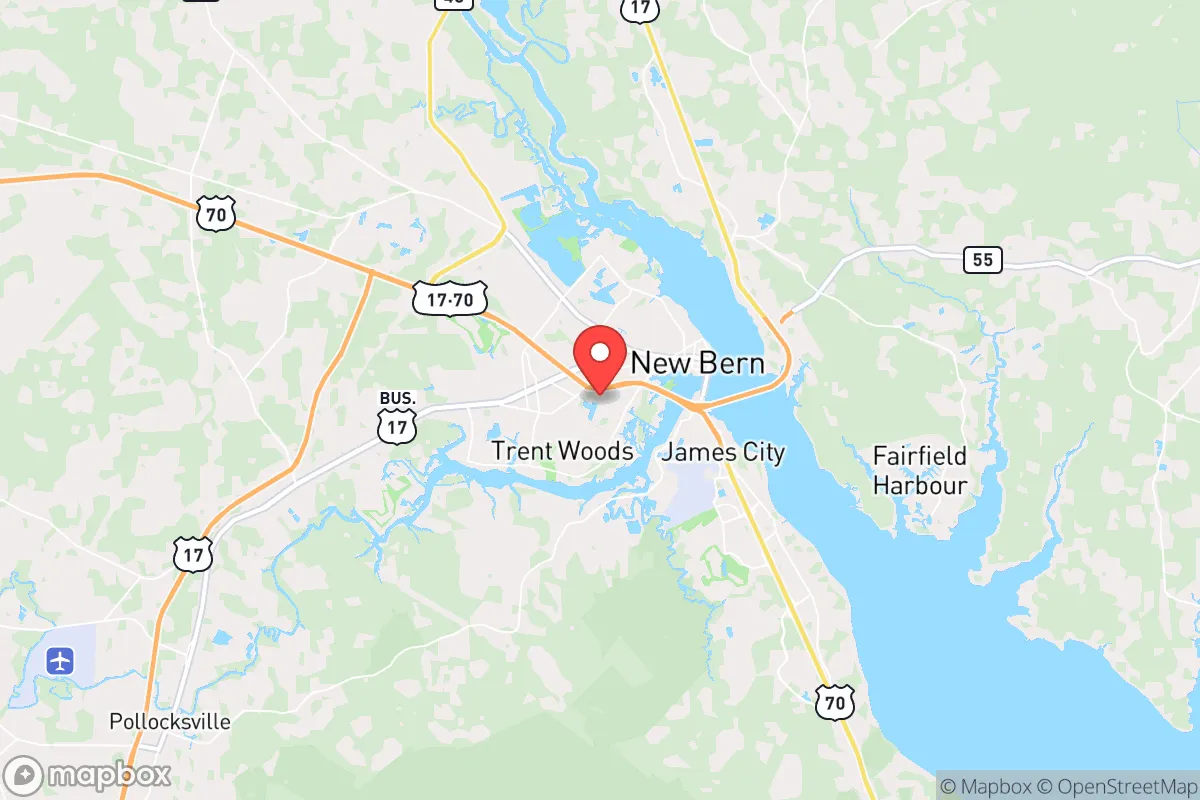
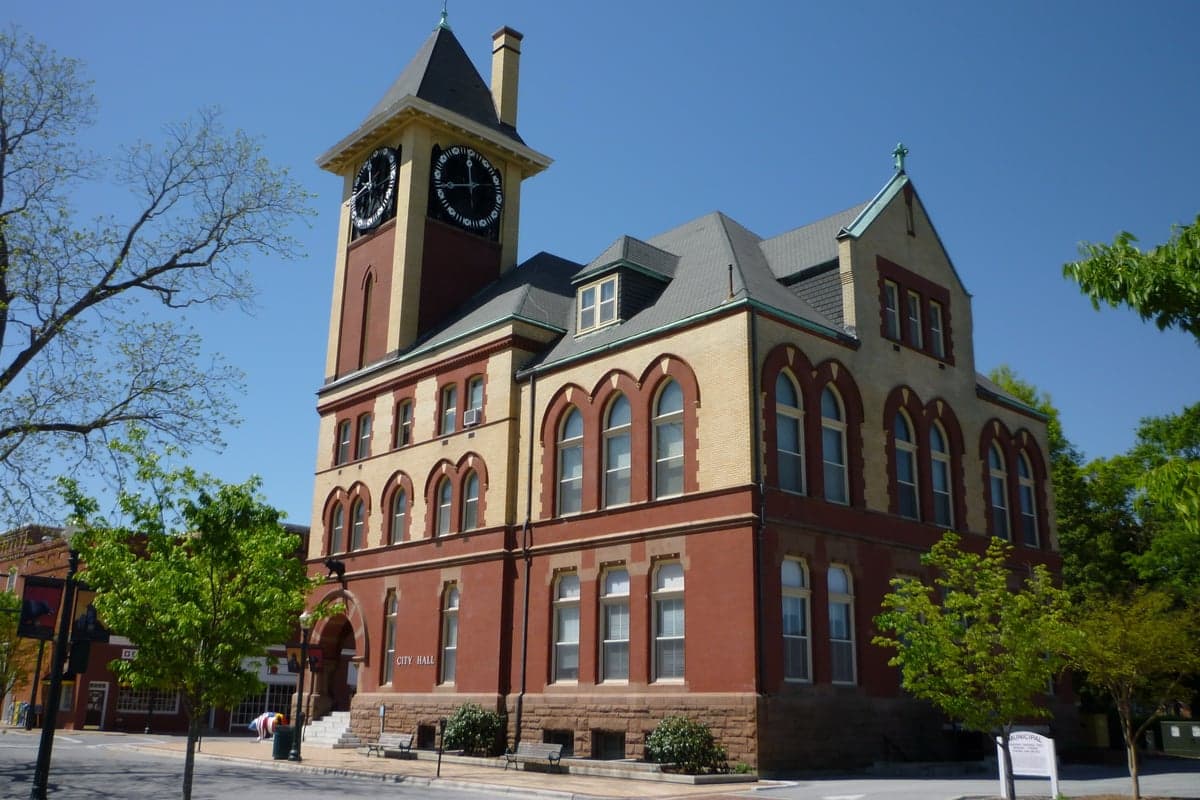
Photo: Wikipedia
Political ClimatePolitical Climate in New Bern, NC
District shown is the primary district for this city’s centroid. Cities may span multiple districts.
Local Political AnalysisPolitical Analysis of New Bern, NC
New Bern has long been a reliably conservative stronghold in Eastern North Carolina, and that hasn't changed much despite some national trends. The area carries a Cook PVI of R+10, meaning it votes about ten points more Republican than the country as a whole, and that number feels about right when you look at local elections. You'll see a lot of "Don't Tread on Me" flags flying alongside the Stars and Bars, and folks here take their Second Amendment rights seriously. That said, there's been a slow trickle of folks moving in from places like Raleigh and even out-of-state, and some of them bring big-government ideas with them, which is something to keep an eye on.
How it compares
If you drive twenty minutes east to Havelock, you'll find a similar conservative vibe, though it's a bit more working-class and military-focused thanks to Cherry Point. Head west toward Kinston, and you'll see a more economically struggling area that still votes red, but with less enthusiasm. The real contrast is with Greenville, about forty-five minutes north, which is a blue dot in a red sea thanks to East Carolina University. Greenville's city council has been pushing progressive policies on things like housing and public spending that would never fly here. New Bern's city council, by contrast, still leans center-right, and the county commission is solidly conservative. The surrounding rural areas—places like Bridgeton and Vanceboro—are even more deeply red, so the overall region hasn't flipped the way some coastal towns have.
What this means for residents
For someone living here, the political climate means you generally get left alone. Property taxes are reasonable, zoning is minimal compared to bigger cities, and you won't see the kind of overreach you hear about in places like California or even parts of the Triangle. The local sheriff's office is pro-Second Amendment, and there's no real push for red flag laws or other restrictions. That said, the city has seen some pressure from state-level Democrats on things like environmental regulations along the Neuse and Trent Rivers, which can feel like a backdoor way to control land use. The biggest concern for long-time residents is the slow creep of progressive ideas through school board elections and city planning—things like diversity initiatives that sound nice but often come with more bureaucracy and less local control. If you value personal freedom and want to keep government out of your business, New Bern is still a good bet, but you have to stay engaged in local elections to keep it that way.
Cultural and policy distinctions
One thing that sets New Bern apart is its strong sense of local identity—people here don't like being told what to do by Raleigh or Washington. The city has a historic downtown that's been preserved without the kind of heavy-handed historic district rules that can strangle property rights. You'll also notice that the local paper, the Sun Journal, still runs letters to the editor complaining about taxes and government overreach, which is a good sign. The biggest cultural distinction is the military influence—Marines from Cherry Point and their families make up a big chunk of the population, and they tend to reinforce the conservative, freedom-first mindset. In the long term, the biggest threat is the same one facing many small Southern cities: retirees and remote workers moving in from blue states, bringing their voting habits with them. So far, New Bern has absorbed that influx without shifting too far left, but it's something to watch over the next decade.

State Political ClimatePolitical Climate in North Carolina
State Political AnalysisPolitical Environment in the State
North Carolina has long been considered a classic swing state, but over the past decade it has settled into a reliably Republican-leaning posture at the state level, while remaining competitive in presidential races. The state voted for Donald Trump in both 2016 and 2024 (by roughly 1.3 and 3.2 points respectively), while electing a Democratic governor in every cycle since 1992. That split tells you everything: the legislature and most local offices are firmly in GOP hands, but the executive branch has been a Democratic firewall. The 10-20 year arc shows a slow but steady rightward drift in the legislature, driven by rural and exurban growth, even as the Research Triangle and Charlotte metros have become more progressive. For a conservative relocating here, the state offers a mixed bag — strong Republican control of policy levers, but a governor with veto power who has used it to block conservative priorities on abortion, guns, and education.
Urban vs. rural divide
The political map of North Carolina is a textbook study in geographic polarization. The three major metros — Charlotte, Raleigh-Durham (the Triangle), and Greensboro-Winston-Salem (the Triad) — are the Democratic strongholds. Mecklenburg County (Charlotte) and Wake County (Raleigh) together cast about 20% of the state's votes and lean 15-20 points blue. Durham County is even more lopsided, routinely going 75-80% Democratic. These metros are powered by banking, tech, and university populations that have attracted a steady stream of out-of-state transplants from blue states. Meanwhile, the rural east — places like Duplin County, Robeson County, and the northeastern coastal plain — vote heavily Republican, often by 30-40 point margins. The real battleground is the exurban ring around Charlotte and Raleigh: Union County (southeast of Charlotte) and Johnston County (southeast of Raleigh) have exploded in population and are now reliably red, with Union County voting +35 for Trump in 2024. The mountain counties like Watauga (Boone) and Buncombe (Asheville) are blue islands in an otherwise red western half, driven by college towns and retiree transplants. The rural-to-urban migration is real, but the exurbs are growing faster than the cities, which is why the state-level map has stayed red.
Policy environment
On paper, North Carolina's policy environment is one of the most conservative in the Southeast. The state has a flat income tax rate of 4.5% (down from 7% in 2013), with a scheduled phase-down to 3.99% by 2027. There is no state property tax, and the sales tax is capped at 7.5% locally. The regulatory climate is business-friendly, with right-to-work laws and no state-level minimum wage above the federal $7.25. Education policy has been a flashpoint: the legislature passed the Opportunity Scholarship Program, which now provides universal school choice vouchers for any family, regardless of income — a major win for parental rights. However, Governor Roy Cooper vetoed multiple bills expanding the program, and the GOP supermajority (which they held from 2022-2024) overrode him. On abortion, the legislature passed a 12-week ban in 2023, overriding Cooper's veto. On guns, North Carolina is a permitless carry state since 2023, and the legislature has repeatedly blocked Cooper's attempts to impose universal background checks. Election laws have been tightened: voter ID is now required (implemented in 2023 after years of litigation), and same-day registration during early voting was eliminated in 2024. The state also banned sanctuary city policies in 2015, requiring local law enforcement to cooperate with ICE. For a conservative, the policy environment is largely favorable, but the governor's veto pen remains a constant obstacle.
Trajectory & freedom
North Carolina has been moving in a decidedly more free direction on several fronts, but not without pushback. The 2023 permitless carry law was a major expansion of Second Amendment rights, making North Carolina one of 27 states with constitutional carry. The same year, the legislature passed the Parents' Bill of Rights (HB 755), which requires schools to notify parents of any changes to a child's health or well-being and prohibits instruction on gender identity and sexuality in K-4 classrooms. This was a direct response to progressive school board policies in Wake and Mecklenburg counties. On medical freedom, the state banned COVID-19 vaccine mandates for state employees and contractors in 2023, and the legislature has repeatedly blocked any state-level mask mandates. However, property rights took a hit in 2024 when the state Supreme Court upheld the use of eminent domain for private economic development in a controversial case out of New Hanover County. Taxation has become more free — the flat tax phase-down is real — but the state's gas tax (36.1 cents per gallon) remains above the national average. The trajectory is clearly toward more personal liberty, but the governor's veto and the Democratic-controlled state Supreme Court (as of 2024) have slowed the pace. The 2024 election flipped the Supreme Court to a 5-2 Republican majority, which should accelerate conservative rulings on school choice, abortion, and election law.
Civil unrest & political movements
North Carolina has seen its share of political flashpoints, but nothing approaching the scale of Portland or Seattle. The 2020 George Floyd protests in Charlotte and Raleigh turned violent for a few nights, with property damage and looting, but were quickly contained. The most sustained political movement has been the fight over Confederate monuments — the 2015 removal of the "Silent Sam" statue at UNC Chapel Hill sparked years of litigation and activist pressure, culminating in the legislature passing a law (HB 22) that prohibits the removal of any monument without a special state commission's approval. Immigration politics have been relatively quiet, thanks to the 2015 sanctuary ban, but there have been localized tensions in Siler City and Monroe, where meatpacking plants have drawn large immigrant populations. Election integrity has been a major issue since 2020: the state's voter ID law was tied up in court for years, and the 2024 election saw a high-profile controversy in Bladen County over absentee ballot irregularities (the same county at the center of the 2018 congressional race fraud scandal). On the left, the Moral Monday movement (2013-2016) organized massive protests at the legislature over voting rights and education funding, but has largely fizzled. On the right, the NC Freedom Caucus has become a powerful force in the legislature, pushing for further tax cuts, school choice expansion, and constitutional carry. A new resident would notice the political energy is real but mostly channeled through the ballot box and the legislature, not the streets.
Projection
Over the next 5-10 years, North Carolina is likely to become more reliably Republican at the state level, while remaining competitive in presidential races. The key demographic driver is in-migration: the state is adding about 100,000 new residents per year, and the majority are settling in the exurban counties of Union, Johnston, Brunswick, and Cabarrus — all of which are trending red. The urban cores of Charlotte and Raleigh are becoming more progressive, but they are not growing as fast as the surrounding suburbs. The 2024 election results showed that Trump improved his margins in 90 of the state's 100 counties compared to 2020, even as he lost the national popular vote. The legislature's Republican supermajority (which they regained in 2024) will likely push through a school choice expansion, further income tax cuts, and a constitutional amendment on voter ID. The wild card is the governor's race in 2028 — if Republicans can finally win that office, they would have unified control for the first time since 2012. The state Supreme Court, now 5-2 Republican, will likely uphold the 12-week abortion ban and the voter ID law. For a conservative moving in now, expect a state that is solidly red on policy, with a growing economy and a political culture that values freedom, but with a persistent Democratic veto threat at the top. The trajectory is positive, but the fight is not over.
For a conservative relocating to North Carolina, the bottom line is this: you get a low-tax, right-to-work state with strong gun rights, school choice, and a legislature that fights for parental rights and election integrity. The urban areas are blue and will push back, but the exurbs and rural areas are growing faster and voting redder. You'll have to deal with a Democratic governor until at least 2028, but the legislature can override his vetoes on most issues. The state is not Texas or Florida in terms of conservative dominance, but it's closer to that than to Virginia or Georgia. If you're looking for a place where your values have a fighting chance and your money goes further, North Carolina is a solid bet — just know that the fight is ongoing, and you'll need to stay engaged in local elections to keep the trajectory moving in the right direction.
* Values derived from national, state, county, city and local statistics and may differ in a specific area. Last updated: 2026-05-03T20:27:40.000Z
Narrative content on this page is AI-generated and may contain mistakes. Verify any details that matter before acting on them.
ReloMaps may earn a commission from affiliate links at no extra cost to you.

