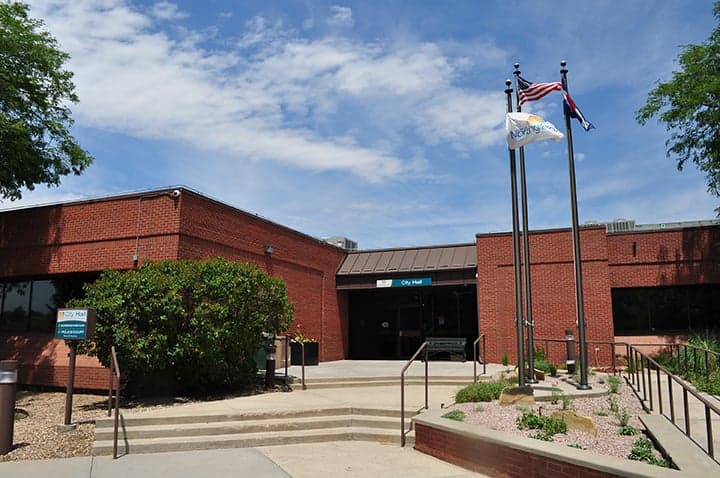
Photo: Wikipedia
Political ClimatePolitical Climate in Northglenn, CO
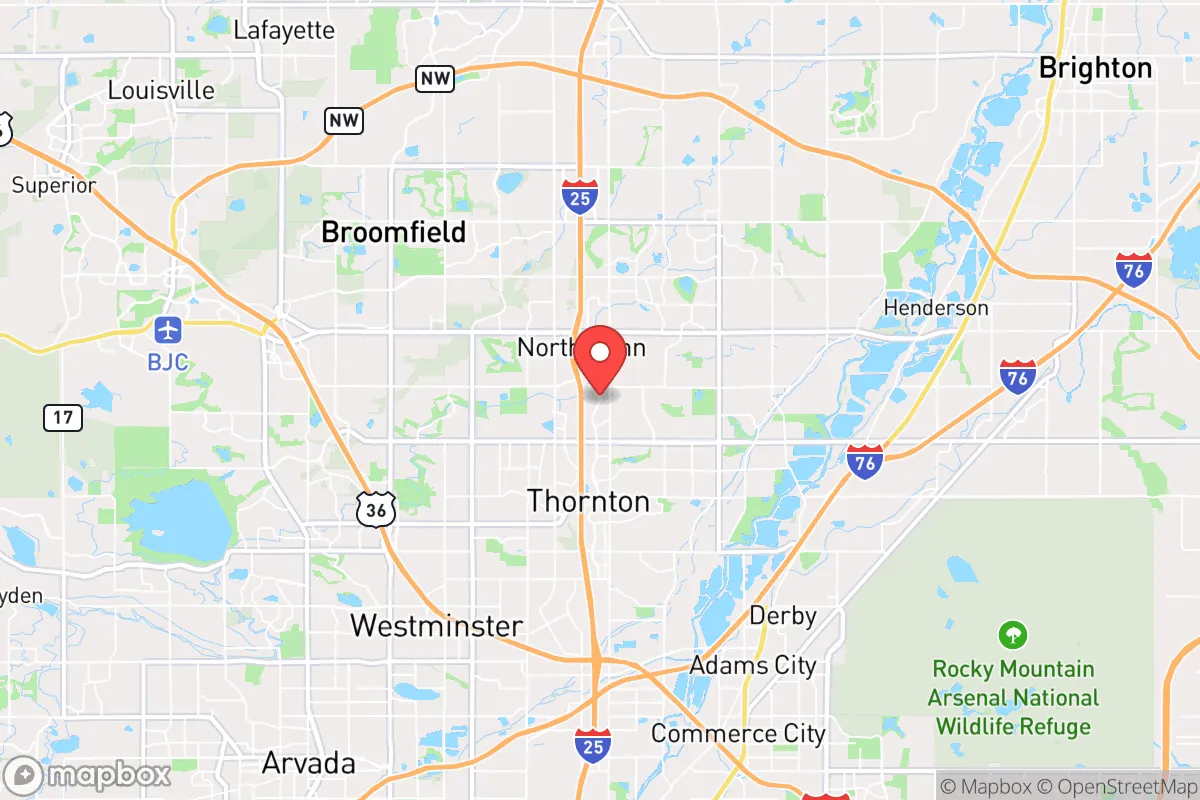
District shown is the primary district for this city’s centroid. Cities may span multiple districts.
Local Political AnalysisPolitical Analysis of Northglenn, CO
Northglenn sits in a political no-man's-land that's been shifting under our feet for the past decade. The Cook PVI rating of EVEN tells you exactly what you need to know: this isn't a deep-blue suburb like Boulder or a ruby-red stronghold like Douglas County. It's a battleground where the old-school, live-and-let-live Colorado spirit is getting squeezed by Denver's progressive sprawl creeping north up I-25. Ten years ago, you could count on Northglenn to lean center-right, especially on local issues like property rights and school choice. Now? Every election feels like a coin flip, and the trajectory is worrying for anyone who values personal freedom over government mandates.
How it compares
Drive ten minutes south to Thornton or Westminster, and you're in similar territory—purple suburbs that have been trending bluer as new arrivals from California and Texas bring big-city voting habits. But head east to Brighton or west to Arvada, and you'll find communities that have held the line better on conservative values like limited government and Second Amendment rights. The real contrast is with Boulder County, twenty minutes northwest, where the county government has pushed everything from plastic bag bans to strict rent control. Northglenn still has a fighting chance to stay grounded, but the pressure is real. The city council has flirted with inclusionary zoning and "equity" initiatives that sound harmless but often mean more bureaucracy and less say for homeowners. It's a slow creep, not a sudden takeover.
What this means for residents
For folks who just want to be left alone—to run a small business, park an RV in the driveway, or teach their kids what they want—the political drift matters. The school board has become a flashpoint, with debates over curriculum transparency and parental rights that would have been unthinkable a generation ago. Property taxes have climbed as the city borrows for "sustainability" projects that feel more like pet causes than necessities. And if you value your right to carry a firearm for self-defense, you've noticed that Adams County's sheriff is more moderate than Denver's, but the state legislature in Denver keeps chipping away at those rights. The practical effect is that you can't take your freedoms for granted here anymore. You have to pay attention, vote in every local election, and maybe even run for a seat on the planning commission if you want to keep Northglenn from turning into another over-regulated suburb.
Culturally, Northglenn still has a blue-collar, family-first vibe that resists the coastal transplants' obsession with bike lanes and farmers markets. The annual 4th of July parade and the Adams County Fairgrounds are still about hot dogs and carnival rides, not virtue signaling. But the policy fights are getting sharper. The city's recent push for "complete streets" redesigns—narrowing lanes to slow traffic—sounds nice until you realize it's a backdoor way to discourage driving and push people onto buses. That's the kind of well-intentioned overreach that makes you wonder if the people running things trust you to make your own choices. For now, Northglenn is still a place where you can live your life without a government checklist. But the window is closing, and it's going to take active, engaged residents to keep it that way.

State Political ClimatePolitical Climate in Colorado
State Political AnalysisPolitical Environment in the State
Colorado has undergone a dramatic political transformation over the past two decades, shifting from a classic purple swing state to a solidly blue stronghold in statewide elections. The state’s overall partisan lean now favors Democrats by roughly 8-10 points in presidential races, with the Denver-Boulder-Aurora metroplex driving the bulk of that margin. While the state still elects a moderate Democratic governor (Jared Polis) and a split congressional delegation, the trajectory has been unmistakably leftward since the early 2000s, when Colorado was considered a bellwether that could go either way. For a conservative considering relocation, the state’s political climate is a tale of two Colorados — the urban core that votes like coastal California and the rural and exurban areas that remain deeply red.
Urban vs. rural divide
The political map of Colorado is defined by a stark urban-rural chasm. The Denver-Boulder-Aurora corridor, home to over half the state’s population, is the engine of Democratic dominance. Boulder County is one of the most liberal jurisdictions in the nation, routinely delivering 75-80% of its vote to Democratic presidential candidates. Denver County is similarly deep blue, while Jefferson County (suburban Denver) has flipped from purple to reliably blue over the past decade. Colorado Springs, anchored by military installations and evangelical institutions, remains a conservative stronghold — El Paso County voted +14 for Trump in 2020, making it the largest red county in the state. The Western Slope, including Mesa County (Grand Junction), and the Eastern Plains (Weld, Elbert, and Lincoln counties) are deeply Republican, but their populations are too small to offset the Front Range urban vote. A notable shift: Larimer County (Fort Collins) and Pueblo County have moved from swing to solidly blue, while once-competitive suburban counties like Arapahoe and Douglas are trending left, though Douglas still leans Republican by a narrowing margin.
Policy environment
Colorado’s policy environment reflects its blue governance, with a few moderating exceptions. The state has a flat income tax rate of 4.4% (voter-approved, and actually reduced from 4.55% in 2020 via Proposition 116), and property taxes are relatively low compared to the national average. However, the regulatory posture is decidedly progressive. The state has a strict red-flag law (Extreme Risk Protection Orders) passed in 2019, a 2021 law requiring universal background checks for private gun sales, and a 2023 law raising the minimum age to purchase any firearm to 21. Colorado has some of the most permissive marijuana laws in the nation (recreational use since 2014), but also some of the most aggressive environmental regulations, including a 2019 law setting a 100% renewable energy mandate for utilities by 2040. Education policy is controlled by the state, with school choice options (charter schools, open enrollment) that are relatively robust, though the Denver Public Schools system has faced controversy over curriculum and parental rights. Healthcare is dominated by a heavily regulated insurance market, with the state operating its own reinsurance program to stabilize premiums. Election laws have moved toward convenience: universal mail-in ballots (since 2013), same-day voter registration, and automatic voter registration. Voter ID is required, but the accepted forms are broad, including utility bills and bank statements.
Trajectory & freedom
On the freedom index, Colorado is a mixed bag trending in a concerning direction for conservatives. The state has expanded personal liberty in some areas — marijuana legalization, assisted suicide (2016), and a 2023 law protecting gender-affirming care for minors — but has contracted it significantly in others. The 2019 red-flag law has been used hundreds of times, often with minimal due process for gun owners. In 2023, the legislature passed a law banning the sale of semiautomatic firearms to anyone under 21, and a 2024 law created a 10-day waiting period for all firearm purchases. Parental rights took a hit with the 2023 passage of a law requiring schools to allow transgender students to use facilities matching their gender identity, overriding local school board decisions. Property rights have been constrained by a 2021 law limiting oil and gas drilling near homes and schools, effectively banning new wells in much of the Front Range. The Taxpayer Bill of Rights (TABOR) still limits state spending growth, but voters have repeatedly approved ballot measures to retain excess revenue, weakening its effect. The overall trajectory is toward a more regulatory, higher-tax, and culturally progressive state, with the pace accelerating since 2018.
Civil unrest & political movements
Colorado has seen its share of political flashpoints. The 2020 protests in Denver were among the largest in the country, with the city declaring a curfew and the state deploying the National Guard. The Aurora City Council has debated sanctuary city policies, though the city itself has not formally adopted one. The 2022 election saw a failed attempt to recall Denver District Attorney Beth McCann over progressive criminal justice policies, including declining to prosecute certain low-level offenses. On the right, the Colorado Republican Party has been riven by internal factionalism, with the 2023 election of a far-right chair, Dave Williams, who has pushed the party toward more confrontational tactics. The 2020 election integrity controversy was less intense than in some states, but a 2022 audit of Dominion voting machines in Mesa County led to the indictment of the county clerk, Tina Peters, for allegedly allowing unauthorized access. Immigration politics have been relatively quiet compared to border states, but the 2023 influx of migrants bused from Texas to Denver created visible strain on city services. The most visible political movement is the secessionist sentiment in rural areas, with several counties (Weld, Moffat, Rio Blanco) passing resolutions to explore joining Wyoming or forming a new state, though these remain symbolic.
Projection
Over the next 5-10 years, Colorado’s political trajectory is likely to continue leftward, driven by demographic trends. The state is a top destination for domestic migration, but the newcomers are disproportionately young, college-educated, and from blue states like California and Texas. The Denver metro area is projected to add another 500,000 residents by 2035, most of whom will settle in the urban core and inner suburbs that vote Democratic. The rural population is stagnant or declining. The state’s congressional delegation is likely to become more uniformly Democratic, with the 8th district (created in 2022) already a toss-up that leans blue. The 2026 gubernatorial race will be a key test: if Polis’s successor is a more conventional progressive, expect a sharp left turn on taxes and regulation. The Republican Party’s best hope is to hold the 3rd and 5th congressional districts and possibly flip the 8th, but statewide offices will remain out of reach unless the party moderates significantly. A conservative moving to Colorado now should expect a state that is culturally and politically more like Oregon or Washington within a decade, with the Front Range dominating all policy decisions.
For a conservative considering relocation, the bottom line is this: Colorado offers stunning natural beauty, a strong economy, and relatively low property taxes, but the political climate is increasingly hostile to traditional values on guns, parental rights, and limited government. If you can live in El Paso County or the Western Slope, you’ll find like-minded neighbors and local representation, but you’ll still be subject to state laws passed by a Denver-dominated legislature. The state is not yet California, but it’s on that trajectory — and the pace is accelerating. If you value personal freedom in the classical liberal sense, you’ll find some wins (marijuana, tax limits) but many more losses (gun control, regulatory overreach, erosion of parental rights). Visit for a week, talk to locals in both the city and the country, and decide if the trade-offs are worth it for the lifestyle.
* Values derived from national, state, county, city and local statistics and may differ in a specific area. Last updated: 2026-04-19T08:31:41.000Z
Narrative content on this page is AI-generated and may contain mistakes. Verify any details that matter before acting on them.
ReloMaps may earn a commission from affiliate links at no extra cost to you.

