
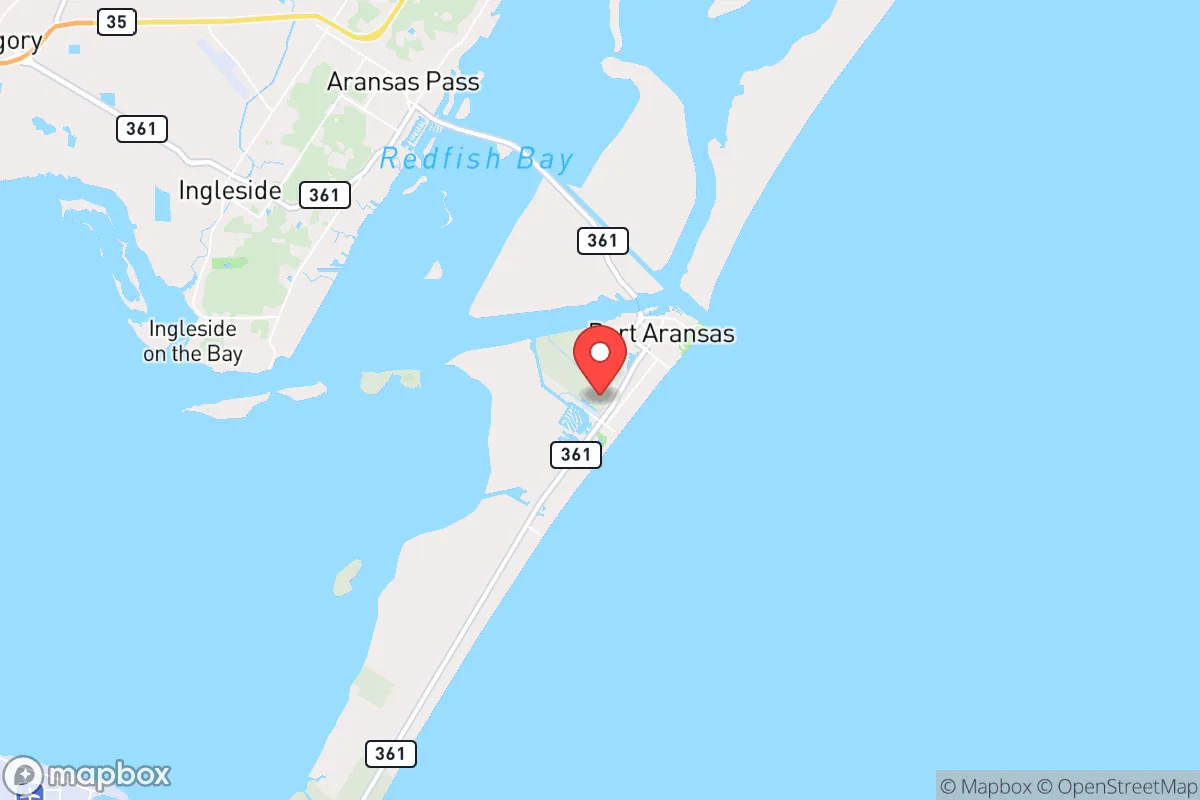
Photo: Wikipedia
Political ClimatePolitical Climate in Port Aransas, TX
District shown is the primary district for this city’s centroid. Cities may span multiple districts.
Local Political AnalysisPolitical Analysis of Port Aransas, TX
Port Aransas has long been a solidly conservative pocket on the Texas coast, and that hasn’t changed much. The area’s Cook Partisan Voting Index (PVI) of R+14 tells you everything you need to know—this is a place where folks take their freedoms seriously and don’t take kindly to outside interference. Compared to the state of Texas as a whole, which sits at R+4, Port Aransas is a full ten points more Republican, and that gap reflects a deeper cultural divide between the island and the more moderate, urbanized parts of the state. You see it in local elections, in the way people talk about property rights and fishing regulations, and in the general distrust of any government that tries to tell you how to live your life.
How it compares
When you look at the broader Texas political map, Port Aransas stands out as a beacon of old-school conservatism. The state’s R+4 rating is pulled left by places like Austin, Houston, and Dallas—cities where progressive ideas about zoning, environmental restrictions, and social policies have taken root. Here on the coast, it’s a different story. Neighboring towns like Rockport and Aransas Pass lean conservative too, but Port Aransas is even more pronounced, likely because of its isolation and the strong local fishing and tourism economy. The contrast is stark if you drive up to Corpus Christi, which has a more mixed political vibe—still red-leaning overall, but with pockets of blue that have grown over the last decade. In Port Aransas, you don’t see that shift. The community is tight-knit, and most folks are wary of any policy that feels like government overreach, whether it’s new building codes, beach access restrictions, or state-level mandates on local businesses.
What this means for residents
For people living here, the political climate means a lot of personal freedom in day-to-day life. There’s no push for the kind of progressive social engineering you see in bigger cities—no talk of defunding the police, no heavy-handed environmental rules that would shut down local charters or limit private property use. The local government tends to stay out of the way, which is exactly how most residents want it. That said, there’s a growing concern about state-level trends. As Texas as a whole has become more competitive politically—moving from solid red to R+4—there’s a fear that some of that progressive influence could trickle down. You hear people grumble about new state mandates on short-term rentals or water usage, and there’s a real worry that if the state legislature shifts even slightly left, Port Aransas could lose its independent character. For now, though, the local culture remains rooted in self-reliance and a healthy skepticism of authority.
One thing that sets Port Aransas apart from many other Texas towns is its strong resistance to what locals see as unnecessary regulation. For example, while some coastal communities have embraced strict building height limits or beach access fees to cater to environmental groups, Port Aransas has largely held the line. The city council tends to favor property rights and economic freedom over top-down planning. That’s not to say there aren’t debates—there are always arguments about development and conservation—but the default position here is to trust the individual, not the government. If you’re looking for a place where you can live your life without a lot of bureaucratic hassle, this is it. Just keep an eye on Austin, because the political winds there could eventually blow this way, and that’s a change most residents aren’t ready for.

State Political ClimatePolitical Climate in Texas
State Political AnalysisPolitical Environment in the State
Texas is a solidly Republican state with a Cook PVI of R+4, but that number doesn't tell the full story of a deeply divided political landscape. The dominant coalition is a mix of rural conservatives, suburban moderates, and a growing libertarian-leaning population, but the state has been slowly trending purple over the past 10-20 years due to massive in-migration from blue states and explosive growth in Democratic-leaning urban centers. If you're looking at Texas as a relocation option, you need to understand that the political climate is a tug-of-war between a deeply entrenched conservative establishment and a rapidly organizing progressive movement, with the outcome likely determining the state's character for decades.
Urban vs. rural divide
The political map of Texas is a study in extremes. The major metros—Austin, Dallas, Houston, San Antonio, and El Paso—are blue islands in a sea of red. Austin is the most liberal major city in the South, with a city council that has pushed everything from defunding the police to sanctuary city policies. Dallas and Houston are reliably Democratic, driven by diverse populations and professional-class transplants. El Paso is a deep blue stronghold, consistently voting 2-to-1 for Democrats. Meanwhile, the rural and exurban areas—places like Lubbock, Amarillo, and the Permian Basin—vote Republican by margins of 70-80%. The real battleground is the suburbs. Counties like Collin (north of Dallas) and Fort Bend (southwest of Houston) have been trending left, with Collin County flipping from +27 R in 2016 to +15 R in 2020. The 2024 election saw some of these suburbs shift back toward the GOP, but the trend line is clear: the cities are growing faster than the countryside, and that demographic pressure is slowly eroding the Republican advantage.
Policy environment
Texas has one of the most conservative policy environments in the country, but it's not without its frustrations for freedom-minded residents. The state has no personal income tax, which is a major draw, but property taxes are among the highest in the nation—averaging around 1.6-1.8% of home value. The regulatory posture is generally business-friendly, with few zoning restrictions and a right-to-work law that keeps unions weak. On education, the state has leaned into school choice, with the 2023 passage of a universal education savings account program that lets parents use public funds for private or homeschool expenses. Healthcare is a mixed bag: Texas has the highest uninsured rate in the country, and the state has refused to expand Medicaid under Obamacare. Election laws have been tightened, with the 2021 SB 1 restricting mail-in voting and early voting hours, and requiring photo ID for all ballots. For a conservative, the policy environment is largely favorable, but the high property taxes and lack of Medicaid expansion can be a burden on families.
Trajectory & freedom
The trajectory of freedom in Texas is a mixed picture. On the positive side, the state has been a leader in expanding Second Amendment rights, with permitless carry (HB 1927) passed in 2021, allowing any law-abiding adult to carry a handgun without a license. Parental rights were strengthened with the 2023 passage of the "Parental Bill of Rights" (SB 1515), which gives parents more control over their children's education and medical decisions. Medical autonomy took a hit with the near-total abortion ban (SB 8 and the trigger law) in 2021, which many conservatives see as a win for life but libertarians view as government overreach. On the concerning side, the state has seen a troubling expansion of government power in the name of "election integrity" and "public safety." The 2021 law SB 1 gave the state unprecedented authority to overturn local election results, and the 2023 "bathroom bill" (SB 14) banned transgender athletes from school sports, which conservatives see as protecting women's sports but critics view as government intrusion into private life. The biggest red flag for freedom-minded residents is the growing influence of corporate and federal pressure on state policy, particularly around energy and environmental regulations.
Civil unrest & political movements
Texas has seen its share of political flashpoints. The 2020 Black Lives Matter protests in Austin and Houston were large and occasionally violent, leading to property damage and a lasting rift between city leaders and state officials. The "Defund the Police" movement gained traction in Austin, where the city council cut the police budget by $150 million in 2020, only to reverse course after a surge in violent crime. Immigration politics are a constant battleground. The state has sued the Biden administration multiple times over border policy, and Governor Abbott's Operation Lone Star has deployed thousands of National Guard troops and state troopers to the border. This has created a visible militarized presence in border towns like El Paso and Brownsville, with razor wire and buoys in the Rio Grande sparking legal fights. Secession rhetoric is mostly a fringe movement, but the "Texit" idea gets airtime on conservative talk radio and at GOP conventions. Election integrity remains a hot-button issue, with the 2020 and 2022 cycles seeing widespread claims of fraud (mostly unsubstantiated) and a push for more restrictive voting laws. A new resident will notice the political polarization in everyday life—yard signs, bumper stickers, and heated conversations at the grocery store are common.
Projection
Over the next 5-10 years, Texas is likely to become more competitive at the statewide level, but not necessarily more liberal. The in-migration from California and New York is often assumed to be Democratic, but many of these transplants are actually fiscally conservative but socially moderate—the kind of voter who likes low taxes but doesn't want to talk about abortion or guns. This could push the state toward a more libertarian or "live and let live" posture, rather than a progressive one. The rural areas will continue to lose population and political power, while the suburbs and exurbs will decide the state's future. If Republicans can hold the suburbs by focusing on economic growth and school choice, they can maintain control. If they push too hard on social issues, they risk alienating the suburban moderates who are already skeptical of government overreach. The biggest wildcard is the border crisis—if it continues to escalate, it could either galvanize conservative turnout or create a backlash against the state's heavy-handed response. For someone moving in now, expect to see a state that is still conservative but increasingly divided, with the freedom to live your life largely intact, but with growing battles over what that freedom means.
For a conservative-leaning individual or family, Texas offers a strong foundation: low taxes, school choice, gun rights, and a business-friendly environment. But the state is not a libertarian paradise—property taxes are high, government overreach is real in areas like election law and social policy, and the political climate is increasingly polarized. The bottom line is that Texas is still one of the best bets for someone who values personal freedom and economic opportunity, but you need to choose your location carefully. The suburbs of Fort Worth or San Antonio offer a more balanced environment than the progressive strongholds of Austin or El Paso. If you're willing to engage in the political process and push back against the creeping influence of big government, Texas is a place where your voice can still make a difference.
* Values derived from national, state, county, city and local statistics and may differ in a specific area. Last updated: 2026-05-12T00:15:21.000Z
Narrative content on this page is AI-generated and may contain mistakes. Verify any details that matter before acting on them.
ReloMaps may earn a commission from affiliate links at no extra cost to you.

