Photo: Wikipedia
Political ClimatePolitical Climate in Saguache, CO
District shown is the primary district for this city’s centroid. Cities may span multiple districts.
Local Political AnalysisPolitical Analysis of Saguache, CO
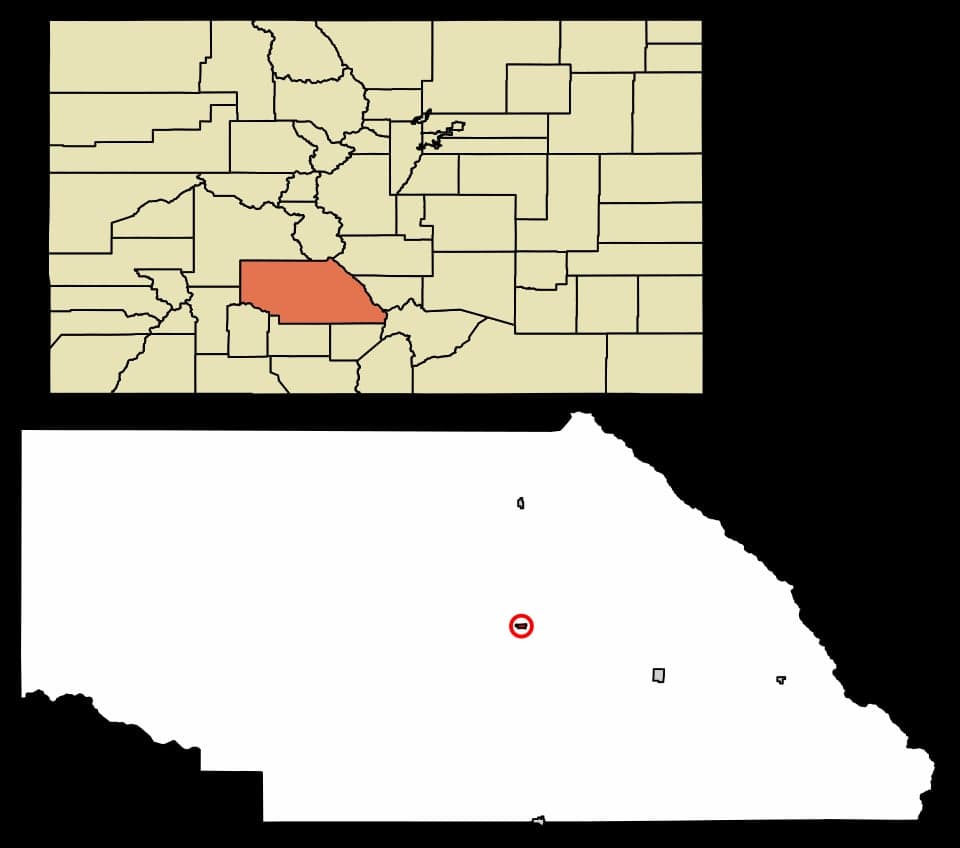
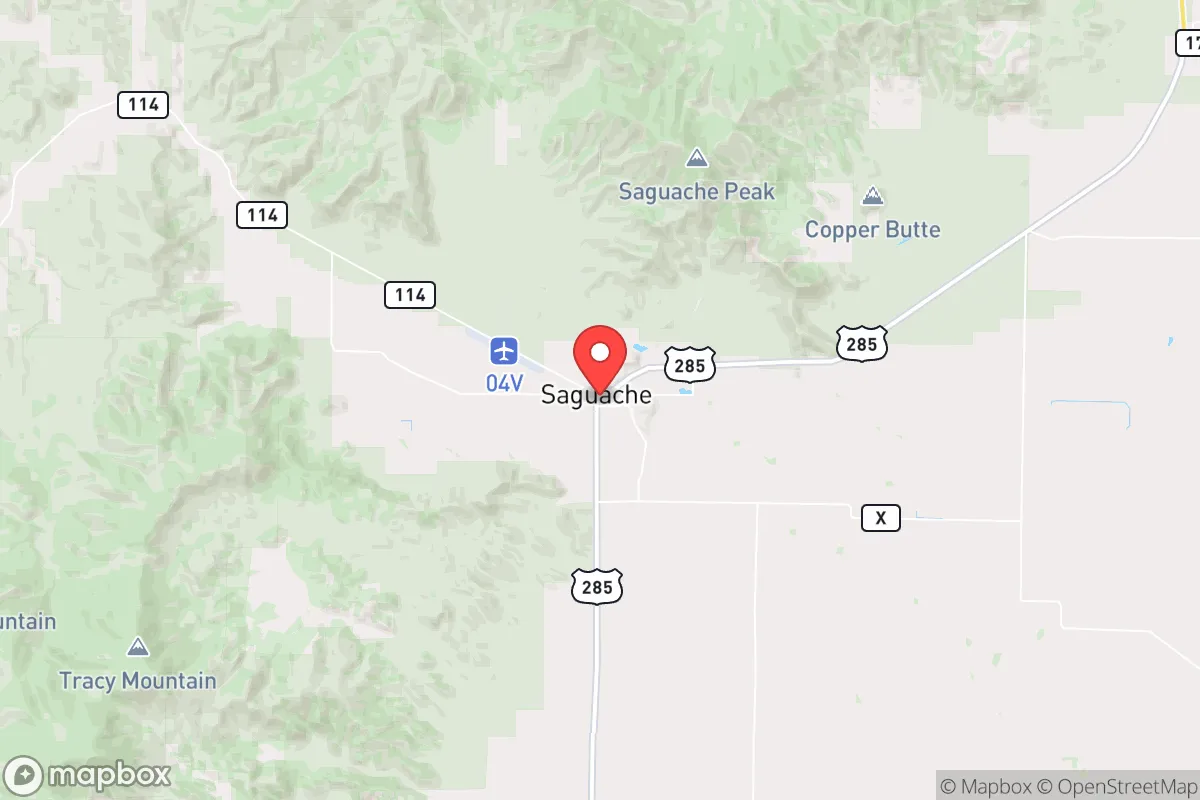
Saguache, Colorado, is one of those places where the political climate still feels like the old West—independent, self-reliant, and deeply skeptical of government overreach. The area leans solidly conservative, with a Cook PVI of R+5, meaning it votes about five points more Republican than the national average. That’s a stark contrast to the state of Colorado as a whole, which has shifted to a D+6 PVI, reflecting the progressive tide that’s swept through Denver, Boulder, and the Front Range. In Saguache, you won’t find many folks clamoring for the kind of top-down policies that have become common in the state capital.
How it compares
When you look at the numbers, the gap between Saguache and Colorado is a chasm. The state’s D+6 rating means it leans Democratic by six points, while Saguache’s R+5 shows it’s a solid red island in a blue sea. That’s a 11-point swing in political preference, and it plays out in everyday life. Drive an hour north to Salida or Buena Vista, and you’ll see more “coexist” bumper stickers and craft breweries catering to a younger, more liberal crowd. Head south to Alamosa, and it’s a bit more mixed, but still not as conservative as Saguache. The real contrast is with the Front Range—places like Boulder and Denver, where progressive policies on everything from energy to education are the norm. In Saguache, those ideas feel like an imposition from outsiders who don’t understand rural life.
What this means for residents
For folks living here, the political climate means a lot of things are still decided locally, without much interference from Denver. Property taxes are low, and there’s a strong resistance to new regulations that might hamper ranching, farming, or small businesses. You don’t see the same push for green energy mandates or gun control measures that you do in the rest of the state. That said, there’s a growing concern that the state government’s progressive agenda is creeping in—through water rights restrictions, land use policies, and education standards that don’t fit a rural community. Many residents feel like they’re fighting to keep their way of life against a tide of urban values that don’t prioritize personal freedom or local control.
Looking ahead, the trajectory is a bit worrying. Colorado’s population is booming, and more people are moving to the San Luis Valley for the scenery and lower cost of living. Some of those newcomers bring their politics with them, which could shift Saguache’s lean over time. But for now, the community holds firm. Local elections are still dominated by conservative candidates, and there’s a strong network of ranchers, farmers, and small-town business owners who keep the culture grounded. The long-term future depends on whether the state’s progressive policies—like renewable energy mandates or tighter environmental regulations—start to bite harder. If they do, you might see more folks pushing back or even leaving for places like Texas or Wyoming.
Culturally, Saguache stands apart from Colorado’s urban centers in a few key ways. There’s no big push for diversity, equity, and inclusion programs in local schools, and the town’s annual events—like the Saguache County Fair—still feel like a throwback to a simpler time. Gun rights are taken seriously, and the Second Amendment is a point of pride, not debate. On the policy front, you won’t find any local ordinances banning plastic bags or mandating electric vehicle charging stations. It’s a place where people expect to be left alone to live their lives, and any shift toward progressive ideology is seen as a direct threat to that independence. For now, Saguache remains a quiet holdout against the state’s blue wave, but it’s a fight that requires constant vigilance.

State Political ClimatePolitical Climate in Colorado
State Political AnalysisPolitical Environment in the State
Colorado has shifted from a classic purple swing state to a solidly blue one, with a Cook PVI of D+6, meaning it votes about six points more Democratic than the national average. Over the past 20 years, the state has undergone a dramatic transformation: George W. Bush won it in 2004, but Democrats have carried it in every presidential election since, with margins growing from 5 points in 2012 to over 13 points in 2020. The dominant coalition is a mix of urban progressives, suburban moderates, and a growing population of out-of-state transplants, while the rural and exurban areas have become increasingly Republican but lack the population to counterbalance the Front Range.
Urban vs. rural divide
The political map of Colorado is a tale of two landscapes. The entire political power of the state is concentrated along the Front Range urban corridor, stretching from Fort Collins in the north, through Denver and Aurora, down to Colorado Springs in the south. Denver and Boulder County are deep blue strongholds, with Boulder routinely voting 80%+ Democratic. The Denver metro area alone accounts for over half the state's population, and its growth has been fueled by transplants from California, Illinois, and New York who bring progressive voting habits with them. Colorado Springs is the one major conservative city, home to Focus on the Family and the Air Force Academy, but even its El Paso County has been trending purple in recent cycles. The rural Eastern Plains, Western Slope towns like Grand Junction, and the San Luis Valley are deeply red, but they simply don't have the numbers. The 2020 election saw counties like Larimer (Fort Collins) and Jefferson (suburban Denver) flip from purple to solid blue, sealing the state's leftward shift.
Policy environment
Colorado's policy environment is now firmly progressive, with a state income tax flat rate of 4.4% (reduced from 4.55% via Proposition 116 in 2020) and a state sales tax of 2.9%, though local taxes can push the combined rate over 10% in some cities. The regulatory posture is heavy: the state has some of the strictest environmental regulations in the West, including a 2024 law requiring 100% renewable energy by 2040 for large utilities. Education policy is dominated by the Colorado Department of Education, which has embraced critical race theory-aligned curriculum standards and gender identity policies that allow students to use preferred names and pronouns without parental notification. The state has universal mail-in voting, automatic voter registration, and same-day registration, which progressives argue increases turnout but conservatives view as ripe for fraud. Healthcare is heavily regulated, with a state-based exchange and Medicaid expansion under the Affordable Care Act. The Colorado Civil Rights Commission has been aggressive in enforcing anti-discrimination laws, including against religious bakers and wedding vendors, a flashpoint for religious liberty advocates.
Trajectory & freedom
Colorado is unequivocally becoming less free from a conservative perspective, particularly on gun rights, parental rights, and economic liberty. In 2023, the legislature passed a red flag law (Extreme Risk Protection Orders) allowing courts to temporarily seize firearms from individuals deemed a risk, without a criminal conviction or mental health adjudication. In 2024, they passed a ban on "assault weapons" (defined broadly to include many semi-automatic rifles) and raised the minimum purchase age to 21. On parental rights, the 2023 "Judy's Law" requires schools to notify parents if a student requests a name or pronoun change, but it was immediately challenged and partially blocked by courts, creating confusion. The state also passed a law in 2024 requiring all public schools to provide free menstrual products in bathrooms, a small but symbolic expansion of government mandates. On the economic side, the state's Taxpayer's Bill of Rights (TABOR) remains in place, requiring voter approval for tax increases, but progressives have repeatedly found ways around it through fee increases and ballot measures that exempt certain spending. The 2024 election saw a ballot measure to repeal TABOR entirely fail, but the fight is far from over.
Civil unrest & political movements
Colorado has been a hotbed of political activism on both sides. The 2020 George Floyd protests in Denver turned violent, with looting and fires in the downtown area, and the city's progressive DA, Beth McCann, was criticized for not prosecuting many of the rioters. The state has a strong sanctuary policy: the 2019 "Colorado Road and Community Safety Act" limits cooperation between local law enforcement and federal immigration authorities, and Denver has been a "welcoming city" for illegal immigrants, busing thousands from the southern border to the city. This has strained city resources and created visible encampments. On the right, the Colorado Republican Party has been fractured between establishment and populist factions, with the 2024 state convention devolving into chaos over election integrity disputes. The "Three Percenter" movement has a presence in rural areas, and there have been several high-profile standoffs between federal land management agencies and local ranchers, particularly in Moffat County. Election integrity remains a major concern: the 2020 election saw widespread use of drop boxes and mail-in ballots, and while no widespread fraud was proven, the lack of voter ID requirements (Colorado has no strict photo ID law for voting) continues to worry conservatives.
Projection
Over the next 5-10 years, Colorado will likely become more blue, not less. The in-migration from blue states shows no signs of slowing, with the Denver metro adding over 100,000 new residents between 2020 and 2024, most from California and the Northeast. The rural population is aging and shrinking, while the Front Range continues to densify. The state's Republican Party is in disarray, and the last Republican governor was Bill Owens (1999-2007). Expect further gun control measures, expansion of government healthcare, and increased regulation of the energy sector, which will hit the Western Slope's oil and gas industry hard. The one wildcard is the cost of living: housing prices in Denver and Boulder have become astronomical, which may eventually slow migration and shift growth to more affordable, potentially more conservative areas like Pueblo or Colorado Springs. But for now, the trajectory is clear: Colorado is a one-party state dominated by progressives, and anyone moving here should expect that trend to continue.
For a conservative individual or family considering relocation, the bottom line is this: Colorado offers stunning natural beauty and a strong economy, but you will be living under a government that is actively hostile to gun rights, parental authority, and religious liberty. If you can afford to live in Colorado Springs or a rural county like Elbert or Weld, you may find a like-minded community, but you will still be subject to state-level policies that are increasingly progressive. The days of Colorado as a live-and-let-live swing state are over; it is now a blue state with a blue state agenda, and that is unlikely to change in your lifetime.
* Values derived from national, state, county, city and local statistics and may differ in a specific area. Last updated: 2026-05-16T10:07:49.000Z
Narrative content on this page is AI-generated and may contain mistakes. Verify any details that matter before acting on them.
ReloMaps may earn a commission from affiliate links at no extra cost to you.

