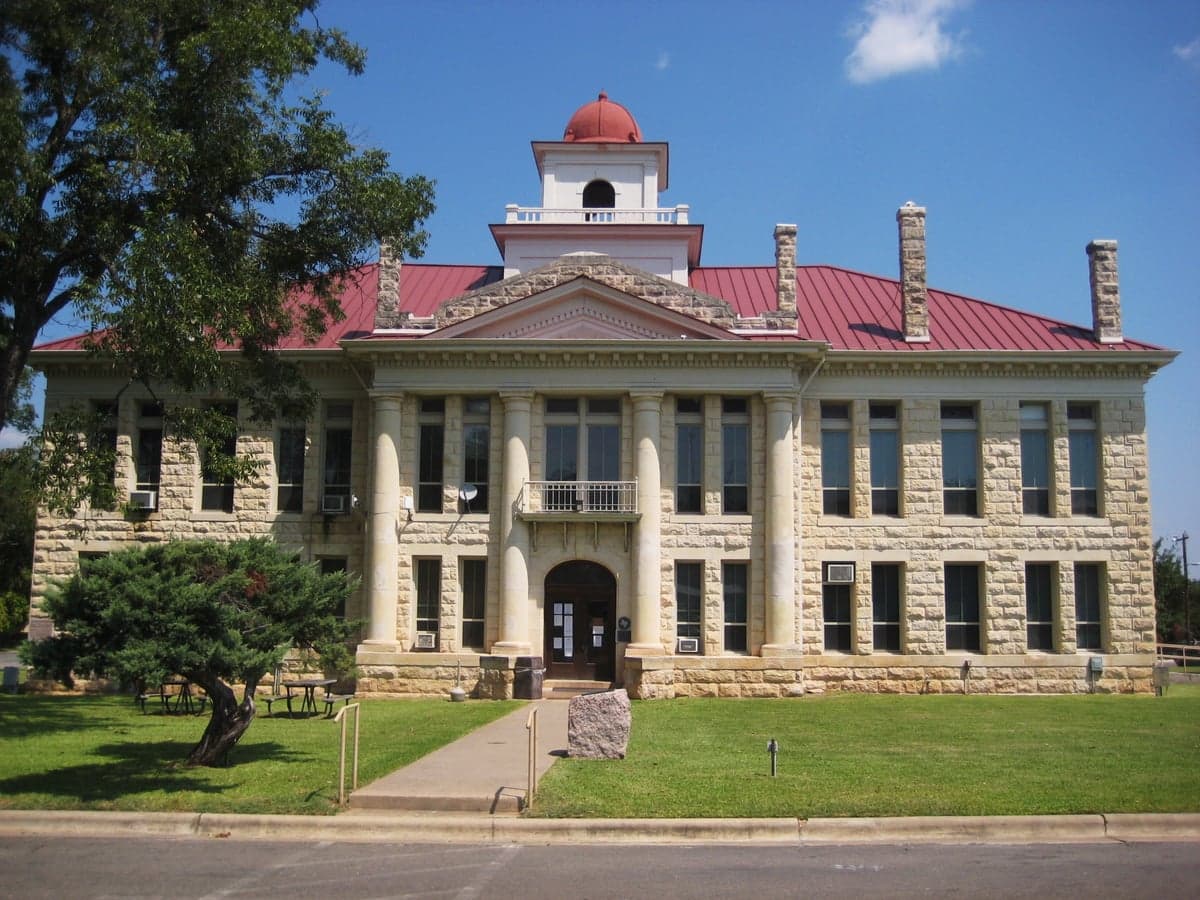
Photo: Wikipedia
Political ClimatePolitical Climate in Blanco County
Showing district-level results — no local-only data available.
Local Political AnalysisPolitical Analysis of Blanco County
Blanco County, Texas, is about as solidly conservative as they come, and it’s been that way for as long as anyone can remember. The Cook PVI clocks it at R+11, which is a full seven points redder than the state of Texas as a whole (R+4), and that gap isn’t an accident—it reflects a deep, lived-in preference for limited government and personal responsibility. Over the past decade, the county has actually held steady or shifted slightly rightward, even as some neighboring areas have seen a creep of progressive influence. The real story, though, is how that conservative majority plays out differently depending on which part of the county you’re standing in.
How it compares
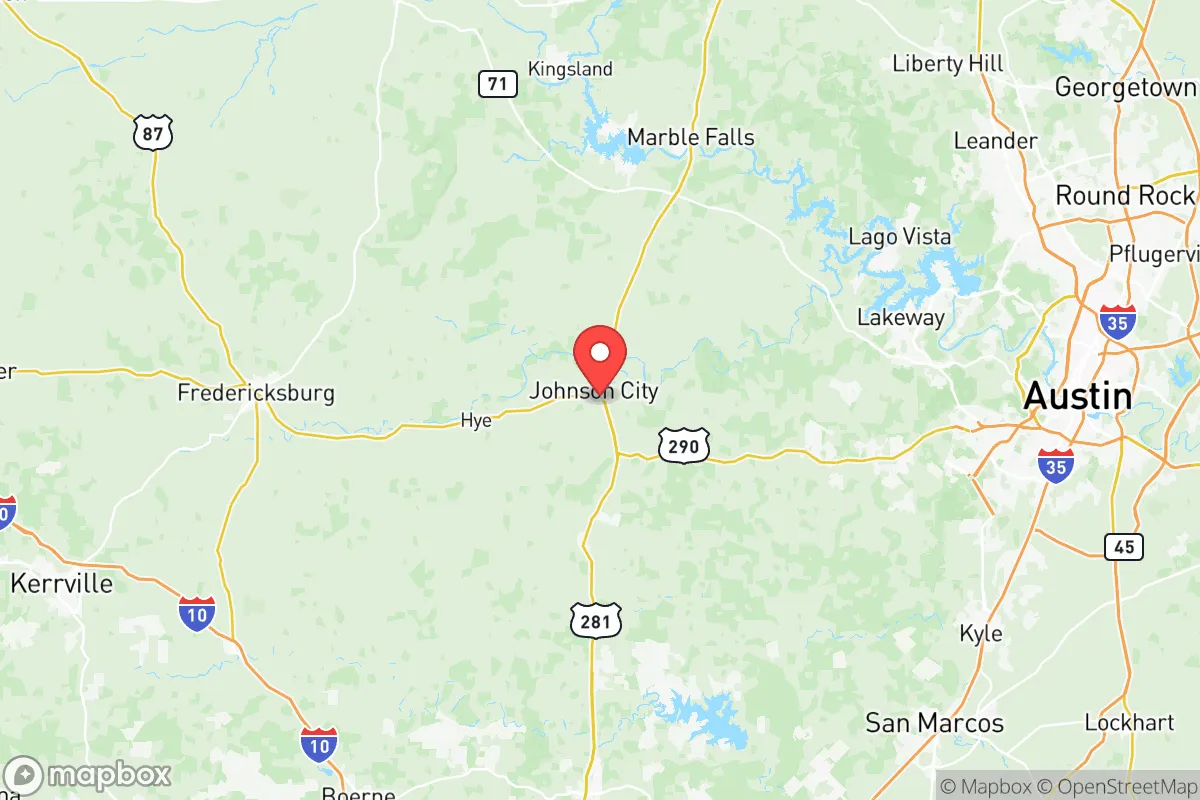
Compared to Texas at large, Blanco County is a fortress of traditional values. The state’s R+4 rating already leans Republican, but it’s been nudged left by the explosive growth in metro areas like Austin, Dallas, and Houston. Blanco County, by contrast, has largely avoided that kind of ideological dilution. The county seat, Johnson City, is reliably red, with precincts routinely voting 70-80% Republican in statewide races. Blanco, the other main town, is similar—solidly conservative, though you’ll find a few more independents mixed in. The real outlier is Round Mountain, a tiny unincorporated community that’s even more staunchly Republican, often pushing into the high 80s. There isn’t a single town in the county that leans blue, but the closest thing to a swing precinct is around the Hye area, where a handful of newer transplants from Austin have introduced a slight purple tint—still comfortably red, but worth watching. That’s a far cry from the state’s urban corridors, where progressive policies on everything from property taxes to school curriculum are gaining traction.
What this means for residents
For folks living here, the political climate means a government that mostly stays out of your business. Property taxes are a perennial headache, but local officials are generally responsive to complaints about overreach—whether it’s zoning restrictions, mask mandates, or land-use regulations. The county’s stance on Second Amendment rights is unambiguous, and you won’t find the kind of local ordinances that chip away at personal freedoms like you see in Austin or San Antonio. That said, there’s a growing concern among longtime residents that the influx of remote workers and retirees from blue states could start shifting the needle. If those newcomers bring their voting habits with them, the county’s R+11 rating could slip toward R+8 or R+6 within a decade, which would be a real loss for those who value the current hands-off approach.
Cultural and policy distinctions
One thing that sets Blanco County apart from the rest of Texas is its fierce independence on local land use. The county has resisted the kind of aggressive zoning and development controls that have cropped up in places like Travis County, where government overreach into private property rights is a constant battle. You can still build a fence, run a small business from your home, or hunt on your own land without jumping through a dozen bureaucratic hoops. That’s a big deal for residents who see it as a last stand against the creeping regulatory state. The downside? The lack of planning means you’ll see some haphazard development along the 290 corridor, but most locals would rather deal with that than surrender their freedom to a planning commission. It’s a trade-off that feels right for this part of Texas, and one that’s worth protecting as the state’s political winds shift.

State Political ClimatePolitical Climate in Texas
State Political AnalysisPolitical Environment in the State
Texas has been a reliably Republican state for decades, with a Cook PVI of R+4, but the political landscape is far more complex than a simple red-state label. The dominant coalition has long been a mix of suburban conservatives, rural voters, and business interests, but rapid in-migration and demographic shifts are creating a genuine two-front battle. Over the last 10-20 years, the state has moved from solidly GOP to a competitive battleground, with the 2020 and 2024 elections showing the GOP still winning statewide but by shrinking margins in key metro areas. The real story isn’t a blue wave—it’s a slow, uneven realignment where some counties are flipping left while others are digging in deeper right.
Urban vs. rural divide
The political map of Texas is a tale of two worlds. The major metros—Houston, Dallas-Fort Worth, San Antonio, and Austin—are the engines of Democratic growth. Harris County (Houston) and Dallas County have become reliably blue, while Travis County (Austin) is a deep-blue stronghold. In 2024, Harris County went for the Democratic presidential candidate by about 15 points, a shift from its purple status a decade ago. Meanwhile, the rural and exurban counties—places like Lubbock (Lubbock County), Amarillo (Potter/Randall), and the vast West Texas oil patch—vote Republican by margins of 50-70 points. The real battleground is the suburbs: Collin County (north of Dallas) and Fort Bend County (southwest of Houston) were once reliably red but are now competitive. Collin County, home to Plano and Frisco, voted for Trump by only 8 points in 2024, down from a 20-point margin in 2016. This suburban shift is driven by college-educated professionals and new arrivals from blue states who bring their politics with them.
Policy environment
Texas’s policy environment is defined by a low-tax, low-regulation posture that has attracted businesses and residents for decades. There is no state income tax, and property taxes are high (around 1.6-2.2% of assessed value) to compensate. The regulatory climate is business-friendly, with minimal zoning in many areas and a right-to-work law that weakens union power. On education, the state has pushed school choice and charter expansion, but funding per student remains below the national average. Healthcare is a mixed bag: Texas has the highest uninsured rate in the country (around 17%), and the state has refused to expand Medicaid under the ACA. Election laws have tightened since 2021 with SB 1, which added ID requirements for mail-in voting and limited drive-through and 24-hour voting options. For a conservative-leaning audience, the policy environment is largely favorable—low taxes, light regulation, and a focus on parental rights in education—but the property tax burden and underfunded infrastructure are real concerns.
Trajectory & freedom
The trajectory of freedom in Texas is a tug-of-war. On the positive side for conservatives, the state has expanded gun rights significantly: permitless carry (HB 1927) passed in 2021, allowing most adults to carry a handgun without a license. Parental rights in education were strengthened with HB 900 (2023), which restricts sexually explicit content in school libraries and requires parental consent for certain health services. The state also passed a near-total abortion ban (SB 8, 2021) and a trigger law that effectively ended abortion access. On the concerning side, government overreach has crept in: the state’s response to the 2021 winter storm (ERCOT failures) exposed a lack of grid reliability, and the 2023 property tax relief package (SB 2) was a one-time fix rather than a structural reform. Medical autonomy took a hit with the COVID-era mandates and restrictions on private business vaccine requirements, though those have largely been rolled back. The biggest red flag for personal liberty is the growing use of state power to enforce ideological conformity—like the 2023 law targeting drag shows (SB 12) and the 2021 law banning critical race theory in schools (HB 3979). While these may align with conservative values, they represent an expansion of government into cultural matters that some residents find intrusive.
Civil unrest & political movements
Texas has seen its share of political flashpoints. The 2020 Black Lives Matter protests in Austin and Dallas were large and sometimes violent, leading to property damage and a lasting tension between police and activists. The 2021 abortion law (SB 8) sparked nationwide protests and a wave of civil disobedience, with clinics in El Paso and San Antonio becoming focal points. Immigration politics are a constant flashpoint: the state’s Operation Lone Star, launched in 2021, deployed state troopers and National Guard to the border, leading to legal battles with the Biden administration and humanitarian concerns. The “sanctuary city” debate is alive in Austin and Houston, where local police have resisted full cooperation with federal immigration enforcement. Election integrity remains a hot-button issue: the 2020 election saw Trump win Texas by 5.5 points, but conspiracy theories about fraud persist, particularly in Harris County, where a 2022 audit found minor irregularities but no widespread fraud. Secession rhetoric is mostly fringe, but the Texas Nationalist Movement has a small but vocal presence. A new resident will notice the political polarization in everyday life—yard signs, bumper stickers, and conversations at the grocery store are more charged than in many other states.
Projection
Over the next 5-10 years, Texas will likely remain Republican at the statewide level but become more competitive. The demographic trends are clear: the state is growing fastest in the suburbs and exurbs, with San Antonio and Dallas-Fort Worth absorbing the most new residents. These newcomers are a mixed bag—some are conservatives fleeing California, but many are young, diverse, and lean left. The Hispanic vote, long considered a GOP opportunity, has not materialized as expected; in 2024, Trump improved his share among Hispanic voters in Texas, but the overall trend is still toward Democrats in urban areas. The state legislature will likely remain under GOP control, but the margin will shrink. The biggest wildcard is the state’s water and power infrastructure: if another winter storm or drought crisis hits, it could erode trust in the current leadership. For a conservative moving in now, expect a state that is still red but with a growing blue undercurrent. The policy environment will remain favorable for business and gun rights, but property taxes and school funding will be ongoing battles. The cultural wars will intensify, with more fights over school curriculum, library books, and transgender rights. Bottom line: Texas is still a good bet for conservatives, but it’s no longer a safe bet—you’ll need to be engaged in local politics to keep it that way.
For a new resident, the practical takeaway is this: Texas offers low taxes, strong gun rights, and a business-friendly climate, but it’s not a libertarian paradise. The state government is active in cultural and moral issues, and the property tax burden is real. If you’re moving here for freedom, you’ll find plenty of it—but you’ll also need to get involved in your local school board, city council, and county commission to protect it. The political climate is dynamic, and the next decade will determine whether Texas remains a conservative stronghold or becomes a purple state like Florida or Georgia. Choose your county wisely: Collin County or Montgomery County for a reliably red suburban experience, or Bexar County (San Antonio) if you want a more competitive environment. Either way, you’re moving to a state where your vote matters more than ever.
* Values derived from national, state, county, city and local statistics and may differ in a specific area. Last updated: 2026-06-07T17:41:09.000Z
Narrative content on this page is AI-generated and may contain mistakes. Verify any details that matter before acting on them.
ReloMaps may earn a commission from affiliate links at no extra cost to you.

