Photo: Wikipedia
Political ClimatePolitical Climate in Brown County
Showing district-level results — no local-only data available.
Local Political AnalysisPolitical Analysis of Brown County
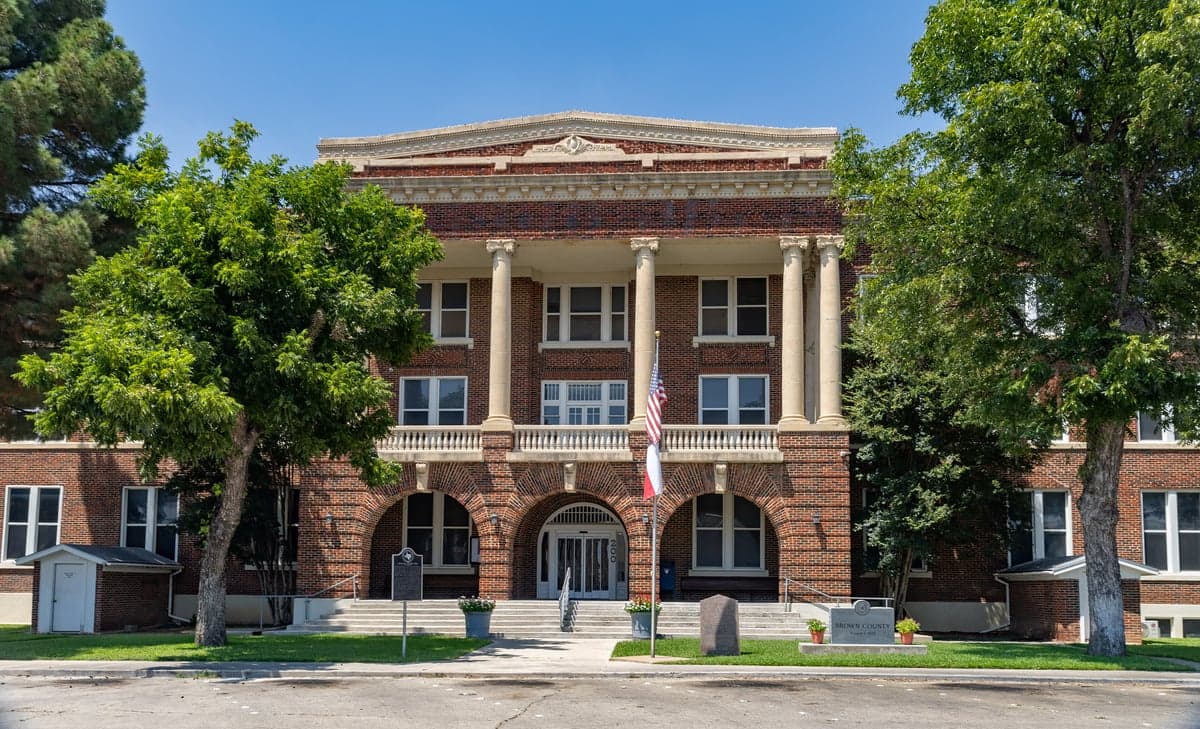
Brown County, Texas, is about as solidly conservative as it gets, with a Cook Partisan Voting Index of R+22 — that’s a full 18 points more Republican than the state of Texas as a whole, which sits at R+4. This isn’t a recent shift; it’s been the county’s backbone for decades, and while the rest of Texas has seen some purple creeping in around the big cities, Brown County has held the line. The county seat, Brownwood, is the political anchor, consistently voting red by wide margins, but you’ll find the deepest conservative roots in the smaller towns like Early and Bangs, where local elections often turn on property rights and Second Amendment issues. There are no real blue strongholds here — even the precincts around Howard Payne University in Brownwood lean right, though they’re slightly less lopsided than the rural ones.
How it compares
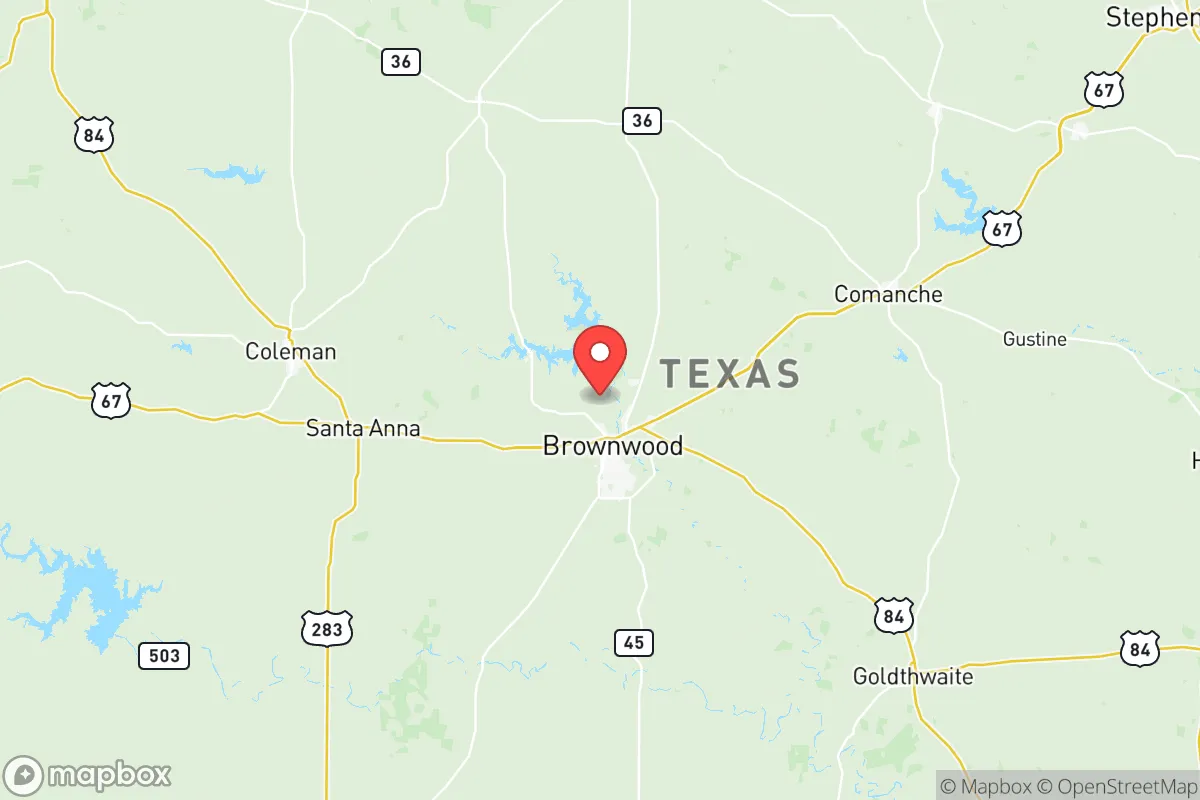
When you stack Brown County against the state of Texas, the difference is stark. Texas as a whole has become a battleground, with places like Dallas, Houston, and Austin pulling the state’s politics toward progressive policies on everything from energy regulation to school curriculum. Brown County, by contrast, has stayed true to its roots. The R+22 PVI means that in a statewide race, a Republican candidate can expect to win Brown County by roughly 22 points more than the national average — and in practice, that often translates to 70-75% of the vote. The surrounding counties — Coleman, McCulloch, and Mills — are similarly red, so there’s no progressive island nearby to worry about. The only real variation is in Brownwood’s city limits, where a handful of precincts near the university might only go 60-40 Republican, but that’s still a solid red. The rural precincts, especially around Lake Brownwood and the farming communities to the south, are where you see the most reliable conservative turnout.
What this means for residents
For folks living here, the political climate means local government stays focused on what matters: keeping taxes low, protecting gun rights, and pushing back against state or federal overreach. You don’t see the kind of progressive experiments you’d find in Austin or Dallas — no talk of defunding the police, no zoning fights over “affordable housing” mandates, and no school board battles over critical race theory or gender ideology. The county commissioners and city councils in Brownwood and Early are overwhelmingly conservative, and they’ve kept the area’s character intact. That said, there’s a growing concern among longtime residents about the direction of the state. As Texas’s urban centers shift left, state-level policies — like the recent push for more state control over local land use or the expansion of renewable energy mandates — feel like a slow creep of government overreach into our way of life. The worry is that if the state legislature keeps tilting toward the cities, we’ll see more fights over property rights and personal freedoms that we’ve always taken for granted.
Culturally, Brown County is a place where people still wave the flag and mean it. The biggest policy distinction from the state as a whole is the county’s strong stance on Second Amendment sanctuary status — the sheriff’s office has publicly stated it won’t enforce any federal gun laws it deems unconstitutional, and that’s a point of pride. You’ll also notice a heavier emphasis on local control in education: the Brownwood ISD and Early ISD boards are stacked with conservatives who prioritize parental rights and traditional curriculum. If you’re looking for a place where the politics match the values of personal responsibility and limited government, Brown County is still that place — but keep an eye on Austin, because the fight to keep it that way is getting harder every year.

State Political ClimatePolitical Climate in Texas
State Political AnalysisPolitical Environment in the State
Texas has been a reliably Republican state for decades, with a Cook PVI of R+4, but that label hides a more complicated reality. The dominant coalition is a mix of rural conservatives, suburban moderates, and a growing number of libertarian-leaning transplants, but the state’s 10-20 year trajectory shows a slow but steady shift toward purple, driven by explosive growth in the blue-leaning metros of Austin, Dallas, Houston, and San Antonio. While statewide races still tilt red—no Democrat has won a statewide office since 1994—the margins have tightened, and the 2024 presidential race saw Donald Trump win Texas by roughly 9 points, down from 11 points in 2020 and 16 points in 2016. For a conservative considering relocation, the key question is whether the state’s policy environment can outpace the demographic headwinds.
Urban vs. rural divide
The political map of Texas is a stark checkerboard. The big metros—Austin (Travis County), Dallas (Dallas County), Houston (Harris County), San Antonio (Bexar County), and El Paso (El Paso County)—are solidly blue, with Democrats winning these counties by 15-30 points in recent cycles. These urban centers are where the state’s population growth is concentrated, driven by tech, healthcare, and energy jobs, and they’ve become increasingly progressive on social issues. Meanwhile, rural and exurban Texas—places like Lubbock (Lubbock County), Amarillo (Potter County), Tyler (Smith County), and the sprawling Permian Basin (Midland and Ector counties)—vote Republican by margins of 30-50 points. The suburbs are the battleground: Collin County (north of Dallas) and Fort Bend County (southwest of Houston) have shifted from reliably red to competitive, with Collin County voting for Trump by only 7 points in 2024 after supporting him by 15 points in 2016. The rural-urban split is so pronounced that a handful of counties now decide statewide elections, and the trend is clear: the blue metros are growing faster than the red countryside.
Policy environment
Texas remains a low-tax, low-regulation state by design. There is no state income tax—a constitutional prohibition—and property taxes are high (averaging 1.6% of assessed value) to compensate. The regulatory posture is business-friendly: no state-level occupational licensing for many trades, minimal environmental permitting hurdles, and a right-to-work law that weakens unions. On education, the state funds schools through a Robin Hood system that redistributes property tax revenue from wealthy districts to poor ones, but per-pupil spending remains below the national average. School choice has expanded slowly—the 2023 legislative session saw a push for education savings accounts fail, but Governor Greg Abbott has made it a priority for 2025. Healthcare policy is limited: Texas refused Medicaid expansion under the ACA, leaving roughly 18% of residents uninsured, the highest rate in the nation. Election laws have tightened since 2021’s SB 1, which added voter ID requirements, limited drive-thru voting, and restricted mail-in ballot access. For a conservative, the policy environment is broadly favorable, but the lack of school choice and high property taxes are persistent pain points.
Trajectory & freedom
On personal liberty, Texas has moved in two directions simultaneously. On gun rights, the state expanded permitless carry (HB 1927, 2021), allowing most adults to carry a handgun without a license—a clear expansion of freedom. On parental rights, the 2023 passage of SB 14 banned gender transition procedures for minors, and the 2021 “Save Women’s Sports” Act (SB 29) restricted transgender athletes from competing in school sports. These moves align with conservative values. However, on medical autonomy, the state’s near-total abortion ban (trigger law from 2021, effective 2022) has no exceptions for rape or incest, which some see as government overreach into personal decisions. Property rights remain strong: Texas has no state-level zoning in unincorporated areas, and the 2017 “property tax reform” (SB 2) capped annual appraisal increases at 10% for homesteads. But the state has also expanded surveillance: the 2023 “social media censorship” law (HB 20) requires platforms to host content they might otherwise remove, which some view as government compulsion of private speech. The net trajectory is mixed—more freedom on guns and family policy, less on medical choice and speech regulation.
Civil unrest & political movements
Texas has seen significant political flashpoints in recent years. The 2020 Black Lives Matter protests in Austin and Houston were large and occasionally violent, leading to property damage and a subsequent backlash that helped fuel the 2021 “defund the police” repeal movement. Immigration politics are a constant: the state has bused over 100,000 migrants to sanctuary cities like New York and Chicago since 2022, and Governor Abbott’s Operation Lone Star has deployed state troopers and National Guard to the border, resulting in ongoing legal battles with the Biden administration over razor wire and buoy barriers. The “sanctuary city” ban (SB 4, 2017) remains in effect, requiring local law enforcement to cooperate with federal immigration authorities. Secession rhetoric has flared on the right—the Texas Nationalist Movement has gained some traction, but it remains a fringe position. Election integrity controversies have been muted since SB 1, though Democrats continue to challenge the law in court. A new resident would notice the heavy police presence in border counties like Webb (Laredo) and Cameron (Brownsville), and the occasional protest in Austin’s downtown.
Projection
Over the next 5-10 years, Texas will likely continue its slow drift toward purple, but not necessarily blue. The in-migration pattern—roughly 1,000 new residents per day—is split: many are conservatives from California and the Northeast fleeing high taxes and progressive policies, but many are also young, diverse professionals who lean left. The key battleground will be the suburbs of Dallas-Fort Worth and Houston, where Asian and Hispanic populations are growing and becoming more politically active. If Republicans can hold these suburbs—by focusing on economic growth, school choice, and border security—the state will remain red-leaning. If they lose them, Texas could become competitive at the presidential level by 2032. The state’s policy environment is unlikely to shift dramatically: the legislature is gerrymandered to favor rural Republicans, and the 2025 session will likely pass education savings accounts and further restrict abortion access. A conservative moving in now should expect a state that remains broadly free on economic and family issues, but with growing cultural friction in the cities.
For a new resident, the bottom line is that Texas offers a strong conservative policy foundation—no income tax, gun rights, parental rights—but it’s not a static red fortress. The urban centers are increasingly progressive, and the political climate is becoming more polarized. If you’re moving for freedom from government overreach, you’ll find it in the suburbs and rural areas, but you’ll need to be engaged locally to keep it that way. The state’s trajectory depends on who shows up to vote in the next few cycles.
* Values derived from national, state, county, city and local statistics and may differ in a specific area. Last updated: 2026-05-12T13:53:17.000Z
Narrative content on this page is AI-generated and may contain mistakes. Verify any details that matter before acting on them.
ReloMaps may earn a commission from affiliate links at no extra cost to you.

