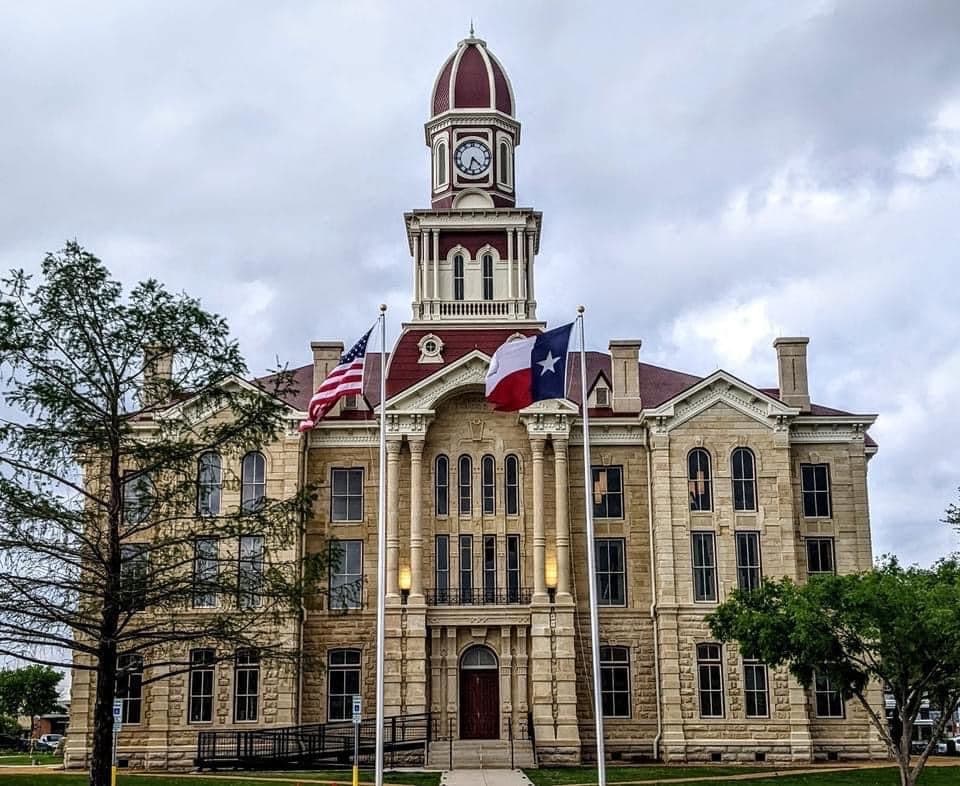
Photo: Wikipedia
Political ClimatePolitical Climate in Fannin County
Showing district-level results — no local-only data available.
Local Political AnalysisPolitical Analysis of Fannin County
Fannin County is about as solid red as they come in North Texas, with a Cook PVI of R+16—that’s twelve points more Republican than the state of Texas as a whole (R+4). And it’s not just a number; you feel it when you drive through. It’s been this way for as long as I can remember, and most folks here like it that way. That said, we’re starting to see a little more traffic from the big cities, and with that comes some unease about whether the old ways are going to hold.
How it compares
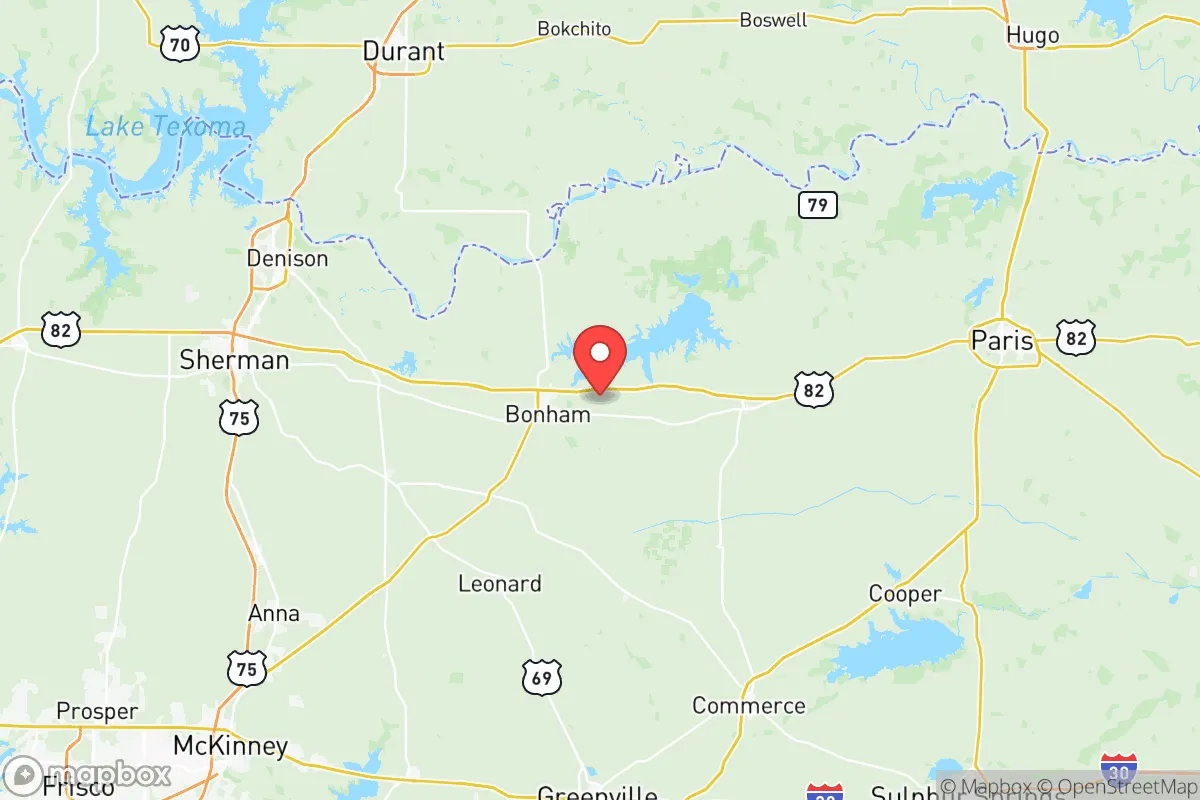
Compare that R+16 to Texas’s R+4 statewide, and you realize Fannin County is operating on a whole different political wavelength. The state overall has purple streaks—places like Harris, Tarrant, and Dallas counties that swing blue—but Fannin remains deeply conservative. Look at the towns themselves: Bonham, the county seat, is reliably Republican but can show a slightly softer edge in local races, especially after some recent growth around the lake. Down in Leonard and over to Honey Grove, you get precincts that go 75%+ GOP every cycle. Dodd City and Trenton are about the same—good, salt-of-the-earth people who don’t take kindly to distant governments telling them how to live. The swingy parts? Honestly, there aren’t many. Maybe a handful of precincts right along the county line near Grayson County show a little more purple, but no town here leans blue. Even Bonham’s more moderate voters are still voting straight-ticket conservative most elections.
What this means for residents
For people living here, that R+16 means local officials feel free to push back against state and federal overreach. You don’t get the same kind of progressive mandates you see in Austin or Dallas. Zoning is minimal, property rights are respected, and the county sheriff makes it clear he’s not interested in becoming a federal compliance officer. It’s the kind of place where you can do what you want on your own land as long as you’re not bothering anyone else. But you can feel the pressure building. As more folks move up from the DFW suburbs—looking for cheaper land and quieter streets—they bring different voting habits. That’s the concern. A couple thousand new transplants a year, and that R+16 could slip to +12, then +8, until suddenly the county commission is debating the same kind of woke nonsense you see in Collin County. So far, it hasn’t happened, and the culture is strong enough to resist, but you’d have to be blind not to watch the trend.
What really sets Fannin County apart from the state at large is its cultural DNA. This is an area where the Second Amendment isn’t a debate, it’s a way of life. The county government stays lean, taxes stay low, and the attitude is very much “leave us alone.” Texas overall has gotten wealthier, more diverse, and more urban, which has moved the state’s politics toward the center-left on some issues. Fannin County hasn’t followed. The biggest fear around here isn’t crime or the economy—it’s that the freedom to live your own life keeps getting squeezed from above. That’s why you see such resistance to any attempt to bring California-style rules or federal overreach into the county. For now, the politics match the people, and that trust holds. But we’re all watching closely.

State Political ClimatePolitical Climate in Texas
State Political AnalysisPolitical Environment in the State
Texas has been a reliably Republican state for decades, with a Cook PVI of R+4, but the coalition that keeps it red is shifting beneath the surface. The dominant coalition remains a mix of rural conservatives, suburban moderates, and a growing number of Hispanic voters who lean right on economics and social issues. Over the last 10-20 years, the state has moved from a solid +12 or +13 GOP margin down to a more competitive R+4, driven by explosive growth in the blue-leaning metros of Austin, Dallas, Houston, and San Antonio, while the rural and exurban areas have only deepened their red hue.
Urban vs. rural divide
The political map of Texas is a study in stark contrast. The major metros — Austin (Travis County), Dallas (Dallas County), Houston (Harris County), and San Antonio (Bexar County) — have become Democratic strongholds, with Travis County routinely voting +40 to +50 points blue. These cities are the engines of the state's population growth, drawing in transplants from California, New York, and Illinois who bring progressive voting habits with them. Meanwhile, the vast rural and exurban expanse — places like Lubbock (Lubbock County), Amarillo (Potter County), and Midland (Midland County) — votes Republican by margins of 30 to 50 points. The suburbs are the real battleground: Collin County (north of Dallas) and Fort Bend County (southwest of Houston) have shifted from solid red to purple, with Collin County still leaning R but by shrinking margins, while Fort Bend flipped to blue in 2018. The Rio Grande Valley — places like Hidalgo County (McAllen) and Cameron County (Brownsville) — has been a fascinating story: historically Democratic, these border counties swung hard toward Trump in 2020 and 2024, driven by conservative social values and a growing distrust of the national Democratic Party's immigration stance.
Policy environment
Texas offers a policy environment that is deliberately designed to attract conservative-leaning residents. There is no state income tax, a major draw for high-earners and families. Property taxes are high — among the top in the nation — but the state legislature has passed multiple rounds of compression (SB 2 in 2023 and HB 1 in 2024) to lower effective rates. The regulatory posture is famously business-friendly: no state-level occupational licensing for many trades, weak unions (right-to-work law since 1947), and minimal environmental permitting for new construction. On education, the state has a robust school choice program (the Texas Education Savings Account program, passed in 2023) that allows parents to use state funds for private school tuition. Healthcare policy is a mixed bag: Texas did not expand Medicaid under the ACA, keeping the system lean, but that leaves many low-income residents uninsured. Election laws were tightened in 2021 with SB 1, which banned 24-hour and drive-through voting, added ID requirements for mail ballots, and empowered poll watchers — changes that conservatives argue protect election integrity and progressives call voter suppression.
Trajectory & freedom
On the freedom front, Texas has been a mixed bag in recent years — expanding liberty in some areas while contracting it in others. On the plus side for conservatives: constitutional carry (HB 1927, 2021) allows permitless carry of handguns, a major expansion of Second Amendment rights. The Heartbeat Act (SB 8, 2021) effectively banned abortion after six weeks by empowering private citizens to sue violators, a novel approach that survived early court challenges. The Parental Bill of Rights (HB 900, 2023) gave parents more control over school library content and curriculum transparency. On the concerning side: the state has aggressively pursued medical autonomy restrictions — the 2023 ban on gender-affirming care for minors (SB 14) and the 2021 ban on mask mandates (SB 29) both represent government intervention into personal medical decisions, albeit from opposite ideological directions. Property rights remain strong, with no state-level rent control and a robust homestead exemption, but the use of eminent domain for private development projects (like the Texas Bullet Train) has raised alarms among landowners. The overall trajectory is toward more state-level control over social issues, which freedom-minded residents should watch closely.
Civil unrest & political movements
Texas has seen its share of political flashpoints. The 2020 Black Lives Matter protests in Austin, Dallas, and Houston were large and sometimes violent, leading to property damage and a lasting shift in how those cities police public demonstrations. The Texas Capitol in Austin has been a recurring site of tension: the 2021 "People's Filibuster" over the voting bill SB 1 drew thousands of protesters, and the 2023 special session on school choice saw dueling rallies from teachers' unions and parental rights groups. Immigration politics are a constant live wire along the border. Governor Greg Abbott's Operation Lone Star, launched in 2021, deployed state troopers and National Guard to the border, bused migrants to sanctuary cities like New York and Chicago, and installed razor wire and buoys in the Rio Grande — all of which have been challenged in federal court. The sanctuary city ban (SB 4, 2017) remains in effect, making it a crime for local law enforcement to refuse cooperation with federal immigration authorities. Secession rhetoric — "Texit" — flares up periodically, especially after federal mandates during COVID, but remains a fringe movement with no serious legislative traction. Election integrity remains a hot-button issue: the 2020 and 2022 cycles saw intense scrutiny of Harris County's ballot procedures, leading to the state takeover of the county's elections in 2023.
Projection
Over the next 5-10 years, Texas is likely to become more competitive at the statewide level, but not necessarily more liberal. The in-migration pattern is shifting: while early waves of transplants were heavily blue (from California and New York), recent data shows a growing number of red-state migrants from Illinois, California, and Colorado who are fleeing high taxes and progressive policies. The Hispanic vote, particularly in the Rio Grande Valley and suburban San Antonio, is trending right on cultural issues like abortion, parental rights, and religious freedom. The 2024 election results showed Trump winning Hidalgo County by 10 points — a county Obama won by 30 points in 2012. If that trend holds, Texas could actually become more Republican over the next decade, not less. However, the urban cores — Austin, Dallas, Houston — will continue to deepen blue, creating a more polarized state where the legislature remains red but the cities become increasingly hostile to conservative values. A new resident moving to Texas in 2026 should expect to find a state where the suburbs and exurbs are the real battlegrounds, and where the fight over school curriculum, property taxes, and election laws will only intensify.
For a conservative-leaning individual or family considering relocation, Texas offers a policy environment that is broadly aligned with limited government, low taxes, and strong Second Amendment protections — but the picture is not uniform. Choose your county carefully: Collin County (Frisco, McKinney) and Montgomery County (The Woodlands, Conroe) remain reliably red, while Travis County (Austin) and Harris County (Houston) are increasingly progressive. The state's trajectory is toward a more polarized, culturally contested landscape where your local school board and city council elections matter as much as the governor's race. If you value personal freedom, low taxes, and a government that stays out of your business, Texas is still one of the best bets in the country — just know that the fight to keep it that way is far from over.
* Values derived from national, state, county, city and local statistics and may differ in a specific area. Last updated: 2026-06-03T03:40:20.000Z
Narrative content on this page is AI-generated and may contain mistakes. Verify any details that matter before acting on them.
ReloMaps may earn a commission from affiliate links at no extra cost to you.

