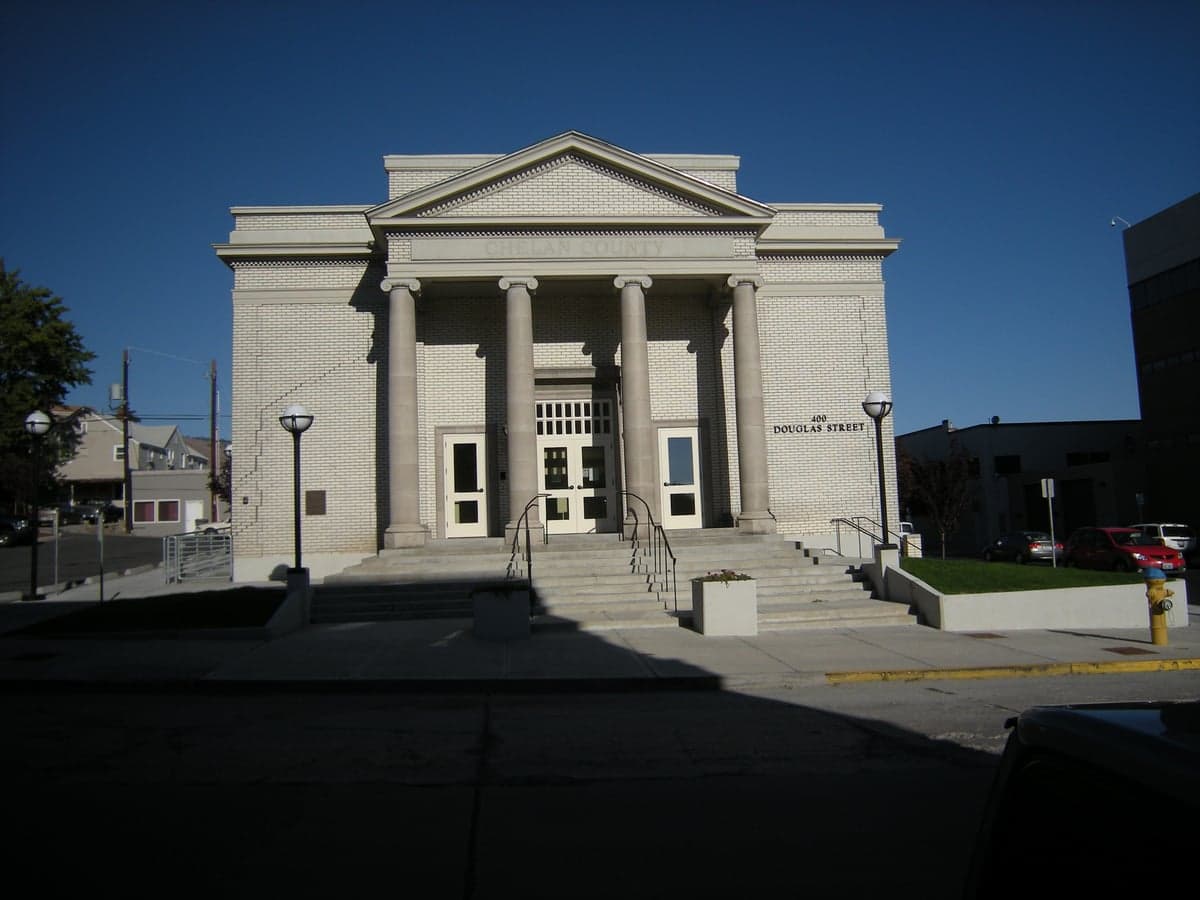
Photo: Wikipedia
Political ClimatePolitical Climate in Chelan County
Showing district-level results — no local-only data available.
Local Political AnalysisPolitical Analysis of Chelan County
Chelan County has long been a reliably Republican stronghold in Washington state, but the political landscape is shifting. While the county as a whole still leans right, the margin of victory for GOP candidates has been shrinking in recent presidential cycles, driven largely by the explosive growth of the liberal-leaning city of Wenatchee. The county's Cook Partisan Voting Index (PVI) of D+3 is a bit misleading—that's a statewide average, not a county-level number. In reality, Chelan County voted for Donald Trump by about 12 points in 2020, a significant drop from the 18-point margin in 2016. The trajectory is clear: the county is becoming more competitive, but it remains a solidly red area outside of its urban core.
How it compares
Compared to Washington state as a whole, Chelan County is a political outlier. The state's Cook PVI of D+3 reflects a Democratic lean driven by the massive populations of King County (Seattle) and other Puget Sound counties. Chelan County, by contrast, is one of the few areas in central Washington where Republicans still hold a comfortable majority. The real political action is within the county itself. Wenatchee, the county seat and largest city, is the blue dot in a red sea, with precincts near the downtown core and the hospital consistently voting Democratic. The surrounding towns tell a different story. Leavenworth, the Bavarian-themed tourist town, leans left due to its artsy, service-industry workforce, but it's an island. Chelan, Entiat, and Cashmere are reliably conservative, with Trump winning some precincts by 30 points or more. The swing precincts are in the unincorporated areas around Wenatchee and the fast-growing communities along the Columbia River, where new residents—many from the west side—are slowly shifting the balance.
What this means for residents
For conservative residents, Chelan County remains a comfortable place to live politically. Local government, from the county commission to the sheriff's office, is dominated by Republicans. Gun rights are broadly supported, and the area's agricultural and outdoor-recreation economy aligns with a pro-business, low-regulation mindset. For liberal residents, the experience is more mixed. You'll find like-minded neighbors in Wenatchee and Leavenworth, but you'll also encounter plenty of "Keep America Great" signs and a local media ecosystem that leans right. The practical effect is that political conversations are often avoided in mixed company, and the area's social fabric is largely built around non-political activities like hiking, boating, and high school sports. The growing Democratic vote in Wenatchee has not yet translated into major policy shifts, but it has made local elections more competitive, particularly for city council seats.
Culturally, Chelan County is distinct from the west side of the state. The area's identity is rooted in agriculture, tourism, and outdoor recreation, not tech or aerospace. You'll see more pickup trucks than Teslas, and the local news covers apple harvests and wildfire seasons more than state politics. The policy distinction that matters most to residents is land use and water rights—issues that cut across party lines. The county's rapid growth has sparked debates about housing affordability and development, with both conservatives and liberals expressing frustration with rising costs. In the near term, expect the county to remain red but with a growing purple tinge, especially as more remote workers and retirees from the west side discover the area's lower cost of living and stunning scenery. The long-term trajectory depends on whether that growth continues and whether the newcomers bring their voting habits with them.

State Political ClimatePolitical Climate in Washington
State Political AnalysisPolitical Environment in the State
Washington State has been a reliably Democratic stronghold for over a decade, but its political reality is far more complex than a simple blue label. The state’s overall lean is driven overwhelmingly by King County (Seattle) and its surrounding suburbs, which cast roughly a third of all votes and deliver margins of +40 to +60 points for Democrats. This coastal dominance masks a deeply divided interior: Eastern Washington, from Spokane to the Tri-Cities, votes as red as any part of the country, while the Puget Sound region has shifted leftward by about 10 points since 2010. For a conservative relocator, the practical takeaway is that Washington offers a stark choice between living in a progressive urban environment or a culturally conservative rural one, with very little purple ground in between.
Urban vs. rural divide
The political map of Washington is essentially a tale of two states separated by the Cascade Range. West of the Cascades, the I-5 corridor from Vancouver (WA) through Olympia, Tacoma, and Seattle to Everett is solidly Democratic, with King County alone providing the margin to decide statewide elections. Seattle’s growth has been fueled by tech and aerospace wealth, creating a dense, highly educated, and socially liberal electorate. East of the mountains, the landscape flips: Spokane County, once a swing area, has trended red and now votes Republican by 10-15 points, while rural counties like Yakima, Grant, and Stevens routinely deliver 65-70% Republican margins. The suburbs tell a more nuanced story. Bellevue and Redmond on the Eastside are now reliably Democratic, driven by tech workers, while Pierce County (Tacoma) and Snohomish County (Everett) have moved from purple to light blue over the past two cycles. The only real swing territory left is the Vancouver/Clark County area, which voted for Biden by 4 points in 2020 after supporting Trump in 2016 — a microcosm of the broader suburban shift. For a conservative, living in Spokane Valley, Wenatchee, or Richland means a very different political experience than living in Seattle or Olympia.
Policy environment
Washington’s policy environment is defined by a progressive tax structure and aggressive regulatory posture. The state has no personal or corporate income tax, which is a major draw for high earners, but it relies heavily on a regressive sales tax (6.5% state rate, often 9-10% with local add-ons) and high property taxes. The regulatory climate is business-friendly in some sectors (tech, aerospace) but burdensome in others (construction, energy, agriculture). Education policy is a mixed bag: Washington spends above the national average per pupil, but outcomes vary wildly by district, with Seattle Public Schools struggling with enrollment declines and Bellevue schools ranking among the nation’s best. Healthcare is heavily regulated, with a state-run exchange and strong Medicaid expansion. Election laws are among the most accessible in the country: universal vote-by-mail is the norm, same-day registration is available, and ballots are automatically sent to all registered voters. For a conservative, the lack of an income tax is appealing, but the high sales and property taxes, combined with a regulatory environment that often favors environmental and labor interests, can feel stifling.
Recent policy direction
Washington’s recent legislative sessions have pushed the state decisively leftward on a broad range of issues. On gun policy, the state has enacted some of the nation’s strictest laws: a ban on high-capacity magazines (2022), a ban on assault weapons (2023), and a requirement for safe storage. Self-defense law is governed by a “reasonable belief” standard, not a “stand your ground” statute. On education and parental rights, the state has moved in the opposite direction of many red states: it passed a law requiring school districts to adopt policies that affirm transgender students’ gender identity, and it has not enacted any parental notification requirements for curriculum or library materials. Privacy and surveillance law is relatively strong, with a comprehensive data privacy act (2021) and limits on facial recognition use by government. Medical and bodily autonomy is fully protected: abortion is legal up to viability, and the state has a shield law protecting providers and patients from out-of-state prosecution. Property rights are constrained by the Growth Management Act, which limits development in rural areas and requires urban growth boundaries. Voting access has been expanded: automatic voter registration, same-day registration, and universal mail-in ballots are all law. For a conservative relocator, the cumulative effect is a state that is actively moving away from traditional conservative positions on guns, education, and parental rights, while maintaining a tax structure that is attractive to high earners.
Civil unrest & political movements
Washington has a visible and active protest culture, particularly in Seattle. The 2020 CHOP/CHAZ occupation in Capitol Hill was a national flashpoint, and the city has seen recurring protests around police reform, housing policy, and immigration. Organized activist movements are strong on both sides: the Washington State Labor Council and environmental groups like 350 Seattle are influential on the left, while the Washington Policy Center and the state’s Republican Party remain active but outmatched in statewide races. Immigration politics are defined by the state’s sanctuary law (2019), which limits local law enforcement cooperation with federal immigration authorities. There has been no serious secession or nullification rhetoric, though some rural counties have passed symbolic “Second Amendment sanctuary” resolutions. Election integrity controversies have been minimal compared to other states, largely because the vote-by-mail system is well-established and trusted by both parties. A new resident in Seattle will encounter frequent protests and visible homelessness, while a resident in Spokane or Yakima will see a more subdued political environment with occasional rallies at the county courthouse.
Projection
Over the next 5-10 years, Washington is likely to become more Democratic, not less. In-migration from California and other states has been net positive, and the new arrivals tend to be younger, more educated, and more liberal. The tech sector’s continued growth in the Puget Sound region will reinforce the urban progressive majority, while rural areas will continue to lose population and political influence. The state’s Democratic trifecta (governor, house, senate) is unlikely to be broken, and the policy direction will continue leftward on guns, climate, and social issues. However, there are limits: the state’s tax structure is unlikely to change dramatically, as voters have repeatedly rejected income tax proposals. For a conservative moving in now, the expectation should be that the state will feel increasingly like a blue state in the classic West Coast mold — high taxes on consumption, strong environmental regulation, and progressive social policy — but with the compensating benefit of no income tax and a strong economy. The rural-urban divide will likely widen, making it even more important to choose a location that aligns with one’s political and cultural preferences.
For a new resident, the bottom line is that Washington offers a genuine choice between two very different political environments. If you want low taxes, strong property rights, and a conservative cultural environment, you can find it in Spokane, Richland, or Wenatchee. If you want progressive governance, high wages, and dense urban amenities, Seattle and its suburbs deliver. The key is to understand that the state’s overall blue lean masks a deeply divided geography, and your experience will depend almost entirely on which side of the Cascades you choose to live on. Plan accordingly, and don’t expect the state’s trajectory to change anytime soon.
* Values derived from national, state, county, city and local statistics and may differ in a specific area. Last updated: 2026-08-09T11:19:52.000Z
Narrative content on this page is AI-generated and may contain mistakes. Verify any details that matter before acting on them.
ReloMaps may earn a commission from affiliate links at no extra cost to you.

