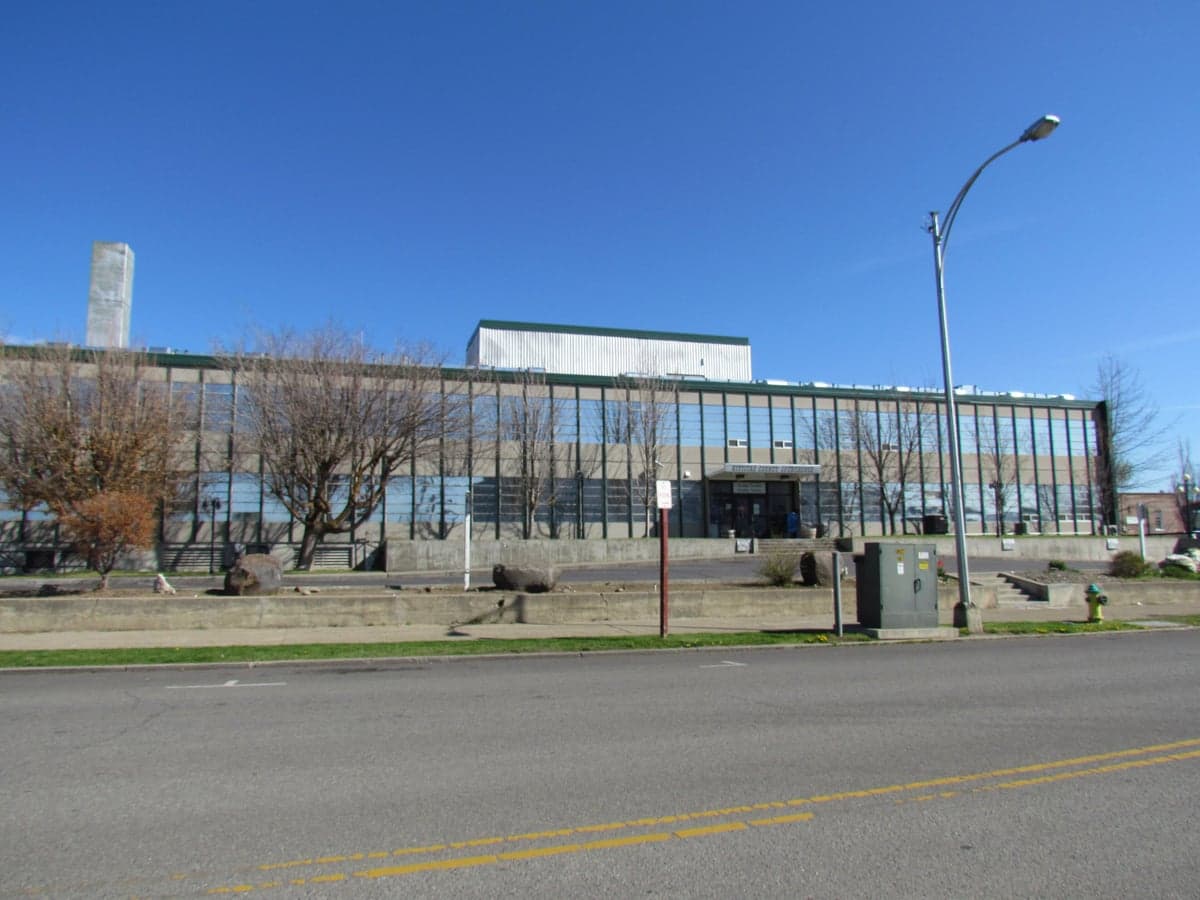
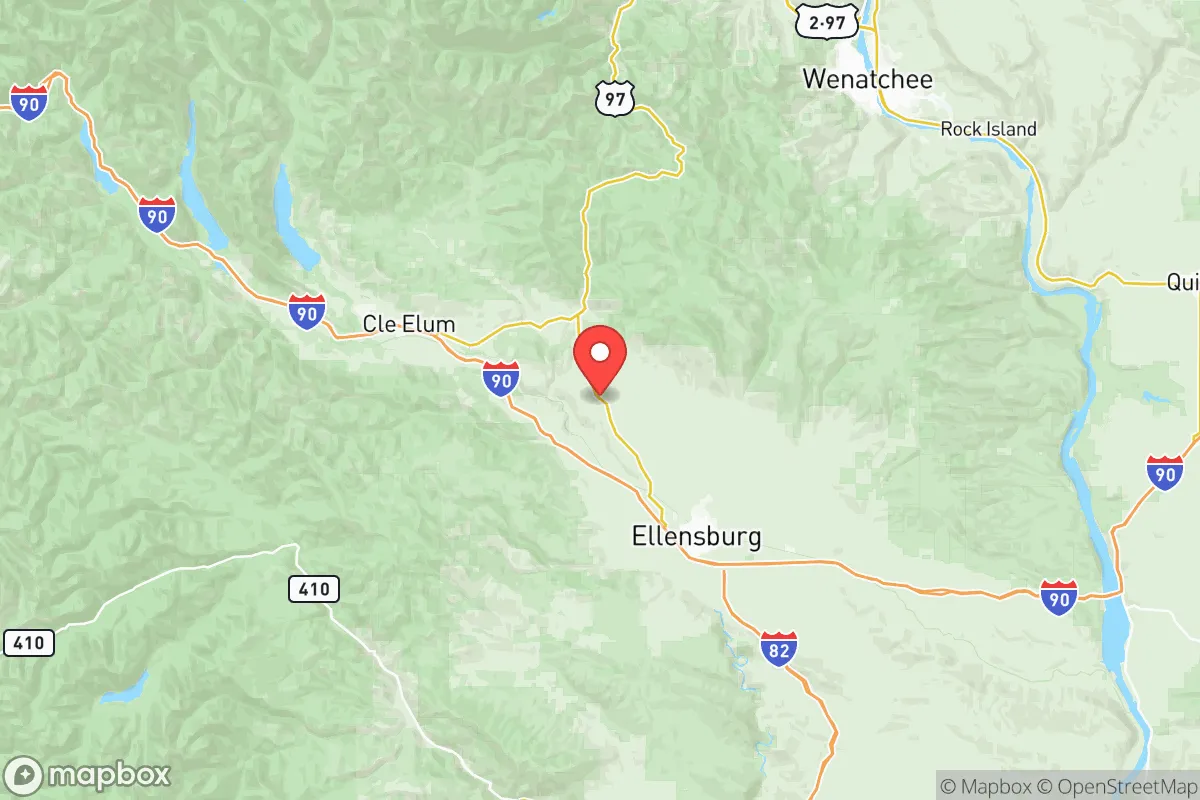
Photo: Wikipedia
Political ClimatePolitical Climate in Kittitas County
Showing district-level results — no local-only data available.
Local Political AnalysisPolitical Analysis of Kittitas County
Kittitas County has been a reliably Republican stronghold for decades, but the political ground is shifting under its feet. The county’s Cook Partisan Voting Index (PVI) is D+3, which is a dramatic swing from its historical lean — in 2016, Donald Trump won the county by 14 points, but by 2024 that margin had shrunk to just 2 points. The county is now a true battleground, with the city of Ellensburg pulling hard to the left while the rest of the county remains deeply red.
How it compares
Compared to Washington state as a whole, Kittitas County is a microcosm of the state’s urban-rural divide. The state’s overall PVI is unknown, but King County (Seattle) votes roughly D+30, while rural counties like Ferry or Garfield vote R+30 or more. Kittitas sits right in the middle — it’s the only county in the state that has flipped from red to purple in the last decade. The city of Ellensburg, home to Central Washington University, votes about 60% Democratic, while the small towns of Cle Elum, Roslyn, and Thorp lean Republican but are trending purple as remote workers move in. The rural precincts in the upper county — around Vantage, Kittitas, and the farmland east of Ellensburg — still vote 70%+ Republican. The swing precincts are in the suburban fringe of Ellensburg, like the areas around the airport and the new developments on the west side of town, where young families and university staff are shifting the balance.
What this means for residents
For conservative residents, the county still feels like home — the county commission is majority Republican, the sheriff is a Republican, and local gun laws are minimal. But they’re seeing more Harris-Walz yard signs in Ellensburg and more progressive candidates winning city council seats. For liberal residents, the county offers a rare thing in Eastern Washington: a place where their vote actually matters. A Democrat can win a countywide race here if they run a moderate campaign, as happened in 2022 when a Democrat won the county auditor seat. The practical effect is that both sides feel like they’re fighting for the soul of the county, which makes local elections unusually competitive and high-turnout.
The cultural and policy distinctions are sharp. Ellensburg has a thriving arts scene, a farmers market that bans political booths, and a city council that passed a non-discrimination ordinance in 2021. The rural parts of the county have a strong agricultural and ranching culture, with a heavy emphasis on property rights and low taxes. The county’s growth — about 15% since 2020 — is the main driver of the political shift. Newcomers from Seattle and Bellevue are bringing their politics with them, and they’re settling in the western part of the county near Cle Elum and Roslyn, where luxury cabins and remote-work hubs are sprouting up. The old-timers in the eastern part of the county are dug in, but they’re outnumbered by the newcomers in the west. If the trend continues, Kittitas County could be a toss-up county by 2028, and a Democratic-leaning county by 2032. For now, it’s the most politically interesting place in Washington — a place where a single precinct can decide a countywide race, and where both parties are spending real money to win it.

State Political ClimatePolitical Climate in Washington
State Political AnalysisPolitical Environment in the State
Washington state has been a reliably Democratic stronghold for over a decade, but its political landscape is far more complex than a simple blue label. The state’s overall lean is driven overwhelmingly by King County (Seattle) and a handful of other urban centers, while vast rural and exurban areas vote just as reliably Republican. Over the last 20 years, the state has shifted from a purple swing state—where it voted for George W. Bush in 2000 and 2004—to a solidly blue one, with Democrats now holding every statewide office and both U.S. Senate seats. The 2024 presidential election saw Kamala Harris win the state by roughly 19 points, but that margin masks a deepening urban-rural chasm that defines daily life for residents.
Urban vs. rural divide
The political map of Washington is essentially two states. The I-5 corridor from Seattle south to Olympia and north to Bellingham is the engine of Democratic power. King County alone delivers about a third of the state’s total vote, and its margin for Democrats has grown from +30 points in 2008 to over +45 points in 2024. Seattle, Bellevue, and Redmond are the core of this coalition, fueled by tech workers, young professionals, and a highly educated electorate. Meanwhile, the eastern half of the state—Spokane, the Tri-Cities (Kennewick, Pasco, Richland), and Yakima—votes heavily Republican. Spokane County, once a swing county, has trended redder, voting +12 for Trump in 2024. The most dramatic flip in recent cycles is Clark County (Vancouver), which was a Republican stronghold as recently as 2016 but has become a competitive swing county, voting for Biden in 2020 and Harris in 2024 by narrow margins, driven by Portland-area transplants and new housing developments. Pierce County (Tacoma) and Snohomish County (Everett) are also trending blue, but more slowly, with suburban areas like Puyallup and Marysville still holding significant conservative pockets.
Policy environment
Washington’s policy environment is defined by a progressive tax structure and a heavy regulatory posture. The state has no personal or corporate income tax—a major draw for conservatives—but relies on a high sales tax (state rate 6.5%, with local add-ons pushing it over 10% in Seattle) and high property taxes. The state’s Long-Term Care Trust Act, a mandatory payroll tax for long-term care insurance, is a unique and controversial program that many conservatives view as an overreach. Education policy is dominated by the state’s fully funded public school system, but school choice is limited; Washington has no private school voucher program and only a small number of charter schools, which are restricted to at-risk students. Healthcare is heavily regulated, with the state running its own health insurance exchange and expanding Medicaid aggressively. Election laws are among the most accessible in the country: Washington conducts all elections by mail, with automatic voter registration and same-day registration. This system is popular across the political spectrum for its convenience, though some conservatives express concerns about ballot security.
Recent policy direction
Recent legislation in Washington has moved the state decisively leftward on several fronts. On gun and self-defense law, the state passed a ban on the sale of assault weapons in 2023, along with a 10-day waiting period for all firearm purchases and a requirement for a permit to purchase a handgun. These laws are currently being challenged in court, but they represent a sharp departure from the state’s historically permissive gun culture. On parental and education rights, the state has expanded LGBTQ+ inclusive curriculum requirements and passed a law prohibiting school districts from notifying parents of a student’s gender identity without the student’s consent—a flashpoint for conservative families. On speech and privacy, Washington has one of the strongest data privacy laws in the nation (the Washington Privacy Act), but also has a broad public records law that can expose personal information. Medical and bodily autonomy is fully protected: abortion remains legal up to the point of viability, with no waiting periods or mandatory counseling, and the state has a shield law protecting providers who serve out-of-state patients. Property rights are constrained by the state’s Growth Management Act, which limits development in rural areas and mandates urban growth boundaries. On taxation, the state’s capital gains tax on high earners (over $250,000 in gains) was upheld by the state supreme court in 2023, signaling a potential future income tax. Voting and ballot access remain expansive, with no voter ID requirement beyond a signature match.
Civil unrest & political movements
Washington has a history of visible political activism, particularly in Seattle. The 2020 protests following George Floyd’s death led to the establishment of the Capitol Hill Autonomous Zone (CHAZ), a two-week occupation that became a national symbol of left-wing activism. Since then, organized activist movements have become more institutionalized, with groups like the Washington State Labor Council and Moms Demand Action wielding significant influence in Olympia. On the right, the Washington State Republican Party has struggled to gain traction, but grassroots conservative movements are active in rural counties, particularly around property rights, gun rights, and parental rights in education. The state’s sanctuary policies are among the strongest in the nation: Washington bars state and local law enforcement from cooperating with federal immigration authorities in most circumstances, and the 2023 “Keep Washington Working” act expanded these protections. Election integrity controversies have been relatively muted compared to other states, though some rural counties have passed symbolic resolutions calling for hand-counting of ballots. The most visible flashpoint for a new resident would likely be the presence of homeless encampments in Seattle and other urban centers, which have become a political lightning rod, with the state supreme court ruling that cities cannot clear encampments without offering shelter.
Projection
Over the next 5-10 years, Washington’s political trajectory is likely to continue its leftward drift, but with important caveats. Demographic shifts are working against Republicans: the state’s fastest-growing counties are King, Snohomish, and Clark, all trending blue. In-migration from California and Oregon reinforces this trend, though a significant number of new arrivals are also conservative-leaning retirees moving to smaller cities like Wenatchee or Walla Walla. The state’s housing crisis, driven by the Growth Management Act and high construction costs, is pushing some families to more affordable, redder areas like Spokane or the Tri-Cities, which could slow the blue shift in those regions. The most realistic scenario is that Washington remains a solidly Democratic state at the statewide level, but with a growing rural backlash that could produce more competitive legislative races in swing districts. A new resident moving in now should expect to see continued expansion of progressive policies—likely a state income tax on high earners, further gun restrictions, and more aggressive climate regulations—alongside persistent cultural tensions between the urban core and the rest of the state.
For a conservative-leaning relocator, the bottom line is that Washington offers a mixed bag. The absence of a state income tax and the state’s natural beauty are major draws, but the regulatory environment, high cost of living in the urban areas, and progressive social policies will be a challenge. If you’re looking for a place where your vote will matter in statewide elections, Washington is not that state. But if you’re willing to live in a red-leaning county like Spokane or the Tri-Cities, you can find a community that aligns with your values while still enjoying the economic opportunities and outdoor lifestyle that the state offers. Just be prepared for a state government that will continue to push policies you likely disagree with, and plan your local involvement accordingly.
* Values derived from national, state, county, city and local statistics and may differ in a specific area. Last updated: 2026-08-18T10:30:48.000Z
Narrative content on this page is AI-generated and may contain mistakes. Verify any details that matter before acting on them.
ReloMaps may earn a commission from affiliate links at no extra cost to you.

