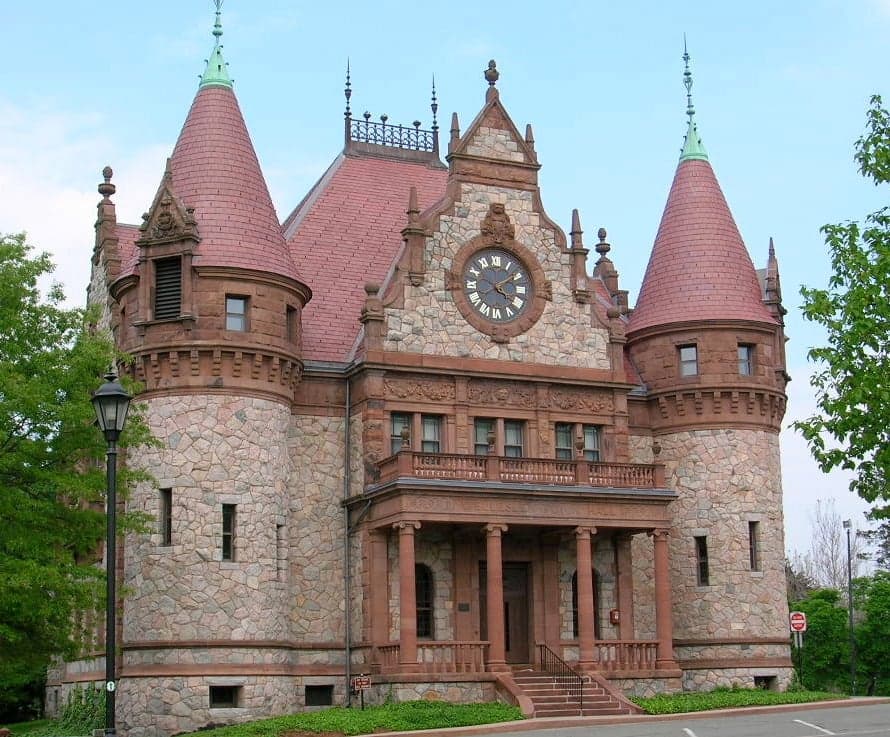
Photo: Wikipedia
Political ClimatePolitical Climate in Wellesley, MA
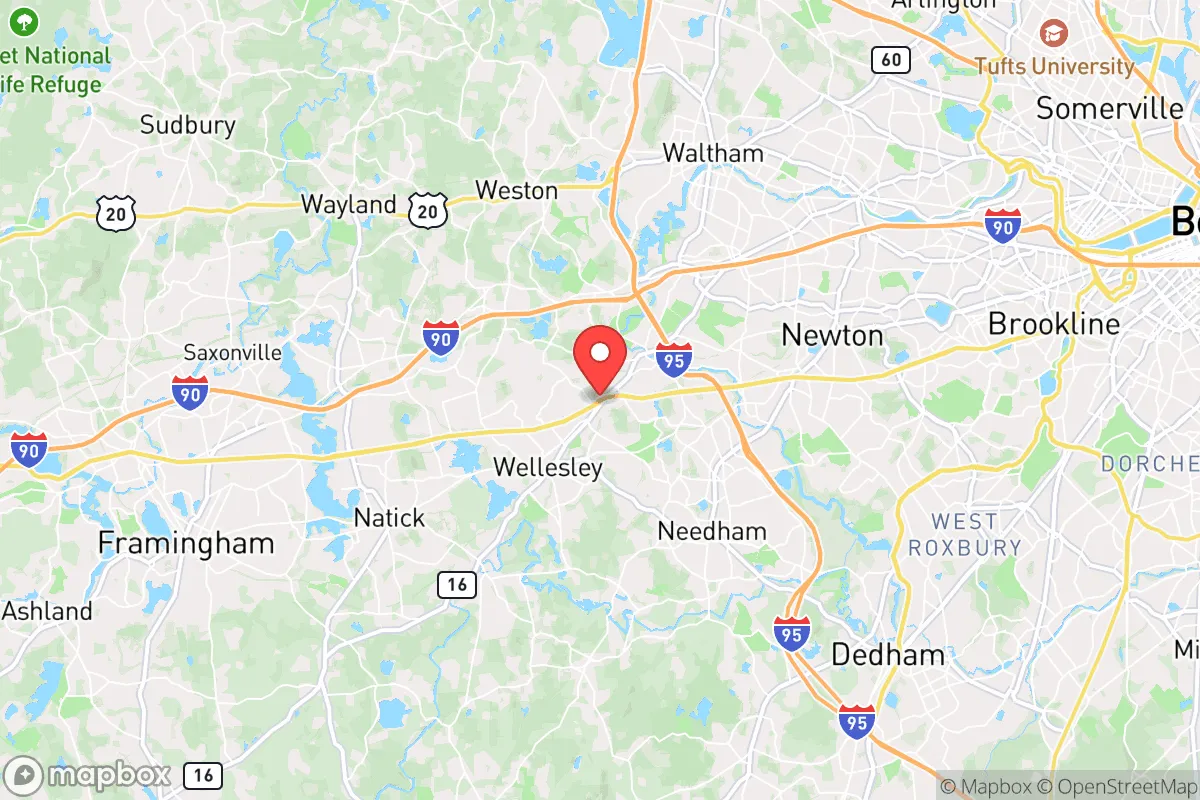
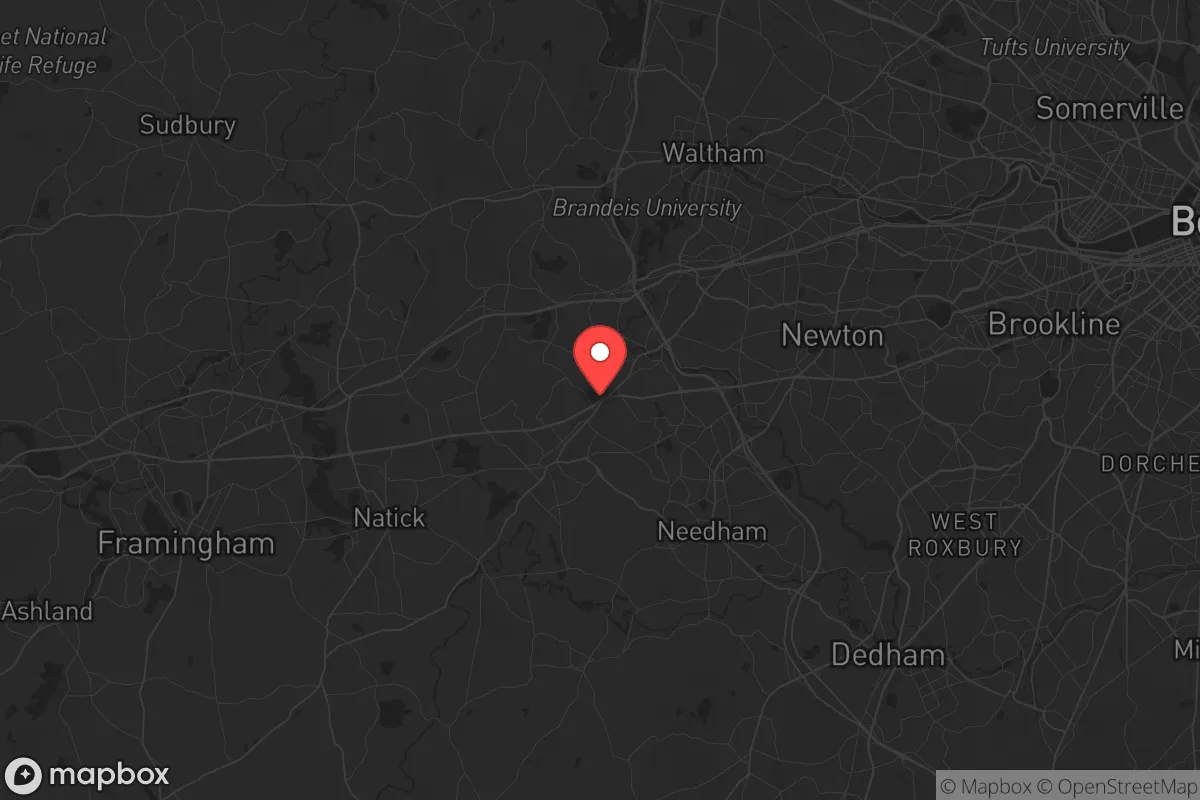
District shown is the primary district for this city’s centroid. Cities may span multiple districts.
Local Political AnalysisPolitical Analysis of Wellesley, MA
Wellesley, Massachusetts, leans heavily Democratic, with a Cook PVI of D+24, meaning the town votes about 24 points more Democratic than the national average. This wasn't always the case—I remember when this town was a lot more balanced, a place where you could have a real conversation about taxes, local control, and individual responsibility without getting labeled. Over the last decade or so, the shift has been dramatic, and it's not just about presidential elections; it's seeped into school board meetings, zoning debates, and even how the town handles things like small business permits. The trajectory is clearly toward a more progressive, one-size-fits-all approach, and that's something to keep an eye on if you value keeping government out of your daily life.
How it compares
If you drive just a few miles west to towns like Dover or Sherborn, you'll find a noticeably different vibe—more fiscal conservatism, more skepticism of top-down mandates, and a stronger emphasis on property rights. Even neighboring Needham, while still blue, has a more moderate, pragmatic streak than Wellesley. The contrast is stark: Wellesley's town government has embraced things like strict net-zero building codes and diversity, equity, and inclusion training as mandatory for town employees, while nearby communities have pushed back on some of these measures as overreach. It's not that everyone here agrees with the direction, but the political machinery—from the school committee to the select board—is firmly in the hands of activists who see government as a tool for social engineering rather than a protector of your freedoms.
What this means for residents
For a resident who values personal liberty, the practical effects are real. You'll see it in higher property taxes that fund programs you might not support, like subsidized housing mandates or climate action plans that dictate how you can renovate your home. The school system, while excellent academically, has become a battleground for curriculum battles—parents who question critical race theory or gender ideology in the classroom are often dismissed as out of touch. There's also a growing pressure to conform socially; if you're not on board with every progressive cause, you might feel like an outsider at the town picnic. The long-term concern is that as the political monoculture hardens, it becomes harder to attract or retain families who want a more balanced, live-and-let-live community.
Culturally, Wellesley has always prided itself on being a "community of conscience," but that conscience now seems to have a very specific political script. The town's annual Wellesley Free Speech Rally, for example, has become more of a platform for progressive activism than a genuine marketplace of ideas. Policy-wise, the town has adopted a "Welcoming Wellesley" initiative that prioritizes sanctuary city-style protections for undocumented immigrants, which some residents see as a federal overreach issue. If you're looking for a place where your individual rights—whether it's how you educate your kids, how you use your property, or how you express your political views—are respected without a side of government lecture, Wellesley's current path might give you pause. It's a beautiful town with great schools, but the political climate is increasingly one where the state knows best, and that's a hard pill to swallow for anyone who believes in freedom first.

State Political ClimatePolitical Climate in Massachusetts
State Political AnalysisPolitical Environment in the State
Massachusetts has long been one of the most reliably Democratic states in the nation, with a partisan lean that has only deepened over the past two decades. In the 2024 presidential election, the state voted for Kamala Harris by a margin of roughly 62% to 36%, a shift from the 2016 result where Hillary Clinton won 60% to Donald Trump’s 33%. The state’s political center of gravity has moved steadily leftward since the 1990s, when it was still a competitive two-party state that elected Republican governors like William Weld and Mitt Romney. Today, the Massachusetts Republican Party is a shadow of its former self, holding no statewide offices and only a handful of legislative seats, while the Democratic supermajority in the legislature routinely advances progressive policies with little opposition.
Urban vs. rural divide
The political map of Massachusetts is a textbook case of the urban-rural split, but with a twist: even the suburbs have gone deep blue. The Boston metro area, including cities like Cambridge, Somerville, and Brookline, is the engine of the state’s progressive tilt, routinely delivering 80-90% Democratic margins. The western part of the state, including Springfield and Worcester, also leans heavily Democratic, though with more working-class voters who occasionally split tickets. The true redoubts of Republican strength are in the rural central and southeastern regions, particularly Plymouth County and the Berkshires’ more conservative pockets. Fall River and New Bedford in the southeast have shown some rightward drift in recent cycles, with Trump improving his margins there in 2020 and 2024, but they remain Democratic overall. The Cape and Islands (Barnstable, Nantucket) are swingy but trending blue as wealthy second-home owners move in. The bottom line: outside a few rural towns, there’s no real Republican stronghold left.
Policy environment
Massachusetts has one of the most interventionist state governments in the country. The state income tax is a flat 5%, but that’s after a 2022 “millionaire’s tax” amendment (Question 1) added a 4% surcharge on income over $1 million, pushing the top rate to 9%. Property taxes are high, averaging about 1.2% of home value, and sales tax is 6.25%. The regulatory environment is dense: the state has its own health insurance mandate (Chapter 58 of the Acts of 2006, the model for the ACA), strict environmental regulations under the Global Warming Solutions Act, and a strong rent control push in cities like Boston and Cambridge. Education policy is dominated by the teachers’ unions, with school choice limited to inter-district transfers and charter schools capped. Election laws are among the most liberal: no-excuse mail-in voting (made permanent in 2022), same-day voter registration, and automatic voter registration through the RMV. The state also has a “sanctuary” law (the 2017 Trust Act) that limits local cooperation with federal immigration enforcement.
Trajectory & freedom
On the freedom front, Massachusetts has been moving in a decidedly less free direction over the past decade. The 2020 police reform bill (An Act Relative to Justice, Equity and Accountability in Policing) created a new state oversight board and banned chokeholds, but also expanded civil asset forfeiture reporting requirements. Gun rights have been steadily eroded: the 1998 assault weapons ban was updated in 2022 with a ghost gun ban, and the state now has some of the strictest magazine capacity limits (10 rounds) and licensing requirements in the country. In 2023, the legislature passed a sweeping parental rights bill (An Act Relative to Parental Rights in Education) that actually weakened parental notification requirements for school-based health services, including gender transition care. Medical freedom took a hit with the 2021 COVID-19 vaccine mandate for healthcare workers, which was not repealed even after the public health emergency ended. Property rights are constrained by the state’s Chapter 40B affordable housing law, which allows developers to override local zoning in towns with less than 10% affordable housing. The trend is clear: more regulation, less local control, and a government that increasingly sees itself as the arbiter of personal choices.
Civil unrest & political movements
Massachusetts has a long history of political activism, but the flashpoints in recent years have been dominated by progressive causes. The 2020 Black Lives Matter protests in Boston were large and sustained, leading to the removal of a statue of Christopher Columbus in the North End and renaming of Faneuil Hall’s connection to slavery. The state’s sanctuary policy has made it a magnet for immigration activism, with groups like the Massachusetts Immigrant and Refugee Advocacy Coalition pushing for further protections. On the right, the Massachusetts Fiscal Alliance and the Massachusetts Republican Party have organized around tax reform and school choice, but their rallies are small and often confined to the State House steps. The 2022 “Parents’ Rights” movement saw some energy in suburbs like Weymouth and Marshfield, where school board meetings became heated over critical race theory and LGBTQ curriculum, but it fizzled after the 2022 midterms. Election integrity is a non-issue in the state—there have been no major controversies, and the Republican Party has largely accepted results. The most visible political flashpoint for a new resident would be the constant presence of protestors on Boston Common and the State House lawn, usually on issues like climate change, abortion rights, or tenant protections.
Projection
Looking ahead 5-10 years, Massachusetts is likely to become even more progressive. Demographic trends are working against conservatives: the state’s population is aging, but the young people moving in (especially to Boston and Cambridge) are overwhelmingly left-leaning. The in-migration from other states is heavily skewed toward professionals in tech, biotech, and academia—groups that favor higher taxes and more regulation. The Republican Party shows no signs of revival; its base is shrinking as rural towns depopulate and the party’s national brand becomes toxic in the state. The legislature will likely pass a single-payer healthcare bill (the “Medicare for All” proposal has been introduced multiple times), further expand rent control, and tighten gun laws. The one wild card is the state’s high cost of living, which could drive some middle-class families to leave, but that exodus is likely to be offset by high-income arrivals. A new resident moving in now should expect to find a state where the government is deeply involved in daily life, taxes are high and rising, and personal freedoms—especially around guns, education, and medical choices—are increasingly constrained by state mandates.
For a conservative-leaning individual or family considering a move to Massachusetts, the bottom line is this: you will be in a political minority, and the state government will actively work against many of your values. The schools will teach from a progressive curriculum, your tax dollars will fund policies you may oppose, and your ability to opt out of state mandates (on vaccines, on housing regulations, on school curriculum) is limited. If you value low taxes, local control, gun rights, or parental authority in education, Massachusetts is likely a poor fit. However, if your career or family ties require you to be here, you can find like-minded communities in the rural towns of the Berkshires, Plymouth County, or the Cape—but even there, the state government’s reach is long and growing. The best advice: come with eyes wide open, and be prepared to engage politically just to hold the line.
* Values derived from national, state, county, city and local statistics and may differ in a specific area. Last updated: 2026-04-16T01:00:27.000Z
Narrative content on this page is AI-generated and may contain mistakes. Verify any details that matter before acting on them.
ReloMaps may earn a commission from affiliate links at no extra cost to you.

