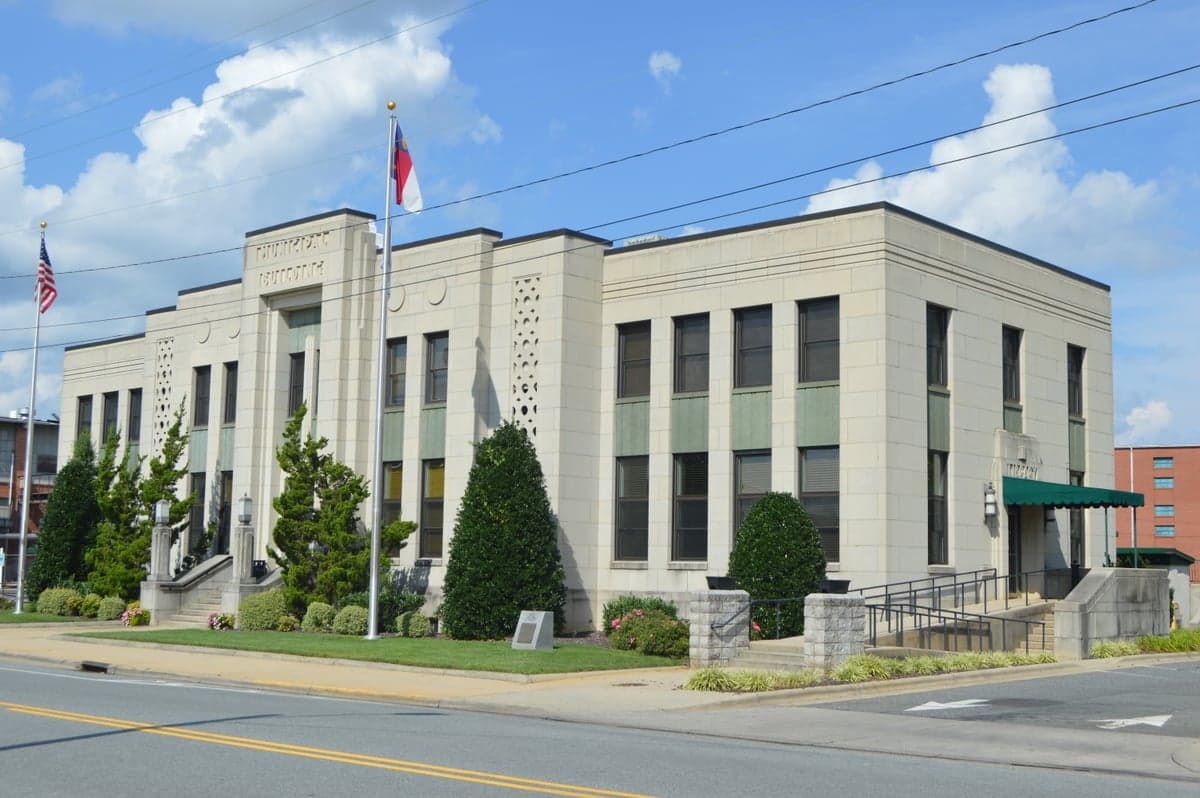
Photo: Wikipedia
Political ClimatePolitical Climate in Asheboro, NC
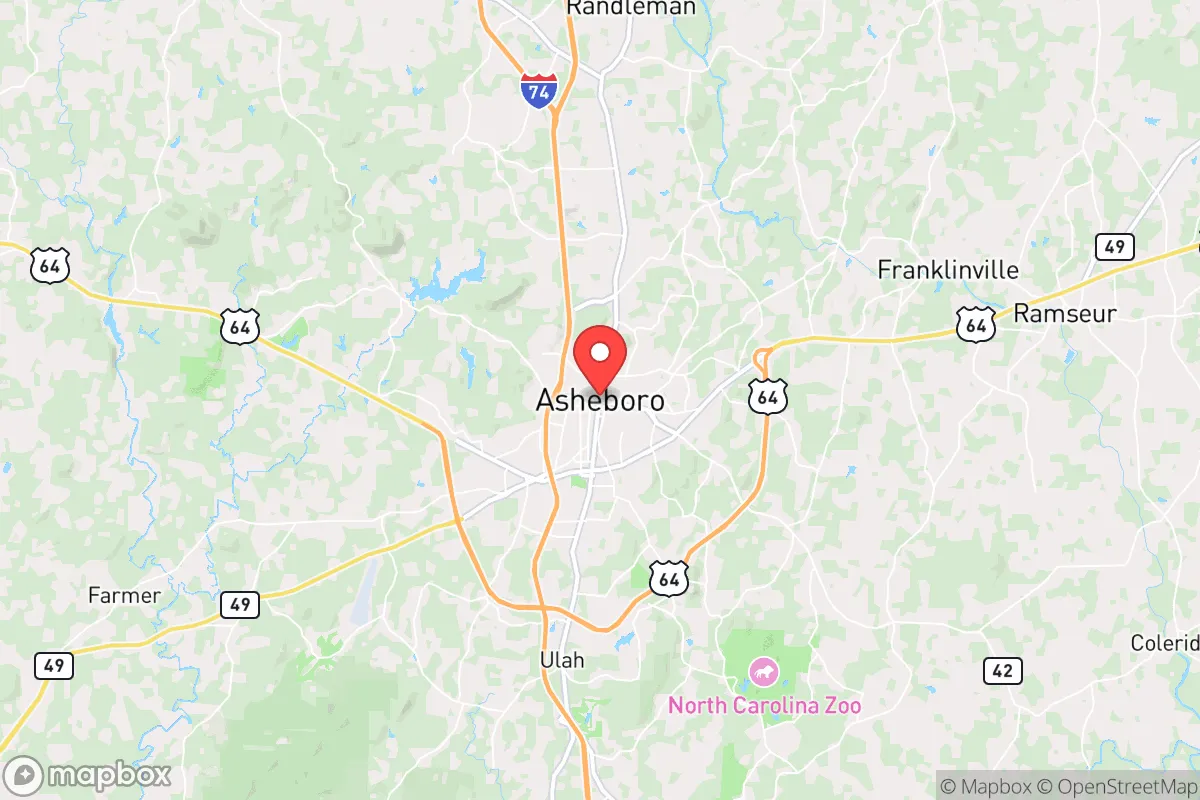
District shown is the primary district for this city’s centroid. Cities may span multiple districts.
Local Political AnalysisPolitical Analysis of Asheboro, NC
Asheboro sits solidly in the red, with a Cook PVI of R+8 that reflects a long-standing conservative majority in Randolph County. The city itself has historically leaned Republican, but the surrounding rural areas—places like Franklinville, Ramseur, and Liberty—are even more deeply conservative, often voting +20 to +30 points for GOP candidates in state and local races. That said, Asheboro’s political climate has shifted noticeably over the past decade. The old guard of quiet, small-government conservatism is still here, but you’re starting to see more progressive energy creeping in, especially among younger transplants and some of the newer folks moving up from the Piedmont Triad. It’s not a blue wave by any stretch, but the trajectory is worth watching if you value limited government and local control.
How it compares
Drive 20 minutes north to Greensboro, and you’re in a completely different political world—Guilford County is reliably blue, with a Cook PVI of D+8. That’s a 16-point swing from Asheboro’s R+8, and you feel it in everything from property tax rates to school board decisions. To the south, places like Troy and Biscoe in Montgomery County are more conservative than Asheboro, but they’re smaller and less economically diverse. The real contrast is with nearby High Point, which is a purple-ish mix of manufacturing roots and newer suburban development. Asheboro’s advantage is that it’s still a place where your voice matters in local elections—turnout is high, and the county commission and school board are dominated by folks who generally believe in fiscal restraint and personal responsibility. That’s getting harder to find as the state’s urban centers push for more centralized control.
What this means for residents
For the average Asheboro resident, the political climate translates into lower taxes and fewer regulations compared to cities like Greensboro or Raleigh. Property taxes in Randolph County are among the lowest in the Piedmont Triad region, and you don’t see the kind of zoning overreach or business mandates that are common in more progressive areas. The school board has resisted woke curriculum pushes, and the county has been slow to adopt state-mandated housing density rules that many conservatives see as government overreach. That said, there’s growing pressure from state-level Democrats and some local activists to expand public transit, increase affordable housing quotas, and impose stricter environmental rules on the many furniture and textile factories here. If those trends accelerate, Asheboro could lose the very independence that makes it attractive to families and small business owners who just want to be left alone.
Culturally, Asheboro still holds onto its blue-collar, church-going roots. The city is home to the North Carolina Zoo, which draws tourists but hasn’t turned the area into a progressive enclave. Gun rights are widely respected, and you’ll see “Come and Take It” flags flying alongside American flags in many front yards. The biggest policy distinction is the county’s strong opposition to sanctuary city status—Randolph County has explicitly declared itself a Second Amendment sanctuary and has resisted any local ordinances that would limit cooperation with federal immigration enforcement. That’s a line in the sand that most residents here support, and it’s one of the main reasons Asheboro remains a refuge for people who feel like their values are under attack in the bigger cities. If you’re looking for a place where the government still remembers it works for you, not the other way around, Asheboro is holding the line—for now.

State Political ClimatePolitical Climate in North Carolina
State Political AnalysisPolitical Environment in the State
North Carolina has long been considered a quintessential swing state, but over the past decade, it has settled into a reliably Republican-leaning posture, particularly in statewide and legislative elections. The state voted for Donald Trump in both 2016 and 2024, and while the margins have been close—Trump won by about 1.3 points in 2024—the GOP has maintained firm control of the General Assembly and the state Supreme Court. The dominant coalition is a mix of rural conservatives, suburban moderates, and a growing population of conservative-leaning transplants from the Northeast and Midwest. However, the state’s political trajectory is not static; the Research Triangle (Raleigh-Durham-Chapel Hill) and Charlotte metro areas are rapidly growing and becoming more progressive, creating a tension that defines North Carolina’s political climate today.
Urban vs. rural divide
The political map of North Carolina is a textbook study in the urban-rural split. The state’s three major metro areas—Charlotte, the Research Triangle (Raleigh, Durham, Chapel Hill), and the Triad (Greensboro, Winston-Salem, High Point)—drive the Democratic vote. Wake County (Raleigh) and Mecklenburg County (Charlotte) alone account for nearly a quarter of the state’s population and vote reliably blue. In 2024, Wake County went for Kamala Harris by 20 points, while Mecklenburg went for her by 18 points. Meanwhile, the rural eastern counties—like Robeson, Columbus, and Pitt—and the western mountain counties—like Watauga, Buncombe (Asheville), and Haywood—are more mixed, with some trending red and others blue. The real Republican strongholds are the exurban and rural counties surrounding the metros: Union County (southeast of Charlotte) voted +32 for Trump in 2024, while Johnston County (southeast of Raleigh) voted +24. The state’s political future hinges on whether these suburban counties continue to drift right or flip back toward the center as new residents arrive. For now, the rural counties are holding the line, but the urban centers are growing faster, which is why the state remains competitive at the presidential level.
Policy environment
North Carolina’s policy environment is broadly conservative, with a few notable exceptions. The state has a flat income tax rate of 4.5%, which is scheduled to drop to 3.99% by 2027 under legislation passed by the Republican supermajority in 2021. There is no state property tax, and sales taxes are capped at 7.5% in most counties. The regulatory posture is business-friendly, with right-to-work laws and a low corporate tax rate of 2.5%. On education, the state has a robust school choice program, including the Opportunity Scholarship Program, which provides vouchers for private school tuition, and charter schools are widely available. However, the state’s public school system is underfunded relative to its wealth, and teacher pay ranks 46th nationally. On healthcare, North Carolina expanded Medicaid in 2023 under a bipartisan deal, a move that was controversial among conservatives but ultimately passed with some GOP support. Election laws are a flashpoint: the state requires voter ID, has strict absentee ballot rules, and has been at the center of gerrymandering lawsuits. The Republican-controlled legislature has consistently pushed for election integrity measures, while Democrats argue they suppress turnout. For a conservative-leaning resident, the tax and regulatory environment is a clear draw, but the Medicaid expansion and ongoing battles over education funding are areas of concern.
Trajectory & freedom
North Carolina is becoming more free in several key areas, but the trend is not uniform. On gun rights, the state passed permitless carry (constitutional carry) in 2023, allowing law-abiding citizens to carry concealed firearms without a permit. This was a major win for Second Amendment advocates. On parental rights, the legislature passed the Parents’ Bill of Rights in 2023, which requires schools to notify parents about curriculum changes and prohibits instruction on gender identity and sexual orientation in K-4 classrooms. This law has been challenged in court but remains in effect. On medical autonomy, the state banned nearly all abortions after 12 weeks in 2023, with exceptions for rape, incest, and fetal anomalies—a significant restriction compared to the previous 20-week limit. However, the state has not moved on school choice expansion beyond vouchers, and property rights remain strong, with no statewide rent control or zoning preemption. The biggest threat to freedom in the eyes of many conservatives is the growing influence of progressive local governments in Charlotte and Raleigh, which have passed sanctuary city policies and pushed for higher minimum wages. The state legislature has preempted many of these local ordinances, but the tension is ongoing. Overall, the state is trending more conservative on cultural issues but remains a battleground on economic and local control matters.
Civil unrest & political movements
North Carolina has seen its share of political flashpoints. The 2020 protests in Charlotte and Raleigh over the death of George Floyd were large but largely peaceful, though there were isolated incidents of property damage. The state has a strong conservative activist base, particularly around the John Locke Foundation and local tea party groups, which have been instrumental in pushing for school choice and tax cuts. On the left, the Moral Monday movement, led by the NAACP, has been a persistent force, organizing protests at the General Assembly over voting rights, Medicaid expansion, and education funding. Immigration politics are a hot-button issue: while the state has no sanctuary policies at the state level, Mecklenburg County (Charlotte) and Durham County have declared themselves sanctuary jurisdictions, leading to clashes with state law enforcement. In 2024, the legislature passed a bill requiring local sheriffs to cooperate with ICE, which was signed into law. Election integrity remains a major concern for conservatives, with ongoing lawsuits over voter ID and absentee ballot procedures. The 2020 election saw a massive surge in mail-in voting, which led to allegations of irregularities, though no widespread fraud was proven. For a new resident, the visible flashpoints are the dueling protests at the state capitol and the constant legal battles over voting laws—a sign that the political temperature is high but not boiling over.
Projection
Over the next 5-10 years, North Carolina is likely to become more competitive at the presidential level, but the state legislature will remain Republican-controlled due to gerrymandering and the concentration of Democratic voters in urban areas. The in-migration from blue states—particularly New York, New Jersey, and California—is accelerating, with the state adding over 100,000 new residents per year. Many of these transplants are conservative-leaning, but a significant number are moderates or liberals, especially those moving to the Research Triangle and Charlotte. The rural counties are losing population, which will erode the GOP’s base over time. However, the state’s conservative policy environment—low taxes, school choice, gun rights—is a powerful draw for the kind of people who are leaving high-tax states. The wildcard is the state’s growing Hispanic population, which is concentrated in the eastern counties and the Charlotte metro. This group is not monolithic; many are conservative on social issues but lean Democratic on economics. If the GOP can continue to court Hispanic voters, the state could remain red for another decade. If not, it will flip blue by 2032. For someone moving in now, expect a state that is politically divided but functionally conservative on most policy fronts, with a constant low-grade culture war playing out in the legislature and the courts.
For a conservative-leaning individual or family, North Carolina offers a strong combination of low taxes, school choice, gun rights, and a growing economy. The trade-off is that you will live in a state where the urban centers are increasingly progressive, and the political battles over education, immigration, and election integrity are ongoing. If you value personal freedom and limited government, the state is a solid bet—just be prepared to engage in the fight to keep it that way. The key is to choose your location wisely: the exurbs of Charlotte (like Waxhaw or Fort Mill) or the Triad (like Kernersville or Clemmons) offer a conservative lifestyle with access to urban amenities, while the rural counties offer a quieter, more traditional way of life. Avoid the urban cores unless you are comfortable with progressive local governance. North Carolina is not Texas or Florida in terms of conservative dominance, but it is a state where your values can thrive if you are intentional about where you live and how you vote.
* Values derived from national, state, county, city and local statistics and may differ in a specific area. Last updated: 2026-05-03T04:56:10.000Z
Narrative content on this page is AI-generated and may contain mistakes. Verify any details that matter before acting on them.
ReloMaps may earn a commission from affiliate links at no extra cost to you.

