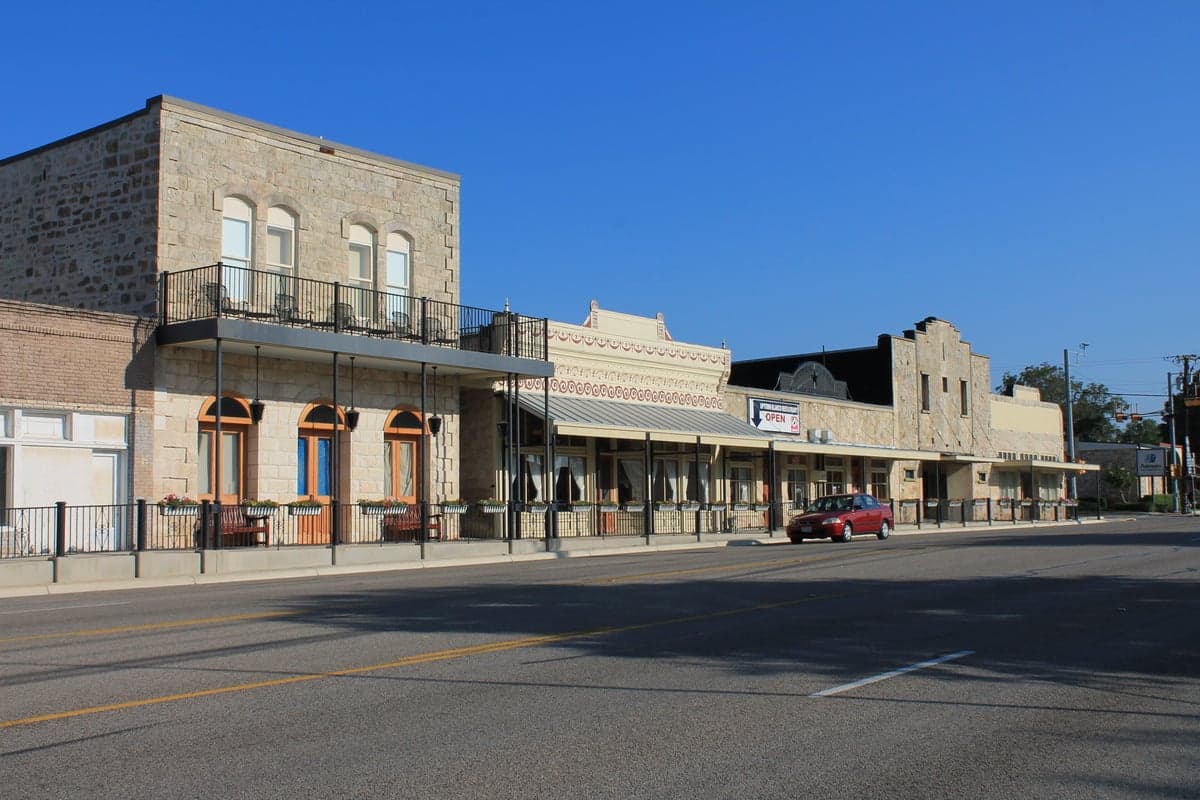
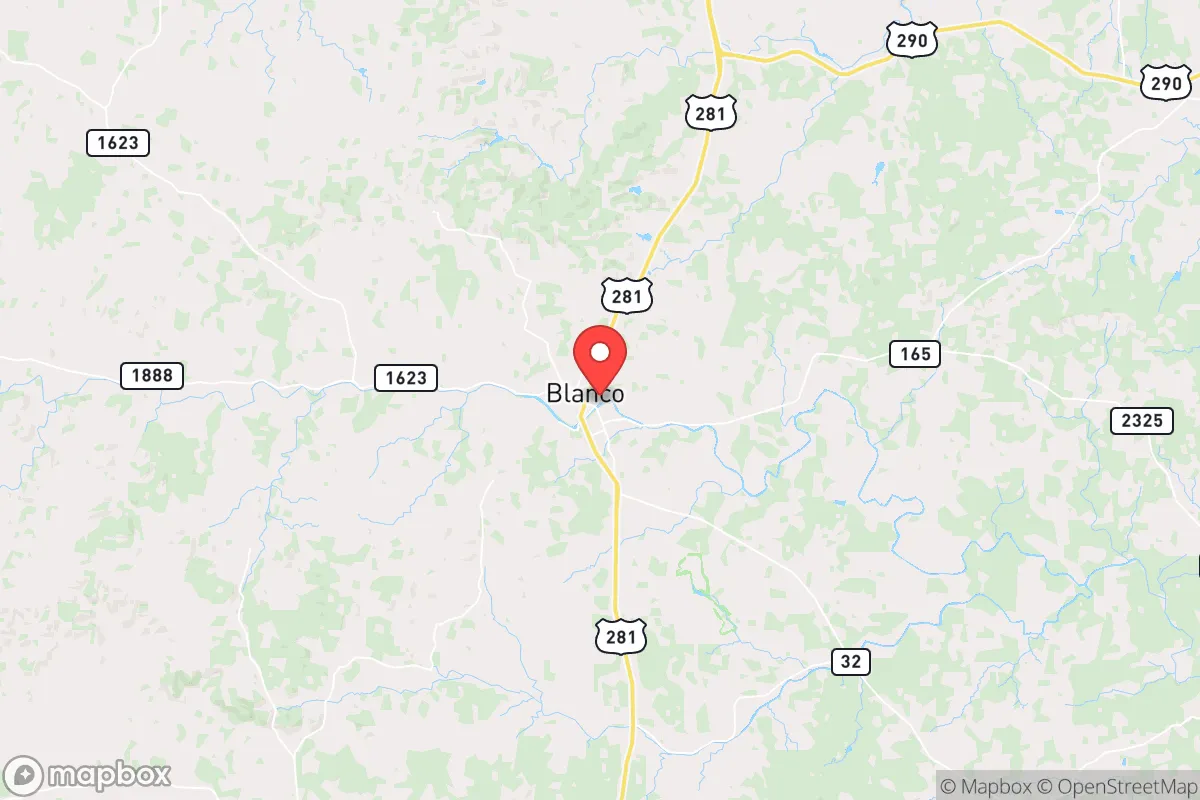

Photo: Wikipedia
Political ClimatePolitical Climate in Blanco, TX
District shown is the primary district for this city’s centroid. Cities may span multiple districts.
Local Political AnalysisPolitical Analysis of Blanco, TX
Blanco, Texas, has long been a rock-ribbed conservative stronghold, and that hasn't changed much even as the rest of the state has shifted a few degrees left. The area carries a Cook Partisan Voting Index of R+11, meaning it votes about 11 points more Republican than the national average. That’s a full seven points redder than Texas as a whole, which sits at R+4. If you’ve lived here a while, you’ve watched the county hold the line while places like Austin—just 45 minutes east—have gone full progressive. Blanco itself still feels like the Texas I grew up in: folks mind their own business, keep their guns, and don’t take kindly to government telling them how to live.
How it compares
Compared to the state average, Blanco is noticeably more conservative. The R+11 PVI puts it in the same league as deep-red rural counties, while Texas as a whole has been drifting purple—especially in the metroplexes. Drive 20 minutes south to San Marcos or 30 minutes north to Johnson City, and you’ll see a different political flavor. San Marcos, home to Texas State University, leans blue and has gotten more progressive every cycle. Johnson City is still conservative but not as reliably as Blanco. Even nearby Fredericksburg, though red, has a more tourist-driven, moderate vibe. Blanco, by contrast, hasn’t budged. The local elections are decided in Republican primaries, and the county commission, school board, and sheriff’s office are all solidly conservative. The state’s R+4 average reflects the influence of Houston, Dallas, and San Antonio—cities where progressive policies on taxes, zoning, and policing have taken root. That’s not happening here.
What this means for residents
For someone who values personal freedom and limited government, Blanco is a breath of fresh air. You don’t see the kind of overreach that’s become common in blue-leaning cities—no heavy-handed mask mandates, no restrictive zoning that tells you what you can do with your own land, no property tax hikes disguised as “equity” initiatives. The local government stays out of your business. That’s a big deal when you look at what’s happening in Austin or even San Antonio, where city councils have pushed everything from defunding police to mandatory paid leave. Here, the sheriff’s office still cooperates with federal immigration enforcement, and the school board hasn’t bought into critical race theory or gender ideology. If you’re worried about the direction of the state, Blanco feels like a holdout. The concern, though, is that as Texas gets bluer, state-level mandates could start overriding local control. That’s the real threat—not from Blanco itself, but from Austin and Washington trying to impose one-size-fits-all rules on a community that knows what works for itself.
Culturally, Blanco is still a place where the Fourth of July parade is a bigger deal than any political rally, and where neighbors help each other without a government program. The policy distinctions are clear: low taxes, strong Second Amendment protections, and a school system that focuses on basics, not social experiments. The biggest contrast with the rest of Texas is the pace of change. While the state’s urban centers race toward progressive policies, Blanco is content to stay the same. That’s exactly what most of us want—to be left alone to live our lives the way we see fit. If that ever changes, it won’t be because Blanco voted for it. It’ll be because the state or federal government forced it on us. And that’s the fight worth keeping an eye on.

State Political ClimatePolitical Climate in Texas
State Political AnalysisPolitical Environment in the State
Texas leans Republican with a Cook PVI of R+4, but that number tells only part of the story. Over the past 20 years, the state has shifted from a solid red stronghold to a more competitive battleground, though the 2024 election showed a notable rightward swing—Donald Trump won by over 13 points, up from 5.6 in 2020. The dominant coalition remains a mix of rural conservatives, suburban moderates, and a growing number of Hispanic voters who broke for Republicans in record numbers. But the urban cores of Austin, Houston, Dallas, and San Antonio are increasingly Democratic, creating a sharp geographic and cultural divide that defines Texas politics today.
Urban vs. rural divide
The political map of Texas is a tale of two landscapes. The vast rural and exurban areas—think Lubbock, Amarillo, Midland-Odessa, and the Piney Woods of East Texas—vote overwhelmingly Republican, often by 70-80% margins. These regions are the backbone of the GOP’s dominance. Meanwhile, the major metros are split: the urban cores of Austin (Travis County), Dallas (Dallas County), Houston (Harris County), and San Antonio (Bexar County) lean Democratic, with Austin being the bluest major city in the state. The real action is in the suburbs. Collin County (Plano, Frisco) and Fort Bend County (Sugar Land, Katy) were once reliably red but became competitive in the Trump era. However, in 2024, Collin County swung back to the right, with Trump winning it by 15 points after a narrow loss in 2020. That flip signals that the suburban shift toward Democrats may have peaked. El Paso remains a Democratic stronghold, but even there, Republican gains among Hispanic voters are narrowing the gap.
Policy environment
Texas’s policy environment is a dream for conservatives who value limited government and personal freedom. There is no state income tax, and property taxes, while high, are offset by homestead exemptions and a robust appraisal cap. The regulatory posture is business-friendly—no state-level minimum wage above the federal $7.25, right-to-work laws, and minimal occupational licensing barriers. On education, Texas has expanded charter schools and is currently debating a school voucher program (SB 2 in the 2025 session) that would let parents use state funds for private or homeschool expenses. Healthcare remains a flashpoint: the state refused Medicaid expansion and passed a near-total abortion ban (SB 8 and the trigger law) that took effect after Dobbs. Election laws were tightened with SB 1 in 2021, adding voter ID requirements and limiting drive-through and 24-hour voting. Gun rights are robust—permitless carry (HB 1927) became law in 2021, allowing most adults to carry a handgun without a license. Parental rights are also prioritized: HB 3979 restricts how race and history are taught in public schools, and HB 900 requires age verification for adult websites. For a conservative family, the policy environment is largely aligned with traditional values and limited government.
Trajectory & freedom
Is Texas becoming more or less free? From a conservative lens, the trajectory is mixed but largely positive. On the freedom side, permitless carry expanded Second Amendment rights. HB 1927 was a landmark win for gun owners. The state also banned COVID-19 vaccine mandates for private employers (SB 29) and protected medical freedom of choice. Property rights were strengthened with laws limiting eminent domain for private development and restricting foreign ownership of land near military bases (SB 147). School choice legislation, if passed, would give parents more control over their children’s education. On the concerning side, some conservatives worry about the growing influence of corporate interests in Austin—big tech and renewable energy companies pushing for more regulation. The state’s abortion ban, while popular with social conservatives, is seen by some libertarians as government overreach into personal medical decisions. Overall, Texas has trended toward more personal liberty in the areas of guns, vaccines, and parental rights, while maintaining a low-tax, low-regulation economic environment. The key is that the state government generally stays out of your life unless it’s protecting life or traditional values.
Civil unrest & political movements
Texas has seen its share of political flashpoints. The 2020 Black Lives Matter protests were largest in Austin, Dallas, and Houston, with Austin’s downtown becoming a nightly battleground. In response, the state legislature passed a law (HB 9) increasing penalties for rioting and blocking highways. The border crisis has been a constant source of tension: Governor Abbott’s Operation Lone Star deployed state troopers and National Guard to the border, and the state bused thousands of migrants to sanctuary cities like New York and Chicago. This has energized both pro- and anti-immigration activists. The “Texit” movement—pushing for secession—gained traction after the 2020 election, with the Texas Nationalist Movement holding rallies, though it remains fringe. Election integrity controversies flared after 2020, leading to SB 1 and ongoing audits in counties like Harris. School board meetings have become battlegrounds over library books and curriculum, with groups like Moms for Liberty gaining influence. A new resident would notice the strong presence of both conservative and progressive activism, especially in Austin, where you’ll see competing rallies at the Capitol almost weekly. The political climate is passionate but not violent—most disagreements play out in elections and courtrooms.
Projection
Looking ahead 5-10 years, Texas is likely to remain a Republican-leaning state, but the margin could narrow again as in-migration from blue states brings more Democratic voters. However, the 2024 election showed that many newcomers—especially from California—are actually conservatives fleeing high taxes and lockdowns. The Hispanic vote is the wild card: if Republicans continue to gain ground with this demographic, Texas could become even redder. The suburbs of Dallas-Fort Worth and Houston will remain the key battlegrounds. Policy-wise, expect continued fights over school choice, property tax reform, and energy regulation (grid reliability after the 2021 winter storm). The state’s economic growth will attract more people, but that growth also strains infrastructure and housing. For a conservative moving in now, the next decade will likely bring more of the same: low taxes, strong gun rights, and a government that respects parental authority—but with constant cultural battles in the cities. The state’s political trajectory is stable but not static; it rewards those who stay engaged.
For a new resident, the bottom line is this: Texas offers a high degree of personal freedom, especially
* Values derived from national, state, county, city and local statistics and may differ in a specific area. Last updated: 2026-05-14T18:31:56.000Z
Narrative content on this page is AI-generated and may contain mistakes. Verify any details that matter before acting on them.
ReloMaps may earn a commission from affiliate links at no extra cost to you.

