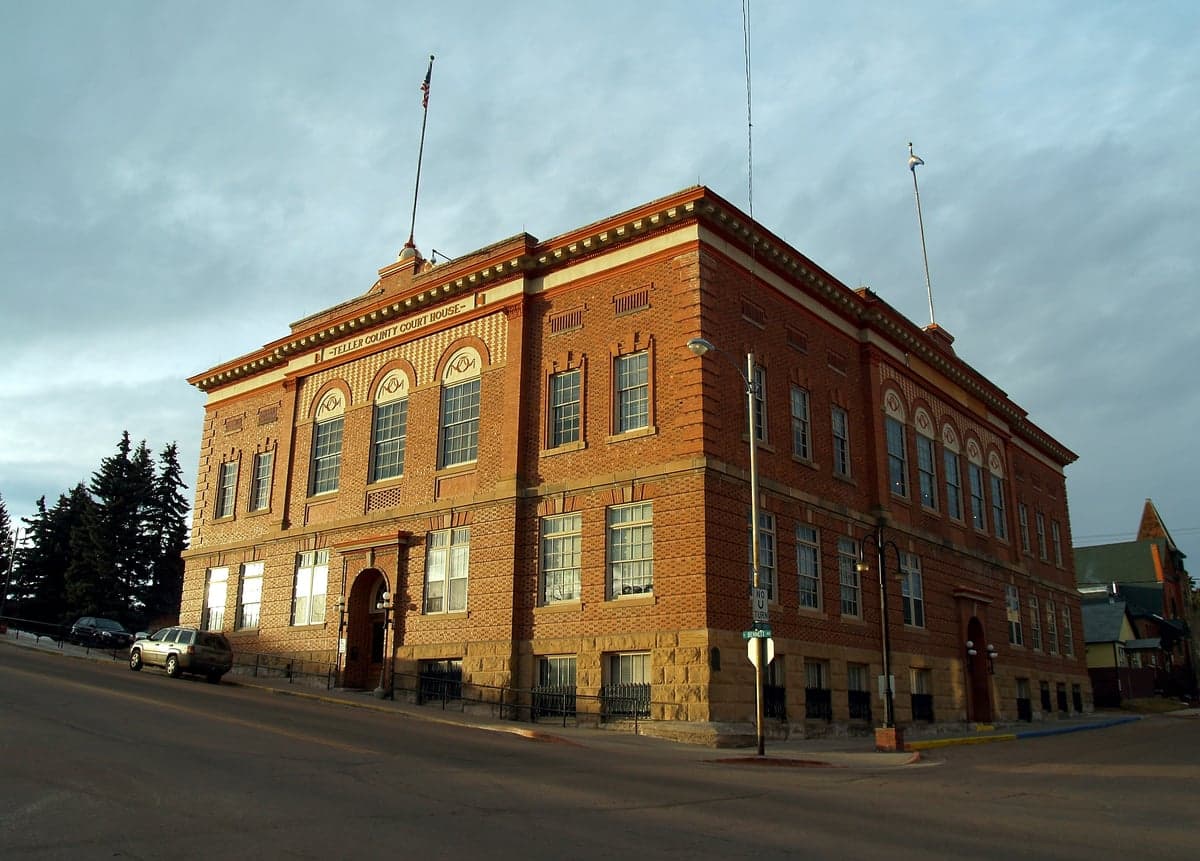
Photo: Wikipedia
Political ClimatePolitical Climate in Teller County
Showing district-level results — no local-only data available.
Local Political AnalysisPolitical Analysis of Teller County
Teller County, Colorado, has long been a bastion of conservative values, a place where folks take personal responsibility seriously and view government with a healthy dose of skepticism. While the county as a whole leans reliably red, the political landscape is shifting, and not entirely in a direction that sits well with many of us who’ve been here a while. The Cook PVI for Colorado is D+8, and the state as a whole is D+6, but those numbers don't tell the full story of the tension between the rural, liberty-minded communities and the creeping influence of Front Range progressivism.
How it compares
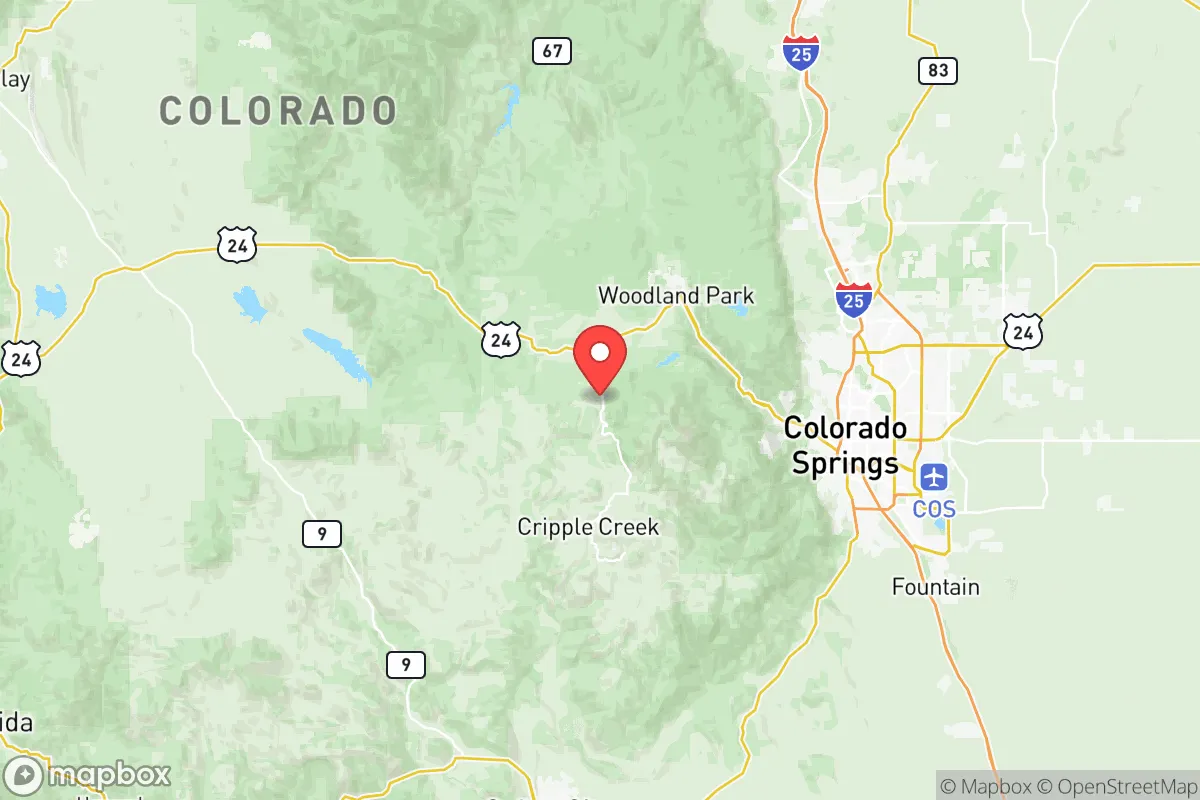
Compared to the rest of Colorado, Teller County is a political island. The state’s D+6 PVI reflects the dominance of Denver, Boulder, and the I-25 corridor, where progressive policies on everything from energy to land use are the norm. Here in Teller, you see a different picture. Woodland Park, the county seat, is a solidly conservative hub, with local elections often turning on issues of property rights and limited government. The smaller towns like Cripple Creek and Victor lean even further right, driven by a strong mining and tourism heritage that values self-reliance. The real contrast is with places like Colorado Springs, just down Ute Pass, which is more of a mixed bag—military and evangelical conservatives there, but also a growing tech and arts scene that pulls left. In Teller, you don't get that same split; the county’s rural character and distance from the Front Range’s urban centers keep the political temperature cooler and more consistent. The swing precincts, if you can call them that, are in the newer subdivisions around Divide and Florissant, where transplants from Denver have brought some of their voting habits with them. Those areas are where you see the closest races, and they’re a real concern for anyone who values the county’s traditional independence.
What this means for residents
For those of us living here, the political climate means a daily fight to keep government out of our lives. You see it in the pushback against state-level mandates on everything from gun laws to energy regulations. Teller County’s commissioners have been vocal about opposing state overreach, and local law enforcement has a reputation for not enforcing laws they see as infringing on Second Amendment rights. That’s a big deal for residents who moved here specifically to escape the kind of progressive policies that are choking the Front Range. Property taxes are relatively low, and there’s a strong culture of volunteerism and neighborly help that doesn’t rely on government programs. But the pressure is mounting. The influx of new residents from blue states is slowly changing the electorate, and there’s a real worry that in another decade, Teller County could start to look more like Jefferson County—a place that was once conservative but has been flipped by demographic change. For now, though, the county remains a place where a person can still live free, as long as they’re willing to stay engaged and vote.
Culturally, Teller County stands apart from the rest of Colorado in its embrace of traditional values and its resistance to the progressive agenda. You won’t find the same level of support for things like sanctuary city policies or green energy mandates here. Instead, the focus is on local control, fiscal responsibility, and a deep respect for the Constitution. The policy distinctions are stark: while the state pushes for tighter environmental regulations that can hurt small businesses and property owners, Teller County fights to keep land-use decisions local. It’s a place where the old Colorado spirit—independent, rugged, and skeptical of authority—still thrives, but it’s under constant threat from the political winds blowing from Denver. If you’re looking for a community that values freedom over government control, Teller County is one of the last strongholds in the state. But don’t take it for granted; the fight to keep it that way is real and ongoing.

State Political ClimatePolitical Climate in Colorado
State Political AnalysisPolitical Environment in the State
Colorado today is a solidly blue state with a Cook PVI of D+6, meaning it votes about six points more Democratic than the national average in presidential elections. That wasn’t always the case—as recently as 2004, the state went for George W. Bush, and it was considered a classic swing state well into the 2000s. Over the last 20 years, a massive influx of out-of-state transplants, particularly from California and the Northeast, has shifted the political center of gravity from the conservative Western Slope and Front Range exurbs to the Denver-Boulder-Aurora metroplex, turning a purple state decisively blue.
Urban vs. rural divide
The political map of Colorado is a textbook study in urban-rural polarization. The Denver metro area, home to roughly 60% of the state’s population, is the engine of Democratic dominance. Denver, Boulder, and the inner-ring suburbs of Jefferson and Arapahoe counties consistently vote 60-70% Democratic, with Boulder County being one of the most left-leaning jurisdictions in the entire country. The I-25 corridor from Fort Collins down through Colorado Springs is a mixed bag: Fort Collins (Larimer County) leans blue, while Colorado Springs (El Paso County) remains a conservative stronghold, anchored by military installations like Fort Carson and the Air Force Academy. The Western Slope—places like Grand Junction, Montrose, and Durango—is more libertarian-leaning conservative, but its population is too small to counterbalance the Front Range. The rural Eastern Plains, towns like Lamar and Burlington, vote overwhelmingly Republican but have been losing population for decades. The key shift: suburban counties like Douglas and Weld, once reliably red, have been trending purple or even blue as new arrivals from blue states settle in. Douglas County, for example, went from a 20-point Republican margin in 2012 to a single-digit one in 2020.
Policy environment
Colorado’s policy environment reflects its blue tilt, with a few notable wrinkles. The state has a flat income tax rate of 4.4% (voter-approved via TABOR, which limits tax increases), but Democrats have repeatedly tried to bypass TABOR through fee increases and ballot measures. Property taxes are relatively low compared to Texas, but the state’s regulatory posture is aggressive, especially on energy and land use. The 2019 oil and gas reform law (SB 19-181) gave local governments sweeping authority to restrict drilling, effectively crippling new development in much of the Front Range. Education policy is dominated by teachers’ unions; the state has seen multiple strikes and consistently ranks near the bottom nationally for school choice, with a weak charter school law and no voucher program. Healthcare is heavily regulated, with a state-run insurance exchange and Medicaid expansion under the Affordable Care Act. Election laws are among the most liberal in the nation: Colorado automatically mails a ballot to every registered voter, offers same-day registration, and has no voter ID requirement at the polls. This has led to persistent concerns about election integrity among conservatives, though no major fraud has been proven.
Trajectory & freedom
On the freedom front, Colorado is a mixed bag trending in the wrong direction for conservatives. The state has expanded personal liberty in some areas—recreational marijuana was legalized in 2012, and assisted suicide was legalized in 2016. But on core conservative issues, the trajectory is concerning. Gun rights have been under sustained assault: in 2013, the state passed universal background checks and a 15-round magazine limit (since upheld by courts), and in 2023, a new law raised the minimum age to purchase any firearm to 21 and imposed a three-day waiting period. A 2024 “red flag” law allows courts to temporarily seize firearms from individuals deemed a risk. Parental rights took a hit with the 2019 “comprehensive sex education” law (HB 19-1032), which mandates age-appropriate instruction on sexual orientation and gender identity starting in kindergarten, with no parental opt-out. Medical autonomy was curtailed during COVID, when Governor Jared Polis imposed some of the nation’s longest-lasting mask and vaccine mandates for state workers. Property rights are under pressure from a 2021 law that eliminated single-family zoning in many cities, allowing duplexes and triplexes in formerly residential neighborhoods. The overall trend is clear: Colorado is becoming less free for those who value gun rights, parental control, and limited government.
Civil unrest & political movements
Colorado has seen its share of political flashpoints. The 2020 George Floyd protests in Denver turned violent, with property damage and clashes between police and demonstrators. The city later cut its police budget by $8 million, though much of that was restored. On the right, the “Colorado Project” and other grassroots groups have organized around election integrity, parental rights in schools, and opposition to the state’s energy policies. The 2022 election saw a surge in Republican activism in Weld and El Paso counties, but the party failed to flip any statewide offices. Immigration is a growing flashpoint: Denver has declared itself a “sanctuary city,” and the state has a 2019 law (HB 19-1124) that limits cooperation between local law enforcement and federal immigration authorities. In 2023, the city struggled to house thousands of migrants bused from Texas, leading to tensions between progressive activists and residents frustrated with the cost and strain on services. Election integrity remains a hot-button issue: the 2020 election saw a lawsuit over the state’s mail-in ballot system, and a 2022 audit of Dominion voting machines in Mesa County led to a criminal investigation of the county clerk, a Republican who claimed the machines were compromised. These controversies are not theoretical—they are live issues that a new resident will hear about in local news and community meetings.
Projection
Looking ahead 5-10 years, the demographic trends favor continued Democratic dominance. The state is growing fastest in the Denver metro and along the Front Range, where new arrivals tend to be younger, more diverse, and more liberal. The rural and exurban areas that vote Republican are stagnant or shrinking. By 2030, Colorado could easily shift from D+6 to D+8 or D+10, making it as reliably blue as states like New Mexico or Oregon. The state’s policy trajectory will likely accelerate: expect more gun control, more restrictions on oil and gas, more progressive education mandates, and higher taxes as Democrats find ways around TABOR. The one wild card is the cost of living: if housing prices continue to skyrocket (the median home price in Denver is over $600,000), the inflow of new residents could slow, potentially stabilizing the political balance. But for now, the momentum is all one direction.
For a conservative considering a move to Colorado, the bottom line is sobering. The state offers stunning natural beauty, a strong economy, and a relatively low tax burden compared to the coasts, but the political climate is increasingly hostile to traditional conservative values. If you value gun rights, parental control over education, and limited government, you will find yourself on the losing side of most legislative battles. The best bets for a conservative-friendly enclave are El Paso County (Colorado Springs), Weld County (Greeley), or the Western Slope (Grand Junction), but even those areas are being diluted by in-migration. Colorado is a beautiful place to live, but it is no longer a place where conservatives can feel at home politically—and that trend shows no signs of reversing.
* Values derived from national, state, county, city and local statistics and may differ in a specific area. Last updated: 2026-05-24T13:22:03.000Z
Narrative content on this page is AI-generated and may contain mistakes. Verify any details that matter before acting on them.
ReloMaps may earn a commission from affiliate links at no extra cost to you.

