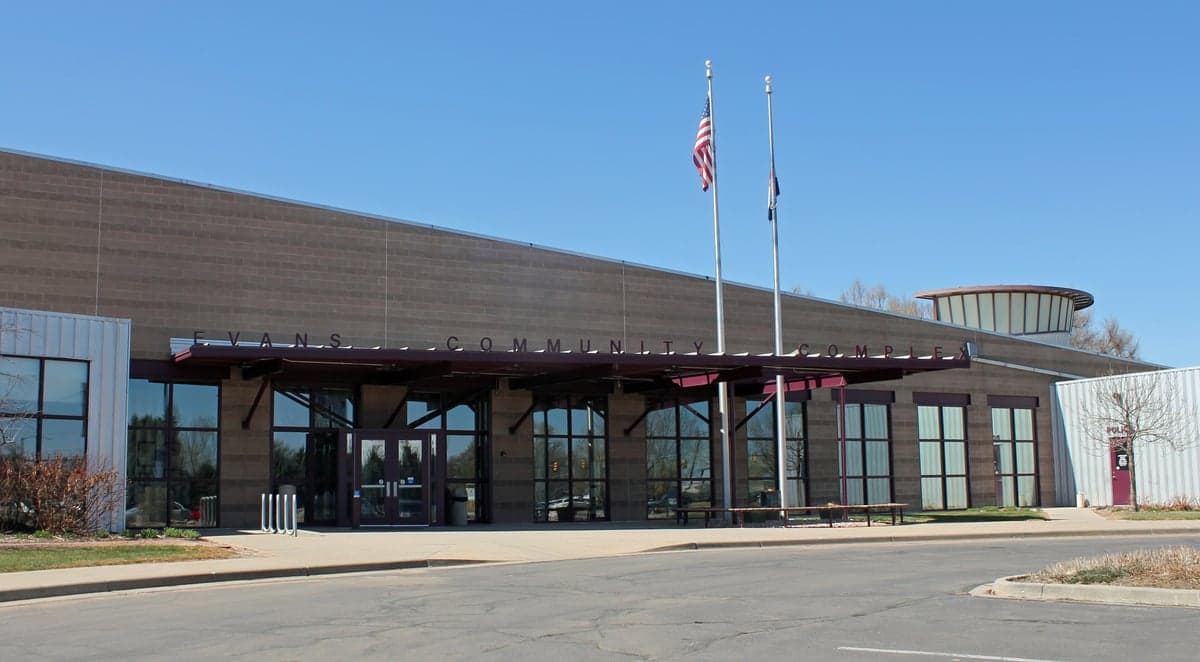
Photo: Wikipedia
Political ClimatePolitical Climate in Evans, CO
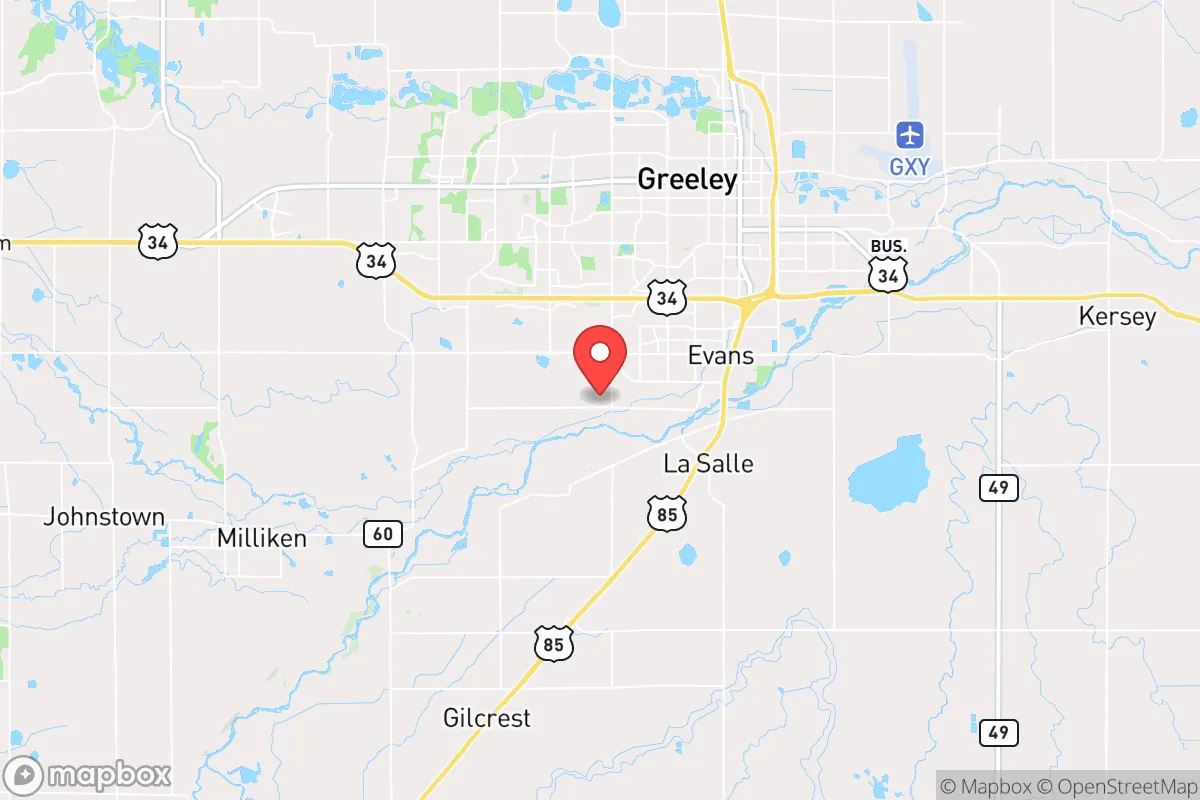
District shown is the primary district for this city’s centroid. Cities may span multiple districts.
Local Political AnalysisPolitical Analysis of Evans, CO
Evans, Colorado, sits in a political tug-of-war that mirrors the state's broader shift, but the town itself still leans conservative at its core. The Cook PVI rating of EVEN tells you everything you need to know—this isn't a deep-red stronghold like Weld County used to be, but it's not a progressive hub either. For a long time, Evans was reliably conservative, with folks who valued personal responsibility and limited government interference. But over the last decade, you've seen the influence of nearby Greeley and the Front Range's rapid growth start to nudge things toward the center. The 2020 and 2024 elections showed a tightening, with Democratic candidates making inroads in local races, but the old-school values of self-reliance and fiscal restraint still hold strong in most neighborhoods.
How it compares
Drive ten minutes east to Greeley, and you'll find a more mixed political landscape—still conservative overall, but with a growing progressive presence, especially among younger transplants and the university crowd at UNC. Head west to Windsor, and you're in solidly Republican territory, where taxes and property rights are sacred. Evans sits right in the middle, politically speaking. It's not as red as Johnstown or Milliken, but it's nowhere near as blue as Fort Collins or Boulder. What sets Evans apart is its working-class backbone—many residents work in agriculture, energy, or trades, and they're not quick to embrace the kind of government overreach you see in bigger cities. The contrast is sharpest when you look at local school board races or city council decisions: Evans tends to vote for common-sense, low-regulation approaches, while neighboring towns are starting to flirt with more progressive policies on housing and zoning.
What this means for residents
For the average person living here, the political climate means you still have a good deal of freedom to live your life without the government breathing down your neck. Property taxes are reasonable, and there's not much appetite for the kind of overregulation that's creeping into places like Denver or Boulder. You won't see Evans jumping on board with statewide mandates that trample on personal choices—whether that's about how you run your small business or what you do on your own land. That said, the shift toward the center is real, and it's something to keep an eye on. If you're the kind of person who values individual rights and doesn't want a bunch of bureaucrats telling you how to live, Evans still feels like a safe bet. But the pressure is building, especially as more people move in from blue areas and bring their ideas about "progress" with them.
One thing that stands out culturally is how Evans handles local issues like water rights and land use—these are bread-and-butter concerns that cut across party lines, but the conservative instinct to keep government small and hands-off is still the default. You won't find the kind of activist city councils or woke policies that are popping up in some Colorado towns. The long-term trajectory depends on who moves in next and whether the old guard can hold the line against the tide of progressive ideology that's washing over the rest of the state. For now, Evans remains a place where you can still breathe easy, but you'd better keep your eyes open.

State Political ClimatePolitical Climate in Colorado
State Political AnalysisPolitical Environment in the State
Colorado has shifted from a classic purple swing state to a solidly blue-leaning state over the past two decades, with Democrats now controlling the governorship, both chambers of the legislature, and both U.S. Senate seats. The state voted for Hillary Clinton by 5 points in 2016, Joe Biden by 13 points in 2020, and Kamala Harris by roughly 11 points in 2024, reflecting a durable leftward tilt driven largely by explosive growth in the Denver-Boulder-Aurora metroplex. However, that blue wave masks a deeply divided state where vast rural and exurban areas remain reliably conservative, creating a political landscape that feels like two different countries depending on whether you’re standing in Colorado Springs or Cortez.
Urban vs. rural divide
The political map of Colorado is a tale of three regions. The Denver-Boulder-Aurora corridor, home to over half the state’s population, is the engine of Democratic dominance — Boulder County alone voted for Biden by 60 points, and Denver County by 50 points. The Front Range suburbs that once leaned purple, like Jefferson County and Arapahoe County, have shifted decisively blue over the last decade, driven by an influx of out-of-state transplants from California, Texas, and the Northeast. Meanwhile, the Colorado Springs area (El Paso County) remains a conservative stronghold, voting +15 for Trump in 2024, anchored by military installations and evangelical institutions like Focus on the Family. The Western Slope and Eastern Plains — places like Grand Junction, Montrose, and Lamar — vote heavily Republican, but their populations are too small to offset the Front Range’s numbers. The only real swing territory left is the I-25 corridor south of Denver, including Pueblo and Colorado Springs’ northern exurbs, where working-class voters have drifted right even as the state overall has drifted left.
Policy environment
Colorado’s policy environment has become a textbook case of progressive governance, with a few notable exceptions. The state income tax is a flat 4.4%, relatively low by national standards, but property taxes have been rising sharply — especially in Denver and Boulder — due to a 2020 ballot measure (Proposition EE) that hiked tobacco and nicotine taxes, and a 2022 measure (Proposition 123) that dedicates 0.1% of income tax revenue to affordable housing. The regulatory posture is aggressive: Colorado was one of the first states to adopt strict electric vehicle mandates (requiring 82% of new car sales to be zero-emission by 2032), and the state’s oil and gas regulatory commission has imposed some of the nation’s toughest setback rules for drilling, effectively banning new wells in large parts of the Front Range. Education policy is dominated by the Colorado Department of Education, which has pushed critical race theory-aligned curriculum standards and gender identity mandates in K-12 schools — a major concern for conservative parents. Healthcare is heavily regulated, with a state-run insurance exchange and Medicaid expansion under the Affordable Care Act. Election laws have been liberalized significantly: Colorado was the first state to implement universal mail-in voting (2013), and same-day voter registration is the norm. Voter ID requirements exist but are minimal — a utility bill or bank statement suffices, which has raised integrity concerns among conservatives.
Trajectory & freedom
On the freedom front, Colorado’s trajectory is mixed but trending in a concerning direction for conservatives. The state has expanded personal liberty in some areas — recreational marijuana has been legal since 2014, and psilocybin therapy was decriminalized in 2022. But on core conservative issues, the trend is unmistakably restrictive. Gun rights have been under sustained assault: the 2013 magazine capacity ban (15 rounds) was followed by a 2023 “red flag” law (HB23-1219) allowing courts to temporarily seize firearms from individuals deemed a risk, and a 2024 law raising the purchase age for all firearms to 21 (SB24-066). Parental rights took a hit with the 2023 “Protect Our Youth” law (HB23-1069), which prohibits school districts from notifying parents if a student changes their gender identity or pronouns — a direct blow to family autonomy. Medical autonomy was curtailed by the 2024 “Reproductive Health Equity Act” (HB24-1004), which codified abortion access and removed parental notification requirements for minors. Property rights have been eroded by the aforementioned oil and gas setbacks and by a 2021 law (SB21-260) that allows local governments to impose rent control — a policy previously banned statewide. The state’s tax burden is rising: the 2020 Gallagher Amendment repeal (which had capped residential property tax increases) was followed by a 2023 property tax hike that hit homeowners hard, especially in Douglas County and Larimer County.
Civil unrest & political movements
Colorado has seen its share of political flashpoints. The 2020 George Floyd protests in Denver turned violent, with property damage and looting in the downtown area, and the city’s defund-the-police movement led to a 2021 budget cut of $8.4 million from the police department — though some funding was later restored. Immigration politics are a live wire: Denver has been a “sanctuary city” since 2017, and the state’s 2023 “Immigrant Legal Defense Fund” (HB23-1100) allocated $5 million for legal services for undocumented immigrants. In 2024, the state saw a surge of migrant arrivals from the southern border, straining Denver’s shelter system and sparking backlash in suburban communities like Aurora and Thornton. Election integrity remains a hot-button issue: the 2020 election saw no major fraud convictions, but the state’s universal mail-in system has drawn scrutiny from conservatives, and a 2022 audit of Denver’s election found 1,900 ballots with signature verification issues. Secession rhetoric has flared in rural areas: the “State of Jefferson” movement has some traction in the Eastern Plains, and Weld County commissioners voted in 2023 to explore secession from Colorado, citing Denver’s dominance. On the right, the Colorado Republican Party has fractured between establishment and populist factions, while on the left, activist groups like Colorado Rising and 350 Colorado have successfully pushed climate and energy policies.
Projection
Looking ahead 5-10 years, Colorado’s political trajectory is likely to continue its leftward drift, but with growing friction. Demographic trends favor Democrats: the state’s population growth is concentrated in the Denver-Boulder corridor and the I-25 Front Range, where new arrivals tend to be younger, more diverse, and more liberal. The 2024 election results showed that even Weld County, once a Republican bastion, is becoming more competitive — Trump’s margin there dropped from +27 in 2020 to +22 in 2024. However, the state’s housing crisis and rising cost of living could slow in-migration, and there are signs of a conservative backlash in exurban areas like Parker and Castle Rock, where school board elections have flipped to conservative slates in 2023-2024. The wild card is the energy transition: if the state’s aggressive EV mandates and drilling restrictions cause economic pain in oil-dependent regions like the Western Slope, it could fuel a populist revolt. Realistically, a conservative moving to Colorado today should expect to live in a state where state government is controlled by Democrats for the foreseeable future, but where local control in conservative counties offers some buffer — at least for now.
For a new resident, the bottom line is this: Colorado offers stunning natural beauty and a strong economy, but the political climate is increasingly hostile to conservative values at the state level. If you’re moving here, choose your county carefully — El Paso County (Colorado Springs) and Douglas County (Castle Rock) offer the best chance of living in a community that reflects your values, while Boulder and Denver are best avoided unless you’re prepared for progressive governance. Expect higher taxes, more regulations, and a state government that prioritizes environmental and social agendas over economic freedom and parental rights. The trade-off is access to world-class outdoor recreation and a growing job market — but the freedom you’ll find in Colorado is increasingly the kind the government grants, not the kind you keep for yourself.
* Values derived from national, state, county, city and local statistics and may differ in a specific area. Last updated: 2026-05-01T04:23:36.000Z
Narrative content on this page is AI-generated and may contain mistakes. Verify any details that matter before acting on them.
ReloMaps may earn a commission from affiliate links at no extra cost to you.

