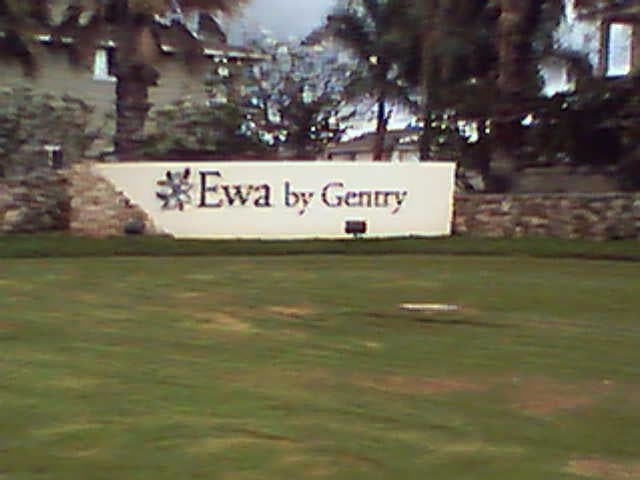
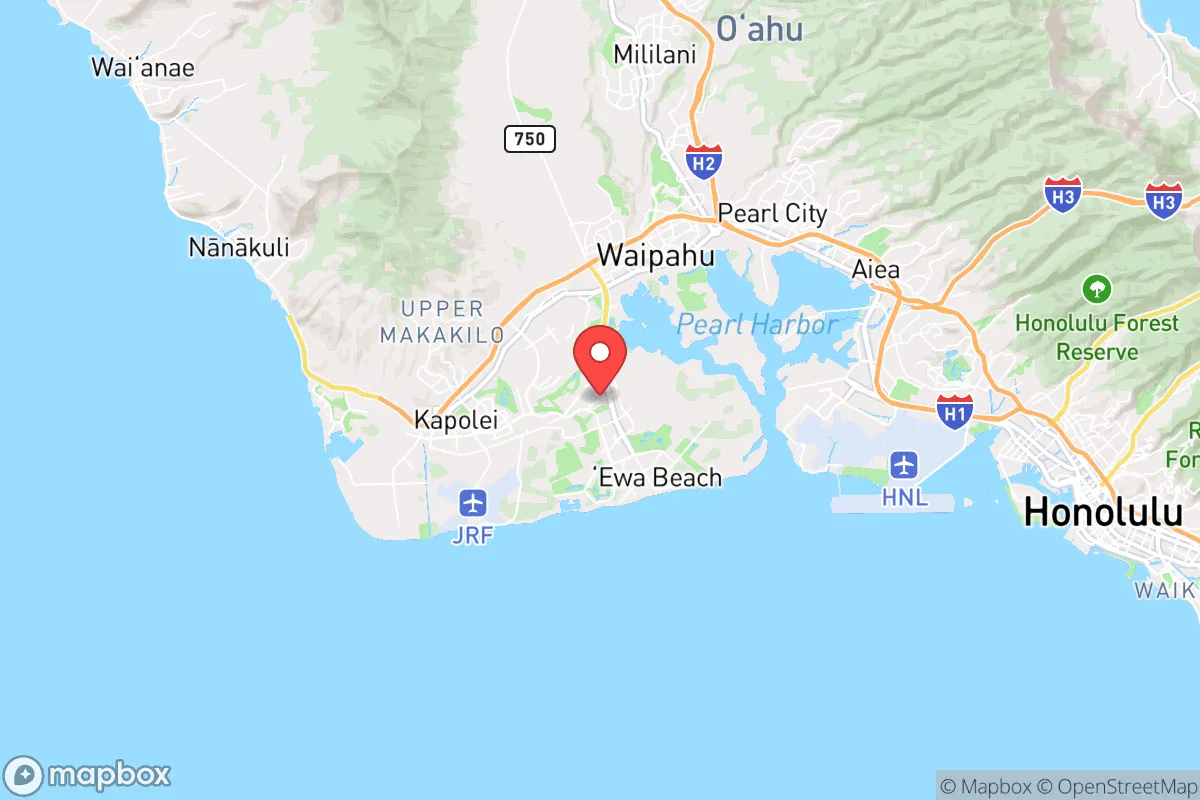
Photo: Wikipedia
Political ClimatePolitical Climate in Ewa Gentry, HI
District shown is the primary district for this city’s centroid. Cities may span multiple districts.
Local Political AnalysisPolitical Analysis of Ewa Gentry, HI
Ewa Gentry sits in Hawaii’s 1st Congressional District, which carries a Cook PVI of D+13 — meaning it votes about 13 points more Democratic than the national average. That number alone tells you the area leans hard blue, but if you’ve lived here as long as I have, you know it wasn’t always this way. Twenty years ago, this was a quieter, more middle-of-the-road community where folks kept to themselves and the government mostly stayed out of daily life. Now, with the rapid build-out of new subdivisions and an influx of transplants from the mainland, the political center of gravity has shifted noticeably leftward. The local precincts now reliably deliver 60-65% of their votes to Democratic candidates, and the progressive energy coming out of Honolulu and Kapolei is seeping into every neighborhood association and school board meeting.
How it compares
To understand Ewa Gentry’s politics, you have to look at the towns around it. Drive ten minutes north to Mililani, and you’ll find a similar D+10 to D+12 vibe — lots of government workers, military families, and a strong union presence. Head south toward Kapolei, and the tilt gets even bluer, with newer master-planned communities drawing younger, more progressive residents. The real contrast is out west, in places like Waianae or Nanakuli, where the politics are still more independent and skeptical of Honolulu’s top-down mandates. Even closer, the older Ewa Beach neighborhoods — the ones built before the 2000s boom — tend to vote more moderately, often splitting tickets on local issues like property taxes and development. So Ewa Gentry sits right in the middle of that shift: not as deep blue as urban Honolulu, but no longer the quiet, conservative-leaning suburb it was a generation ago.
What this means for residents
For those of us who value personal freedom and limited government, the trend is concerning. The county council and state legislature have passed a steady stream of new regulations in recent years — from stricter rental controls to mandatory solar panel requirements on new homes — that feel less like sensible policy and more like overreach. Property taxes have crept up, and the permitting process for even minor home improvements has become a bureaucratic slog. The school board, too, has embraced progressive curriculum changes that many parents feel sideline traditional values and parental input. If you’re the kind of person who believes your home, your business, and your family decisions should be yours to make, you’ll find yourself increasingly at odds with the local political establishment. The long-term trajectory points toward more of the same: higher costs, more mandates, and less room for dissent.
Culturally, Ewa Gentry still holds onto some of its old Hawaii charm — the local plate lunch spots, the weekend farmers markets, the sense of community at the ball fields. But the policy direction is unmistakable. The county’s affordable housing push has brought denser development and more transient renters, changing the neighborhood’s character. And with every election cycle, the progressive slate gains a little more ground. If you’re considering a move here, just know what you’re walking into: a beautiful place with a political climate that’s drifting further from the principles of individual liberty and local control. Keep an eye on the local council races and the school board elections — those are where the real fights are happening, and where your voice can still make a difference.

State Political ClimatePolitical Climate in Hawaii
State Political AnalysisPolitical Environment in the State
Hawaii has been a one-party Democratic stronghold for decades, but don’t let the blue veneer fool you—the state’s political climate is far more complex than a simple left-right label. The dominant coalition is a mix of labor unions, Native Hawaiian sovereignty advocates, and a progressive establishment that has held power since statehood. Over the last 10-20 years, the state has shifted steadily leftward on social issues, but a growing conservative undercurrent—especially among military families, rural farmers, and some Asian-American communities—is pushing back against rising costs, overregulation, and a perceived erosion of personal freedoms. The 2024 presidential election saw Hawaii vote +28 for the Democratic candidate, but that masks a realignment: Oahu’s urban core is deep blue, while the outer islands are becoming more competitive, with some precincts in Hawaii County and Kauai flipping red in down-ballot races.
Urban vs. rural divide
The political map of Hawaii is a tale of two worlds. Honolulu on Oahu is the progressive engine—think San Francisco with palm trees. The city’s urban core, from Waikiki to Manoa, votes overwhelmingly Democratic, driven by unionized government workers, university faculty, and a large LGBTQ+ community. But drive 30 minutes to the North Shore or the Leeward Coast, and you’ll find a more mixed electorate—military families from Schofield Barracks and local ranchers who lean conservative on taxes and gun rights. The real divide is between Oahu and the Neighbor Islands. Hilo on the Big Island is a progressive stronghold, but Kailua-Kona is a conservative oasis, with a strong libertarian streak among coffee farmers and retirees. Maui’s upcountry (Makawao, Kula) is surprisingly red, with a vocal Second Amendment community. Kauai is split: the north shore is green and progressive, while the west side (Waimea, Hanapepe) is more traditional and conservative. The rural-urban divide is widening, with outer island voters increasingly frustrated by Honolulu-centric policies on housing, tourism, and land use.
Policy environment
Hawaii’s policy environment is a mixed bag for a conservative-leaning newcomer. On taxes, the state is one of the highest-taxed in the nation, with a progressive income tax that tops out at 11% and a general excise tax (GET) of 4% that applies to nearly everything, including rent and groceries. There is no state property tax on owner-occupied homes, but the GET makes everyday life expensive. The regulatory posture is heavy: Hawaii has some of the strictest land-use laws in the country, which drives up housing costs and limits property rights. Education policy is dominated by a single statewide school district, which means local control is minimal—parents in Mililani or Kapolei have little say over curriculum. The state has a universal mail-in voting system, which conservatives often criticize for lacking ID requirements, though fraud is rare. Healthcare is heavily regulated, with a state-run insurance exchange and a strong push for single-payer. On the plus side, Hawaii has some of the lowest property crime rates in the nation, and the state’s gun laws—while strict—are consistently enforced, with a shall-issue concealed carry system that was recently upheld by the courts.
Trajectory & freedom
Hawaii is becoming less free by most measures, and the trend is accelerating. The state’s response to COVID was among the most restrictive in the nation, with a mandatory 14-day quarantine for travelers that lasted over a year, and vaccine mandates for state workers and private businesses that were only recently rolled back. In 2023, the legislature passed Act 2, which expanded background checks for private gun sales and banned “ghost guns,” despite a federal court ruling that the state’s carry restrictions were unconstitutional. On parental rights, Hawaii has some of the most progressive sex education laws in the country, with no opt-out for parents on LGBTQ+ content. Medical autonomy is limited: the state has strict vaccine mandates for schoolchildren, and a 2024 law (Act 46) allows minors to consent to gender-affirming care without parental notification. Property rights are under constant threat from the state’s powerful Land Use Commission, which can rezone land at will. The only bright spot for freedom advocates is the recent court-ordered release of some prison inmates and a modest rollback of asset forfeiture laws. Overall, the trajectory is toward more government control, not less.
Civil unrest & political movements
Hawaii has a long history of civil unrest, but it’s not the kind you see on the mainland. The most visible movement is Native Hawaiian sovereignty, which has been a flashpoint for decades. The 2019 occupation of Mauna Kea against the Thirty Meter Telescope drew thousands of protesters and was a rare moment of cross-ideological unity—conservatives joined progressives in opposing federal overreach. More recently, the “Aloha First” movement has emerged, pushing back against over-tourism and development, with some activists calling for a moratorium on new hotels. On the right, the Hawaii Republican Party is small but active, with a strong presence in Ewa Beach and Kapolei, where military families and Filipino-American voters are organizing. Election integrity is a growing concern: the 2022 gubernatorial race saw a Republican come within 10 points of winning, and many conservatives believe the universal mail-in system favors incumbents. Immigration politics are muted, but the state’s sanctuary policies (Hawaii was one of the first to sue over the Trump travel ban) are a sore point for conservatives. The most visible flashpoint for a new resident would be the constant tension between locals and tourists, which can spill over into political arguments about land use and housing.
Projection
Over the next 5-10 years, Hawaii is likely to become more polarized, not less. Demographic shifts are working against conservatives: the state’s population is aging, and younger residents are overwhelmingly progressive. In-migration from the mainland is accelerating, with many newcomers from California and New York bringing their politics with them—this is already transforming neighborhoods in Kihei and Princeville. However, the cost of living is driving out many working-class families, which could shift the electorate toward wealthier, more progressive voters. The Republican Party is making inroads in rural areas, but it’s a long shot to flip the state legislature. The most likely scenario is a continuation of the status quo: high taxes, heavy regulation, and a progressive social agenda, with occasional conservative victories on local issues like property rights or gun carry. A new resident moving in now should expect to find a state that is increasingly unfriendly to traditional values, but with pockets of resistance in the outer islands and among military families. The bottom line: if you value personal freedom, low taxes, and local control, Hawaii is a tough place to live—but if you’re willing to fight for your rights, there are communities where you can make a difference.
For a conservative-leaning individual or family, Hawaii offers stunning natural beauty and a unique culture, but the political climate is a headwind. You’ll pay more in taxes, have less say in your children’s education, and face a government that is increasingly comfortable with mandates. The best bet is to settle in a conservative pocket like Kailua-Kona or Makawao, where you can find like-minded neighbors and a slower pace of life. But don’t expect the state to change direction anytime soon—the progressive establishment is deeply entrenched, and the demographic trends are against you. If you’re moving here, come for the aloha spirit, but be ready to fight for your freedoms.
* Values derived from national, state, county, city and local statistics and may differ in a specific area. Last updated: 2026-04-24T13:43:31.000Z
Narrative content on this page is AI-generated and may contain mistakes. Verify any details that matter before acting on them.
ReloMaps may earn a commission from affiliate links at no extra cost to you.

