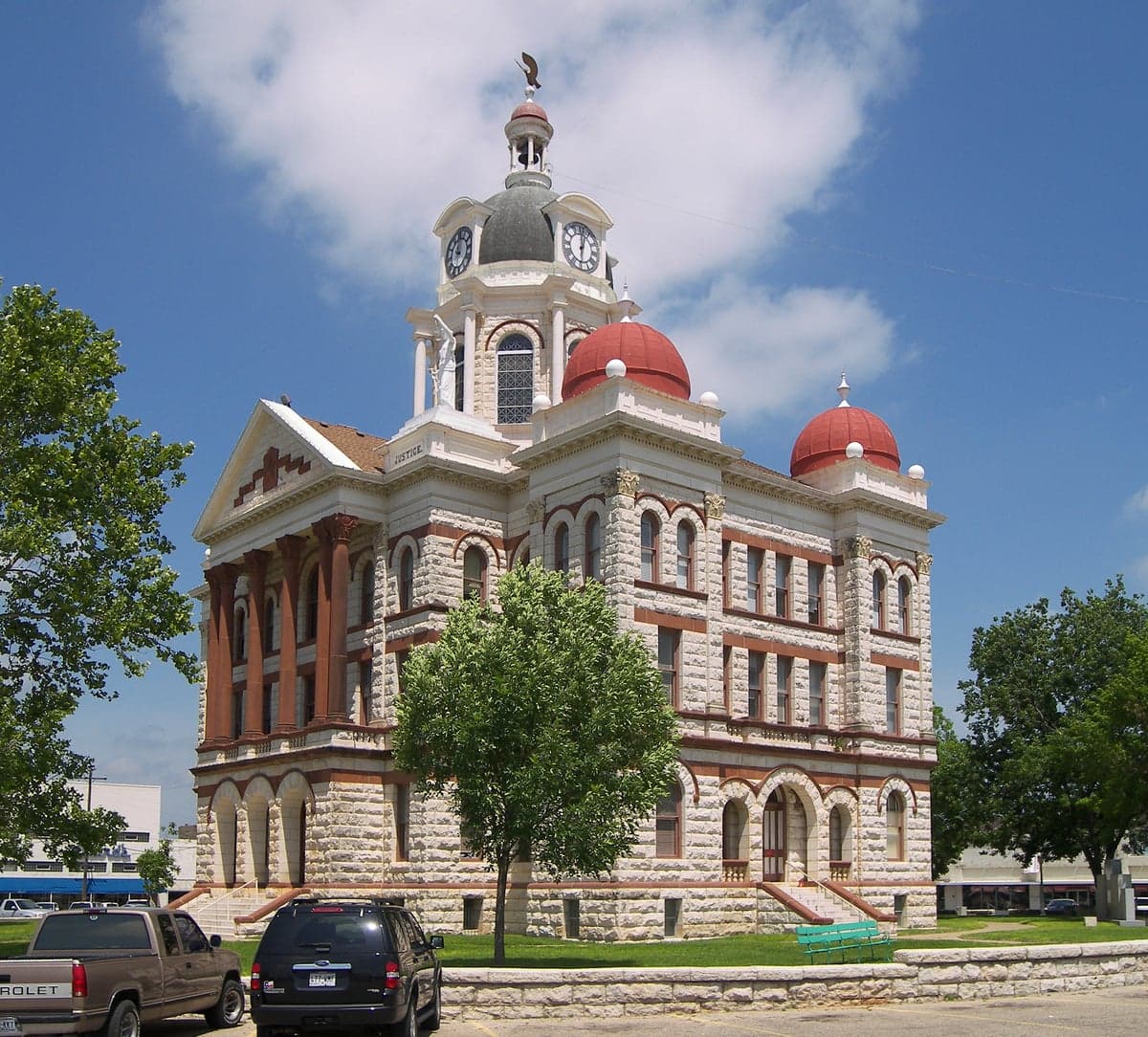

Photo: Wikipedia
Political ClimatePolitical Climate in Gatesville, TX
District shown is the primary district for this city’s centroid. Cities may span multiple districts.
Local Political AnalysisPolitical Analysis of Gatesville, TX
Gatesville, Texas, is about as solidly conservative as it gets in Central Texas, and it’s been that way for as long as anyone around here can remember. The Cook PVI for the area sits at R+11, which is a full seven points more Republican than the state of Texas as a whole (R+4). That gap isn’t just a number on a map—it reflects a deep, lived-in culture where personal responsibility, limited government, and traditional values aren’t just talked about at the dinner table; they’re the default setting for how folks live their lives. You don’t see the same kind of political drift here that you might in places like Austin or even Waco, and that’s something a lot of us take quiet pride in.
How it compares
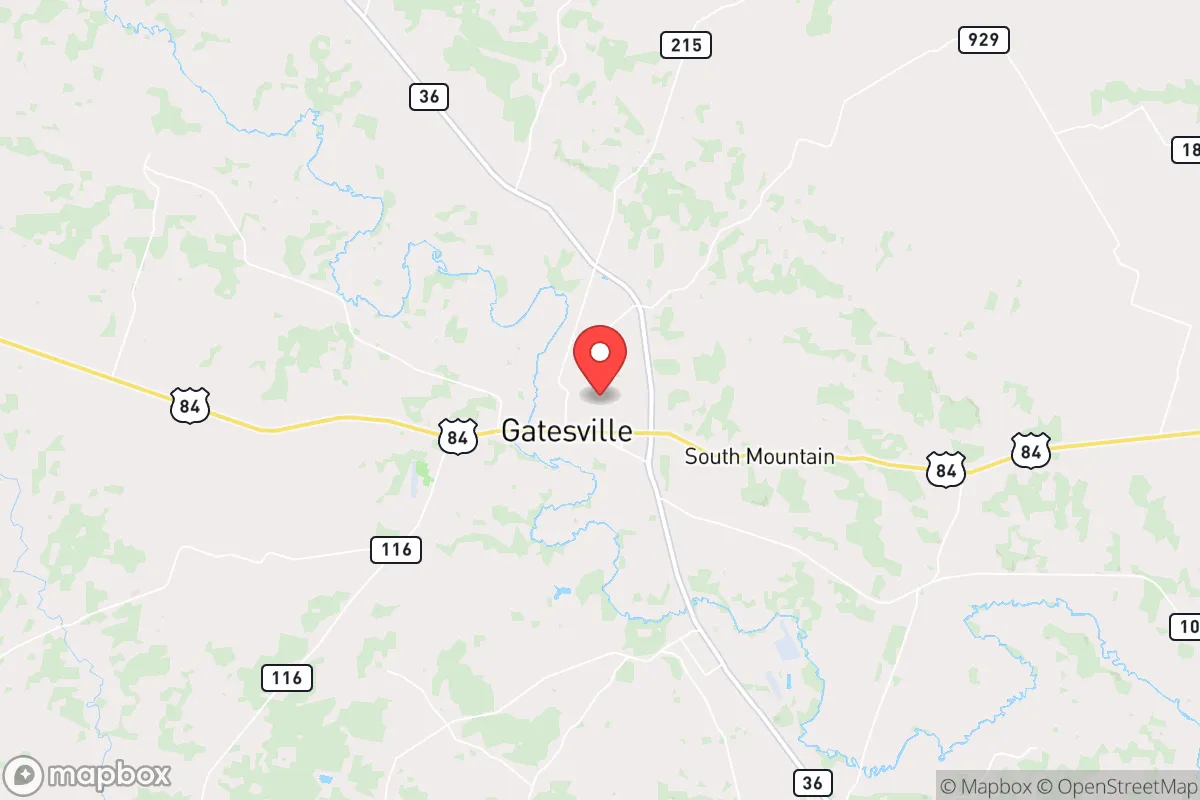
When you stack Gatesville up against the rest of Texas, the difference is stark and getting starker. The state as a whole has been trending purple in recent cycles, especially in the suburban rings around Houston, Dallas, and San Antonio, where you’ll find more split-ticket voting and even some blue-leaning precincts. Gatesville, by contrast, has held steady. The surrounding counties—Coryell, Hamilton, and Lampasas—all vote reliably red, and there’s no real urban center nearby to pull the needle left. The closest city of any size is Waco, which leans more moderate but is still a far cry from the progressive politics of Austin, about 90 minutes south. That distance isn’t just geographic; it’s philosophical. People here tend to view the kind of government overreach you see in bigger cities—whether it’s zoning restrictions, mask mandates, or property tax hikes—as a warning sign, not a model to follow.
What this means for residents
For someone living in Gatesville, the political climate translates directly into daily life. You’re not dealing with the same kind of regulatory friction you’d find in more progressive areas. The local government generally takes a hands-off approach, which means fewer hoops to jump through if you want to start a small business, build a workshop on your property, or exercise your Second Amendment rights without a lot of red tape. Property taxes are still a concern—they are everywhere in Texas—but there’s a strong local sentiment against any new bond measures or tax increases that don’t come with clear, limited purposes. The school board and county commission tend to reflect that same conservative bent, so you’re not seeing the kind of curriculum battles or DEI initiatives that have become common in districts closer to the metroplex. It’s a place where the phrase “live and let live” still means something, as long as you’re not asking the government to step in and run your life for you.
That said, there are some cultural and policy distinctions worth noting. Gatesville is home to a large state prison complex, which brings a unique set of law-and-order priorities to local politics. You’ll find strong support for tough-on-crime policies and a general skepticism of criminal justice reform that might be more popular in other parts of the state. The local economy also leans heavily on agriculture and small manufacturing, so there’s a practical, boots-on-the-ground resistance to environmental regulations that could affect land use or water rights. Looking ahead, the biggest concern I hear from neighbors isn’t about national politics—it’s about the slow creep of state-level mandates that feel like they’re written for Houston or Dallas but get applied here too. If that trend continues, I think you’ll see Gatesville dig in even harder, not because people are stubborn, but because they’ve seen what happens when you let the government get too comfortable telling you how to live.

State Political ClimatePolitical Climate in Texas
State Political AnalysisPolitical Environment in the State
Texas has been a reliably Republican state-level Republican territory for over three decades, but its current Cook PVI of R+4 actually understates the complexity on the ground. The dominant coalition remains suburban conservatives, rural traditionalists, and a growing exurban population that fled blue states for lower taxes and fewer mandates. However, the 10-20 year trajectory shows a slow but steady erosion of the GOP margin, driven by explosive growth in the Austin-San Antonio corridor and the Dallas-Fort Worth suburbs. The 2024 results tell the story: while Donald Trump carried Texas by roughly 14 points, Harris County (Houston) flipped back to Democrats by a wider margin than 2020, and Tarrant County (Fort Worth) — once a GOP stronghold — is now a genuine swing county. The state is not becoming blue, but it is becoming more contested, and that shift is reshaping everything from school board races to property tax policy.
Urban vs. rural divide
The political map of Texas is a study in extremes. The five largest metros — Houston, Dallas-Fort Worth, San Antonio, Austin, and El Paso — account for roughly 70% of the state’s population, and they lean increasingly Democratic. Austin is the most liberal major city in the South, with Travis County delivering a 50-point margin for Biden in 2020 and similar numbers for Harris in 2024. El Paso is reliably blue, driven by its heavily Hispanic working-class base. Houston’s Harris County and Dallas County are now solidly Democratic, though the suburbs within them — like Katy, Frisco, and McKinney — remain competitive or lean Republican. The rural and small-town expanse tells a different story. The Panhandle, anchored by Lubbock and Amarillo, votes 70-80% Republican. East Texas, from Tyler to Longview, is deep red. The Hill Country west of Austin, including places like Fredericksburg and Kerrville, is reliably conservative. The real battleground is the exurban ring: counties like Comal (New Braunfels), Hays (San Marcos), and Williamson (Round Rock) are growing fast and trending purple. Comal County voted +35 R in 2016 but only +22 R in 2024 — a 13-point shift in eight years. That’s where the political future of Texas is being decided.
Policy environment
Texas remains a low-tax, low-regulation state by design. There is no state income tax, and property taxes are high but capped by a 3.5% appraisal increase limit for homesteads, passed in 2023 as Proposition 4. The regulatory posture is business-friendly: no state-level OSHA, minimal environmental permitting delays, and a right-to-work law that keeps unions weak. Education policy has been a flashpoint. The 2023 school voucher bill (SB 8) failed in the House, but Governor Abbott made it his top priority and is expected to push a version through in 2025. Meanwhile, the 2021 "critical race theory" law (HB 3979) and the 2023 "parental rights" bill (HB 900, which restricted library content) reflect a state government actively pushing back against progressive curriculum trends. Healthcare is a mixed bag: Texas did not expand Medicaid, and the uninsured rate remains the highest in the nation at roughly 17%. However, the 2021 "Heartbeat Act" (SB 8) effectively banned abortion after six weeks, and the 2023 trigger law (HB 1280) made it a felony. Election laws tightened after 2020: SB 1 (2021) added ID requirements for mail ballots, limited drive-through voting, and banned 24-hour polling places. For a conservative family, the policy environment is broadly aligned with limited government and traditional values, though the property tax burden and school funding fights are real frustrations.
Trajectory & freedom
On balance, Texas has been expanding personal liberty in several key areas over the past five years. The 2021 permitless carry law (HB 1927) allows most adults to carry a handgun without a license — a significant expansion of Second Amendment rights. The 2023 "parental bill of rights" (HB 900) gave parents more say over school library materials and curriculum, though it faces legal challenges. Property rights were strengthened by the 2023 "takings" law (SB 2039), which requires faster compensation when government regulations reduce property value. On the other hand, there are concerning trends. The 2023 "drag show" law (SB 12) was struck down as unconstitutional, but the state continues to push restrictions on public expression. The 2021 "abortion bounty" law (SB 8) created a novel enforcement mechanism that some civil libertarians — including conservatives — worry sets a precedent for private lawsuits against protected speech. Medical freedom took a hit during COVID: while Texas lifted mask mandates earlier than most blue states, Governor Abbott’s 2021 executive order banning vaccine mandates by private employers was later overturned by courts. The 2023 "gender modification" ban (SB 14) prohibits puberty blockers and hormone therapy for minors, which aligns with parental rights advocates but represents a major government intervention into medical decisions. The trajectory is mixed: Texas is freer on guns and parental rights, but the state is also increasingly willing to use its police power to enforce social policy, which cuts both ways.
Civil unrest & political movements
Texas has seen its share of political flashpoints. The 2020 Black Lives Matter protests in Austin were among the largest and most destructive in the country, with property damage estimates exceeding $10 million. In response, the 2021 "back the blue" law (HB 9) increased penalties for rioting and blocking highways and attacking police. Immigration politics are a constant pressure point. The 2023 "Operation Lone Star" has deployed thousands of National Guard troops to the border, and Governor Abbott’s busing of migrants to New York, Chicago, and Denver became a national story. Sanctuary city policies are banned statewide under SB 4 (2017), but some cities — notably Austin and El Paso — have resisted cooperation with ICE. The "secession" rhetoric, while loud on social media, has no serious legislative traction; the Texas Nationalist Movement is a fringe group. Election integrity remains a live issue. The 2020 audit of four counties (Harris, Dallas, Tarrant, Collin) found no widespread fraud, but the 2021 SB 1 restrictions were passed anyway. In 2024, a controversy over voter roll purges in Harris County led to lawsuits. New residents will notice the political tension most in the suburbs: school board meetings in places like Southlake and Frisco have become battlegrounds over library books and transgender athletes, and local politics is increasingly nationalized.
Projection
Over the next 5-10 years, Texas will likely remain Republican-leaning but more competitive. The demographic drivers are clear: the state is adding roughly 1,000 new residents per day, and a disproportionate share are from California and the Northeast. Many of these newcomers are conservative-leaning, but a significant minority bring blue-state voting habits. The Hispanic vote, which was once reliably Democratic, is shifting right — Trump won 45-50% of Hispanic voters in Texas in 2024, up from 35% in 2020. This could offset some of the urban growth. The state legislature will remain under GOP control through at least 2030 due to gerrymandering, but the margin in the Texas House is narrowing. Expect continued fights over school vouchers, property tax reform, and energy policy (Texas is the nation’s top oil and gas producer, but wind and solar now supply over 30% of the grid). The 2025 legislative session will likely pass a school choice bill, tighten election laws further, and possibly preempt local ordinances on everything from tree preservation to short-term rentals. For a conservative moving in now, the next decade will feel like a holding action: the state will remain broadly free and low-tax, but the cultural and political battles will intensify, especially in the suburbs and exurbs where growth is fastest.
Bottom line: Texas is still a good bet for someone seeking lower taxes, fewer mandates, and a government that respects property rights and parental authority. But it is not the solid red fortress it was 20 years ago. The practical takeaway for a new resident is to choose your county carefully — Collin County (Frisco, McKinney) is still reliably conservative, while Travis County (Austin) is a progressive enclave. The state’s political trajectory is toward a more competitive, more contested environment, but the fundamentals — no income tax, strong gun rights, and a business-friendly climate — are likely to endure for at least another decade. If you’re moving for freedom, you’ll find it here, but you’ll also find a state that is increasingly arguing with itself about what freedom means.
* Values derived from national, state, county, city and local statistics and may differ in a specific area. Last updated: 2026-05-18T01:52:25.000Z
Narrative content on this page is AI-generated and may contain mistakes. Verify any details that matter before acting on them.
ReloMaps may earn a commission from affiliate links at no extra cost to you.

