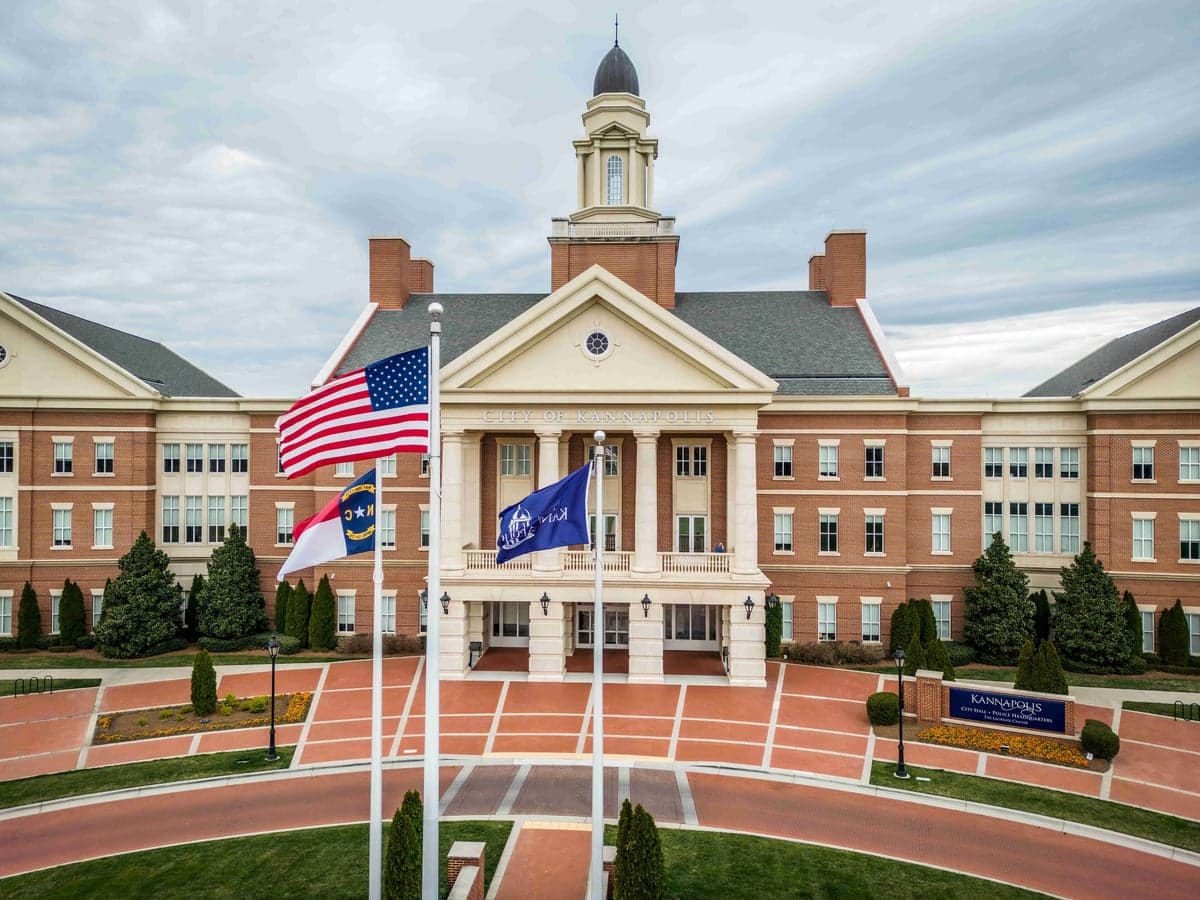
Photo: Wikipedia
Political ClimatePolitical Climate in Kannapolis, NC
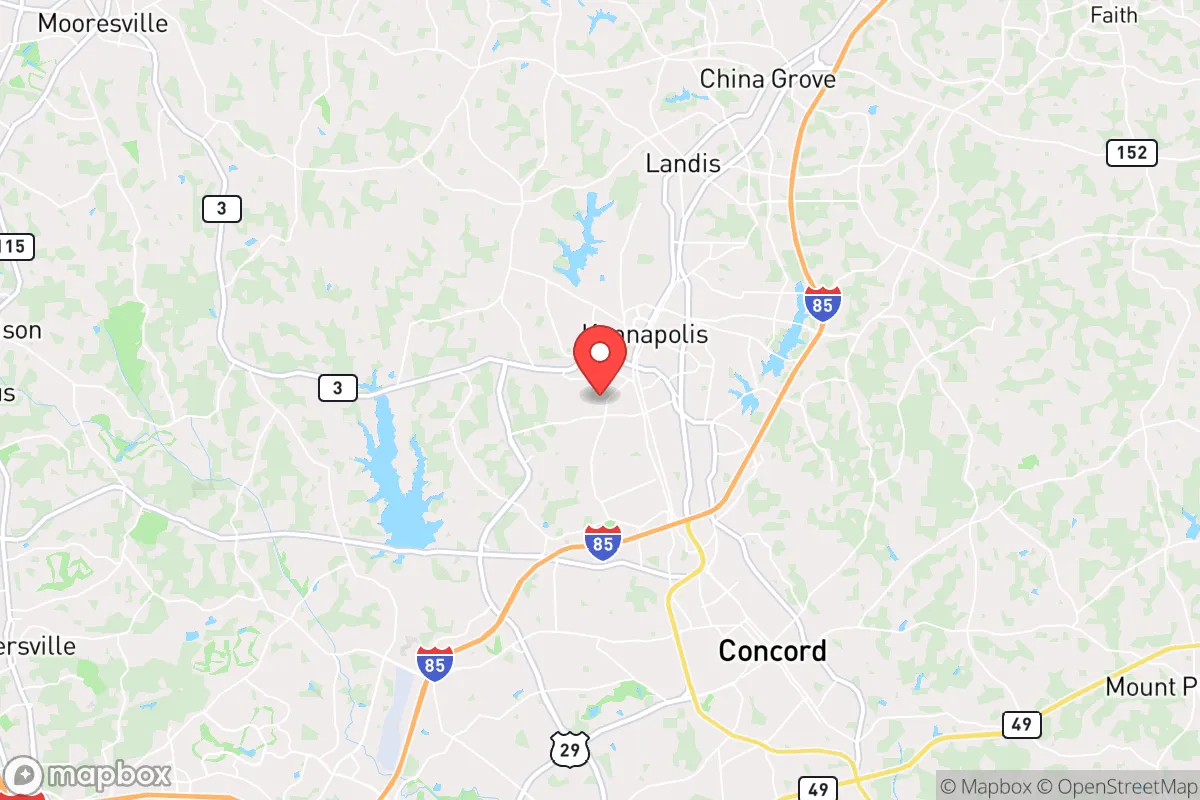
District shown is the primary district for this city’s centroid. Cities may span multiple districts.
Local Political AnalysisPolitical Analysis of Kannapolis, NC
Kannapolis, North Carolina, sits solidly in the red column, with a Cook PVI of R+9 that reflects a community where conservative values aren't just a preference—they're the baseline. For decades, this was a mill town built on hard work and self-reliance, and that DNA still runs deep. You won't find much appetite here for the kind of top-down social engineering you see in places like Charlotte, just 20 miles south, or even in neighboring Concord, which has started to drift a bit more purple as new transplants pour in. The political trajectory in Kannapolis has been remarkably stable, with local elections consistently favoring candidates who talk about fiscal discipline, Second Amendment rights, and keeping government out of your backyard. If anything, the recent influx of folks from high-tax states like New York and California has actually reinforced the conservative lean, as many of them moved here specifically to escape the overreach they left behind.
How it compares
Drive 15 minutes east to Harrisburg, and you'll find a similar vibe—mostly conservative, family-oriented, with a strong sense of local control. But head west toward Davidson or Cornelius, and the political temperature shifts noticeably. Those lake towns have become magnets for Charlotte commuters and out-of-state retirees who bring a more progressive, "let the government fix it" mindset. Kannapolis, by contrast, has largely resisted that trend. The city council and county commissioners in Cabarrus County still lean heavily Republican, and there's a palpable skepticism toward state-level mandates, especially around land use, school curriculum, and public health orders. The contrast with Mecklenburg County, where Charlotte sits, is stark: Kannapolis residents tend to view that area's rapid growth and progressive policies as a cautionary tale of what happens when you let government creep into every corner of daily life.
What this means for residents
For the people who live here, the political climate translates into a few concrete realities. Property taxes remain among the lowest in the Charlotte metro area, and there's little appetite for the kind of bond referendums or tax hikes that fund big government programs elsewhere. Gun rights are taken seriously—you won't find the same restrictive ordinances here that you see in Charlotte or even in some parts of Concord. The local schools, while not perfect, still operate with a focus on parental involvement and local control, rather than being driven by state or federal mandates. That said, there are warning signs. The rapid development along I-85 is bringing in new residents who don't always share the local values, and some of the older neighborhoods are seeing pressure to adopt zoning changes that feel like a foot in the door for more regulation. If you value being left alone to live your life without a bureaucrat telling you how to run your business or raise your kids, Kannapolis is still one of the better bets in the region—but you need to stay engaged, because the political winds can shift faster than you'd think.
Culturally, Kannapolis is a place where the American flag flies year-round, not just on holidays, and where the local VFW post is still a community hub. The policy distinctions that matter most here are the ones that protect personal freedom: no mask mandates, no vaccine passports, no heavy-handed business closures. The city has also been smart about economic development, attracting biotech and manufacturing jobs without selling out its character. The long-term concern is whether the relentless growth from Charlotte will eventually dilute the local culture. For now, though, Kannapolis remains a pocket of common sense in a state that's increasingly split between urban progressivism and rural traditionalism. If you're looking for a place where your vote actually means something and where the government still remembers it works for you, this is it.

State Political ClimatePolitical Climate in North Carolina
State Political AnalysisPolitical Environment in the State
North Carolina has long been considered a quintessential swing state, but over the past decade, it has settled into a reliably red-leaning posture in presidential elections, while maintaining a competitive edge at the state and local levels. The state voted for Donald Trump in both 2016 and 2020, and the GOP has held supermajorities in the General Assembly since 2012, giving them the ability to override gubernatorial vetoes. However, the state’s political trajectory is not static—rapid in-migration from blue states, particularly into the Research Triangle and Charlotte metros, is slowly shifting the electoral math, making it a state where conservative victories are earned, not guaranteed.
Urban vs. rural divide
The political map of North Carolina is a textbook case of the urban-rural chasm. The state’s three major metros—Charlotte (Mecklenburg County), Raleigh-Durham (Wake and Durham Counties), and Greensboro-Winston-Salem (Guilford and Forsyth Counties)—are deep blue strongholds that drive Democratic turnout. Mecklenburg County alone delivered over 300,000 votes for Joe Biden in 2020, while Wake County added another 280,000. In contrast, the vast rural and exurban counties—places like Union County (just east of Charlotte), Johnston County (southeast of Raleigh), and Iredell County (north of Charlotte)—vote Republican by margins of 20 to 40 points. The coastal counties, including Wilmington (New Hanover County) and the Outer Banks, are more competitive but lean red, while the mountainous western counties like Buncombe County (Asheville) are an island of blue in a sea of red. The key battlegrounds are the fast-growing suburban counties like Cabarrus and Harnett, which are trending rightward as families flee the urban cores.
Policy environment
North Carolina’s policy environment is a mixed bag for conservatives, but the trend has been broadly positive over the last decade. The state has a flat income tax rate of 4.5%, which is scheduled to decline to 3.99% by 2027 under legislation passed in 2021. There is no state tax on Social Security benefits, and the standard deduction is generous. The regulatory climate is business-friendly, with right-to-work laws and a low corporate tax rate of 2.5%. On education, the state has a robust school choice program, including Opportunity Scholarships that can be used for private school tuition, and a growing charter school sector. However, the state’s Medicaid expansion, enacted in 2023 under a bipartisan compromise, was a significant concession to the left, though it did include work requirements for able-bodied adults. Election laws have been tightened in recent years, with voter ID requirements (upheld by the state Supreme Court in 2023) and restrictions on mail-in ballot drop boxes. The state’s abortion law now bans the procedure after 12 weeks, with exceptions for rape, incest, and fetal anomalies—a compromise that angered both sides but kept the state from becoming a total ban state like its southern neighbors.
Trajectory & freedom
On the freedom front, North Carolina has been a mixed bag, but the overall trajectory is cautiously positive. The state passed a landmark Second Amendment Preservation Act in 2021, which prohibits state and local law enforcement from enforcing federal gun laws that infringe on the right to keep and bear arms. Permitless carry (constitutional carry) became law in 2023, allowing any law-abiding adult to carry a concealed handgun without a permit. On parental rights, the state passed the Parents’ Bill of Rights in 2023, requiring schools to notify parents of any changes to a student’s health or well-being, including gender identity issues, and giving parents the right to review instructional materials. However, the state’s medical autonomy record is concerning: the governor’s emergency powers during COVID were used to shut down businesses and mandate masks for over a year, and the state still has a vaccine database that privacy advocates worry could be expanded. Property rights are generally strong, with no statewide rent control and a relatively straightforward eminent domain process. The biggest red flag for freedom-minded residents is the state’s Certificate of Need (CON) laws, which restrict the opening of new healthcare facilities and have been criticized as a barrier to competition and innovation.
Civil unrest & political movements
North Carolina has seen its share of political flashpoints. The Moral Monday protests of 2013, led by the NAACP, were a sustained campaign of civil disobedience against the GOP’s legislative agenda, including voter ID and education cuts. More recently, the HB2 “bathroom bill” controversy in 2016 made national headlines, leading to boycotts and corporate backlash, though the law was eventually repealed in 2017. The state has also been a battleground over election integrity, with the 2020 election seeing intense scrutiny of mail-in ballots in counties like Durham and Wake. Immigration politics are relatively muted compared to border states, but there is a growing movement in rural counties to declare themselves “Second Amendment sanctuaries” and resist federal gun control. The LGBTQ+ rights debate continues, with the 2023 Parents’ Bill of Rights sparking protests from left-wing groups, particularly in Asheville and Chapel Hill. A new resident should expect to see occasional protests on both sides, but the state is generally peaceful, with no widespread civil unrest.
Projection
Over the next 5-10 years, North Carolina is likely to become more competitive, but not necessarily more liberal. The in-migration from blue states—particularly from New York, New Jersey, and California—is concentrated in the urban and suburban counties, which will continue to boost Democratic turnout. However, many of these newcomers are fleeing high taxes and crime, and they often bring conservative fiscal values even if they lean left on social issues. The state’s rural and exurban areas are growing too, driven by domestic migration from other red states. The net effect is that the state will likely remain a lean-red state for presidential elections, but with a Democratic governor (the current governor, Roy Cooper, is term-limited and will be replaced in 2024) and a GOP legislature. The biggest wildcard is the state Supreme Court, which flipped from a 4-3 Democratic majority to a 5-2 Republican majority in the 2022 election, ensuring that conservative-leaning rulings on redistricting, voter ID, and abortion will hold. A new resident moving in now should expect a state that is broadly conservative on fiscal and gun issues, but with a growing progressive urban core that will keep the political conversation lively.
For a conservative-leaning individual or family, North Carolina offers a compelling mix of low taxes, strong gun rights, school choice, and a growing economy. The key is to choose your location carefully: stick to the exurban and rural counties like Union, Johnston, or Iredell if you want a reliably red environment, or consider the more competitive suburbs of Cabarrus or Harnett if you prefer a purple setting. Avoid the urban cores of Charlotte, Raleigh, and Durham unless you’re comfortable with progressive local governance. The state’s trajectory is positive for personal freedom, but vigilance is required—the next governor could be a Democrat who tries to expand executive power, and the urban counties will continue to push for higher taxes and more regulation. Bottom line: North Carolina is a solid choice for conservatives, but it’s not Texas or Florida—you’ll need to stay engaged politically to keep it that way.
* Values derived from national, state, county, city and local statistics and may differ in a specific area. Last updated: 2026-10-10T16:27:50.000Z
Narrative content on this page is AI-generated and may contain mistakes. Verify any details that matter before acting on them.
ReloMaps may earn a commission from affiliate links at no extra cost to you.

