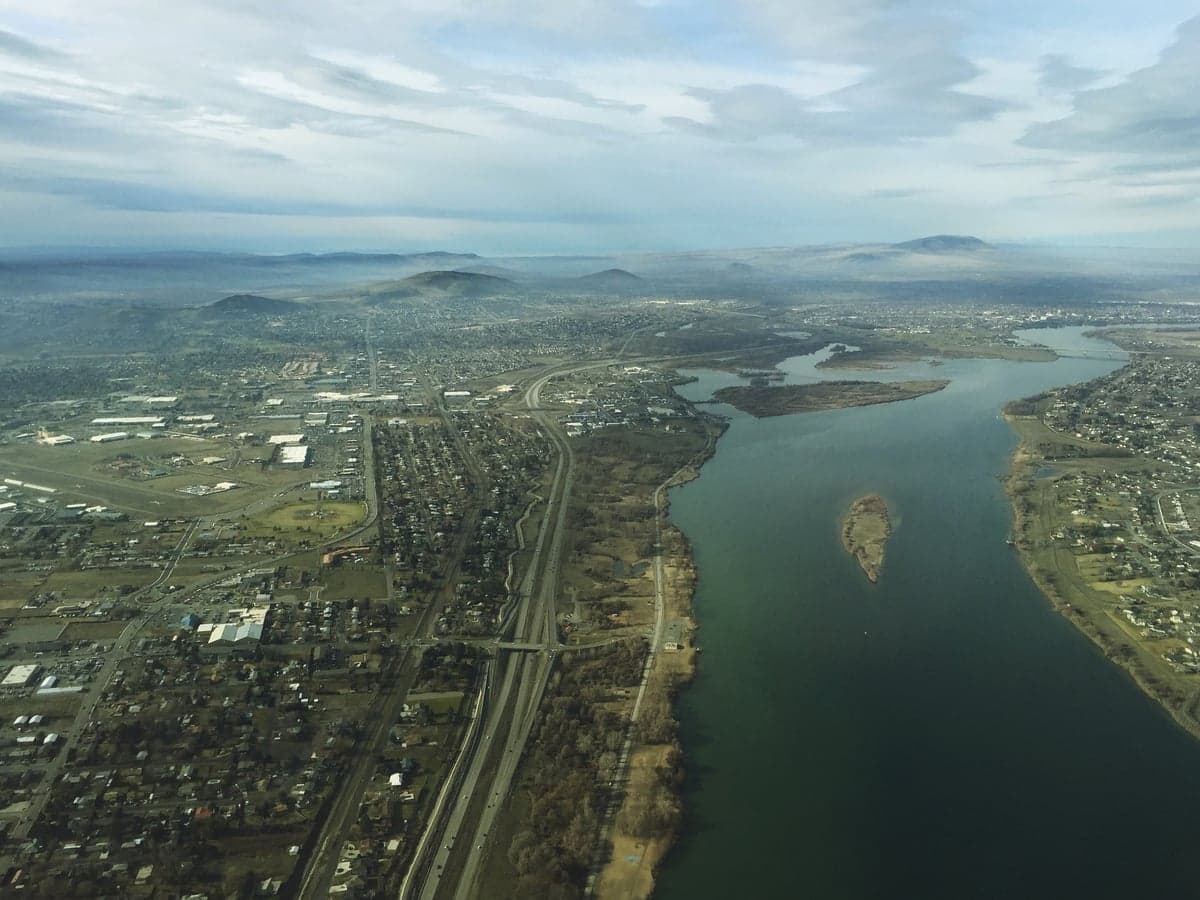
Photo: Wikipedia
Political ClimatePolitical Climate in Kennewick, WA
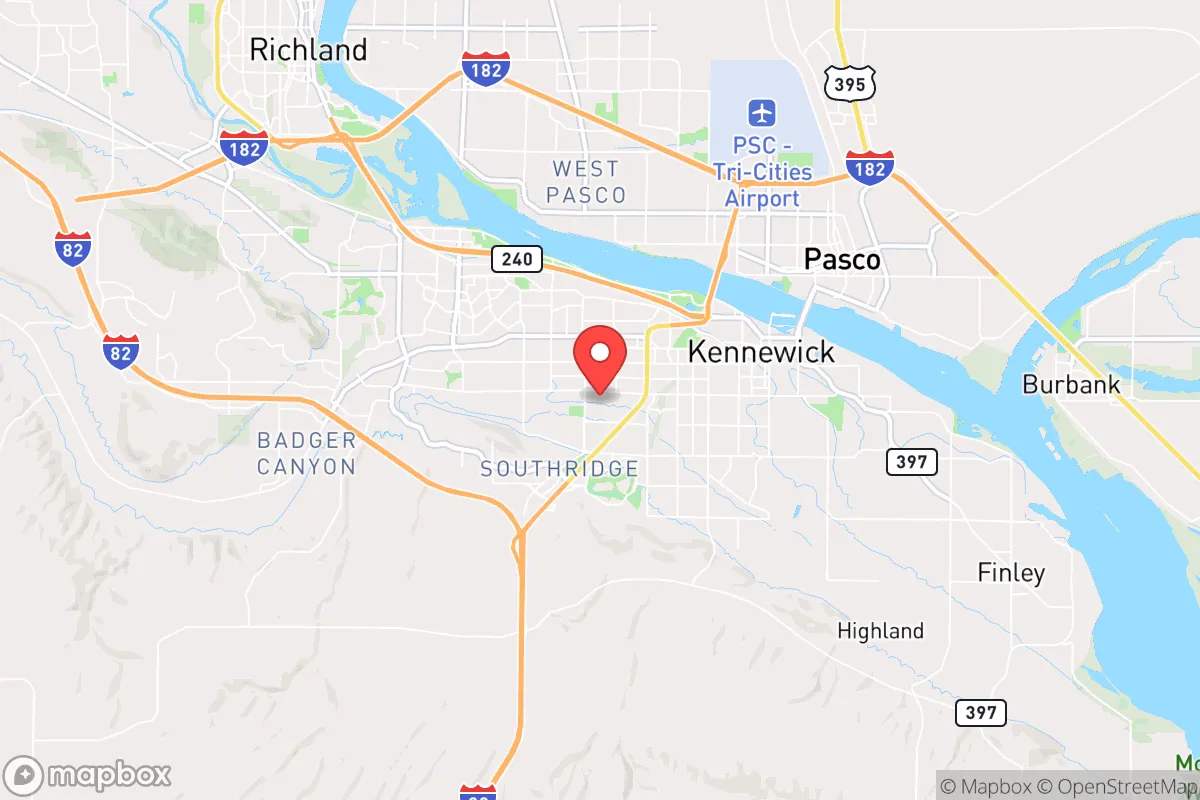
District shown is the primary district for this city’s centroid. Cities may span multiple districts.
Local Political AnalysisPolitical Analysis of Kennewick, WA
Kennewick has long been a solidly conservative community, and that hasn't changed much despite some national trends. The Cook PVI of R+10 tells you the real story here—this is a place where Republican candidates routinely win by double digits, and the local culture reflects that. But if you've lived here as long as I have, you've noticed the political winds shifting in subtle ways, especially as the Tri-Cities grows and attracts folks from bluer parts of the state. The core is still red, but the edges are getting a little more purple, and that's something to keep an eye on.
How it compares
Drive 15 minutes west to Richland, and you'll feel a noticeable difference. Richland, home to the Pacific Northwest National Laboratory and a lot of federal contractors, leans more moderate—think R+5 or so, with a stronger independent streak. Then there's Pasco, just across the river, which is reliably conservative but with a growing Hispanic population that's shifting its political conversations. Kennewick sits right in the middle, but it's the most reliably red of the three. Compared to Seattle or even Spokane, Kennewick is a different world entirely. In the 2024 election, Benton County (where Kennewick sits) voted over 60% for the Republican presidential candidate, while King County went the other way by a similar margin. That's not just a difference—it's a chasm.
What this means for residents
For the most part, life here reflects those conservative values. Property taxes are relatively low, and there's no state income tax, which is a big deal for anyone who values keeping more of what they earn. The local government tends to stay out of your business—no mask mandates that lasted forever, no heavy-handed business closures during the pandemic. You can still buy a firearm without a waiting period, and the Second Amendment is taken seriously here. But there are warning signs. The city council has seen some turnover, and a few progressive-leaning candidates have made inroads in recent years. If you're worried about government overreach, watch how the school board elections go—that's where the real battles are happening now, with some pushing for curriculum changes that don't align with traditional values.
On the cultural side, Kennewick is still a place where people wave from their trucks and neighbors know each other's names. The annual Water Faire and the Benton Franklin Fair & Rodeo are big deals, and they feel like throwbacks to a simpler time. But the growth is real—new housing developments are popping up everywhere, and with them come new residents who might not share the same political instincts. The long-term trajectory is concerning if you value the kind of freedom that lets you live your life without a bureaucrat looking over your shoulder. For now, Kennewick remains a stronghold of common-sense conservatism, but it's not immune to the pressures that are reshaping the rest of the country. Keep your ear to the ground, and don't take the status quo for granted.

State Political ClimatePolitical Climate in Washington
State Political AnalysisPolitical Environment in the State
Washington State has transformed from a purple swing state into a solidly blue stronghold over the past two decades, with Democrats controlling every statewide office and both legislative chambers since 2012. The state’s overall partisan lean is roughly D+8 to D+10 in presidential elections, driven overwhelmingly by the Seattle metro area, which casts about 40% of the state’s vote. For a conservative considering relocation, the key takeaway is that your vote will be largely irrelevant in statewide races, but your local county and city choices still matter a great deal — especially if you’re looking at places like Spokane, the Tri-Cities, or the more rural eastern half of the state.
Urban vs. rural divide
The political map of Washington is a textbook case of urban-rural polarization. King County (Seattle) alone delivers roughly 30% of the state’s total vote and goes about 75% Democratic. Pierce County (Tacoma) and Snohomish County (Everett) are also reliably blue, though slightly less lopsided. The I-5 corridor from Olympia north to the Canadian border is the Democratic engine room. In contrast, the eastern two-thirds of the state — from the Cascade crest to the Idaho border — is deeply red. Spokane County has been trending purple but still votes Republican in most races, while rural counties like Ferry, Stevens, and Garfield routinely go 70-80% Republican. The Tri-Cities (Kennewick, Pasco, Richland) are a conservative stronghold, though Pasco’s growing Hispanic population is slowly shifting the balance. Yakima County is a fascinating split: the city of Yakima leans left, but the surrounding agricultural areas are solidly red. The real story is the suburban ring around Seattle — places like Issaquah, Redmond, and Bellevue — which have flipped from moderate Republican to solidly Democratic over the last 15 years, mirroring national trends in affluent, educated suburbs.
Policy environment
Washington’s policy environment is aggressively progressive, and it’s been accelerating. The state has no personal income tax, which sounds great, but it’s replaced by one of the highest sales tax rates in the nation (averaging 9-10% in most cities) and a new capital gains tax on high earners that was upheld by the state Supreme Court in 2023 — widely seen as a stepping stone to a full income tax. Property taxes are moderate but rising fast. The regulatory posture is heavy: Washington has a state-run health insurance exchange, strict environmental regulations (including a cap-and-trade program that started in 2023), and a minimum wage that’s indexed to inflation and currently over $16 an hour. Education policy is dominated by the teachers’ unions, with a fully funded public school system but declining test scores and growing parental frustration over curriculum transparency. Election laws are among the most liberal in the country: universal mail-in voting, same-day registration, and no voter ID requirement at the polls. The state also has a “sanctuary” law (the Keep Washington Working Act) that limits local law enforcement cooperation with federal immigration authorities. For a conservative, the policy environment feels like a one-party state where the legislature routinely passes bills that expand government control over housing, energy, and land use.
Trajectory & freedom
Washington is becoming less free by almost any measure, and the trend is accelerating. On gun rights, the state passed a ban on “assault weapons” (defined broadly) in 2023, along with a 10-day waiting period and mandatory training for all handgun purchases. Magazine capacity is capped at 10 rounds. These laws were pushed through without a voter referendum and are currently being challenged in court, but the political will is clearly against the Second Amendment. On parental rights, the state passed a law in 2023 that allows minors to receive gender-affirming care without parental consent, and school districts are increasingly adopting policies that hide a child’s gender identity from parents. Medical autonomy took a hit with the state’s COVID-19 vaccine mandates, which were among the strictest in the nation and led to thousands of state employees losing their jobs. Property rights are under pressure from the state’s new “middle housing” law, which overrides local zoning to allow duplexes and fourplexes in single-family neighborhoods — a move that supporters call housing affordability and critics call a loss of local control. The state’s cap-and-trade program effectively functions as a carbon tax that raises gas prices and energy costs. The trajectory is clear: more regulation, less local control, and a government that increasingly sees itself as the arbiter of personal choices.
Civil unrest & political movements
Washington has a long history of political activism, and it’s been especially visible in the last decade. The 2020 protests in Seattle were among the most intense in the country, with the Capitol Hill Autonomous Zone (CHAZ) becoming a national symbol of lawlessness. Since then, the city has seen a surge in property crime and drug use, though the 2024 election saw a moderate mayor elected on a public safety platform. On the right, the “Three Percent” militia movement has a presence in eastern Washington, and there have been periodic standoffs over land use and federal authority. The state’s sanctuary policies have made it a flashpoint in the immigration debate, with some rural counties passing symbolic resolutions declaring themselves “Second Amendment sanctuaries” or “constitutional counties.” Election integrity is a live issue: Washington’s all-mail system has been praised for high turnout but criticized for lack of transparency, and there have been recurring controversies over ballot harvesting and signature verification. The most visible flashpoint for a new resident would be the homeless encampments in Seattle, Tacoma, and Olympia, which are a direct result of the state’s permissive drug laws and housing policies. The 2023 recriminalization of drug possession after a court ruling shows the pendulum swinging slightly back, but the underlying culture of tolerance for public disorder remains strong in the urban core.
Projection
Over the next 5-10 years, Washington is likely to become more progressive, not less. The demographic trends are clear: the state is growing fastest in the Seattle suburbs and the Puget Sound region, where new arrivals are overwhelmingly young, college-educated, and left-leaning. The eastern half of the state is growing more slowly and aging faster, meaning its political weight will continue to shrink. The state’s cap-and-trade program will drive up energy costs, and the new capital gains tax will likely be expanded into a broader income tax within a decade. The gun control laws will stay on the books and probably get stricter. The parental rights battles will intensify, with the state likely to pass even more laws that weaken family authority. The one wild card is housing: if the state’s zoning reforms actually produce enough new housing to bring down costs, it could slow the exodus of moderate and conservative families to Idaho and Texas. But for now, the net domestic migration is negative — more people are leaving Washington than moving in from other states, and they’re disproportionately conservative. Someone moving in now should expect to find a state where their political views are increasingly marginalized, where the cost of living continues to rise, and where the government is deeply involved in personal decisions about health, education, and property.
Bottom line for a new resident: If you’re a conservative moving to Washington, you’re moving into a state where your vote won’t change the outcome of statewide elections, but you can still find community in places like Spokane, the Tri-Cities, or the rural counties east of the Cascades. You’ll pay high sales taxes, deal with strict gun laws, and navigate a school system that may not align with your values. The trade-off is stunning natural beauty, a strong economy (especially in tech and aerospace), and no income tax — for now. Just know that the political winds are blowing hard in one direction, and they’re not turning back anytime soon.
* Values derived from national, state, county, city and local statistics and may differ in a specific area. Last updated: 2026-04-21T17:23:29.000Z
Narrative content on this page is AI-generated and may contain mistakes. Verify any details that matter before acting on them.
ReloMaps may earn a commission from affiliate links at no extra cost to you.

