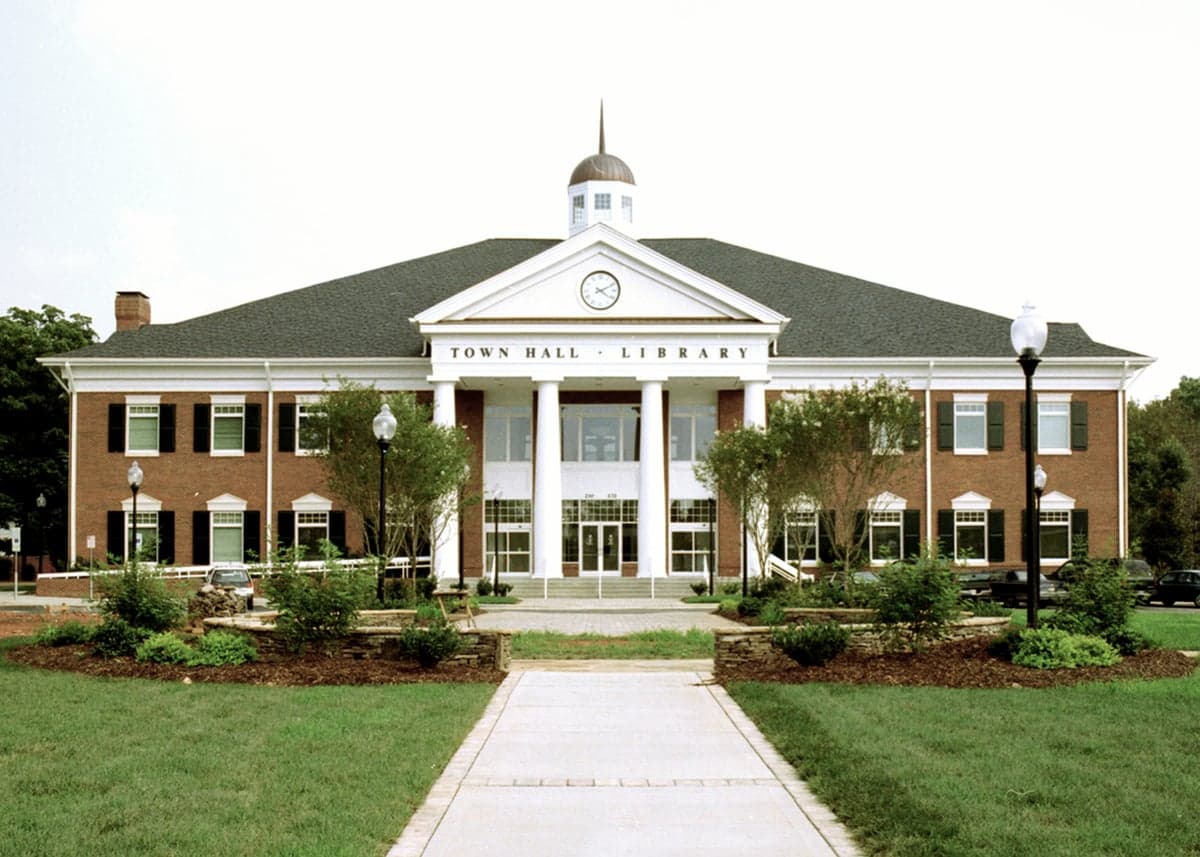
Photo: Wikipedia
Political ClimatePolitical Climate in Matthews, NC
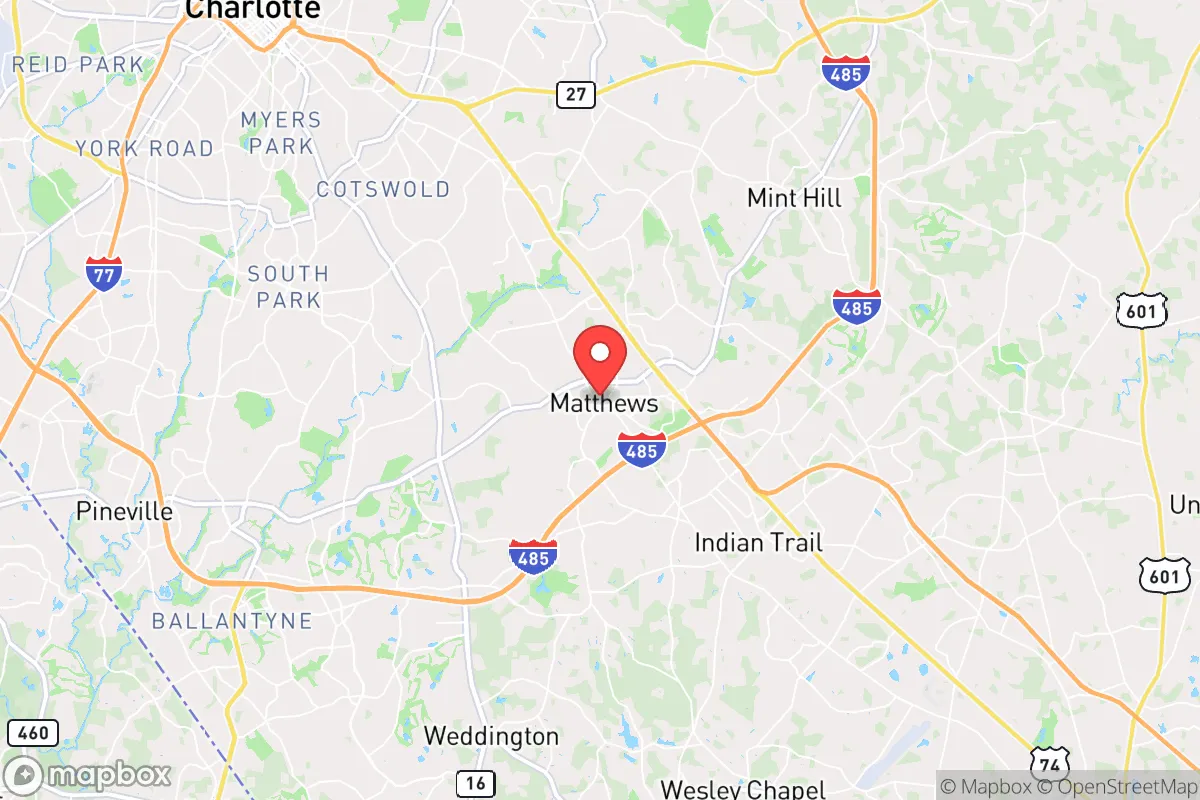
District shown is the primary district for this city’s centroid. Cities may span multiple districts.
Local Political AnalysisPolitical Analysis of Matthews, NC
Matthews, North Carolina, has long been a reliably conservative community, and that hasn't changed much at its core, even as the Charlotte metro area has grown and shifted around it. The Cook Partisan Voting Index (PVI) for the area sits at R+10, meaning it votes about ten points more Republican than the national average. That’s a solid, dependable red lean, and it reflects the values of a lot of the families who’ve been here for generations. You still see more "Don't Tread on Me" flags than rainbow banners in the front yards, and the local chatter at the coffee shop is more about property taxes and school board decisions than any progressive social agenda.
How it compares
Drive ten minutes west into Charlotte proper, and you’re in a completely different political world. Mecklenburg County as a whole is solidly blue, with a Cook PVI of D+18, so Matthews sits as a conservative island in a sea of progressive policies. The contrast is stark. While Charlotte’s city council is pushing things like sanctuary city policies and higher density zoning that feels like government overreach into how you can use your own land, Matthews has largely resisted that kind of top-down control. The surrounding towns tell a similar story: Mint Hill and Indian Trail lean conservative, while places like Davidson and Huntersville have drifted more toward the center-left. For a long-time resident, it feels like Matthews is one of the last places in the metro where you can still have a reasonable conversation about limited government without being shouted down.
What this means for residents
For the people who live here, the R+10 lean translates into a pretty straightforward reality: your local government is generally going to stay out of your business. The town council has historically been cautious about raising taxes, and they’re not eager to adopt the kind of sweeping social ordinances you see in bigger cities. You won’t find a mask mandate or a vaccine passport requirement in Matthews, and the local police aren’t defunded—they’re respected. That said, there’s a quiet concern among folks I know that the growth is bringing in people from Charlotte who want to change things. The school board races are getting more competitive, and there’s been some chatter about affordable housing mandates that feel like a foot in the door for more government control. If you value personal freedom and want to keep your rights intact, you’re probably keeping a close eye on those local elections.
One cultural distinction that stands out is the strong presence of faith-based organizations and a general respect for traditional family structures. You don’t see a lot of push for radical gender ideology in the schools here, and the local churches are still a big part of community life. The annual Matthews Alive festival is a good example—it’s a family-friendly, patriotic event, not a platform for political activism. The trajectory, though, is something to watch. As more people move in from out of state, there’s a real risk that the progressive wave that’s washed over so many other suburbs will eventually reach Matthews. For now, it’s still a place where you can feel like your vote matters and your voice isn’t drowned out by a noisy, activist minority. But the next few election cycles will tell the story. If you’re looking for a place that still values individual liberty over collective conformity, Matthews is holding the line—for now.

State Political ClimatePolitical Climate in North Carolina
State Political AnalysisPolitical Environment in the State
North Carolina has long been the quintessential swing state of the Southeast, but the last decade has seen it settle into a reliably red-leaning posture, though not without serious internal friction. The state voted for Donald Trump in both 2016 and 2024, while flipping for Trump again in 2020 by a razor-thin 1.3 points, and the GOP now holds supermajorities in both chambers of the General Assembly. The dominant coalition is a mix of rural and suburban conservatives, with a growing libertarian streak, but the urban crescent from Charlotte to Raleigh-Durham is a deep blue counterweight that keeps every statewide race competitive. Over the past 20 years, the state has drifted right on fiscal and cultural issues even as its cities have become more progressive, creating a political landscape that is both stable and volatile.
Urban vs. rural divide
The political map of North Carolina is a study in stark contrasts. The major metros—Charlotte, Raleigh, Durham, and Greensboro—are solidly Democratic, driven by a mix of college-educated professionals, tech workers, and a growing minority population. Mecklenburg County (Charlotte) and Wake County (Raleigh) alone account for nearly a quarter of the state's votes, and they reliably deliver margins of 20-30 points for Democrats. Meanwhile, the rural east and west are deeply Republican. Counties like Union (just east of Charlotte) and Cabarrus have flipped from purple to deep red as suburbanites moved outward, while the mountain counties like Watauga and Buncombe (Asheville) are blue islands in a sea of red. The real battleground is the exurban ring around the Triad and the Sandhills—places like Johnston County and Harnett County, which have grown fast and voted +20 for Trump in 2024. If you're moving to North Carolina, your political experience will depend almost entirely on whether you land in a city center or a county with a tractor supply store.
Policy environment
North Carolina's policy environment is a mixed bag for conservatives, but the trend is positive. The state has a flat income tax rate of 4.5%, which is scheduled to drop to 3.99% by 2027 under the 2021 tax reform package—a clear win for fiscal conservatives. There is no state tax on Social Security benefits, and the standard deduction is generous. The regulatory posture is business-friendly, with right-to-work laws and a low corporate tax rate of 2.5%. On education, the state has a robust school choice program: the Opportunity Scholarship Program now provides vouchers for any family, regardless of income, to attend private or religious schools. This was expanded significantly in 2023 over Democratic opposition. Healthcare is a sore spot—the state finally expanded Medicaid in 2023 under a compromise that included certificate-of-need reform, but the system remains heavily regulated. Election laws are a bright spot: voter ID is required (passed in 2018, upheld in 2023), and the state has clean voter rolls and same-day registration during early voting. The General Assembly has also preempted many local progressive ordinances, including sanctuary city policies and plastic bag bans, keeping the state from fragmenting into patchwork regulation.
Trajectory & freedom
North Carolina is becoming more free in several key areas, though the gains are uneven. The biggest win for personal liberty was the 2023 repeal of the pistol purchase permit system, which had required a sheriff's sign-off for handgun purchases—a Jim Crow-era law that was finally killed. Permitless carry for concealed handguns became law in 2021, and the state now has strong preemption laws preventing local governments from enacting their own gun restrictions. On parental rights, the 2023 Parents' Bill of Rights (HB 755) requires schools to notify parents of any changes to a child's health or well-being and bans instruction on gender identity and sexuality in K-4 classrooms. This was a direct response to overreach by woke school boards in Wake County and Mecklenburg County. On medical autonomy, the state banned gender transition procedures for minors in 2023 (SB 49), overriding a veto from the governor. The 12-week abortion ban (with exceptions for rape, incest, and fetal anomalies) passed in 2023 is a compromise that most conservatives find acceptable, though it's stricter than surrounding states like Virginia. Property rights got a boost with the 2024 law limiting the use of eminent domain for private economic development. The trajectory is clearly toward more individual freedom, but the urban counties are fighting it every step of the way.
Civil unrest & political movements
North Carolina has seen its share of political flashpoints, but they've been more institutional than violent. The 2020 protests in Charlotte and Raleigh after George Floyd's death were large but mostly peaceful, though there was some property damage in Charlotte's South End. The real action has been in the legislature and the courts. The "Moral Monday" movement, led by the NAACP, has been a fixture since 2013, with regular protests at the General Assembly over voting rights and social issues. On the right, the "We the People" movement and local Tea Party groups remain active, particularly in Union County and Gaston County. Immigration politics are relatively quiet—the state is not a sanctuary state, and the 2015 law (HB 318) requiring sheriffs to cooperate with ICE remains in effect, though some urban sheriffs like Durham's have resisted. Election integrity was a major flashpoint after 2020, with the legislature passing a series of reforms (voter ID, absentee ballot changes) that were upheld by the courts. The most visible flashpoint for a new resident would be the culture war in school board meetings, particularly in Wake County and Buncombe County, where fights over library books and curriculum have been intense. Overall, the state is politically engaged but not chaotic—the kind of place where people argue passionately but still wave at each other at the grocery store.
Projection
Over the next 5-10 years, North Carolina is likely to become more conservative at the state level, even as its cities get bluer. The key driver is in-migration: people are moving to the state from the Northeast and California, but they're not all liberals. Many are conservatives fleeing high taxes and progressive policies in their home states, and they're settling in exurbs like Johnston County, Cabarrus County, and the Fayetteville area. The rural east, which has been trending Democratic due to African American voters, is actually shifting right as those voters age and younger rural whites turn out. The urban crescent will continue to vote blue, but the state's legislative maps (drawn by the GOP) will keep the General Assembly in conservative hands for the foreseeable future. The wildcard is the governor's office—Democrats have held it since 2017, but the 2024 election was close, and a Republican win in 2028 would complete the trifecta. Expect continued fights over education funding, school choice expansion, and further tax cuts. The state's freedom trajectory is positive, but it will require constant vigilance to prevent the urban counties from imposing their will on the rest of the state through local ordinances and court challenges.
For a conservative moving to North Carolina, the bottom line is this: you can find a community that matches your values, but you have to choose your county carefully. If you land in Union County, Johnston County, or the Fayetteville exurbs, you'll be in a place where your vote matters and your way of life is respected. If you end up in Durham or Asheville, you'll be in a blue bubble with high taxes and progressive school boards. The state government is on your side, but local control means you need to do your homework. The good news is that the state's trajectory is toward more freedom, lower taxes, and stronger parental rights—and the people moving here are helping to accelerate that trend. Just don't expect it to be handed to you; North Carolina is still a battleground, and every election counts.
* Values derived from national, state, county, city and local statistics and may differ in a specific area. Last updated: 2026-05-03T20:27:11.000Z
Narrative content on this page is AI-generated and may contain mistakes. Verify any details that matter before acting on them.
ReloMaps may earn a commission from affiliate links at no extra cost to you.

