Photo: Wikipedia
Political ClimatePolitical Climate in Meridian, TX
District shown is the primary district for this city’s centroid. Cities may span multiple districts.
Local Political AnalysisPolitical Analysis of Meridian, TX
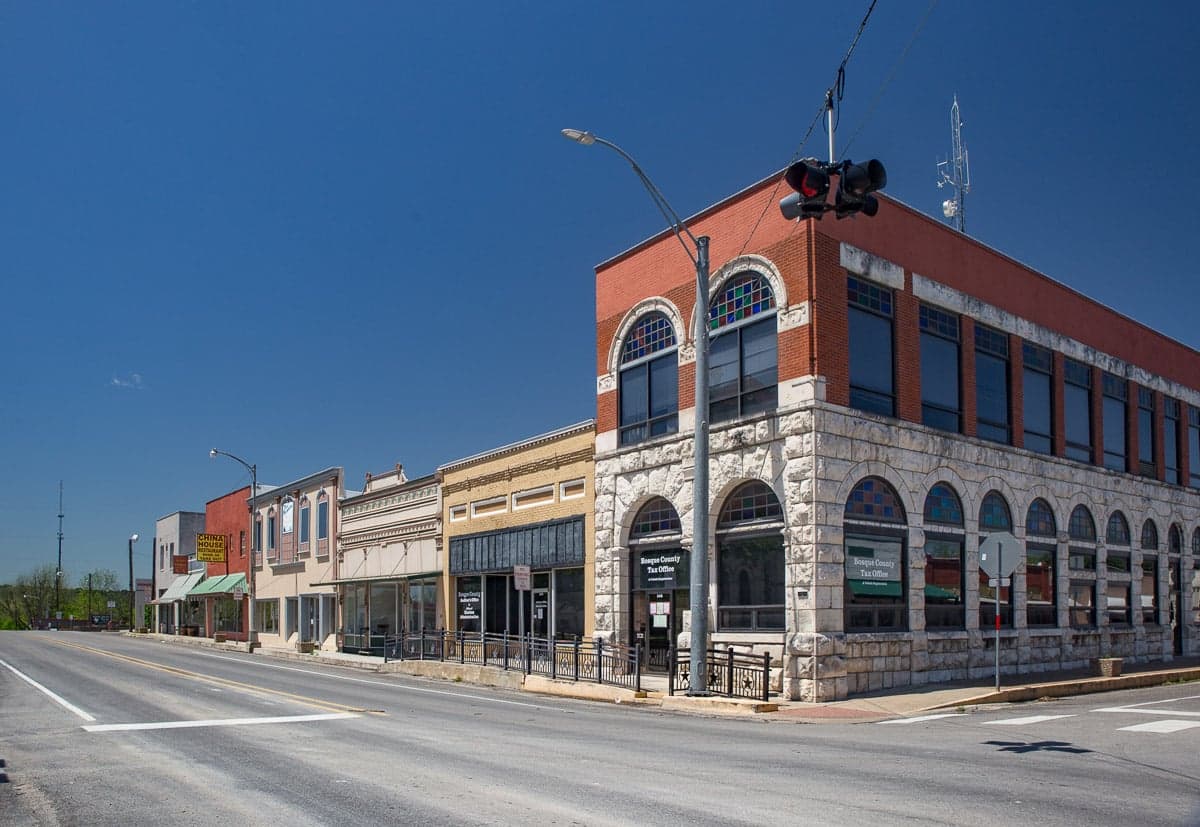
Meridian, Texas, sits in the heart of Bosque County, and politically, it’s about as solidly conservative as you’ll find in the state. The area’s Cook Partisan Voting Index (PVI) of R+11 tells you a lot right off the bat—this isn’t a place that’s flirting with the left. In the 2024 election, the county went heavily for the Republican ticket, and that’s been the trend for as long as anyone can remember. You don’t see a lot of yard signs for the other side around here, and when you do, they’re usually a conversation starter, not a common sight. The trajectory is holding steady, too. While some rural counties in Texas have seen a slow drift toward the center as newcomers arrive from blue states, Meridian’s small-town character and agricultural roots keep it anchored. The local school board, county commission, and even the volunteer fire department are run by folks who believe in limited government and personal responsibility. There’s a quiet but firm resistance to any outside pressure to change that.
How it compares
Compared to the state of Texas as a whole, which has a Cook PVI of R+4, Meridian is a good seven points more conservative. That gap is significant. Texas overall is still a red state, but it’s a lot more purple in places like the Dallas-Fort Worth metroplex, Harris County, or even Waco, which is about 45 minutes east of here. In those areas, you’ll find a mix of suburban moderates and progressive activists pushing for things like higher property taxes, stricter environmental regulations, and more government involvement in local schools. Meridian, by contrast, feels like a different world. Neighboring towns like Clifton and Valley Mills share a similar conservative bent, but drive an hour to Austin or even to Stephenville, and you’ll see a noticeable shift. Stephenville, for instance, has a strong conservative base but is also home to Tarleton State University, which brings in a younger, more diverse crowd that sometimes leans left. Meridian doesn’t have that dynamic. It’s a town of about 1,500 people, and the political conversations here are about keeping the government out of your business, protecting Second Amendment rights, and ensuring local control over land use and education.
What this means for residents
For someone living here, the political climate means a lot of freedom from the kind of overreach you hear about in bigger cities. There’s no talk of defunding the police, no push for mask mandates, and no serious debate about removing Confederate monuments or renaming streets. The local government is small and accessible—you can call the mayor on his cell phone if you have a problem. Property taxes are a concern everywhere in Texas, but here, the county commissioners are more likely to listen to a rancher worried about his land appraisal than to a developer from out of town. The school district, Meridian ISD, focuses on basics and local values, not state-mandated critical race theory or gender ideology curricula. If you’re worried about the direction of the state or the country, this is a place where you can still feel like your vote counts and your voice matters. The downside? It can feel insular. If you’re not a churchgoer or a hunter, you might find the social scene limited. But for those who value personal liberty and a community that looks out for its own, it’s a good fit.
One cultural distinction worth noting: Meridian is part of the "Texas Hill Country" region, which has a strong tradition of self-reliance and skepticism of federal authority. You’ll see more "Don’t Tread on Me" flags than rainbow flags, and the local gun shop does brisk business. The annual Bosque County Fair is a bigger deal than any political rally. That said, there’s a quiet worry among long-time residents that the state’s rapid growth—especially from people moving from California and New York—could eventually dilute the local culture. For now, though, Meridian remains a pocket of old-school Texas conservatism, where the government’s job is to stay out of the way, and the community’s job is to take care of itself.

State Political ClimatePolitical Climate in Texas
State Political AnalysisPolitical Environment in the State
Texas has been a reliably Republican state for decades, with a Cook PVI of R+4, but the political landscape is far more complex than a simple red-state label. The dominant coalition is a mix of rural conservatives, suburban moderates, and a growing number of libertarian-leaning independents, but the last 10-20 years have seen a slow but steady shift toward competitive two-party politics, driven largely by explosive growth in the major metros. While the state hasn't flipped, the margins have tightened significantly — in 2020, Donald Trump won Texas by just 5.6 points, down from 9 points in 2016 and 16 points in 2012 — and the fight for the soul of the state is now a daily reality.
Urban vs. rural divide
The political map of Texas is a stark checkerboard. The big blue dots are Austin (Travis County, which voted +42 for Biden in 2020), Dallas (Dallas County, +25), Houston (Harris County, +15), San Antonio (Bexar County, +18), and El Paso (El Paso County, +37). These five metros alone contain nearly 60% of the state's population, and they are the engine of Democratic growth. Meanwhile, the vast rural and exurban areas — the Panhandle (Lubbock, Amarillo), East Texas (Tyler, Longview), and the Hill Country (Fredericksburg, Kerrville) — vote 70-80% Republican. The real battleground is the suburban ring around these cities: Collin County (north of Dallas) flipped from R+30 in 2012 to R+12 in 2020, and Fort Bend County (southwest of Houston) flipped from R+10 to D+6 in the same period. The suburbs are where the political future of Texas is being decided, and they are trending away from hardline conservatism.
Policy environment
Texas remains a low-tax, low-regulation state by design. There is no state income tax, property taxes are high (averaging 1.6-2.0% of assessed value) but capped by a 2023 law that limits appraisal increases to 10% annually, and the regulatory environment is business-friendly. On education, the state has leaned into school choice: the 2023 session passed a universal Education Savings Account (ESA) program for special needs students, and a broader voucher-like bill is expected in 2025. Healthcare is a mixed bag — Texas has the highest uninsured rate in the nation (18% as of 2023) because it refused Medicaid expansion under the ACA, but the state has also passed laws to protect medical conscience rights and limit vaccine mandates. Election laws tightened after 2020: Senate Bill 1 (2021) banned 24-hour and drive-thru voting, added ID requirements for mail ballots, and gave partisan poll watchers more access. The state also passed a near-total abortion ban (trigger law in 2021, effective 2022) and a law allowing private citizens to sue anyone who "aids or abets" an abortion (SB 8). For a conservative, this is a policy environment that prioritizes fiscal restraint, parental rights, and limited government — but the property tax burden and lack of healthcare access are real trade-offs.
Trajectory & freedom
On the freedom front, Texas has been a mixed bag. On the positive side for conservatives: the state expanded gun rights significantly — permitless carry (HB 1927) passed in 2021, allowing any law-abiding adult to carry a handgun without a license. Parental rights were strengthened with the 2023 "Parental Bill of Rights" (HB 900), which requires schools to get parental consent before providing any medical or mental health services, and bans sexually explicit books from school libraries. Property rights got a boost with the 2023 law limiting eminent domain for private development. On the concerning side: the state has become more aggressive in using government power to enforce social policy. The 2023 law (SB 14) banning gender-affirming care for minors, and the 2021 law (HB 25) banning transgender athletes from school sports, represent a significant expansion of state authority into family medical decisions. The 2023 "Death Star" law (HB 2127) preempts local ordinances on everything from overtime pay to tree removal, which libertarians see as a power grab by the state capitol. Overall, Texas is becoming more free in the traditional conservative sense (guns, taxes, school choice) but less free in the sense of government intrusion into private medical and family decisions — a tension that defines the modern Texas GOP.
Civil unrest & political movements
Texas has seen its share of political flashpoints. The 2020-2021 period was intense: Austin saw months of protests over police brutality and racial justice, culminating in the city council defunding the police by $150 million (later partially restored). The border crisis has been a constant source of tension — Governor Abbott's Operation Lone Star (2021-present) has deployed thousands of National Guard troops and state troopers to the border, bused migrants to sanctuary cities like New York and Chicago, and installed razor wire and buoys in the Rio Grande. This has led to a legal showdown with the Biden administration, with the Supreme Court ruling in 2024 that federal agents can remove the wire. The "secession" rhetoric, while mostly performative, gained traction after the 2020 election — the Texas Nationalist Movement (TNM) claims 500,000 supporters, though no serious political figure has pushed for actual independence. Election integrity remains a hot-button issue: the 2022 midterms saw record turnout, but the 2021 voting law has led to a 30% increase in mail ballot rejections. A new resident would notice the constant political tension at the border, the ubiquitous "Don't Mess with Texas" bumper stickers, and the fact that local news is dominated by fights between the state and the feds.
Projection
Over the next 5-10 years, Texas is likely to become more competitive, not less. The in-migration from California and the Northeast (net 300,000+ new residents per year) is bringing a mix of conservatives fleeing high taxes and progressives fleeing high housing costs — but the net effect is a slight leftward drift in the suburbs. The Hispanic vote, long assumed to be a Democratic lock, is shifting: in 2022, Governor Abbott won 42% of the Hispanic vote, up from 35% in 2018. If that trend continues, the GOP can hold the state. But if the suburban swing continues, Texas could be a true swing state by 2032. The state legislature will likely remain Republican-controlled through 2030 due to gerrymandering, but the statewide races (governor, Senate) will be nail-biters. For a conservative moving in now, expect the political culture to remain broadly red, but with constant cultural battles over education, immigration, and medical freedom. The state will not become California, but it will become more like Arizona — competitive, polarized, and unpredictable.
For a new resident, the bottom line is this: Texas offers a low-tax, gun-friendly, school-choice environment that is still broadly conservative, but the political winds are shifting. If you're moving for freedom from government overreach, you'll find it in the rural areas and exurbs, but the big cities are increasingly progressive and the state government is increasingly willing to use its power to enforce social policy. The best bet for a conservative family is to settle in the outer suburbs of Dallas-Fort Worth (like Frisco or Prosper) or the Hill Country (like Boerne or New Braunfels), where the politics are still red, the schools are good, and the property taxes are manageable. Just know that the fight over what Texas will become is just getting started.
* Values derived from national, state, county, city and local statistics and may differ in a specific area. Last updated: 2026-05-12T01:21:39.000Z
Narrative content on this page is AI-generated and may contain mistakes. Verify any details that matter before acting on them.
ReloMaps may earn a commission from affiliate links at no extra cost to you.

