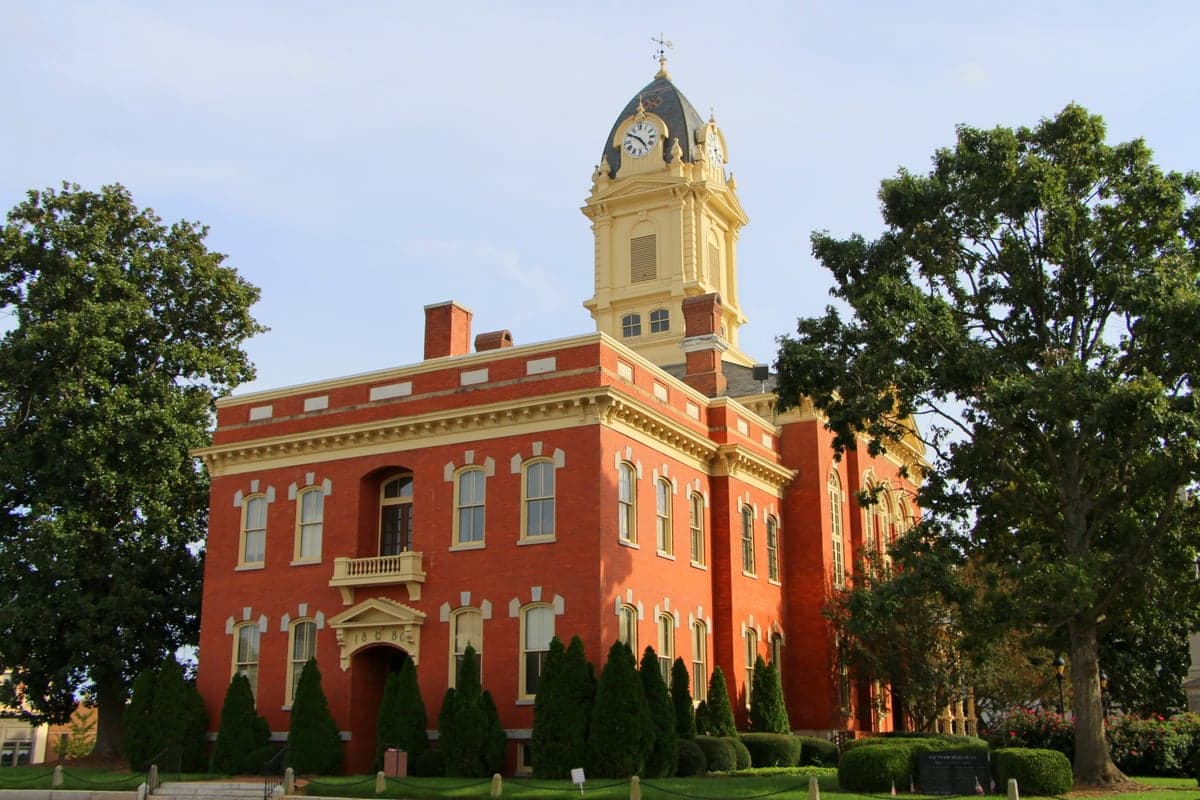
Photo: Wikipedia
Political ClimatePolitical Climate in Monroe, NC
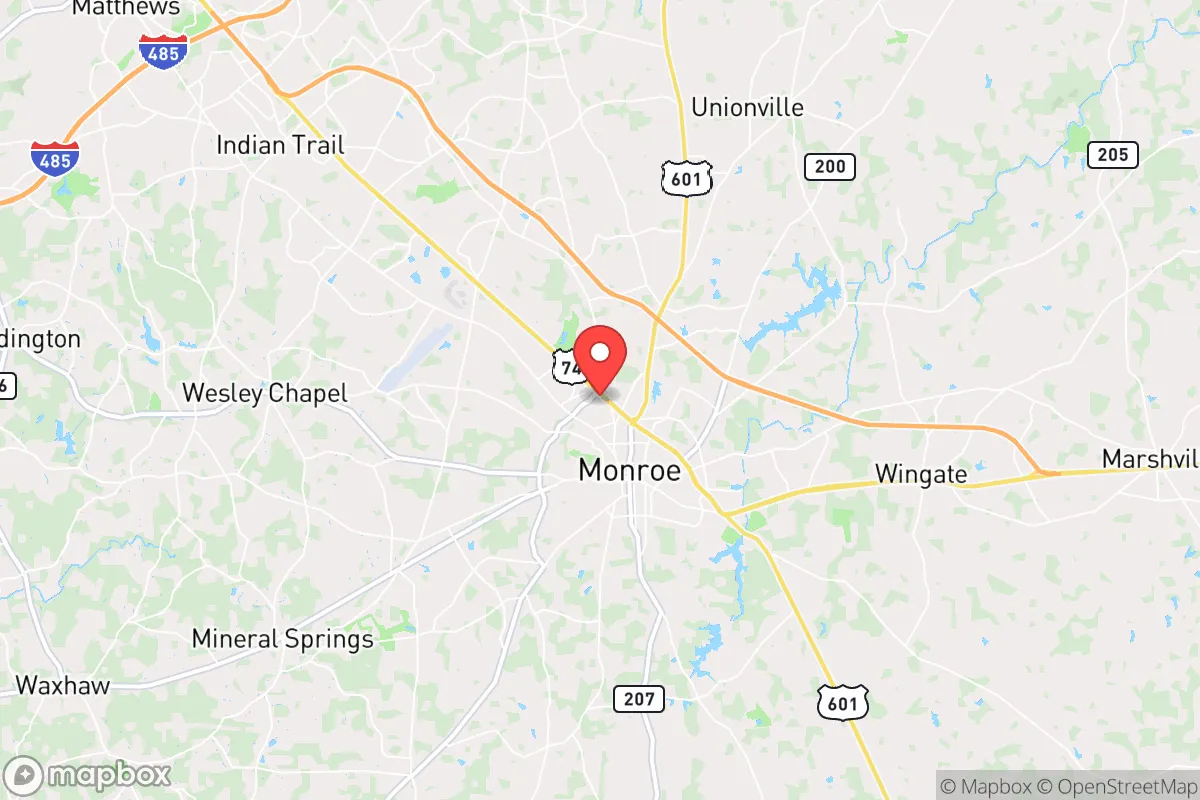
District shown is the primary district for this city’s centroid. Cities may span multiple districts.
Local Political AnalysisPolitical Analysis of Monroe, NC
Monroe, North Carolina, sits squarely in the heart of Union County, and politically, it’s about as reliably conservative as you’ll find in the Charlotte metro area. The Cook PVI rating of R+10 tells you the story on paper, but living here, you feel it in the local school board meetings, the city council decisions, and the general attitude toward government. For a long time, this was a place where folks just wanted to be left alone to run their businesses, raise their families, and go to church without a bunch of red tape or progressive social experiments being pushed down from Raleigh or Washington. That’s still the dominant vibe, but like a lot of places in the South that are growing fast, you can see the cultural and political winds starting to shift, and it’s something a lot of us are keeping a close eye on.
How it compares
Drive 20 minutes west into Charlotte’s Mecklenburg County, and you’ve entered a completely different political universe. Mecklenburg is reliably blue, with a Cook PVI of D+15, so the contrast is stark. Monroe and the rest of Union County act as a kind of conservative bulwark against that urban progressive tide. Even within Union County itself, you see a split. The more rural, eastern parts of the county—places like Marshville and Wingate—tend to be rock-ribbed Republican, while Monroe, as the county seat and a growing hub, is starting to attract some of that Charlotte spillover. You’ll find newer subdivisions where folks moved from Mecklenburg to get more land and lower taxes, but they sometimes bring their voting habits with them. It’s not a blue wave by any stretch, but you can see it in local elections where school board and city council races are getting tighter. The real contrast, though, is with places like Matthews or Mint Hill, which are closer to Charlotte and have a more moderate, suburban Republican feel. Monroe still feels like the old guard—more “leave us alone” than “let’s find a compromise.”
What this means for residents
For the folks who’ve been here a while, the political climate means a few practical things. First, property taxes are still relatively low compared to Mecklenburg, and there’s a general resistance to raising them for big government projects. The county commission and city council are still majority conservative, so you don’t see a lot of talk about new social programs or zoning changes that would cram more apartments into single-family neighborhoods. That’s a big deal for people who moved here to escape the density and regulations of Charlotte. Second, the schools are still a battleground. There’s a strong push to keep curriculum focused on traditional academics and local control, rather than the kind of DEI or CRT stuff you hear about in larger districts. But the pressure is there, and it’s something parents have to stay vigilant about. Third, the Second Amendment is still taken seriously here. You don’t get sideways looks for having a gun rack in your truck, and the local sheriff’s office isn’t interested in enforcing any state-level gun control overreach. That’s a core part of the culture that people are protective of.
Looking ahead, the biggest concern for a lot of us is the long-term trajectory. Monroe is growing, and with growth comes change. The question is whether that change will mean more government overreach into our personal freedoms—things like mask mandates, business closures, or land-use restrictions that tell you what you can do with your own property. So far, the local leadership has held the line, but you can feel the pressure from developers and outside interests who want to turn this into another Charlotte suburb. The cultural distinctions that make Monroe feel like a real community—the Friday night lights, the family-owned diners, the sense that your neighbor will help you without asking for a government grant—are worth protecting. It’s not about being against progress; it’s about making sure progress doesn’t come at the cost of the freedom and common sense that built this place. If you’re looking for a spot where you can still have a voice in how your town is run, Monroe is it. But don’t take it for granted—you’ve got to show up and vote to keep it that way.

State Political ClimatePolitical Climate in North Carolina
State Political AnalysisPolitical Environment in the State
North Carolina has long been considered a quintessential swing state, but over the past decade, it has settled into a consistent, if narrow, Republican lean at the state level. Since 2012, the state has voted for the Republican presidential candidate in every election except 2008, and the GOP has held supermajorities in the General Assembly for most of the last ten years. However, the margin is razor-thin—within 1-2 points in recent presidential races—driven by a powerful coalition of rural conservatives in the Piedmont and Coastal Plain, balanced against explosive growth in the urban Research Triangle and Charlotte metros. The trajectory is a tug-of-war: the state legislature remains firmly red, but the governor’s mansion has been held by Democrats since 2017, and the state Supreme Court flipped back to a 5-2 Republican majority in 2022. For a conservative considering relocation, the picture is one of a state that is culturally and legislatively center-right, but under constant pressure from in-migration that is slowly shifting the electorate.
Urban vs. rural divide
The political map of North Carolina is a textbook case of the urban-rural chasm. The Democratic strongholds are concentrated in three major metros: Charlotte (Mecklenburg County), the Raleigh-Durham-Chapel Hill Research Triangle (Wake, Durham, and Orange Counties), and to a lesser extent Greensboro and Winston-Salem (Guilford and Forsyth Counties). These areas have grown explosively—Wake County alone added over 250,000 residents between 2010 and 2020—and they vote blue by margins of 20-40 points. Meanwhile, the rural and exurban counties that make up the rest of the state are deeply red. Union County, just southeast of Charlotte, voted +30 points for Trump in 2020. Johnston County, east of Raleigh, went +25. The Fayetteville area (Cumberland County) is a swing zone, influenced by the large military population at Fort Liberty (formerly Fort Bragg), which tends to lean conservative but is not monolithic. The real battleground is the suburban ring around Charlotte and Raleigh—places like Cabarrus County and Harnett County—where growth is fastest and where the GOP’s margins are shrinking. A conservative moving to North Carolina should understand that living inside the I-440 beltline in Raleigh means a very different political environment than settling in a rural county like Stokes or Yadkin.
Policy environment
North Carolina’s policy environment is a mixed bag for conservatives, but the trend is positive. The state has a flat income tax rate of 4.5%, which is scheduled to drop to 3.99% by 2027 under legislation passed in 2021. There is no state property tax—only county-level—and the corporate tax rate is a low 2.5%, making it one of the most business-friendly states in the Southeast. On education, the state has a robust school choice program: the Opportunity Scholarship Program provides vouchers for low- and middle-income families to attend private schools, and in 2023, the General Assembly expanded eligibility to all families regardless of income. This is a major win for parental rights. On healthcare, North Carolina did expand Medicaid in 2023 under a bipartisan deal, which some conservatives view as a step toward government overreach, but the expansion came with work requirements and a sunset clause that gives the legislature leverage. Election laws have been a flashpoint: the state requires photo ID to vote (upheld by the courts in 2023), has strict absentee ballot rules, and banned private funding of election administration. These measures have drawn lawsuits from progressive groups, but they remain in effect. For a conservative, the policy environment is largely favorable, with low taxes, school choice, and election integrity measures in place—but the Medicaid expansion and the ongoing legal battles over voting laws are warning signs of future friction.
Trajectory & freedom
North Carolina is becoming more free in several key areas, but the fight is constant. On gun rights, the state is a "shall-issue" concealed carry state, and in 2023, the General Assembly passed a law eliminating the requirement for a permit to purchase a handgun (permitless carry), which took effect immediately. This was a significant expansion of Second Amendment rights. On parental rights, the legislature passed the "Parents’ Bill of Rights" in 2023, which requires schools to notify parents of instructional materials involving sexuality and prohibits classroom instruction on gender identity and sexual orientation in K-4. This law is being challenged in court, but it represents a clear conservative victory. On medical autonomy, North Carolina has not gone as far as some states—there is no broad religious exemption for vaccine mandates, and the state’s emergency powers law was tightened in 2023 to limit a governor’s ability to shut down businesses or mandate masks without legislative approval. This was a direct response to the overreach seen during COVID-19. On property rights, the state has strong protections against eminent domain abuse, but local zoning battles in fast-growing counties like Wake and Mecklenburg are increasingly contentious. The trajectory is one of incremental gains for personal liberty, but every win is met with legal challenges from progressive groups based in the Triangle. A new resident should expect the state to continue moving right on guns and parental rights, but to face persistent pressure on healthcare and education from the urban centers.
Civil unrest & political movements
North Carolina has seen its share of political flashpoints, but they are largely concentrated in the cities. The 2020 protests in Raleigh and Charlotte following the George Floyd incident involved property damage and clashes with police, but they were smaller and shorter-lived than in Portland or Seattle. The most visible organized movement on the left is the Moral Monday protests, which began in 2013 and continue in smaller form, targeting the GOP’s legislative agenda on voting rights, abortion, and education. On the right, the "We the People" movement and local Tea Party groups remain active, particularly in rural counties, and they have successfully pushed for election integrity reforms. Immigration politics are relatively quiet compared to border states—North Carolina has no sanctuary cities, and the state passed a law in 2015 requiring sheriffs to cooperate with ICE. However, Durham and Orange County have declared themselves "welcoming" jurisdictions, creating a patchwork of enforcement. Election integrity was a major issue after 2020, with the state legislature creating a new election fraud investigation unit in 2023. A new resident would notice that political activism is visible but not disruptive—you’ll see yard signs and bumper stickers, but not street blockades. The exception is on college campuses like UNC-Chapel Hill and Duke, where progressive activism is more intense.
Projection
Over the next 5-10 years, North Carolina is likely to remain a purple state with a slight red tilt, but the margin is shrinking. The key demographic shift is the influx of out-of-state migrants—primarily from New York, New Jersey, and California—who are moving to the Charlotte and Raleigh metros for jobs and lower cost of living. These newcomers tend to be moderate to liberal, and they are slowly turning suburban counties like Wake and Mecklenburg deeper blue. However, the rural counties are not depopulating as fast as in the Midwest, and the state legislature has drawn congressional and state legislative maps that favor Republicans (though these are subject to ongoing litigation). The wild card is the growing Hispanic population, which is concentrated in the Charlotte area and the eastern part of the state; this group leans Democratic but is not monolithic. A conservative moving in now should expect that the state will continue to pass conservative legislation on guns, taxes, and parental rights, but that the governor’s office will likely remain Democratic, creating a check on the most aggressive bills. The state Supreme Court could flip again. In a decade, North Carolina may look more like Georgia—a state that is competitive at the presidential level but still governed by a Republican legislature. For a conservative, the window to lock in favorable policies is now, before the demographic tide turns further.
For a conservative relocating to North Carolina, the bottom line is this: you get low taxes, strong gun rights, school choice, and a legislature that fights for parental rights and election integrity. But you also get a Democratic governor who can veto the most ambitious bills, urban counties that are rapidly turning blue, and a constant legal battle over every conservative win. The state is not Texas or Florida in terms of red solidity, but it is far better than Virginia or Maryland. If you choose to live in a rural or exurban county like Union or Johnston, you’ll find a community that shares your values. If you move to Raleigh or Charlotte, you’ll be in a purple bubble where your vote matters but your neighbors may not agree with you. The key is to know the map and pick your county wisely.
* Values derived from national, state, county, city and local statistics and may differ in a specific area. Last updated: 2026-05-03T20:25:02.000Z
Narrative content on this page is AI-generated and may contain mistakes. Verify any details that matter before acting on them.
ReloMaps may earn a commission from affiliate links at no extra cost to you.

