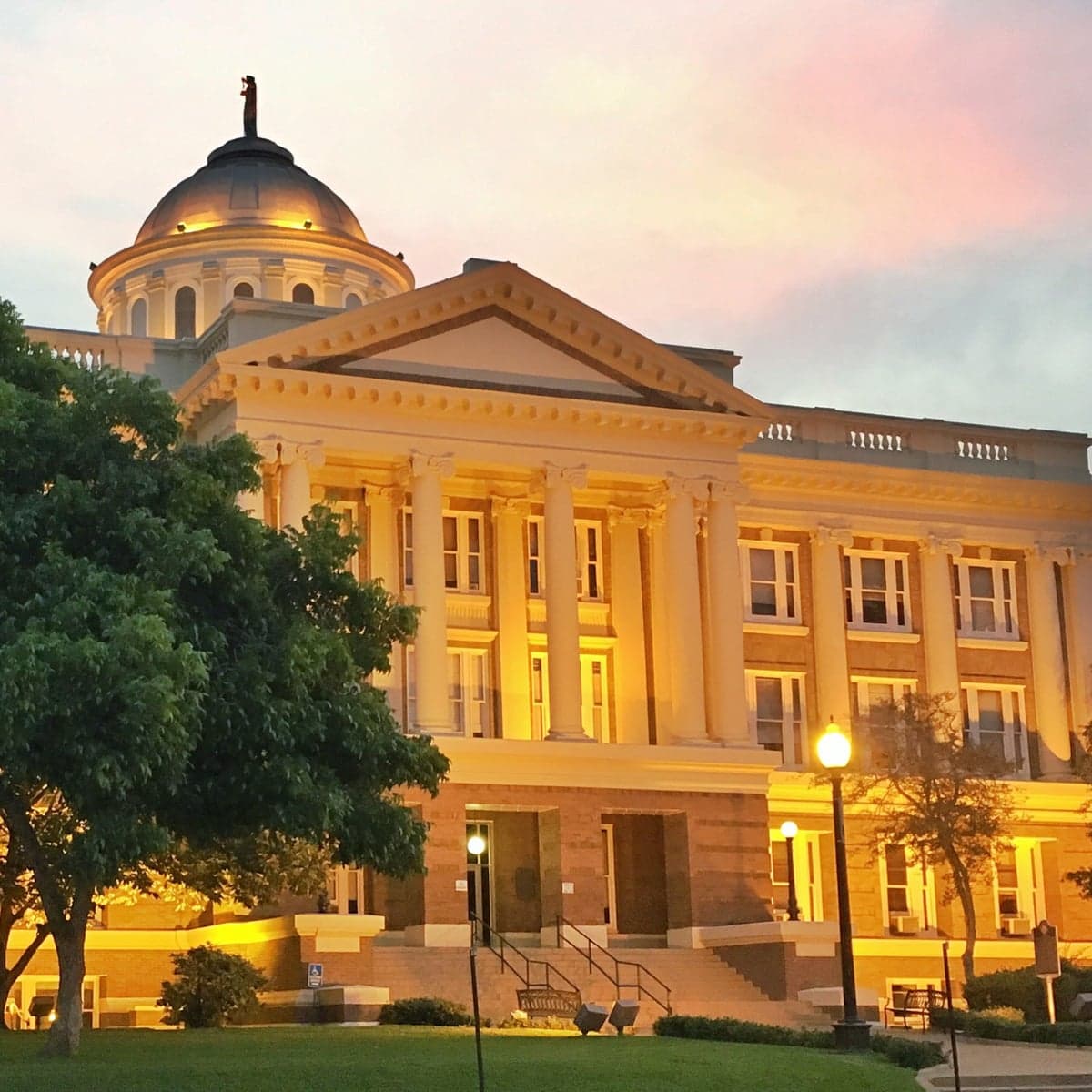
Photo: Wikipedia
Political ClimatePolitical Climate in Palestine, TX
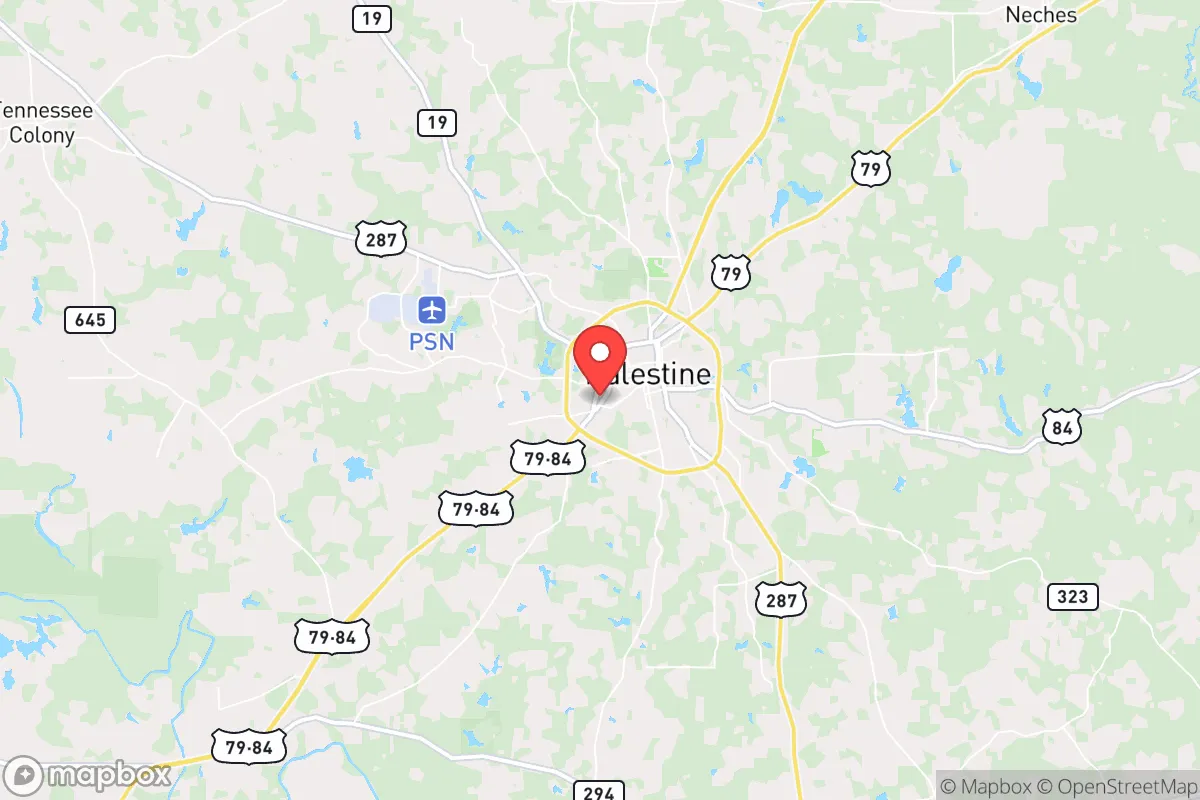
District shown is the primary district for this city’s centroid. Cities may span multiple districts.
Local Political AnalysisPolitical Analysis of Palestine, TX
I’ve lived in Palestine long enough to watch the political winds shift across Texas, but our corner of East Texas has stayed remarkably steady. The area carries a Cook PVI of R+14, which is a full ten points redder than the state’s R+4 rating. That’s not just a number—it reflects a deep-rooted preference for limited government, local control, and traditional values. While the state as a whole has inched toward purple in recent cycles, Palestine and surrounding Anderson County have held firm. If anything, the trajectory here is a quiet resistance to the progressive trends creeping into places like Austin or even Tyler, which has seen some suburban drift. You won’t find many yard signs for candidates who talk about expanding government reach or redefining personal freedoms.
How it compares
Compared to Texas as a whole, Palestine is a conservative stronghold in a state that’s still reliably red but showing cracks. The statewide PVI of R+4 means Texas can swing in close races—think Beto O’Rourke’s 2018 Senate run or the narrow margins in suburban Houston and Dallas. Here in Palestine, that kind of uncertainty doesn’t exist. We vote like the old Texas: solidly Republican, with little appetite for the coastal transplants’ politics. Drive an hour west to Austin, and you’re in a completely different world—blue policies, higher taxes, and a government that seems to want a say in everything from your energy choices to your kids’ curriculum. Even nearby Nacogdoches, with its university influence, leans a bit more moderate. Palestine remains a place where people still believe the best government is the one closest to home, and that’s a distinction you feel in daily life.
What this means for residents
For folks living here, the political climate translates into tangible differences. Property taxes are lower than in many parts of Texas because local officials prioritize fiscal restraint over expanding services. There’s less red tape on small businesses and fewer zoning headaches if you want to build a workshop or keep livestock. The school board here hasn’t bought into the progressive curriculum battles you see in larger districts—parents still have a real say. And on Second Amendment rights, there’s no ambiguity: Palestine respects personal responsibility without the overreach of red-flag laws or waiting periods. The trade-off is that we don’t have the flashy amenities of a big city, but most of us see that as a feature, not a bug. You trade some convenience for the freedom to live your life without a bureaucrat looking over your shoulder.
Culturally, Palestine holds onto distinctions that set it apart even from other conservative Texas towns. We’ve got a strong sense of community rooted in church, family, and local events like the Texas Dogwood Trails Festival. There’s a wariness of federal mandates—whether it’s environmental regulations on farmland or health directives that feel more like control than guidance. The local paper still runs letters to the editor defending property rights and school choice. If you’re looking for a place where the government stays out of your way and your neighbors share your values, Palestine is that rare pocket where the old Texas spirit isn’t just surviving—it’s thriving. Just don’t expect it to change anytime soon; we like it that way.

State Political ClimatePolitical Climate in Texas
State Political AnalysisPolitical Environment in the State
Texas is a solidly Republican state with a Cook PVI of R+4, meaning it leans about four points more conservative than the national average. The GOP holds every statewide office and has supermajorities in both legislative chambers, a dominance that has actually intensified over the past 20 years as rural and exurban areas have become more reliably red while urban centers have shifted blue. But don't let the R+4 label fool you — the state's political landscape is far from monolithic, and the real story is a tug-of-war between booming liberal metros and a deeply conservative hinterland that still sets the agenda in Austin.
Urban vs. rural divide
The political map of Texas is a study in contrasts. The state's five largest metros — Houston, Dallas-Fort Worth, San Antonio, Austin, and El Paso — are increasingly Democratic strongholds. Austin and El Paso are deep blue, with Democrats routinely winning 70% or more of the vote. Houston's Harris County and Dallas County have flipped decisively blue over the past decade, while San Antonio's Bexar County is trending the same way. Meanwhile, the vast rural and small-town expanse — places like Lubbock, Midland, Tyler, and Wichita Falls — votes Republican by margins of 70-80%. The real battleground is the suburbs: Collin County (north of Dallas) and Denton County were once ruby red but are now purple, with Democrats winning local offices in places like Frisco and Plano. Fort Worth's Tarrant County, long a GOP stronghold, flipped to Biden in 2020 and has been competitive ever since. The urban-rural divide is widening, driven by in-migration from blue states into cities and a simultaneous exodus of conservatives to exurbs and small towns.
Policy environment
Texas's policy environment is a textbook example of limited-government conservatism, though with some notable exceptions. The state has no personal income tax, relying instead on high property taxes and sales tax — a trade-off that benefits high earners but can sting homeowners. Business regulation is light, with no state-level minimum wage above the federal $7.25 and a right-to-work law that keeps unions weak. On education, the legislature has pushed school choice and charter expansion, though a 2023 voucher bill failed in the House. The Texas Heartbeat Act (SB 8) effectively banned abortion after six weeks in 2021, and after Dobbs, a trigger law banned it entirely. Medicaid expansion has been repeatedly rejected. Election laws tightened with SB 1 (2021), which added ID requirements for mail ballots, banned 24-hour and drive-through voting, and empowered partisan poll watchers. The state also passed a law banning COVID-19 vaccine mandates for private employers. Overall, the policy environment is friendly to conservative priorities, but the high property tax burden and recent fights over school funding are persistent pain points.
Trajectory & freedom
On balance, Texas has become more free in several key areas over the past five years, though with some caveats. The 2021 permitless carry law (HB 1927) allows most adults to carry a handgun without a license, expanding Second Amendment rights. Parental rights in education were strengthened by HB 900, which requires schools to rate library books for "sexually explicit" content and obtain parental consent for access. The state also banned critical race theory in public schools (SB 3) and prohibited transgender athletes from competing on girls' teams (HB 25). Medical freedom was bolstered by a ban on vaccine mandates and a law protecting doctors who refuse to perform gender-transition procedures. However, some conservatives worry about government overreach in other areas: the state's social media law (HB 20) forces platforms to host certain speech, which cuts against free-market principles. And the 2023 drag show restriction (SB 12) was seen by some as an unnecessary expansion of government into private entertainment. Overall, Texas is trending toward greater personal liberty on guns, education, and medical choice, but the legislature's willingness to regulate culture-war issues raises questions about consistency.
Civil unrest & political movements
Texas has seen its share of political flashpoints. The 2020 Black Lives Matter protests in Austin, Houston, and Dallas were large and occasionally violent, leading to property damage and a lasting distrust between activists and law enforcement. In response, the legislature passed a law protecting police from defunding and increasing penalties for rioting. Immigration politics are front and center: Governor Abbott's Operation Lone Star has deployed state troopers and National Guard to the border, bused migrants to sanctuary cities, and installed razor wire along the Rio Grande. The state also passed a law (SB 4) allowing local police to enforce immigration laws, though it's tied up in court. The Texas Nationalist Movement continues to push for secession, but it remains a fringe effort. Election integrity remains a hot-button issue: the 2020 audit of four counties (including Harris and Dallas) found no widespread fraud, but many conservatives remain skeptical of mail-in voting. The Uvalde school shooting in 2022 sparked intense debate over gun laws, but the legislature responded by raising the purchase age for assault-style rifles to 21 — a rare restriction that angered some Second Amendment advocates. New residents will notice a palpable tension between the state's conservative leadership and the progressive activism of its largest cities.
Projection
Over the next 5-10 years, Texas is likely to remain under Republican control, but the margins will continue to narrow. Demographic trends favor Democrats: the state's Hispanic population is growing, and many new arrivals from California and New York settle in blue-leaning urban areas. However, a significant number of conservative migrants are also moving to Texas, often to exurbs and smaller cities like College Station, Round Rock, and New Braunfels. The GOP's internal divide — between business-friendly establishment types and populist culture-warriors — could lead to primary battles that shift the party's focus. The state's rapid growth will force tough choices on infrastructure, water, and education funding, which could test the low-tax, low-service model. Expect continued fights over school vouchers, property tax reform, and border security. For a new resident, the bottom line is this: Texas will remain a conservative state for the foreseeable future, but the political environment will be increasingly competitive and polarized. Choose your county carefully — living in Austin means a very different political experience than living in Lubbock or Midland.
For someone moving to Texas, the practical takeaway is that you'll enjoy low taxes, limited government, and broad personal freedoms — especially on guns, education, and medical choice. But you'll also encounter high property taxes, ongoing culture wars, and a growing urban-liberal presence that can feel at odds with the state's conservative identity. If you value a community that shares your principles, look to the suburbs and exurbs of Fort Worth, San Antonio's north side, or the Hill Country towns like Boerne and Fredericksburg. The state's trajectory is still red, but the shade is fading — and the fight over what Texas will become is just getting started.
* Values derived from national, state, county, city and local statistics and may differ in a specific area. Last updated: 2026-05-14T20:57:47.000Z
Narrative content on this page is AI-generated and may contain mistakes. Verify any details that matter before acting on them.
ReloMaps may earn a commission from affiliate links at no extra cost to you.

