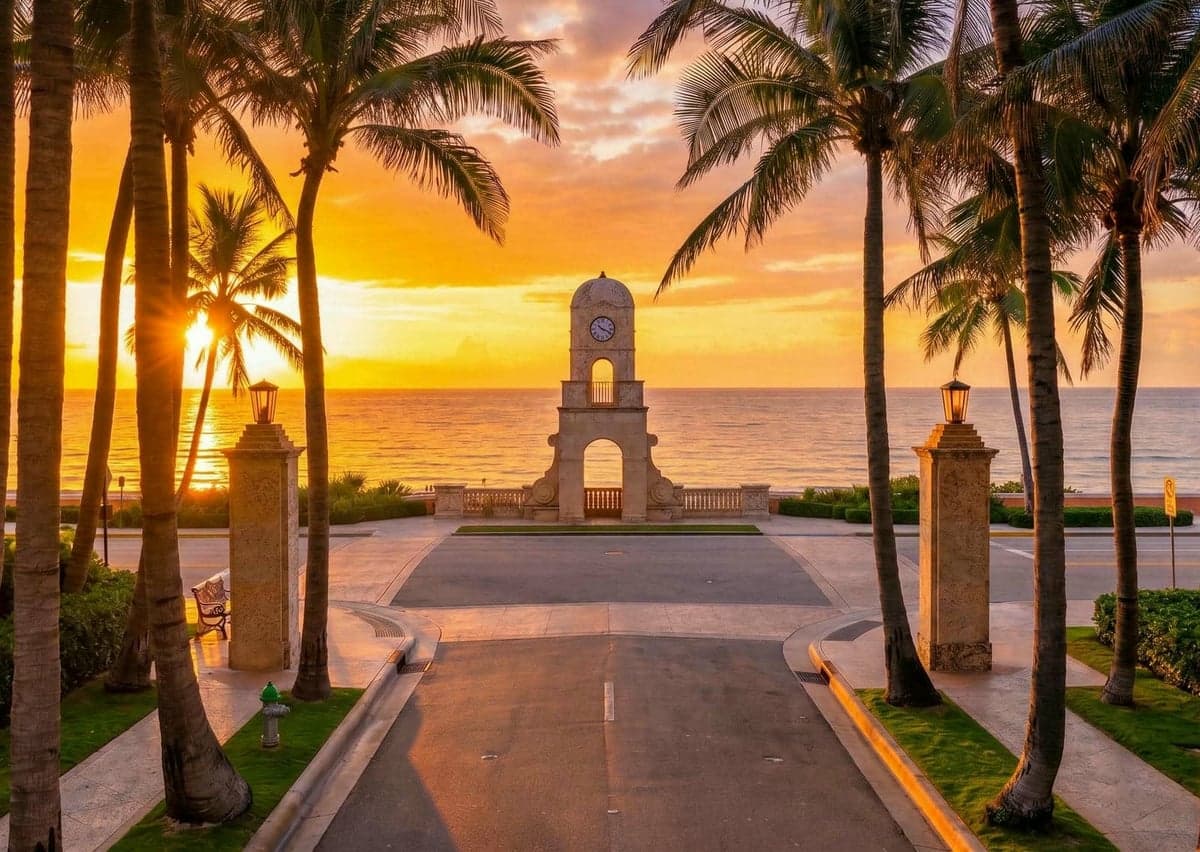
Photo: Made with AI
Political ClimatePolitical Climate in Palm Beach, FL
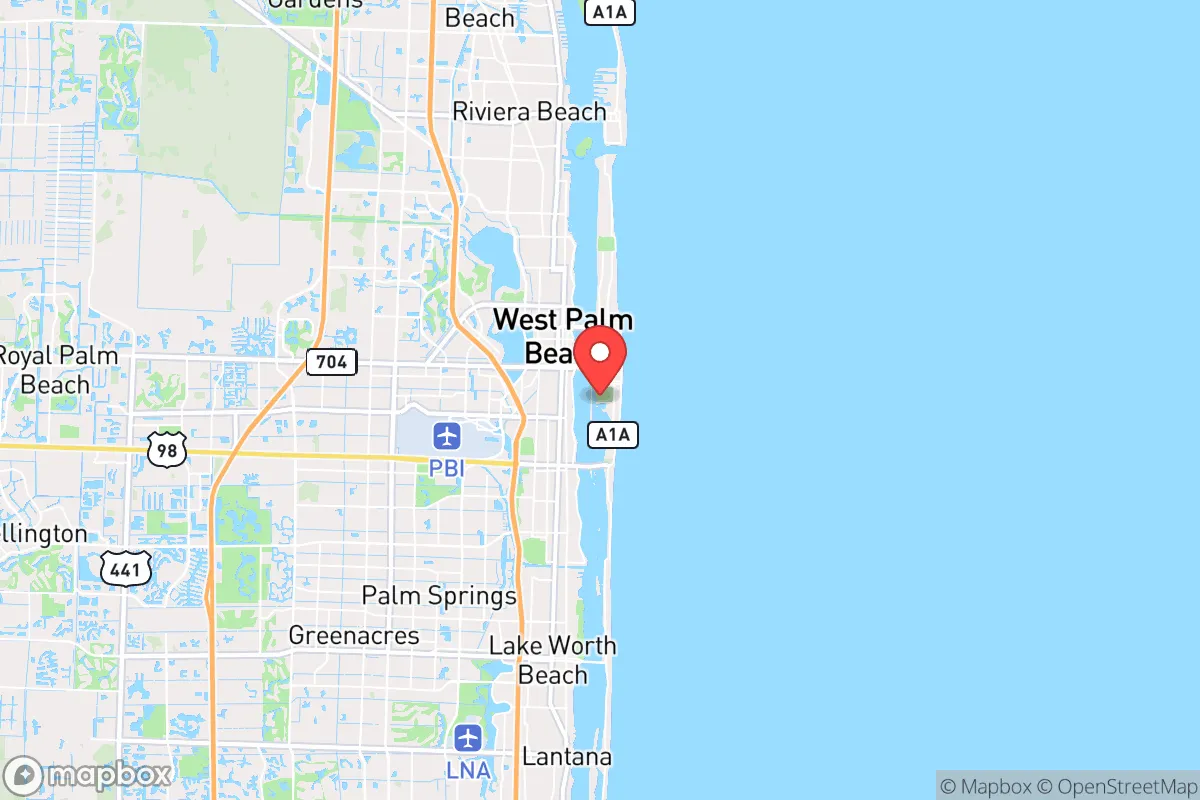
District shown is the primary district for this city’s centroid. Cities may span multiple districts.
Local Political AnalysisPolitical Analysis of Palm Beach, FL
Palm Beach, Florida, has a Cook PVI of D+4, meaning it leans Democratic by four points relative to the national average—a shift that’s become more pronounced in recent years. But if you’ve been around here as long as I have, you know this island wasn’t always this way. It used to be a reliably conservative enclave, where old-money families and snowbirds valued low taxes, limited government, and personal responsibility. Now, you’re seeing a steady influx of out-of-state transplants bringing progressive voting habits, and that’s slowly changing the character of the place. The surrounding state of Florida, by contrast, has a Cook PVI of R+5—a solidly Republican lean—so Palm Beach is increasingly an outlier in a state that’s trending red.
How it compares
Drive just a few miles west or north, and you’ll feel the political difference immediately. West Palm Beach and Lake Worth Beach are more mixed but still lean left, while towns like Wellington and Jupiter are reliably conservative—places where you still hear folks talk about property rights and school choice without getting side-eyed. The contrast is stark: Palm Beach’s D+4 rating puts it at odds with the rest of Palm Beach County, which as a whole is a swing county, and even more so with the state’s R+5 tilt. That means local elections here often feel disconnected from what’s happening in Tallahassee. You’ll see the town council pushing for more regulations on short-term rentals or higher impact fees, while the state legislature is cutting taxes and rolling back red tape. It’s a constant tug-of-war between local progressive impulses and statewide conservative priorities.
What this means for residents
For someone who values personal freedoms—like the right to run a business without endless permitting, or to keep more of what you earn—this political divide creates real friction. Property taxes here are already high compared to inland towns, and there’s always talk of new bond measures for “green” initiatives or affordable housing mandates that sound good on paper but end up costing homeowners. The local government’s appetite for regulation feels like it’s growing, whether it’s restrictions on beach access, noise ordinances, or building height limits. Meanwhile, the state is moving in the opposite direction, with Governor DeSantis and the legislature pushing for preemption laws that limit local control. That’s a double-edged sword: it protects you from some overreach, but it also means you’re stuck in a constant political battle where your town council is fighting the state every step of the way.
If you’re thinking of moving here, understand that Palm Beach is a beautiful, safe, and wealthy community—but it’s not the conservative haven it once was. The cultural shift is real, and it’s accelerating. You’ll see more woke messaging at town events, more diversity-equity-inclusion programs in local schools, and a general acceptance of big-government solutions that would have been unthinkable twenty years ago. The long-term trend is concerning: as property values climb and new residents arrive from blue states, the political center of gravity keeps moving left. If you want a place where your vote actually reflects your values, you might feel more at home in Palm Beach Gardens or Boca Raton—but even those are shifting. Keep an eye on the 2026 midterms; if Palm Beach flips another point or two blue, it’ll be a clear sign that the old Florida is fading fast.

State Political ClimatePolitical Climate in Florida
State Political AnalysisPolitical Environment in the State
Florida is a solidly Republican state with a Cook PVI of R+5, but it’s not a monolith—it’s a battleground of transplants, retirees, and young families that has shifted rightward over the past two decades. The dominant coalition is a mix of conservative Cuban-Americans in Miami-Dade, rural Panhandle voters, and suburban families fleeing high-tax states, while Democrats hold sway in dense urban cores like Miami, Orlando, and Tampa. Over the last 10-20 years, the state has lurched from a classic swing state (where George W. Bush won by 537 votes in 2000) to a reliable red stronghold, with Republicans winning every statewide race since 2012 and flipping Miami-Dade County—once a Democratic firewall—by double digits in 2024.
Urban vs. rural divide
The political map of Florida is a tale of three regions: the conservative Panhandle and interior, the purple I-4 corridor, and the increasingly red South Florida. The Panhandle, anchored by Pensacola and Panama City, is deep red—think rural counties like Liberty and Calhoun that vote 80%+ Republican. The I-4 corridor, running from Tampa through Orlando to Daytona Beach, is the state’s swing belt, where suburban moms in Lakeland and Winter Garden have trended right on education and parental rights. South Florida is the real story: Miami-Dade, once a Democratic stronghold, flipped to Trump in 2020 and 2024, driven by Cuban and Venezuelan exiles who despise socialism. Meanwhile, Fort Lauderdale and West Palm Beach remain blue-leaning but are losing ground as conservative retirees from the Northeast settle in Naples and Sarasota. The urban cores—Miami proper, downtown Orlando, and St. Petersburg—vote heavily Democratic, but they’re islands in a red sea.
Policy environment
Florida’s policy environment is a conservative’s dream: no state income tax, a right-to-work law, and a regulatory climate that favors business over bureaucracy. The state has a constitutional carry law (permitless carry, effective July 2023), a six-week abortion ban (HB 5, signed in 2023), and a Parental Rights in Education law (HB 1557, the “Don’t Say Gay” law) that keeps gender ideology out of elementary classrooms. Election integrity is a priority: Florida passed SB 90 in 2021, requiring voter ID, limiting drop boxes, and banning ballot harvesting—a model for other red states. Property taxes are moderate (average 0.8% of home value), and there’s a $25,000 homestead exemption. On healthcare, the state refused Medicaid expansion under the ACA, keeping government out of your doctor’s office. The only red flag for conservatives is the state’s insurance crisis: property insurance rates have skyrocketed due to lawsuit abuse and hurricane risk, though Governor DeSantis signed tort reform in 2023 to curb frivolous claims.
Trajectory & freedom
Florida is becoming more free for conservatives, but the definition of “freedom” is contested. On personal liberty, the state has expanded gun rights (constitutional carry, preemption laws that block local gun bans), protected parental rights (HB 1557, plus the 2023 “Curriculum Transparency” law requiring schools to post instructional materials online), and banned COVID-19 vaccine mandates for private employers (HB 1, 2023). Medical autonomy took a hit with the six-week abortion ban, but that’s a win for pro-life residents. On property rights, the state passed a 2023 law limiting HOA fines and a 2024 law restricting local governments from imposing rent control. The biggest expansion of freedom? DeSantis’s “Freedom First” budget in 2023 cut taxes by $1.3 billion, including a permanent elimination of the corporate income tax for small businesses. However, the state has become less free for those who want to grow marijuana recreationally—a 2024 ballot initiative failed, keeping weed illegal for non-medical use. The trajectory is clear: Florida is doubling down on conservative governance, with no signs of a leftward pivot.
Civil unrest & political movements
Florida has seen its share of political flashpoints, but they’re mostly organized and legal, not chaotic. The 2020 Black Lives Matter protests in Miami, Orlando, and Tampa were large but largely peaceful, with some looting in downtown Miami. The state’s response was aggressive: DeSantis signed the “Combating Public Disorder” law in 2021, enhancing penalties for rioting and blocking local defunding of police. On the right, the “Don’t Tread on Florida” movement is strong, with groups like Moms for Liberty (founded in Brevard County in 2021) organizing school board takeovers and book challenges. Immigration politics are hot: Florida passed SB 1718 in 2023, requiring E-Verify for employers and banning local “sanctuary” policies, which led to a brief exodus of undocumented workers from Immokalee and Homestead. Election integrity controversies are minimal—Florida’s 2020 and 2022 elections were clean, with no major fraud cases, though Democrats still grumble about SB 90. The only visible flashpoint a new resident might notice is the constant culture war over drag shows and library books, especially in suburbs like St. Johns County and Collier County, where conservative parents are highly organized.
Projection
Over the next 5-10 years, Florida will likely become more Republican as in-migration from blue states accelerates. The state is adding 1,000 new residents a day, mostly from New York, California, and Illinois—and while some are liberals, the majority are conservatives or moderates fleeing taxes and crime. The I-4 corridor will continue to trend red as suburban families in Polk County and Osceola County shift right on education and housing costs. Miami-Dade will stay red as Cuban and Venezuelan voters remain anti-socialist, though a growing Puerto Rican population in Orange County could keep Orlando competitive. The biggest risk to conservative dominance is climate change: rising sea levels and hurricane intensity could drive up insurance costs and push out working-class families, potentially shifting the electorate toward more government intervention. But for now, expect more constitutional carry expansions, more school choice (the state already has the largest voucher program in the nation), and a continued war on “woke” corporate policies. A new resident moving in today should expect a state that is solidly red, aggressively pro-business, and culturally conservative for at least the next decade.
For a conservative family or individual, Florida offers a rare combination: low taxes, strong gun rights, parental control over education, and a government that actively pushes back against federal overreach. The trade-offs are real—high property insurance, brutal summer heat, and a constant culture war that can feel exhausting—but the state’s trajectory is unmistakably toward more personal freedom, not less. If you’re moving here, expect to pay more for homeowners insurance, but you’ll keep more of your paycheck, send your kids to a school that respects your values, and live in a state where your vote actually counts in a Republican primary. Just don’t expect to grow your own weed anytime soon.
* Values derived from national, state, county, city and local statistics and may differ in a specific area. Last updated: 2026-05-14T02:25:10.000Z
Narrative content on this page is AI-generated and may contain mistakes. Verify any details that matter before acting on them.
ReloMaps may earn a commission from affiliate links at no extra cost to you.

