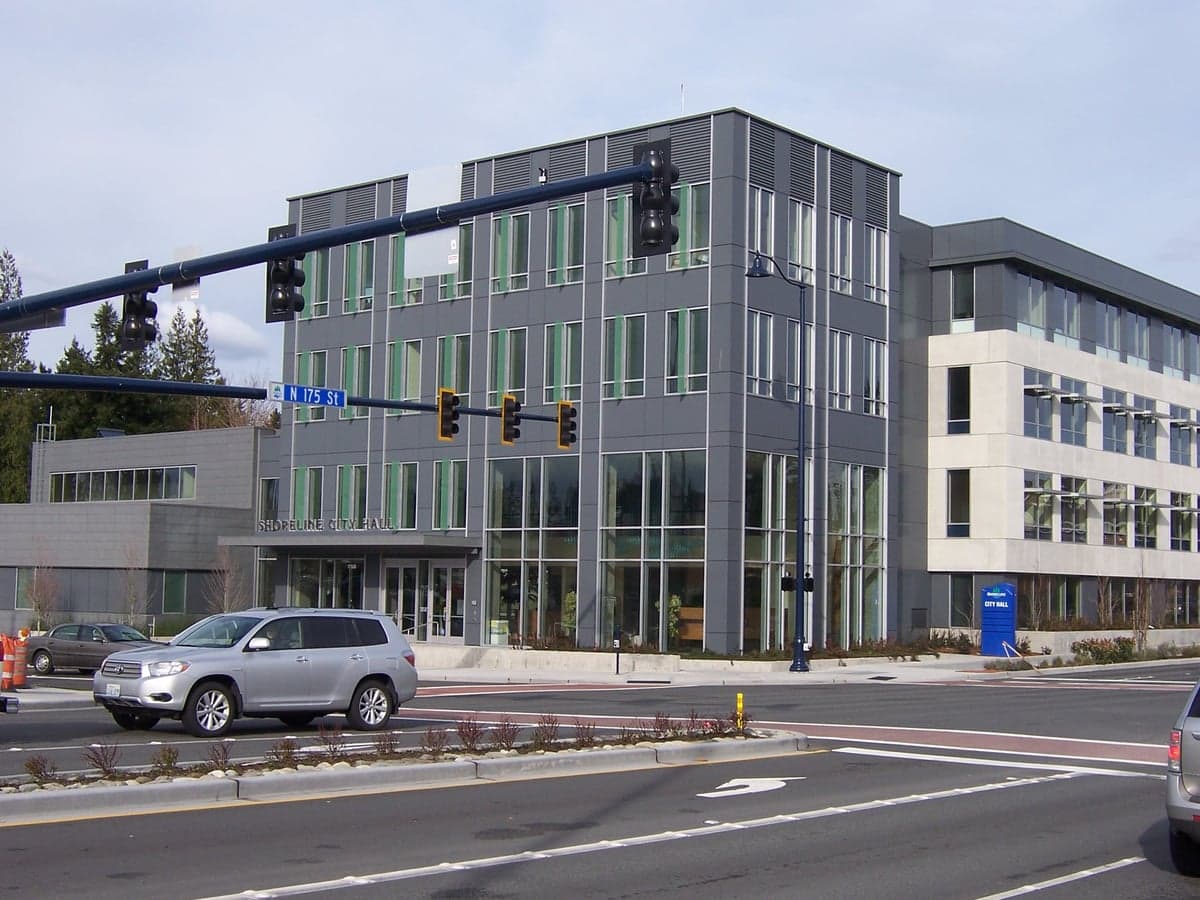
Photo: Wikipedia
Political ClimatePolitical Climate in Shoreline, WA
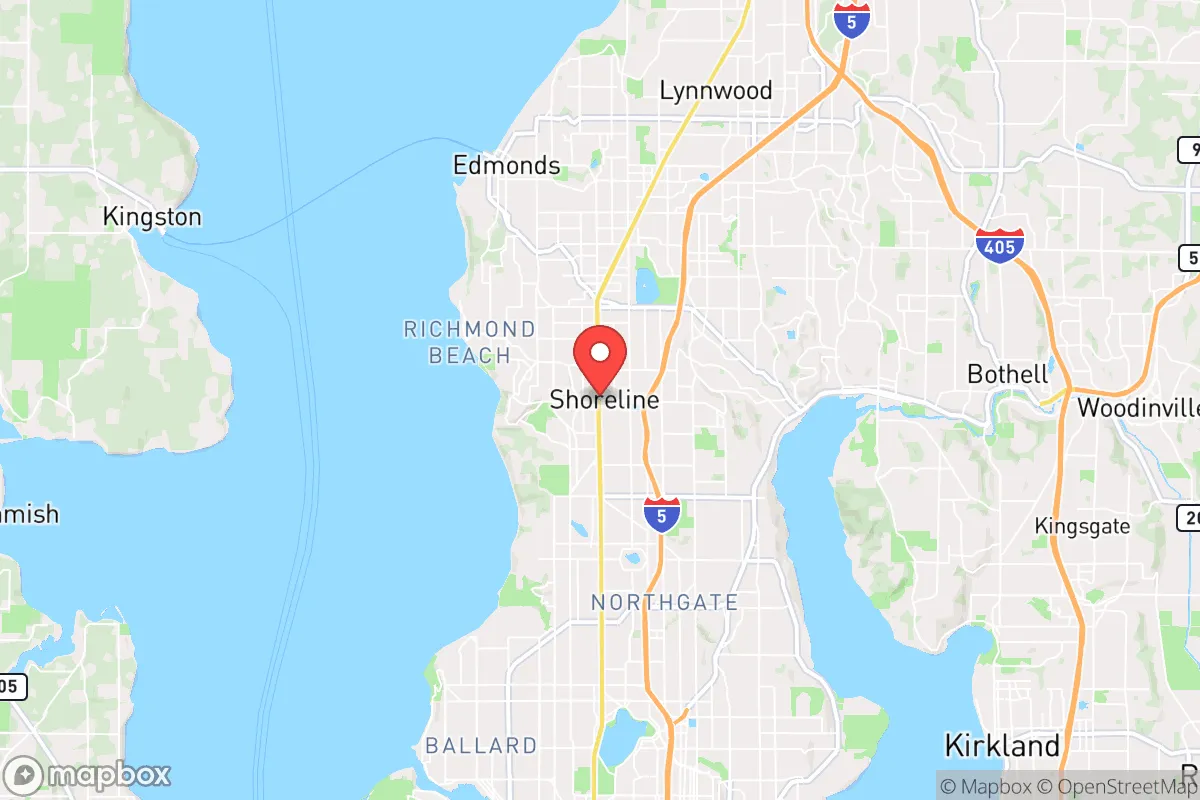
District shown is the primary district for this city’s centroid. Cities may span multiple districts.
Local Political AnalysisPolitical Analysis of Shoreline, WA
Shoreline, Washington, is about as deep blue as it gets in the Pacific Northwest, with a Cook PVI of D+39. That’s not just a lean; it’s a political monolith. The city has been trending further left for decades, and if you’re looking for a place where conservative voices feel at home, this isn’t it. The shift has been steady, accelerating noticeably since the mid-2010s, and the local government has embraced a progressive agenda that touches everything from land use to policing.
How it compares
To understand Shoreline, you have to look at its neighbors. Directly to the south is Seattle, which is even more progressive, but Shoreline is trying hard to keep up. To the north, you hit Lynnwood and Edmonds, which are still blue but with a more moderate, working-class vibe. Drive a bit further east to Bothell or Mill Creek, and you start to see a more balanced political mix. Shoreline, however, feels like an echo chamber of one-party rule. The city council and school board are uniformly progressive, and there’s little organized opposition. In the 2024 primary, the top vote-getters in local races were all running on platforms of increased government spending and expanded social programs. It’s a stark contrast to the more fiscally conservative towns east of I-5, where property taxes and zoning regulations are still debated openly.
What this means for residents
For a conservative or even a moderate, living in Shoreline means constantly feeling like your values are out of step with the local government. The city has aggressively pursued policies that many see as government overreach: strict rent control measures, a push for “social housing” that bypasses traditional market solutions, and a police oversight board that has made recruiting officers difficult. The school district has adopted a curriculum that emphasizes social justice and gender ideology, which has caused friction for families who want a more traditional education. Property taxes are high, and the city has been quick to add new fees and regulations on small businesses. If you value personal freedom—like the right to run a business without endless permits or to speak your mind without social repercussions—you’ll find Shoreline increasingly stifling. The long-term trajectory is concerning: as the city becomes more expensive and more regulated, the people who can afford to leave often do, leaving behind a population that is even more dependent on government services.
One of the biggest cultural distinctions here is the near-total absence of any visible conservative community. There’s no local GOP club that meets publicly, and conservative candidates rarely even file to run. The local paper, the Shoreline Area News, leans heavily into progressive narratives. If you’re a conservative, you learn to keep your head down. The city’s embrace of “sanctuary” policies and its willingness to defy state law on issues like drug decriminalization show a government that prioritizes ideology over public safety. I’ve seen this town change from a quiet, middle-class suburb into a laboratory for progressive policy. It’s not going to swing back anytime soon. If you’re considering a move here, just know that your vote won’t matter, your voice will be drowned out, and the government will be deeply involved in your daily life. That’s the honest truth from someone who’s watched it happen.

State Political ClimatePolitical Climate in Washington
State Political AnalysisPolitical Environment in the State
Washington State has undergone a dramatic political transformation over the past two decades, shifting from a competitive purple state to a solidly Democratic stronghold where Republicans rarely win statewide office. The state’s overall lean is now reliably blue, driven by explosive growth in the Seattle metro area and the Puget Sound corridor, while vast rural and eastern regions remain deeply conservative. Since 2004, Democrats have controlled the governorship, both U.S. Senate seats, and the state legislature for most of that period, with the 2020 and 2024 cycles cementing a 10-15 point Democratic advantage in presidential elections. For a conservative considering relocation, the state’s political trajectory is unmistakable: the urban core’s progressive dominance is expanding outward, and the old “Washington moderate” is becoming a relic.
Urban vs. rural divide
The political map of Washington is a study in stark contrast. The western third of the state, particularly King County (Seattle), Snohomish County (Everett), and Pierce County (Tacoma), generates roughly 60% of the state’s vote and delivers margins of 70-80% for Democrats. Seattle itself is a progressive fortress, but the real story is the suburban sprawl: cities like Redmond, Bellevue, and Kirkland on the Eastside have flipped from reliably Republican to reliably Democratic over the last 15 years, driven by tech industry transplants and demographic change. Meanwhile, the rest of the state votes overwhelmingly Republican. Eastern Washington, anchored by Spokane and the Tri-Cities (Kennewick, Pasco, Richland), is deeply conservative, with many counties delivering 60-70% of the vote for GOP candidates. The rural Olympic Peninsula and southwest Washington, including Vancouver (across from Portland), are more mixed but trending blue as Portland’s influence spills over. The divide isn’t just geographic—it’s cultural. A resident of Wenatchee or Yakima lives in a different political universe than someone in Capitol Hill, and that gap is widening every election cycle.
Policy environment
Washington’s policy environment is a textbook example of progressive governance with a heavy hand. The state has no personal income tax, which sounds appealing, but it’s replaced by one of the highest combined state and local sales tax rates in the nation (over 10% in many cities), a regressive structure that hits lower and middle-income families hardest. Property taxes are also above average and have risen sharply as home values have skyrocketed. On regulation, Washington is a leader in environmental mandates—the state’s cap-and-trade program (Climate Commitment Act) has driven up gas prices by 40-50 cents per gallon, and a 2024 law bans natural gas in new commercial buildings, effectively mandating all-electric construction. Education policy is dominated by teachers’ unions, with the state spending over $18,000 per student but producing mediocre outcomes—Seattle Public Schools have seen enrollment drops as families flee to suburbs or private options. Healthcare is heavily regulated, with a state-run insurance exchange and some of the strictest abortion and gender-affirming care protections in the country. Election laws are among the most liberal: universal mail-in voting, same-day registration, and no voter ID requirement at the polls (though a signature is required on the ballot envelope). For a conservative, the policy mix feels like a slow squeeze—higher costs, less choice, and a government that prioritizes collective mandates over individual freedom.
Trajectory & freedom
Washington is unequivocally becoming less free by traditional conservative measures. The state has enacted a series of laws that expand government control over personal decisions. On gun rights, the 2023 passage of HB 1240 banned the sale of many semi-automatic rifles, and a 2024 law (HB 1903) requires a 10-day waiting period for all firearm purchases—a direct infringement on the Second Amendment as many see it. Parental rights have taken a hit: the state’s “My Health, My Data” act (2023) allows minors to access gender-affirming care without parental consent, and school districts in Seattle and Olympia have policies that withhold information about a child’s gender identity from parents. Medical autonomy is constrained by vaccine mandates that survived legal challenges, and the state’s assisted suicide law (Death with Dignity Act) remains on the books but is tightly regulated. Property rights are under pressure from the state’s Growth Management Act, which limits development in rural areas and has driven up housing costs. On the positive side for liberty-minded residents, Washington has no state income tax and no “red flag” law that allows confiscation without due process (though that’s been proposed repeatedly). But the trend is clear: each legislative session brings new restrictions, and the state’s Supreme Court is reliably activist, often ruling to expand government power.
Civil unrest & political movements
Washington has been a flashpoint for political unrest, particularly in Seattle. The 2020 CHOP/CHAZ occupation in Capitol Hill was a national symbol of lawlessness, with police effectively ceding several blocks to armed protesters for weeks. Since then, organized activist movements have remained active: Antifa-aligned groups still march in Seattle and Portland (just across the river), and the state’s sanctuary policies—Washington was one of the first to limit cooperation with ICE—have made it a magnet for immigration-related tensions. On the right, the “Three Percenters” and “Patriot” groups have a presence in rural counties like Okanogan and Ferry, and there’s been talk of a “Greater Idaho” movement where eastern Washington counties consider joining Idaho. Election integrity is a live issue: the 2020 and 2024 elections saw Republican candidates in close races refuse to concede, citing concerns about mail-in ballot security, though no major fraud was proven. A new resident will notice the political divide in everyday life—Seattle’s city council meetings are often chaotic, with public comment periods dominated by activists on both sides, while in Spokane Valley, you’ll see Trump flags and “Don’t Tread on Me” decals on every other truck. The state is not in open civil war, but the cultural and political friction is palpable.
Projection
Over the next 5-10 years, Washington will likely become even more Democratic and progressive. In-migration patterns are the key driver: the state is gaining people from California, Oregon, and other blue states, and they’re overwhelmingly moving to the Seattle suburbs and the I-5 corridor. The tech industry’s growth in Redmond (Microsoft) and Seattle (Amazon) continues to attract a young, educated, left-leaning workforce. Meanwhile, rural counties are losing population, and the state’s electoral map will continue to shrink the GOP’s influence. Expect more gun control, more environmental mandates (including a potential ban on gas-powered cars by 2035), and further erosion of parental rights. The state’s tax structure may shift—there’s growing talk of a wealth tax or a capital gains tax (the state already passed one in 2021, though it’s being litigated). For a conservative moving in now, the realistic outlook is that you’ll be living in a state where your vote for statewide office is effectively meaningless, and your local government in a red county will have less and less power to resist state mandates. The best-case scenario is that the state’s economic engine keeps running, but the cost—in taxes, regulation, and cultural alienation—will keep rising.
For a new resident, the bottom line is this: Washington offers stunning natural beauty, a strong economy, and no income tax, but it comes with a heavy price tag in personal freedom. If you’re a conservative, you’ll find like-minded communities in places like Spokane, the Tri-Cities, or Yakima, but you’ll be fighting an uphill battle against a state government that’s increasingly hostile to your values. The state is not a lost cause—rural counties still have strong schools, low crime, and tight-knit communities—but the political winds are blowing hard in one direction. If you value low taxes and wide-open spaces, you can make it work. If you value gun rights, parental control, and limited government, you’ll need to be strategic about where you live and how you engage. Washington is a beautiful place to call home, but it’s no longer a place where conservatives can expect to feel at ease in the halls of power.
* Values derived from national, state, county, city and local statistics and may differ in a specific area. Last updated: 2026-04-21T11:05:56.000Z
Narrative content on this page is AI-generated and may contain mistakes. Verify any details that matter before acting on them.
ReloMaps may earn a commission from affiliate links at no extra cost to you.

