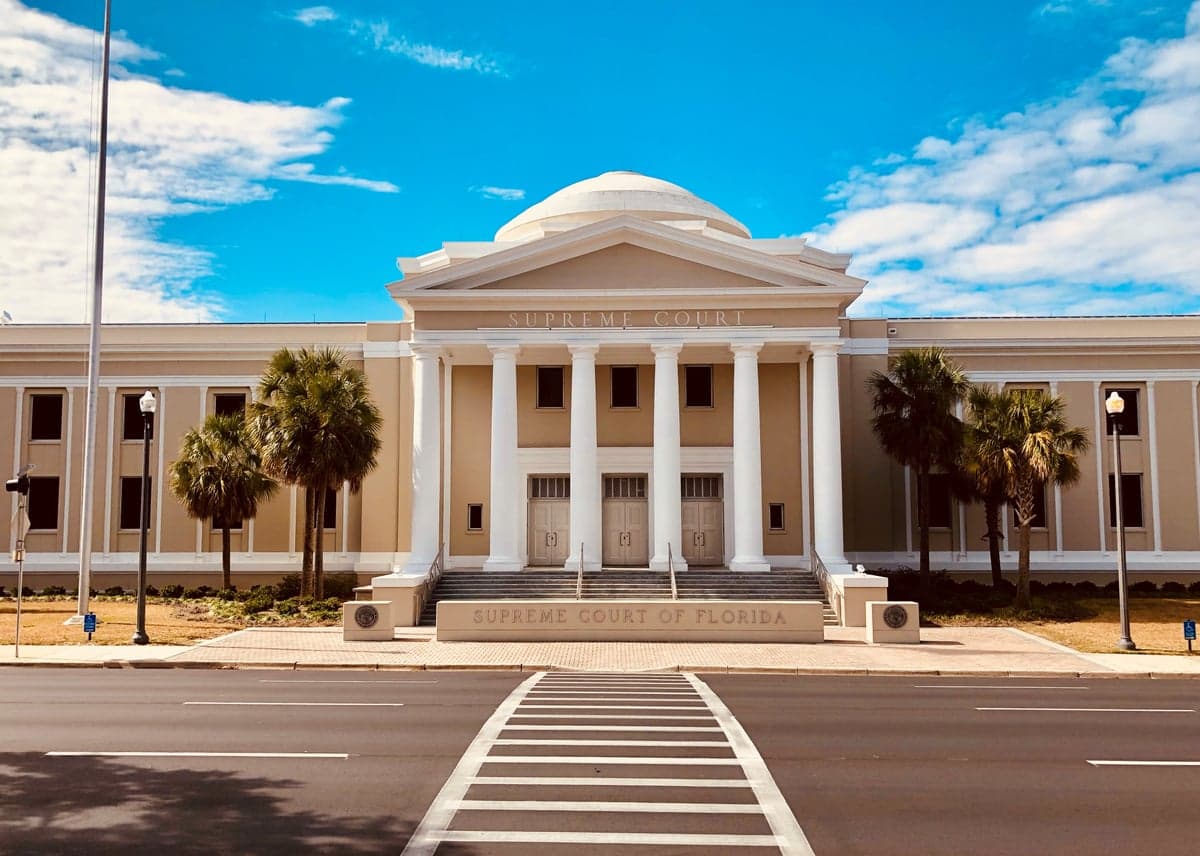
Photo: Wikipedia
Political ClimatePolitical Climate in Tallahassee, FL
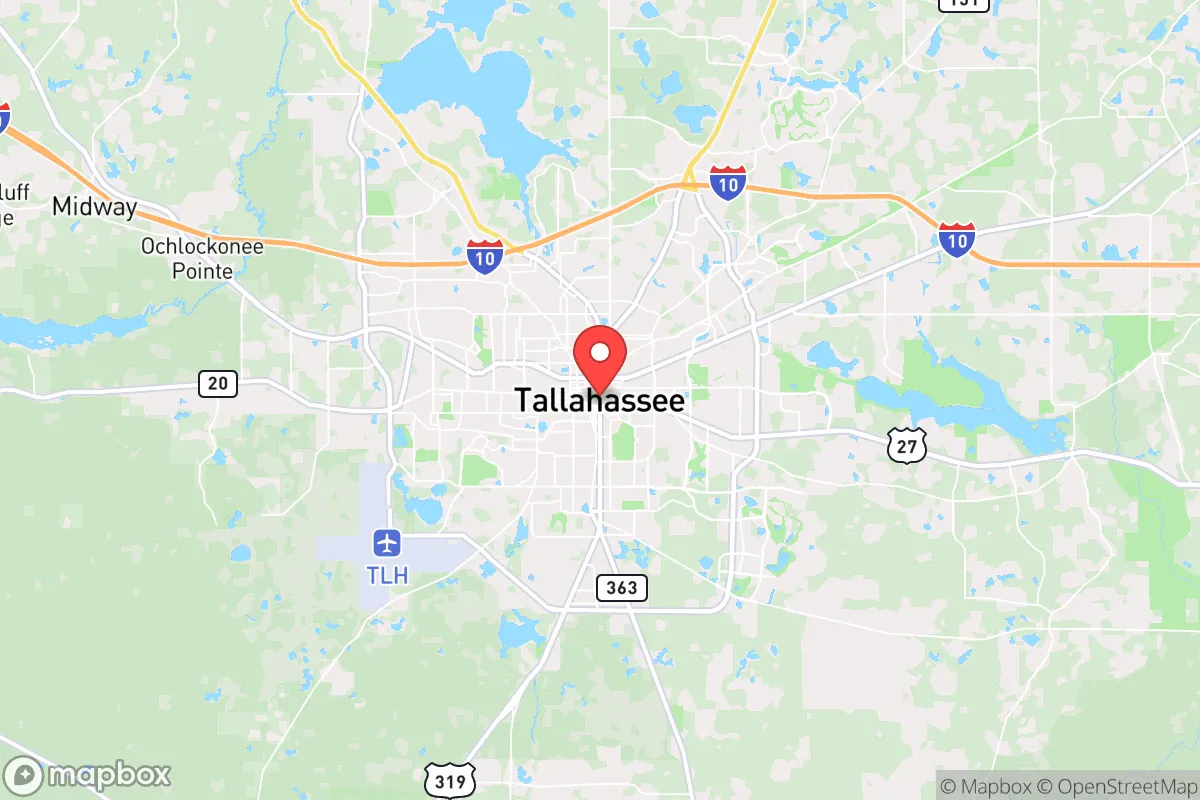
District shown is the primary district for this city’s centroid. Cities may span multiple districts.
Local Political AnalysisPolitical Analysis of Tallahassee, FL
Look, I’ve lived in Tallahassee long enough to remember when this town was a solid, no-nonsense conservative stronghold—a place where folks minded their own business and the government kept its nose out of yours. But the political climate here has shifted in ways that’d make your head spin. Officially, the area carries a Cook PVI of R+8, which means it still leans Republican overall, but that number hides a messy reality: the city itself is a deep-blue bubble surrounded by a sea of red. The trajectory is concerning—every election cycle, progressive policies creep further into local governance, and it’s not just about party labels anymore. It’s about whether your personal freedoms are being squeezed by overreach, and I’m seeing more of that every year.
How it compares
If you drive just 20 miles outside Tallahassee, you hit towns like Havana or Monticello, where the conservative values I grew up with are still the norm—low taxes, minimal zoning fuss, and a general “leave us alone” attitude. Inside the city limits, though, it’s a different world. The contrast is stark: Tallahassee’s politics are increasingly dominated by university influence (Florida State and FAMU) and state government workers, which tilts the local council toward progressive pet projects. Compare that to Thomasville, Georgia, just north of the border, where the county voted over 70% Republican in 2024. Even Leon County itself, which contains Tallahassee, has swung left in recent years—the county went for Biden in 2020, while the surrounding rural counties stayed deep red. That split means you get a city government that’s more interested in symbolic resolutions and green mandates than in protecting your Second Amendment rights or keeping property taxes in check.
What this means for residents
For the average guy or gal living here, the practical effects are real. Property taxes have crept up as the city council funds new programs you didn’t ask for—like bike lane expansions that see little use and diversity initiatives that sound nice but add to your bill. The school board has also shifted, pushing curriculum changes that prioritize social-emotional learning over core academics, which has parents I know pulling their kids into private or charter schools. And don’t get me started on the gun control ordinances that keep getting floated—Tallahassee has tried to pass local restrictions that go beyond state preemption, and while they usually get shot down in court, the fact they keep trying shows a disregard for your constitutional rights. The silver lining? The state legislature in Tallahassee (the Capitol building is literally here) has pushed back hard, passing laws to limit local overreach, like the 2023 preemption bill that stopped cities from banning gas stoves. So there’s a tug-of-war, but you have to stay vigilant.
One thing that sets Tallahassee apart culturally is its split personality. On one hand, you’ve got the “Tally” vibe—college bars, art festivals, and a younger crowd that votes progressive. On the other, you’ve got longtime residents, state workers, and military families from nearby Tyndall Air Force Base who just want stability and freedom from government meddling. The policy battles here are a microcosm of the national fight: housing regulations, mask mandates during COVID, and even how the city handles homeless encampments. I see it going one of two ways in the next decade—either the state keeps reining in local overreach, or Tallahassee becomes another Austin, Texas, where the city council runs wild and the people who built the place start leaving. For now, it’s still a decent place to raise a family if you keep your head down and vote in every local election. But I’d be lying if I said I wasn’t watching the trend lines with a wary eye.

State Political ClimatePolitical Climate in Florida
State Political AnalysisPolitical Environment in the State
Florida has transformed from a classic swing state into a solidly Republican-leaning powerhouse over the past decade, with registered Republicans now outnumbering Democrats by over 700,000 voters and the state voting +13 points for Donald Trump in 2024. The dominant coalition is a mix of conservative retirees, Hispanic voters (especially Cuban-Americans and Venezuelans in Miami-Dade), and fast-growing exurban families fleeing high-tax states. The trajectory has been a sharp rightward shift since 2018, driven by Governor Ron DeSantis’s aggressive conservative agenda and a massive influx of domestic migrants from blue states like New York, California, and Illinois.
Urban vs. rural divide
The political map of Florida is a textbook case of the urban-rural split, but with a unique twist. The major metros of Miami, Orlando, and Tampa are blue-leaning, but not uniformly so. Miami-Dade County, once a Democratic stronghold, has flipped dramatically—Trump won it in 2024 by a narrow margin, driven by a massive shift among Hispanic voters in suburbs like Doral and Hialeah. Orlando’s Orange County remains Democratic, but surrounding suburban counties like Osceola and Lake are trending right as new arrivals from the Midwest settle in. Tampa’s Hillsborough County is a perennial battleground, but the fast-growing exurbs of Pasco and Hernando are deeply red. The rural Panhandle—places like Panama City and Pensacola—is as conservative as any county in Alabama, while the Gainesville area (home to the University of Florida) is a small blue island in a sea of red. The key takeaway: the state’s growth is overwhelmingly in red-leaning suburbs and exurbs, not in the dense urban cores.
Policy environment
Florida’s policy environment is a deliberate counter-model to states like California and New York. There is no state income tax, a huge draw for high-earners and retirees. The regulatory posture is business-friendly, with a right-to-work law and minimal red tape for new construction. Education policy has been a flashpoint: the state’s Parental Rights in Education Act (HB 1557, dubbed “Don’t Say Gay” by critics) restricts classroom instruction on sexual orientation and gender identity in early grades, and the School Choice program is among the most expansive in the nation, with universal Education Savings Accounts available to all families. Healthcare policy leans toward market-based solutions, with no state-level Medicaid expansion under the ACA. Election laws were tightened after 2020, with stricter voter ID requirements, limits on drop boxes, and a ban on ballot harvesting. The state also passed the Combating Public Disorder Act (HB 1) in 2021, increasing penalties for rioting and blocking highways. For a conservative, this is a state that has actively pushed back against progressive overreach.
Trajectory & freedom
On the freedom front, Florida has been moving decisively in the direction of expanded personal liberty, particularly on issues of parental rights, gun rights, and economic freedom. The Constitutional Carry law (HB 543), signed in 2023, allows permitless carry of concealed firearms, a major win for Second Amendment advocates. The Stop WOKE Act (HB 7) restricts mandatory diversity training and critical race theory in schools and workplaces, though parts of it have been blocked in court. On medical freedom, the state banned COVID-19 vaccine mandates for private employers and schools, and DeSantis suspended the local state attorney in Tampa for refusing to enforce abortion laws. Property rights are strong, with no state-level rent control and a robust homestead exemption that protects primary residences from creditors. However, there are concerning trends: the state’s condominium safety law (SB 4-D), passed after the Surfside collapse, imposes costly inspections and repairs that have led to massive special assessments, effectively reducing property freedom for condo owners. And the Live Local Act, while intended to boost affordable housing, preempts local zoning in ways that some conservatives see as government overreach. Overall, though, Florida is trending freer, not less free.
Civil unrest & political movements
Florida has seen its share of political flashpoints, but they are less about sustained civil unrest and more about organized movements on both sides. The Black Lives Matter protests in 2020 were relatively muted compared to Portland or Seattle, but there were notable clashes in Miami and Orlando. The state’s response was swift: DeSantis pushed the anti-rioting law and created the Office of Election Crimes and Security to investigate voter fraud, a move that energized the right and infuriated the left. Immigration politics are a constant undercurrent, especially in South Florida, where the Miami-Dade County commission passed a symbolic resolution declaring the county a “sanctuary county” in 2019, only to have it reversed after state pressure. The Florida Freedom Fund and other conservative groups are highly active, organizing around school board races and parental rights. The Moms for Liberty movement, which started in Florida, has become a national force. On the left, the Dream Defenders and Progress Florida organize around criminal justice reform and voting rights. The most visible flashpoint for a new resident would be the constant political ads and the intensity of local school board elections, which have become proxy wars for the broader culture war.
Projection
Over the next 5-10 years, Florida is likely to become even more conservative, but with a caveat. The in-migration from blue states is overwhelmingly Republican-leaning, but it’s not monolithic—many newcomers are moderate or libertarian-leaning, not hardline social conservatives. The demographic shift is also bringing more young families and remote workers, who tend to prioritize economic freedom over social issues. The Hispanic vote, particularly among younger Cuban-Americans and Venezuelans, is solidifying as Republican, but the growing Puerto Rican population in Central Florida (around Orlando) is more Democratic-leaning. The biggest wild card is climate change: rising insurance costs and hurricane risk could slow growth in coastal areas like Miami Beach and Fort Myers, pushing development inland to places like Ocala and Lakeland, which are deeply red. Expect the state to continue passing preemptive laws on education, immigration, and election integrity, and to remain a national laboratory for conservative policy. A new resident moving in now should expect to find a state that is culturally and politically aligned with traditional values, but with a growing libertarian streak that values individual choice over government mandates.
Bottom line for a new resident: If you’re moving to Florida for freedom from high taxes, government overreach, and progressive social engineering, you’re making a sound bet. The state is on a clear trajectory of expanding personal liberty, especially on economic and parental rights issues. Just be prepared for the trade-offs: intense summer heat, rising property insurance costs, and a political environment that is anything but sleepy. You’ll find like-minded neighbors in the suburbs of Tampa, Jacksonville, and Naples, but if you land in Miami or Orlando, expect a more mixed bag. Overall, Florida is one of the few states where conservative policy is actually being implemented, not just promised.
* Values derived from national, state, county, city and local statistics and may differ in a specific area. Last updated: 2026-04-15T23:48:29.000Z
Narrative content on this page is AI-generated and may contain mistakes. Verify any details that matter before acting on them.
ReloMaps may earn a commission from affiliate links at no extra cost to you.

