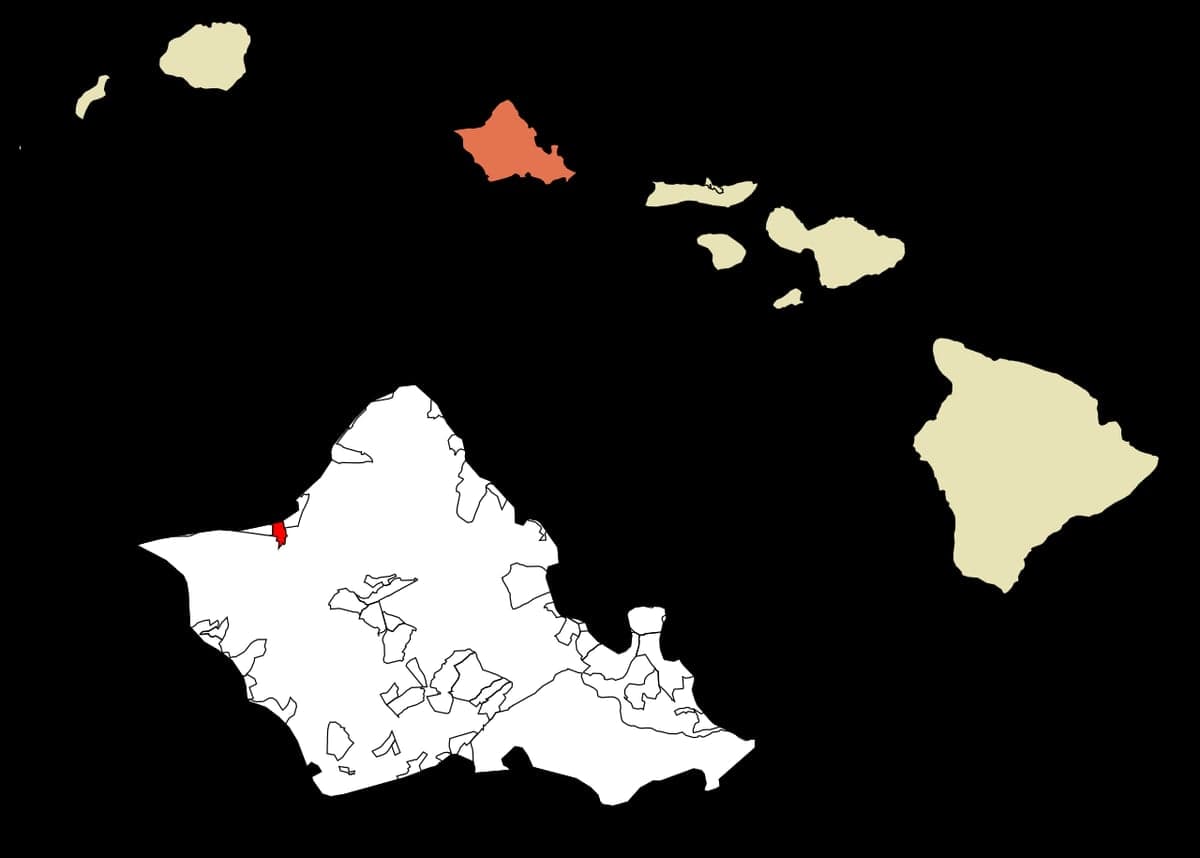
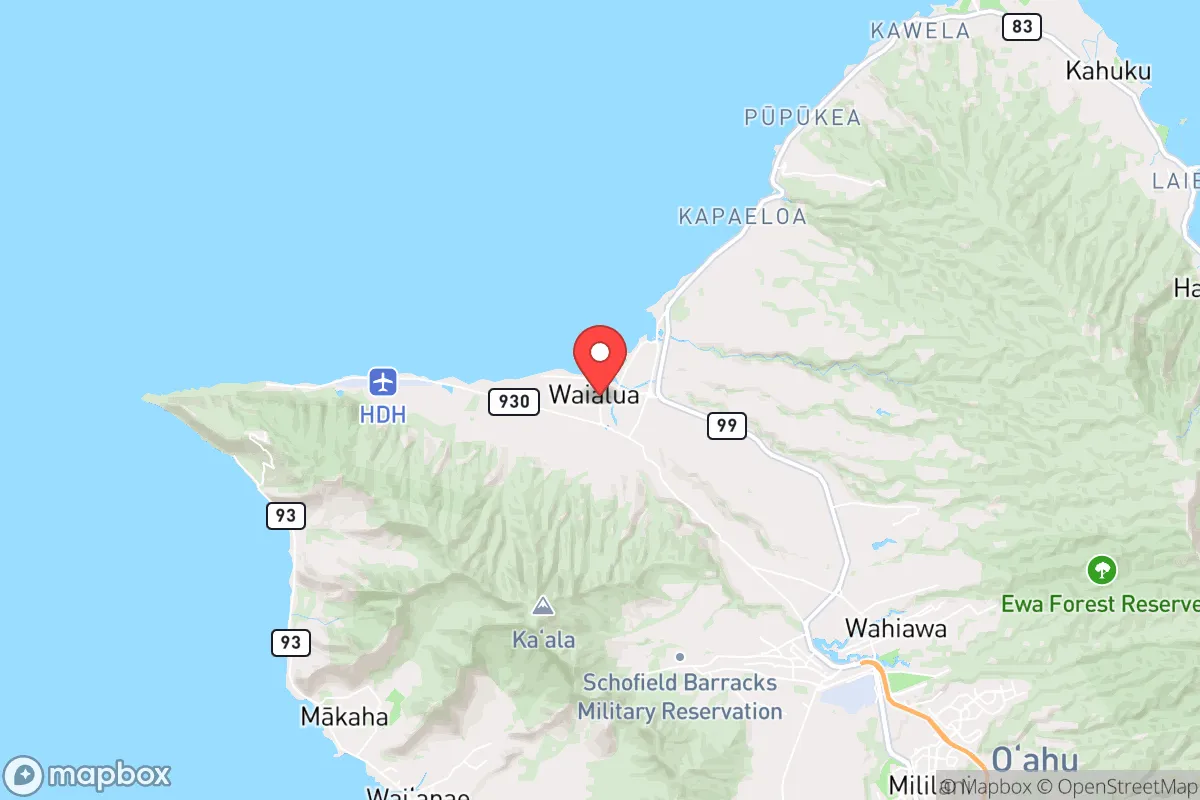
Photo: Wikipedia
Political ClimatePolitical Climate in Waialua, HI
District shown is the primary district for this city’s centroid. Cities may span multiple districts.
Local Political AnalysisPolitical Analysis of Waialua, HI
Waialua, on Oahu’s North Shore, has a Cook PVI of D+12, which puts it in the same deep-blue column as the rest of Hawaii, HI. But if you’ve lived here as long as I have, you know that number doesn’t tell the whole story. This used to be a quiet plantation town where folks kept their heads down and their politics to themselves—more about fishing and farming than fighting over ballot measures. Over the last decade, though, the progressive tide has rolled in hard, and the local government’s appetite for new regulations, land-use restrictions, and social mandates has grown faster than the mango trees. The trajectory is clear: Waialua is shifting from a live-and-let-live community into a place where personal freedoms are increasingly hemmed in by Honolulu’s long reach.
How it compares
On paper, Waialua and Hawaii, HI share the same D+12 PVI, but the lived reality is different. Hawaii, HI—the Big Island’s main population center—has a more scattered, rural feel where you can still buy a few acres and build a shed without three permits. Waialua, by contrast, sits under the thumb of the City and County of Honolulu, which means every fence, every home addition, every short-term rental gets scrutinized by bureaucrats miles away. Nearby Haleiwa, just a few minutes down Kamehameha Highway, has become a poster child for overreach: the city has capped vacation rentals, restricted parking, and even tried to limit beach access hours. Waialua is headed the same way. Meanwhile, towns like Laie or Kahuku, further north, still hold onto a more traditional, family-first vibe—less eager to embrace the progressive agenda that’s reshaping the North Shore. The contrast is stark: in Waialua, you feel the pressure of Honolulu’s zoning boards and environmental impact statements; in the more remote parts of Hawaii, HI, you can still breathe without a permit.
What this means for residents
For those of us who value personal freedom, the writing is on the wall. Property rights are eroding: the county has tightened rules on what you can do with your land, from banning new vacation rentals to requiring expensive archaeological surveys for even minor construction. The school system, too, has leaned hard into progressive curricula—think mandatory DEI training for teachers and gender-identity lessons for elementary kids—leaving parents with fewer options unless they can afford private school. And the tax burden? It’s climbing. The state’s push for “green” energy mandates and carbon taxes hits rural homeowners hardest, especially when you’re already paying some of the highest electricity rates in the nation. If you value the right to live your life without government micromanagement, Waialua is becoming a tougher place to call home. The long-term trend suggests more of the same: tighter housing rules, higher fees, and a cultural shift that sidelines traditional values in favor of coastal elite priorities.
Culturally, Waialua still has its old soul—the shrimp trucks, the surf breaks, the Sunday plate lunches—but the policy landscape is changing fast. The biggest distinction from Hawaii, HI is the sheer density of regulation here. On the Big Island, you can still find pockets where local government is more hands-off. Here, the county’s progressive agenda touches everything from beach access to backyard chickens. If you’re considering a move, look closely at the zoning maps and the school board meeting minutes. The aloha spirit is real, but it’s being strained by a political machine that sees personal freedom as an obstacle to its vision. For now, Waialua remains a beautiful place to live—but the direction it’s heading should give any freedom-minded person pause.

State Political ClimatePolitical Climate in Hawaii
State Political AnalysisPolitical Environment in the State
Hawaii is a solidly Democratic state with a Cook PVI of D+12, meaning it votes about 12 points more Democratic than the national average in presidential elections. Over the past 20 years, the state has shifted from a more moderate, labor-oriented Democratic coalition toward a progressive, government-expanding one, driven largely by the consolidation of power in Honolulu and the decline of rural, independent-minded communities. For a conservative considering relocation, the state’s political trajectory is concerning: what was once a place of pragmatic, live-and-let-live governance has become a laboratory for top-down progressive policy, with high taxes, heavy regulation, and a growing hostility toward traditional freedoms.
Urban vs. rural divide
The political map of Hawaii is starkly divided between the urban core of Honolulu on Oahu and the rest of the state. Honolulu and its suburbs—places like Waipahu, Kaneohe, and Ewa Beach—drive the state’s deep blue lean, with precincts routinely voting 70-80% Democratic. The city’s economy is dominated by government, tourism, and military contracting, creating a voter base that benefits from and supports expansive public spending. In contrast, the neighbor islands—Hilo on the Big Island, Kahului on Maui, and Lihue on Kauai—are more mixed. Rural areas like Puna on the Big Island and Lanai City have pockets of libertarian-leaning voters, but they are outnumbered by the Honolulu metro’s sheer population weight. The only reliably Republican-leaning area is the Kona coast of the Big Island, where a mix of retirees, ranchers, and small-business owners produce occasional GOP wins at the county level. But even there, the margin is shrinking as mainland transplants bring progressive voting habits.
Policy environment
Hawaii’s policy environment is among the most interventionist in the nation. The state has the highest combined state and local tax burden in the country, with a general excise tax that applies to nearly all goods and services—including rent and groceries—effectively acting as a hidden sales tax. Property taxes are relatively low, but the state more than makes up for it with high income taxes (top rate of 11%) and aggressive estate taxes. Education policy is heavily centralized: the state has a single, statewide school district, meaning local control is nearly nonexistent. Parents have limited school choice options, and charter schools are few and tightly regulated. Healthcare is dominated by the state’s employer mandate and the Hawaii Prepaid Health Care Act, which forces businesses to provide coverage—a system that raises costs for small employers. On election law, Hawaii has universal mail-in voting and same-day registration, which critics argue weakens ballot integrity. The state also has some of the nation’s strictest gun laws, including a ban on assault weapons, a 14-day waiting period, and a requirement that all firearm purchases be registered with the county police chief.
Trajectory & freedom
Over the past decade, Hawaii has moved decisively toward less personal freedom. In 2023, the legislature passed Act 2, which expanded abortion access by allowing advanced practice registered nurses to perform the procedure and removing parental notification requirements for minors—a direct blow to parental rights. In 2024, Act 46 created a state-run “Office of Wellness and Resilience,” which critics see as a vehicle for social-emotional learning mandates in schools, further eroding parental control over education. On property rights, the state’s Land Use Commission remains one of the most powerful in the nation, able to block development on agricultural land with little recourse for landowners. The Hawaii Housing Authority has also pushed rent control measures in Honolulu, discouraging new construction. On the Second Amendment, the 2022 Act 207 banned the carrying of firearms in many public places, including beaches and parks, effectively gutting the right to carry after the Bruen decision. Meanwhile, the state’s Office of Hawaiian Affairs continues to push for expanded sovereignty and land claims, creating uncertainty for property owners. The overall trend is clear: more regulation, less individual autonomy, and a government that sees itself as the primary arbiter of daily life.
Civil unrest & political movements
Hawaii has a history of organized protest, but the flashpoints have shifted. The Thirty Meter Telescope (TMT) protests on Mauna Kea from 2015-2019 were a major left-right coalition of Native Hawaiian sovereignty activists and environmentalists, but they also exposed deep tensions between local residents and outside institutions. More recently, the 2023 Maui wildfires sparked protests over government mismanagement and the slow pace of rebuilding, with some residents accusing the state of prioritizing tourist recovery over local housing. On the right, the Hawaii Republican Party remains weak, but there is a growing libertarian and “Live Free or Die” sentiment on the Big Island, particularly in Puna and around Volcano, where off-grid living is common. Immigration politics are less visible than on the mainland, but the state’s sanctuary policies—including a 2019 law limiting cooperation with ICE—have drawn criticism from conservatives. Election integrity concerns flared after the 2020 and 2022 elections, with some local activists questioning the security of universal mail-in voting, though no major fraud has been proven. The most visible political movement today is the Hawaii Sovereignty movement, which seeks greater autonomy or independence for Native Hawaiians—a force that complicates traditional left-right politics and creates uncertainty for non-native residents.
Projection
Over the next 5-10 years, Hawaii is likely to become even more progressive and less friendly to conservative values. Demographic trends are working against the right: the state’s population is aging, and younger residents—who lean heavily Democratic—are the ones staying or moving in from the mainland. The military presence (about 40,000 active-duty personnel) provides a small conservative counterweight, but military families are often transient and less politically engaged locally. The state’s housing crisis is driving out middle-class families, many of whom are more moderate, while wealthy progressive transplants from California and New York buy up properties. The legislature is likely to pass further gun restrictions, expand government healthcare, and increase taxes on tourism and real estate. The sovereignty movement could gain traction, potentially leading to land-use restrictions that hurt property values. For a conservative moving in now, the expectation should be that the political environment will become more hostile to traditional freedoms, with fewer opportunities for local political change.
For a new resident, the bottom line is this: Hawaii offers stunning natural beauty and a unique culture, but the political climate is increasingly at odds with conservative values. If you value low taxes, parental rights, gun ownership, and local control, you will find yourself swimming against a strong tide. The state’s government is large, expensive, and interventionist, and the trajectory is toward more of the same. If you are considering relocation, weigh the lifestyle benefits against the reality of living in a state where your political voice will be a minority one, and where your freedoms will be steadily constrained by a legislature that sees no problem with that.
* Values derived from national, state, county, city and local statistics and may differ in a specific area. Last updated: 2026-05-15T21:53:46.000Z
Narrative content on this page is AI-generated and may contain mistakes. Verify any details that matter before acting on them.
ReloMaps may earn a commission from affiliate links at no extra cost to you.

