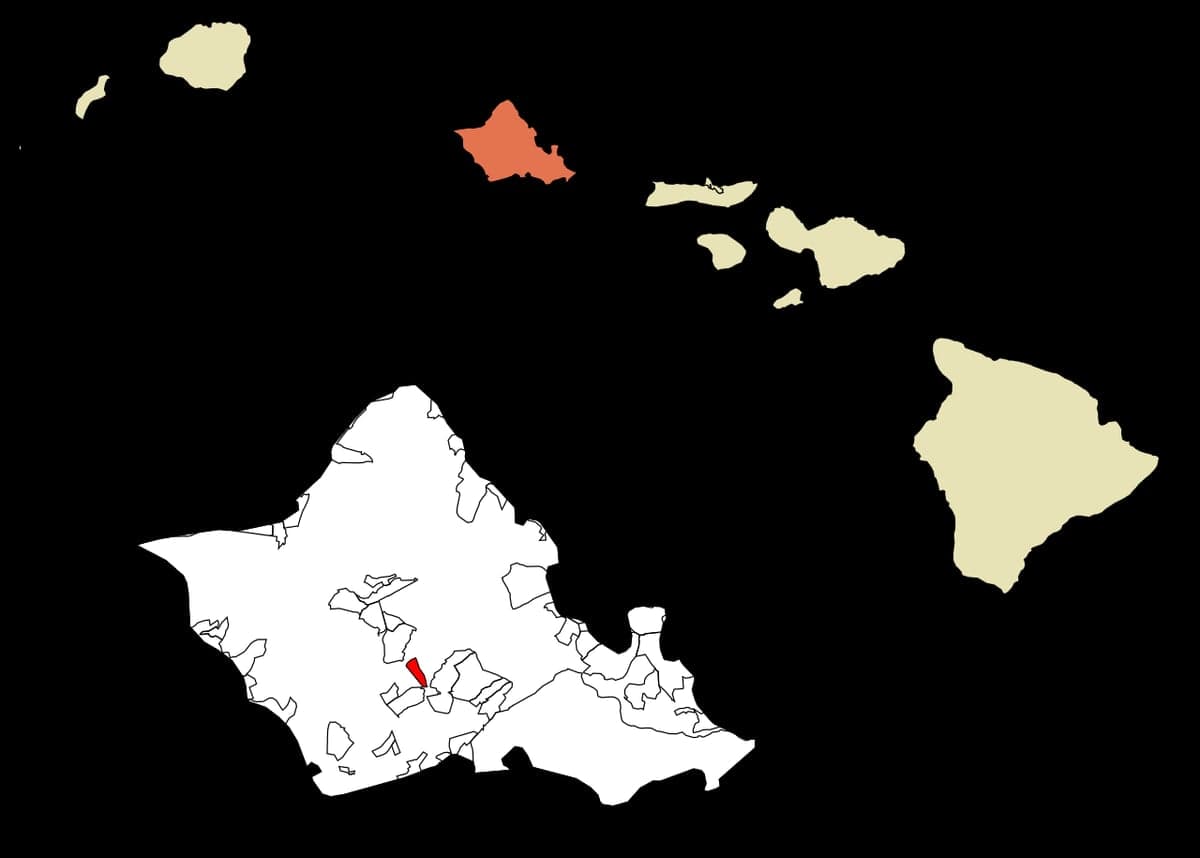
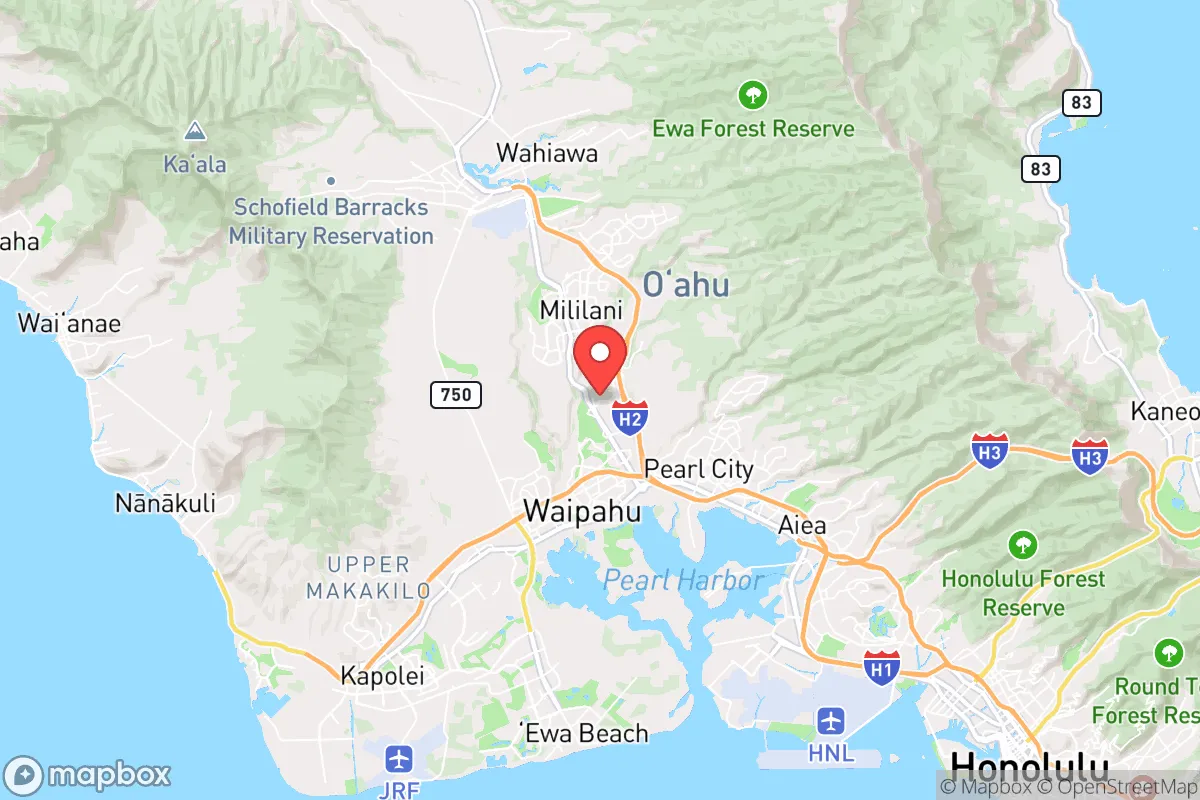
Photo: Wikipedia
Political ClimatePolitical Climate in Waipio, HI
District shown is the primary district for this city’s centroid. Cities may span multiple districts.
Local Political AnalysisPolitical Analysis of Waipio, HI
Waipio, on Oahu’s central Leeward coast, has a Cook PVI of D+13, meaning it votes about 13 points more Democratic than the national average. That’s a pretty solid blue lean, and it’s been trending that way for a while. If you’ve lived here as long as I have, you’ve watched the local politics shift from a more moderate, live-and-let-live vibe to something a lot more progressive, especially over the last decade. The old-timers who just wanted lower taxes and fewer regulations are getting outnumbered by newcomers and younger families who seem to think the government should have a hand in everything from your water catchment to your backyard chickens.
How it compares
Waipio is actually a bit of a moderate island compared to what you’ll find just a few miles away. Head east into urban Honolulu or toward Kailua, and you’re in deep-blue territory—places where the city council and state legislature are pushing things like mandatory affordable housing quotas, plastic bag bans, and even proposals to restrict short-term rentals to the point where it’s nearly impossible to rent out your own property. Drive west to Kapolei or Ewa Beach, and you’ll find a more mixed crowd—some conservative-leaning families, military folks, and people who just want to be left alone. Waipio sits right in the middle, but the political winds are blowing eastward. The local school board and neighborhood board meetings are increasingly dominated by activists pushing for “equity” initiatives and climate action plans that sound good on paper but usually mean more fees, more permits, and more hoops for regular folks to jump through.
What this means for residents
For the average person living in Waipio, the biggest practical impact is the slow creep of government into daily life. Property taxes have been climbing, and there’s constant talk of new “impact fees” for everything from park maintenance to stormwater management. The county has gotten aggressive about enforcing building codes and zoning rules that used to be pretty relaxed—things like adding a carport or putting up a fence now require permits that take months and cost hundreds. There’s also a growing push to restrict single-family zoning, which sounds like a good idea until you realize it means your neighbor could turn their house into a fourplex without any parking. The local police presence is fine, but the real overreach comes from the planning department and the health department, which seem to think they know better than you how to live your life. If you value personal freedom and want to make your own choices about your property, your business, and your family, you’re going to feel that squeeze more and more.
One thing that sets Waipio apart from the rest of Oahu is the strong sense of community among the older, more established families. There’s still a “we take care of our own” attitude here, and that’s a good buffer against the kind of top-down, one-size-fits-all policies you see in Honolulu. But I’d be lying if I said I wasn’t worried about the next five to ten years. The state legislature is controlled by Democrats who have a supermajority, and they’re not shy about using it. Bills that would raise the minimum wage, mandate paid family leave, and restrict firearm ownership are all on the table. The local culture is still pretty laid-back and independent, but the political machinery is grinding in a direction that favors more government control, not less. If you’re thinking of moving here, just know that the political climate is shifting, and it’s not shifting toward more freedom.

State Political ClimatePolitical Climate in Hawaii
State Political AnalysisPolitical Environment in the State
Hawaii has been a one-party Democratic stronghold for decades, with Democrats controlling the governorship and supermajorities in both legislative chambers since the 1960s. The state’s overall partisan lean is roughly D+20 in presidential elections, but that masks a growing conservative undercurrent, especially on the neighbor islands. Over the last 10-20 years, the Democratic coalition has shifted from a more moderate, labor-aligned base to a progressive one, driven by Honolulu’s urban core and a wave of mainland transplants. For a conservative relocating here, the political climate feels like a slow-motion squeeze on personal freedoms, with Honolulu setting the agenda and the rest of the state often left to deal with the consequences.
Urban vs. rural divide
The political map of Hawaii is starkly divided between the urban core of Honolulu on Oahu and the rest of the state. Honolulu, home to nearly 70% of the state’s population, drives the progressive lean. The city’s districts, like those in Manoa, Kaimuki, and Waikiki, reliably elect Democrats who push for higher taxes, stricter land-use regulations, and expansive government programs. In contrast, the neighbor islands—Hilo and Kailua-Kona on the Big Island, Kahului on Maui, and Lihue on Kauai—are more politically mixed. Rural areas like Puna on the Big Island and Hana on Maui lean conservative on issues like property rights and gun ownership, though they still vote Democratic in statewide races due to party loyalty. The suburban areas of Kapolei and Ewa Beach on Oahu are swing zones, with a growing number of military families and mainland transplants shifting them slightly right. The divide is not just geographic but cultural: urban Honolulu feels like a coastal San Francisco, while rural Hawaii still values self-reliance and local control.
Policy environment
Hawaii’s policy environment is a textbook case of government overreach. The state has the highest combined tax burden in the nation, with a 4% general excise tax that applies to nearly everything, including groceries and rent, plus a progressive income tax that tops out at 11%. Property taxes are relatively low, but the state makes up for it with aggressive land-use regulations and a housing shortage that drives costs sky-high. Education policy is centralized and union-dominated; the state has a single school district, and parental rights are weak—school boards have little local control, and curriculum decisions are made in Honolulu. Healthcare is heavily regulated, with a state-run insurance exchange and mandates that drive up premiums. Election laws are restrictive: Hawaii has closed primaries, meaning only registered Democrats or Republicans can vote in their party’s primary, which effectively locks out independents. The state also has universal mail-in voting, which conservatives view as a security concern. On the plus side, Hawaii has no “red flag” gun law, and the state’s constitution includes a strong right to bear arms, though local enforcement varies.
Trajectory & freedom
Hawaii is becoming less free by nearly any measure. The most concerning recent legislation is Act 2 (2023), which expanded the state’s “sensitive places” gun ban to include beaches, parks, and parking lots, effectively gutting the right to carry in public. The state also passed Act 46 (2022), which mandates that all public schools teach “social-emotional learning” and culturally responsive curriculum, a move conservatives see as indoctrination. On parental rights, the state has resisted any form of school choice or parental notification laws for medical decisions. Medical autonomy took a hit with Act 1 (2023), which codified abortion access and removed parental consent requirements for minors. Property rights are under constant assault from the state’s powerful Land Use Commission, which can rezone land at will, and from a growing movement to impose rent control in Honolulu. The only bright spot is that the state has not passed a “sanctuary state” law, though Honolulu is a de facto sanctuary city. The trajectory is clear: more taxes, more regulations, and less personal liberty.
Civil unrest & political movements
Hawaii has a long history of protest, but the most visible flashpoints in recent years have been around housing and development. The anti-development movement in Honolulu, led by groups like the “Save Our Surf” coalition, has successfully blocked new housing projects, exacerbating the affordability crisis. On the Big Island, the Thirty Meter Telescope protests on Mauna Kea in 2019 were a major flashpoint, with activists—many from the progressive left—clashing with police and shutting down construction. That movement has since morphed into a broader “land back” rhetoric that threatens property rights statewide. On the right, the Hawaii Firearms Coalition has been active in challenging the state’s gun laws in court, with some success. Immigration politics are muted, but there is a growing tension over the influx of mainland transplants, who are seen as driving up housing costs and diluting local culture. Election integrity is a concern: the 2020 and 2022 elections saw widespread use of mail-in ballots with minimal signature verification, and the state’s voter rolls are notoriously bloated. A new resident would notice the constant low-grade political tension, especially around land use and housing.
Projection
Over the next 5-10 years, Hawaii will likely become more progressive and less free. Demographic shifts are the key driver: the native Hawaiian population is declining, while the mainland transplant population—mostly from California and the Pacific Northwest—is growing. These transplants tend to be younger, more liberal, and more supportive of government intervention. The state’s economy, heavily dependent on tourism and federal spending, is vulnerable to downturns, which could accelerate the push for even higher taxes and more regulation. The housing crisis will likely force the state to consider more radical policies, like rent control or a land value tax, which would further erode property rights. The only countervailing force is the military presence—Hawaii is home to Schofield Barracks and Pearl Harbor, and the military community tends to lean conservative. But their political influence is limited, as they are often transient and not deeply engaged in local politics. Someone moving in now should expect to see more of the same: a state that is increasingly run by and for the urban progressive elite, with rural areas left to fend for themselves.
For a conservative relocating to Hawaii, the bottom line is this: you’re moving to a state where the government is deeply involved in your life, from what you can build on your property to how you can defend yourself. The neighbor islands offer more breathing room, but the political winds are blowing from Honolulu. If you value low taxes, strong property rights, and personal autonomy, Hawaii will be a constant frustration. If you can afford the cost of living and are willing to fight for your freedoms, there are still pockets of liberty—especially in rural areas like Puna or Hana—but the trend is against you. Plan accordingly.
* Values derived from national, state, county, city and local statistics and may differ in a specific area. Last updated: 2026-05-01T05:59:00.000Z
Narrative content on this page is AI-generated and may contain mistakes. Verify any details that matter before acting on them.
ReloMaps may earn a commission from affiliate links at no extra cost to you.

