Quality of Life in Washington
A livable area that tracks near national norms for affordability, walkability, and neighborhood health.
What does Quality of Life tell us?
Quality of Life measures an area by evaluating factors like cost of living, nearby amenities, country club access, airport proximity, socioeconomic signals and neighborhood character. For large states, this is a general average — quality of life can vary dramatically between metro areas, suburbs, and rural communities within the same state.
What does this tell us?
Quality of Life measures an area by evaluating factors like cost of living, nearby amenities, country club access, airport proximity, socioeconomic signals and neighborhood character. For large states, this is a general average — quality of life can vary dramatically between metro areas, suburbs, and rural communities within the same state.
Cost of Living
61% above national average
64%
The Real Cost of Living in Washington for 2026
| Tier | Individual | Family (4) |
|---|---|---|
| Survival | $27k | $50k |
| Comfortable | $101k | $148k |
| Luxury | $172k+ | $266k+ |
| Elite (Top 5%) | $210k+ | $326k+ |
Quality-of-Life Analysis
Washington State offers a remarkably broad spectrum of quality-of-life options, from the hyper-urban density of Seattle to the remote, rain-shadowed ranchlands of Okanogan County. With a statewide cost-of-living index of 161 (well above the US average of 100), a median home value of $519,800, and a median rent of $1,682, the state is not uniformly expensive — the financial reality varies dramatically depending on whether you choose a tech hub, a college town, or a rural farming community. The average commute of roughly 27 minutes also masks a wide divide: a 45-minute crawl through King County traffic versus a 10-minute drive across a wheat-farming town like Ritzville. This analysis breaks down the state’s living options by tier, naming specific places and the kind of resident each attracts.
Major metros
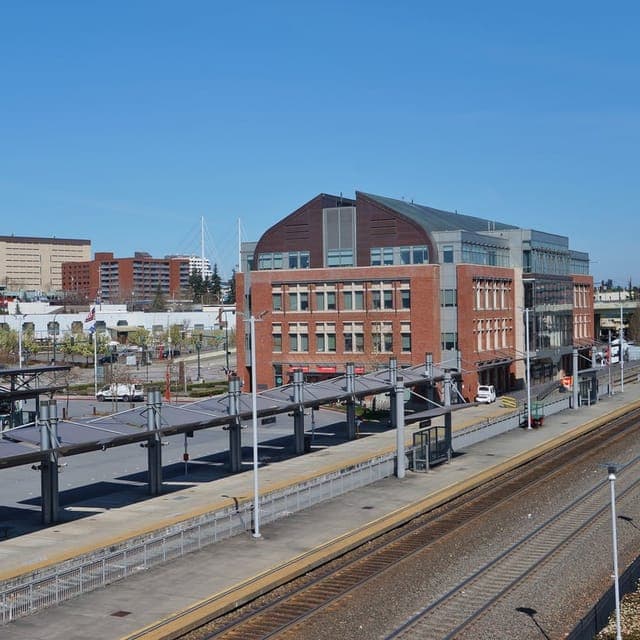
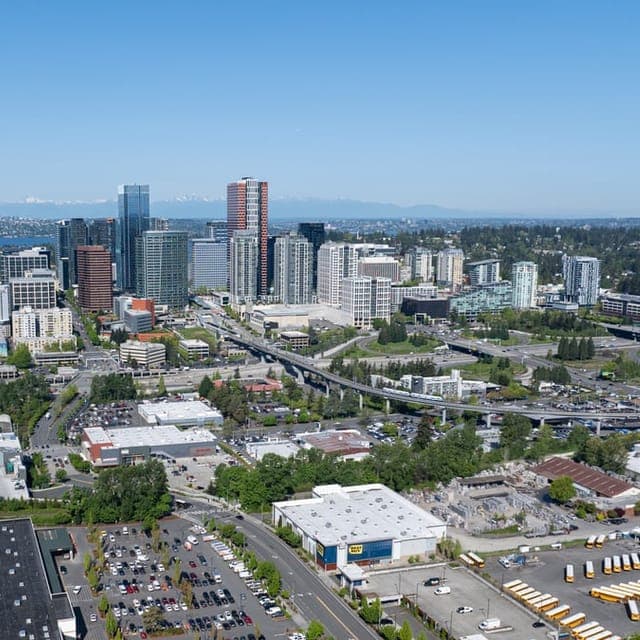
If you are looking for dense urban living, Washington has two primary anchors: Seattle and Spokane, with Tacoma and Bellevue acting as significant secondary hubs. Seattle is the state’s economic engine, dominated by Amazon, Microsoft, and a sprawling tech and biotech sector; its culture is fast-paced, progressive, and notoriously expensive, with median home values well above the state average and a commute that often exceeds 30 minutes. Bellevue, across Lake Washington, functions as a quieter, wealthier extension of Seattle’s tech corridor, with some of the highest home prices in the state and top-rated public schools. Tacoma, 35 miles south of Seattle, offers a grittier, more affordable urban alternative with a growing arts scene, the University of Washington Tacoma campus, and a historic port economy — it attracts those priced out of Seattle who still want walkable neighborhoods and light-rail access. Spokane, on the eastern side of the state, is a completely different proposition: a mid-sized city (population ~230,000) with a lower cost of living, a strong healthcare and manufacturing base, and a more conservative-leaning culture. It appeals to families and remote workers who want urban amenities — museums, a riverfront park system, a regional airport — without the Seattle price tag.
Mid-size cities & college towns
Washington’s mid-tier cities and college towns offer a balance of employment, culture, and affordability that the major metros cannot match. Bellingham, located 90 miles north of Seattle near the Canadian border, is anchored by Western Washington University and a strong outdoor recreation culture; its compact downtown, waterfront trail system, and access to Mount Baker skiing make it a magnet for young professionals and nature-oriented families, though home prices have risen sharply in recent years. Olympia, the state capital, offers a slower-paced government-town vibe with a growing food scene and proximity to the Puget Sound; it attracts state employees, environmental nonprofits, and artists who want a small-city feel with urban access (Seattle is an hour north). Wenatchee, on the eastern slope of the Cascades, is the hub of the state’s apple and cherry industry; it offers a sunny, dry climate (unlike western Washington’s rain), a lower cost of living, and a growing healthcare sector — ideal for agricultural professionals and retirees seeking four-season weather. Pullman, home to Washington State University, is a classic college town: affordable, walkable, and culturally anchored by the university, but isolated geographically (75 miles from Spokane). It suits students, academics, and those who value a tight-knit community over urban nightlife.
Small towns & rural areas
For those seeking solitude, wide-open spaces, or a slower pace, Washington’s small towns and rural regions offer distinct landscapes and lifestyles. The San Juan Islands — particularly Friday Harbor on San Juan Island — attract retirees, artists, and remote workers who prioritize natural beauty, marine access, and a tight community; the trade-off is high housing costs (comparable to Seattle suburbs) and limited year-round employment. On the Olympic Peninsula, Port Townsend is a Victorian seaport town with a vibrant arts scene and a large retiree population, while Forks (of Twilight fame) remains a working-class logging town with very low home prices and heavy rainfall. In eastern Washington, Leavenworth is a Bavarian-themed tourist town in the Cascade foothills that draws hospitality workers and retirees who tolerate crowds for the scenery. For true rural living, Okanogan County in north-central Washington offers vast ranchlands, a dry climate, and some of the lowest property prices in the state — but also limited healthcare access and long drives to any major city. Walla Walla, in the southeast, is a small city (population ~34,000) that has reinvented itself around a booming wine industry; it attracts food-and-wine professionals and retirees who want a charming downtown and a mild, sunny climate.
Luxury vs. affordable living
The gap between Washington’s wealthiest enclaves and its most affordable areas is extreme. On the luxury end, Mercer Island (a Seattle suburb on Lake Washington) and Medina (home to Bill Gates and Jeff Bezos) have median home values exceeding $2 million, with top-tier schools and waterfront properties. Redmond, the headquarters of Microsoft, is another high-cost tech hub where a modest three-bedroom home often tops $1.5 million. On the affordable end, Yakima in central Washington offers a median home value around $300,000 and a cost of living below the national average; it is a majority-Hispanic agricultural hub with a strong sense of community but higher crime rates than the state average. Spokane remains relatively affordable for a city of its size, with median home values around $400,000. Pasco and Kennewick (the Tri-Cities area) offer affordable housing, a dry climate, and jobs in nuclear research (Pacific Northwest National Laboratory) and agriculture. The most budget-friendly option is often a rural town like Ritzville or Colville, where homes can be found for under $200,000 — but employment options are limited and amenities sparse.
The practical reality is that Washington’s quality-of-life spectrum is defined by trade-offs. High earners in tech or finance gravitate toward Seattle, Bellevue, or Redmond for career opportunity and urban energy, accepting a cost-of-living index that can exceed 200 in some neighborhoods. Mid-career professionals and families often find the best balance in mid-size cities like Bellingham, Olympia, or Spokane, where home prices are 30-50% lower than Seattle and commutes are shorter. Retirees and remote workers with flexible incomes are drawn to small towns like Port Townsend or Walla Walla for lifestyle and climate. Those on a tight budget can still find affordable housing in Yakima, the Tri-Cities, or rural eastern Washington, but must accept longer drives to healthcare, fewer job options, and a more isolated social environment. The statewide median home value of $519,800 and median rent of $1,682 are averages that obscure a market where a one-bedroom in Seattle can cost $2,200 while a three-bedroom in Colville rents for $900 — the key is knowing which tier fits your income, career, and tolerance for rain or isolation.

Crime in Washington
Crime rates similar to the national median for U.S. locations.
Violent CrimeViolent Crime Analysis
Property CrimeProperty Crime Analysis
Crime Analysis
Washington, D.C., presents a complex safety landscape where crime rates significantly exceed national averages, particularly in property crime, while violent crime has shown recent declines from elevated levels. The District's violent crime rate stands at 284.4 incidents per 100,000 residents, and its property crime rate reaches 1,967.1 per 100,000, both figures that demand careful consideration from potential residents. These numbers reflect a city grappling with the consequences of progressive criminal justice policies that prioritize offender rehabilitation over public safety, a trade-off that has tangible effects on daily life.
Crime in context
Washington, D.C.'s violent crime rate of 284.4 per 100,000 is roughly 1.5 times the national average, while its property crime rate of 1,967.1 per 100,000 is approximately 1.8 times higher than the U.S. average. These figures place the District in a challenging position compared to other major metropolitan areas. For context, nearby Arlington, Virginia reports a violent crime rate of roughly 150 per 100,000, while Baltimore, Maryland—a city with its own significant challenges—records violent crime rates exceeding 1,500 per 100,000. The District's property crime rate is particularly concerning, driven largely by motor vehicle theft and larceny, which have been exacerbated by lenient pretrial release policies and reduced prosecution rates for non-violent offenses under the current U.S. Attorney's office for D.C. The District's unique status as a federal enclave means its criminal justice system is overseen by Congress, which has historically deferred to local progressive leadership, resulting in a judicial environment that critics argue prioritizes decarceration over accountability.
What residents experience
Residents of Washington, D.C. navigate a city where crime is highly concentrated in specific corridors and neighborhoods, while other areas remain relatively safe. The most significant safety concerns center on property crime, with carjackings and vehicle thefts having surged dramatically since 2020, a trend directly linked to the District's soft-on-crime approach that includes no-cash-bail policies and reduced penalties for repeat offenders. Neighborhoods such as Anacostia, Congress Heights, and Deanwood in Wards 7 and 8 experience the highest rates of violent crime, including homicides and armed robberies, driven by gang activity and the illegal drug trade. In contrast, Georgetown, Chevy Chase, and Capitol Hill report substantially lower violent crime rates, though property crime—particularly theft from vehicles and package theft—remains a persistent nuisance even in these affluent areas. The District's progressive District Attorney, Matthew Graves, has faced criticism for declining to prosecute certain categories of crimes, including many drug possession cases and low-level thefts, a policy that has emboldened repeat offenders and contributed to a perception of lawlessness in commercial corridors like H Street NE and 14th Street NW. Residents in safer neighborhoods often report feeling secure walking during daylight hours but remain vigilant after dark, while those in higher-crime areas describe a daily reality of hearing gunshots and avoiding certain blocks entirely.
Neighborhood-level variation in Washington, D.C. is stark, with safety often correlating directly with income and proximity to Metro stations. The safest areas—Foggy Bottom, Woodley Park, and Cleveland Park—benefit from heavy police presence, private security patrols, and active neighborhood watch programs, while higher-crime neighborhoods like Trinidad and Benning Ridge suffer from under-policing and a lack of community resources. The District's Metropolitan Police Department has struggled with staffing shortages, and the city's commitment to police reform following the 2020 protests has led to reduced proactive enforcement in some areas. For prospective residents, the key takeaway is that Washington, D.C. offers pockets of genuine safety alongside areas where crime is a daily concern, and the city's overall trajectory depends heavily on whether its progressive judicial policies will be moderated to restore public confidence and reduce recidivism.
Top Cities for Quality of Life in Washington
* Values derived from national, state, county, city and local statistics and may differ in a specific area. Last updated: 2026-10-13T19:43:46.000Z
Narrative content on this page is AI-generated and may contain mistakes. Verify any details that matter before acting on them.
ReloMaps may earn a commission from affiliate links at no extra cost to you.

