Political ClimatePolitical Climate in Washington
Political Environment in the State
Washington State has been a reliably blue stronghold for over a decade, with Democrats controlling the governorship since 1985 and both chambers of the legislature since 2017. The state’s overall partisan lean is driven overwhelmingly by King County (Seattle) and its surrounding suburbs, which cast roughly a third of the state’s total vote and deliver margins of +40 to +50 points for Democrats. However, the state is far from monolithic: eastern Washington and many rural counties vote as red as any in the country, creating one of the sharpest urban-rural political divides in the nation. Over the past 20 years, the state has shifted leftward on social and environmental policy, while economic regulation has remained moderate compared to California or Oregon.
Urban vs. rural divide
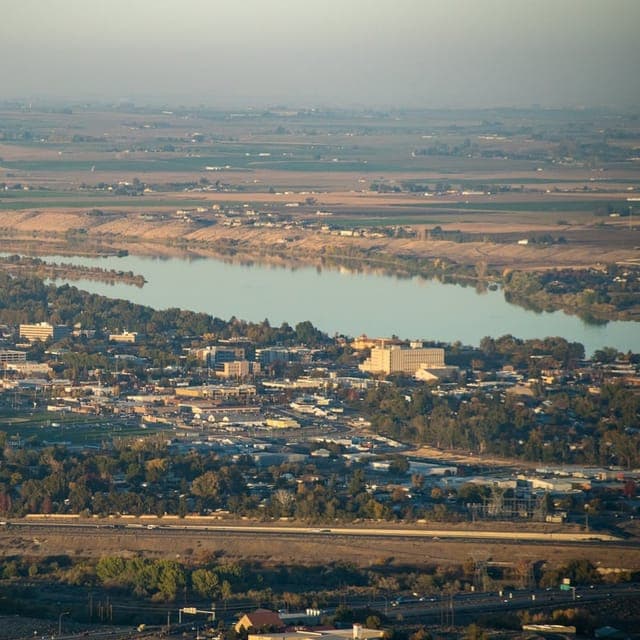
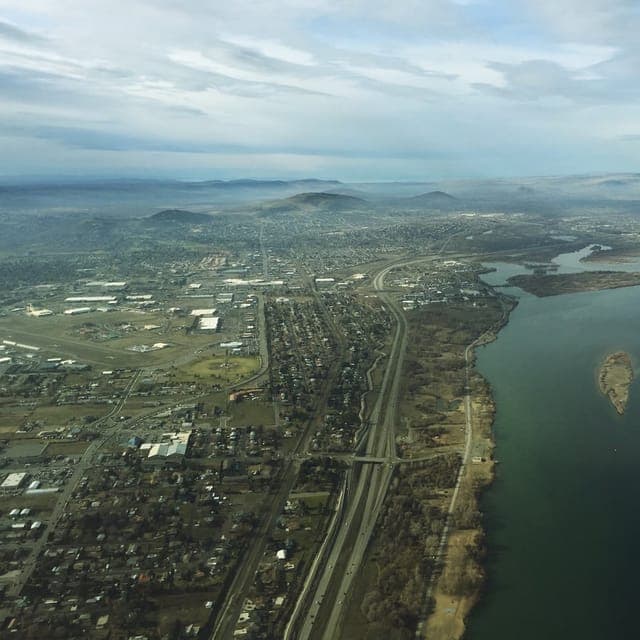
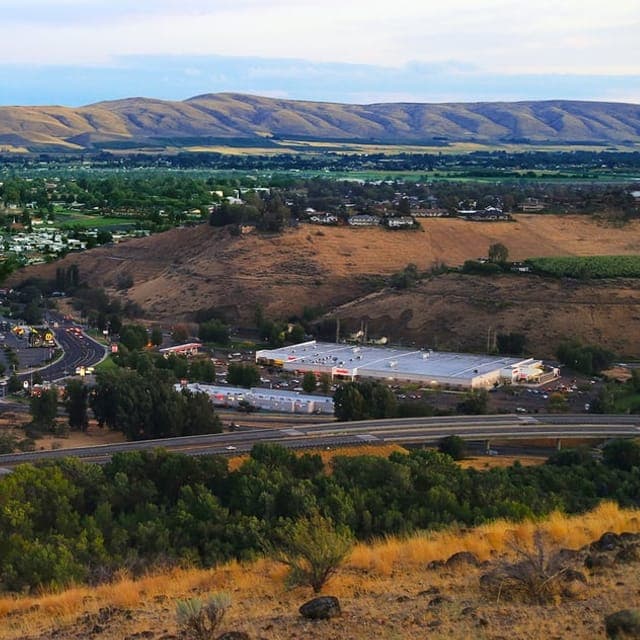
The political map of Washington is essentially two states. The western third, anchored by the I-5 corridor from Vancouver through Seattle to Bellingham, is heavily Democratic. King County alone accounts for about 30% of the state’s population and votes roughly 70-30 Democratic in presidential elections. Neighboring Snohomish and Pierce counties have trended blue as well, though Pierce (home to Tacoma) still has a notable conservative minority. Across the Cascade Range, the political landscape flips dramatically. Spokane County, the largest in eastern Washington, is a swing county that leans Republican but has become more competitive as the city of Spokane grows younger and more diverse. Yakima, Tri-Cities (Kennewick, Pasco, Richland), and Walla Walla are reliably red, with agricultural and energy-sector voters driving conservative majorities. The most conservative counties in the state are in the far northeast (Ferry, Stevens, Pend Oreille) and the rural southwest (Lewis, Pacific, Wahkiakum), where Trump won by 30-40 points in 2020. The divide is not just geographic but cultural: residents of Spokane Valley or Moses Lake often feel as disconnected from Seattle politics as they do from Washington D.C.
Policy environment
Washington has no state income tax, which is a major draw for conservative relocators, but it compensates with one of the highest state sales tax rates in the country (6.5% state rate, plus local rates that can push it over 10% in some cities). Property taxes are moderate but have been rising steadily due to housing appreciation and levy measures. The state’s regulatory posture is generally business-friendly compared to California, but it has a robust minimum wage ($16.28/hour as of 2024, indexed to inflation) and strong labor protections. Education policy is controlled by the state, with a fully funded public school system that ranks in the top 10 nationally, though outcomes vary widely between wealthy Seattle suburbs and rural districts. Healthcare is heavily regulated, with a state-run insurance exchange and expanded Medicaid under the Affordable Act. Election laws are among the most accessible in the country: Washington has universal vote-by-mail, automatic voter registration, and same-day registration, which both parties have used to turn out their bases.
Recent policy direction
Over the past five years, Washington’s Democratic supermajority has passed a slate of progressive legislation that directly affects daily life. On gun policy, the state enacted a ban on high-capacity magazines (2022) and a ban on assault weapons (2023), both of which are being challenged in court. Self-defense law remains relatively standard, but the state does not have a “stand your ground” statute. On education and parental rights, Washington has some of the strongest LGBTQ+ anti-discrimination laws in the country, including a 2023 law protecting gender-affirming care for minors, which has become a flashpoint for conservative families. Speech and privacy are protected under the state constitution, but the state has passed laws limiting political advertising and requiring social media platforms to disclose algorithms. Medical and bodily autonomy is broadly protected: abortion is legal up to viability, and the state has a 2023 law shielding providers from out-of-state lawsuits. Property rights are constrained by the state’s Growth Management Act, which limits development in rural areas and has driven up housing costs. On taxation, the state passed a capital gains tax (2021) on high earners, which is currently being litigated as an income tax. Voting and ballot access remain expansive, with no voter ID requirement and mail-in ballots sent automatically to all registered voters.
Civil unrest & political movements
Washington has a history of visible political activism on both sides. The 2020 protests in Seattle, including the Capitol Hill Autonomous Zone (CHAZ), drew national attention and remain a touchstone for conservative critics of the state’s governance. Since then, organized left-wing activism has focused on housing, police reform, and climate policy, with groups like the Washington State Labor Council and 350 Seattle wielding significant influence. On the right, the Washington State Republican Party has struggled to gain traction statewide but remains active in eastern Washington, with strong grassroots networks around gun rights, parental rights in education, and anti-tax initiatives. The state has a sanctuary law (2019) that limits local law enforcement cooperation with federal immigration authorities, which has been a major point of contention in more conservative counties like Yakima and Grant. Election integrity controversies have been relatively muted compared to other states, though some rural counties have passed symbolic resolutions questioning the security of mail-in voting. A new resident would notice the political divide most acutely in the stark difference between Seattle’s progressive street politics and the conservative small-town culture of places like Colville or Ellensburg.
Projection
Over the next 5-10 years, Washington is likely to remain a Democratic-leaning state, but the margin may narrow slightly as in-migration from California and Oregon brings a mix of both progressive and conservative voters. The biggest demographic shift is the growth of the Seattle suburbs (Bellevue, Redmond, Kirkland) and the continued expansion of the Tri-Cities and Spokane metros, which are attracting families and remote workers from more expensive coastal areas. The state’s tax structure (no income tax) will continue to draw high-earners, but the capital gains tax and potential future income tax could become a flashpoint. The political trajectory suggests that Washington will remain a leader on climate policy, gun control, and social liberalism, while economic regulation may moderate as the tech sector matures and housing affordability becomes a crisis. A conservative relocator moving to Spokane or Vancouver today should expect to live in a state where their vote is less influential statewide but where local control in their county remains strong. A liberal relocator moving to Seattle should expect continued progressive governance but also rising costs and potential backlash from rural areas.
For a new resident, the bottom line is that Washington offers a high degree of personal freedom in many areas (no income tax, strong privacy protections, expansive voting access) but also imposes significant regulatory constraints on gun ownership, property development, and business operations. The state’s political climate is best understood as a two-state system: if you live in King County, you are in a deep-blue urban environment; if you live in Stevens or Yakima County, you are in a deep-red rural one. The practical takeaway is to choose your county carefully, as local governance and community culture vary more than the statewide label suggests.

Most Conservative Cities in Washington

Most Liberal Cities in Washington
* Values derived from national, state, county, city and local statistics and may differ in a specific area. Last updated: 2026-10-13T19:43:46.000Z
Narrative content on this page is AI-generated and may contain mistakes. Verify any details that matter before acting on them.
ReloMaps may earn a commission from affiliate links at no extra cost to you.

