Photo: Wikipedia
Political ClimatePolitical Climate in Skagit County
Showing district-level results — no local-only data available.
Local Political AnalysisPolitical Analysis of Skagit County
Skagit County has shifted from a competitive swing area to a solidly Democratic stronghold, carrying a Cook PVI of D+12 that places it well to the left of the national average. This wasn't always the case — as recently as the early 2000s, the county could flip between parties in presidential elections, but the trend has been unmistakably blue over the last two cycles. The county seat, Mount Vernon, and the college town of Bellingham-adjacent communities like Sedro-Woolley's eastern edges now anchor the Democratic base, while rural pockets east of Interstate 5 — think Concrete, Hamilton, and the upper Skagit Valley — still reliably vote Republican. The swing precincts that decide close local races are mostly in the unincorporated areas around Burlington and the fast-growing bedroom communities near the Snohomish County line.
How it compares
Compared to Washington state as a whole, Skagit County is slightly more moderate than King County (Seattle) but notably more liberal than the eastern Washington counties like Spokane or Yakima. The state's overall Cook PVI isn't publicly calculated in the same way, but Washington has voted Democratic in every presidential election since 1988, and Skagit's D+12 puts it roughly in line with the state's coastal tilt — though it's less blue than San Juan County (D+20) and bluer than Whatcom County to the north (D+8). What sets Skagit apart is its internal divide: the county's agricultural economy and rural traditions create a genuine conservative presence that you don't see as much in the Seattle suburbs. In the 2024 election, for example, the county went for the Democratic candidate by about 12 points, but the margin was closer to 30 points in Mount Vernon precincts and flipped to a 15-point Republican advantage in the eastern hill towns.
What this means for residents
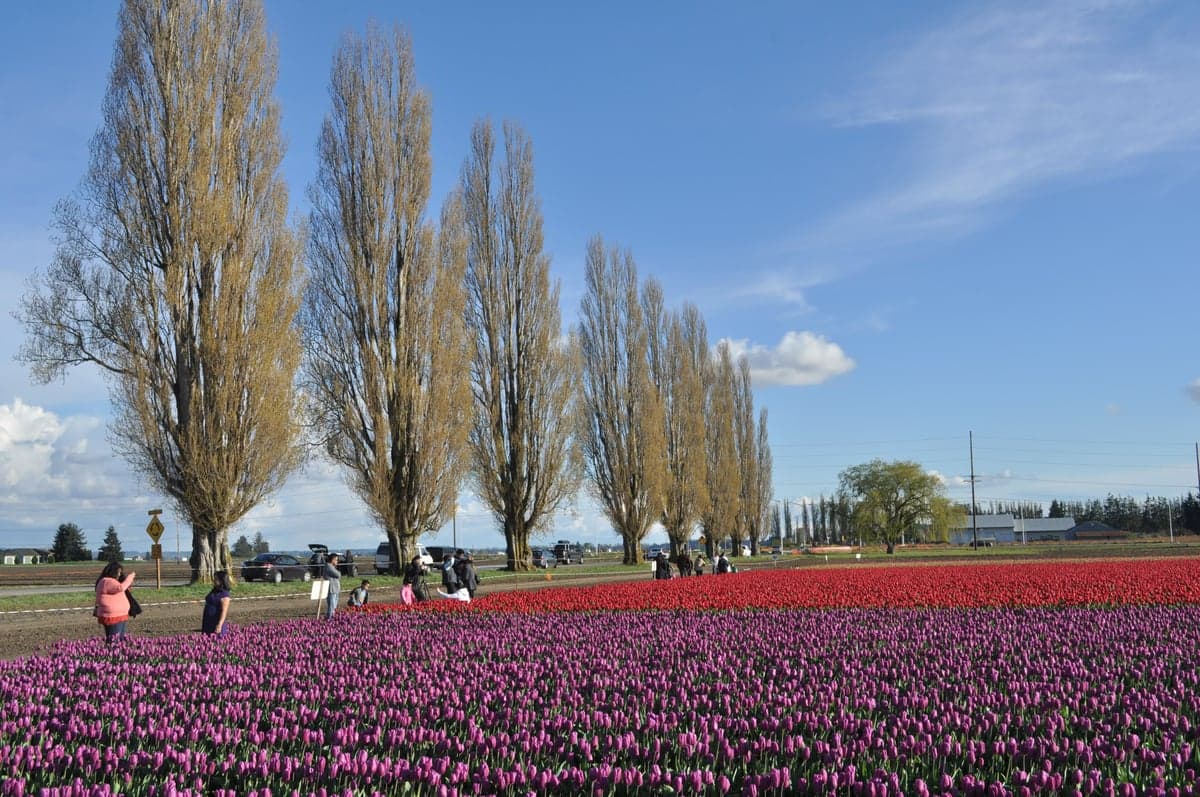
For liberal residents, the county's lean means local offices — county commissioners, school boards, and the superior court bench — are generally held by Democrats or left-leaning independents, and policy priorities like environmental protections for the Skagit River and affordable housing initiatives in Mount Vernon tend to get traction. Conservative residents aren't shut out, though; they hold sway in the eastern parts of the county, and the local Republican Party remains active in school board races and land-use debates, especially around property rights and farming regulations. The practical effect is that Skagit County feels less polarized than many places — neighbors might disagree on national politics but still show up for the same community events, from the Skagit Valley Tulip Festival to high school football games in Sedro-Woolley. The county's growth pressure from Seattle expats is slowly shifting the balance further left, but the rural character and working-class roots keep the political conversation grounded in local issues like salmon recovery, flood control, and the price of farmland.
Culturally, Skagit County stands apart from both the urban intensity of Seattle and the conservative strongholds of eastern Washington. The county's politics are shaped by a mix of environmentalists, farmers, tribal communities (the Swinomish and Upper Skagit tribes have significant influence), and a growing population of remote workers. You'll see "Save the Skagit" bumper stickers next to "Farmers Feed the World" decals in the same parking lot. The policy distinction that matters most day-to-day is land use: Skagit's Growth Management Act implementation is stricter than in many rural counties, which pleases conservationists but frustrates developers and some landowners. For anyone moving here, the key takeaway is that Skagit is a place where your vote matters in local races — the county's D+12 label doesn't mean every election is a foregone conclusion, especially in the odd-numbered years when city council and port commission seats are decided by a few hundred votes.

State Political ClimatePolitical Climate in Washington
State Political AnalysisPolitical Environment in the State
Washington State has been a reliably Democratic stronghold for over a decade, but it’s a far more complex place than the “deep blue” label suggests. The state hasn’t voted for a Republican presidential candidate since 1984, and Democrats currently hold every statewide executive office and both U.S. Senate seats. However, the political reality is a tale of two Washingtons: the booming, left-leaning Puget Sound corridor (Seattle, Bellevue, Tacoma, Olympia) and the vast, conservative-leaning interior east of the Cascade Range (Spokane, Yakima, the Tri-Cities). Over the last 20 years, the state has shifted leftward overall, driven by explosive population growth in King County and the tech-fueled suburbs of Redmond and Kirkland, but the rural-urban chasm has widened dramatically, creating a state that feels like two different countries under one capitol dome.
Urban vs. rural divide
The political map of Washington is essentially a battle between the wet, liberal west side and the dry, conservative east side. King County, home to Seattle and nearly 30% of the state’s population, is the Democratic engine, routinely delivering 70-75% of its vote to Democratic candidates. The suburban counties of Snohomish (Everett) and Pierce (Tacoma) have also trended blue, though they retain more moderate pockets. The real action is east of the Cascades. Spokane County, once a Republican stronghold, has become a swing county in recent cycles, flipping to Biden in 2020 by a narrow margin, while the more rural counties like Yakima, Grant, and Douglas remain deeply red. The Tri-Cities (Kennewick, Pasco, Richland) are a conservative anchor, but even there, growing Hispanic populations in Pasco are slowly shifting the calculus. The most politically distinct suburb is probably Bellevue, which has evolved from a conservative-leaning bedroom community into a tech-driven, fiscally moderate but socially liberal city that now votes reliably Democratic. Meanwhile, places like Wenatchee and Walla Walla are purple-ish islands in a sea of red, where local issues often trump party labels.
Policy environment
Washington’s policy environment is defined by a progressive tax structure and a heavy regulatory hand. The state has no personal or corporate income tax, relying instead on a high sales tax (state rate 6.5%, but local add-ons push it to 9-10% in many cities) and high property taxes. This makes it a relatively high-tax state for middle-class families, especially those who own homes. The regulatory posture is business-friendly in some sectors (tech, aerospace) but burdensome in others (construction, energy). Education policy is a perennial battleground: the state funds K-12 through a complex levy system that has led to lawsuits and teacher strikes, and it has a robust but expensive public university system (UW, WSU). Healthcare is heavily regulated, with a strong push for public options and abortion protections codified into law. Election laws are among the most accessible in the nation: Washington has all-mail voting, same-day voter registration, and automatic voter registration at the DMV. This has led to high turnout but also persistent (though unsubstantiated) concerns about ballot security from conservative groups.
Recent policy direction
Over the last five years, the state legislature has moved aggressively on a broad range of liberties. On gun and self-defense law, Washington passed a ban on high-capacity magazines (2022) and a ban on the sale of assault weapons (2023), making it one of the strictest states in the West. Parental and education rights have been a flashpoint: the state mandates LGBTQ-inclusive curriculum and has a strong "opt-out" system for sex education, but conservative parents in places like Spokane and Yakima have organized against it. Speech and privacy are protected by a strong state constitution, but the legislature has passed laws limiting political advertising transparency and restricting doxxing. Medical and bodily autonomy is fully protected: abortion is legal up to viability, and the state has a "shield law" protecting providers who treat patients from out of state. Property rights are constrained by the Growth Management Act, which limits development in rural areas and has driven up housing costs. Taxation remains income-tax-free, but a capital gains tax on high earners (over $250k) was passed in 2021 and upheld by the state Supreme Court. Voting and ballot access has been expanded with automatic voter registration and pre-paid postage on ballots, but the state also requires a signature on every ballot, which has led to a small but persistent rejection rate.
Civil unrest & political movements
Washington has a long history of political activism, from the WTO protests in Seattle (1999) to the CHOP/CHAZ autonomous zone in 2020. The latter was a major flashpoint that galvanized conservative opposition and led to the recall of King County Prosecutor Dan Satterberg. On the right, the Washington State Republican Party has been fractured between establishment and Trump-aligned factions, with the latter gaining ground in rural counties. The state has a strong "sanctuary" policy: local law enforcement is prohibited from asking about immigration status, and the state has sued the federal government over immigration enforcement. This has made Washington a destination for undocumented immigrants, especially in agricultural areas like Yakima and the Tri-Cities. Election integrity controversies have been muted compared to other states, but there was a notable incident in 2022 when a ballot drop box in Vancouver was set on fire. The "secession" rhetoric is mostly confined to the "Greater Idaho" movement, which wants to move eastern Washington counties into Idaho, but it has gained some traction in rural areas like Ferry and Stevens counties.
Projection
Over the next 5-10 years, Washington is likely to become even more Democratic at the state level, but the internal divisions will deepen. The Puget Sound region will continue to grow, driven by tech and biotech jobs, pulling the state further left. However, the rural east will become more conservative and more vocal, potentially leading to a "blue state, red counties" dynamic similar to California or Oregon. The key demographic wildcard is the Hispanic population, which is growing rapidly in the Tri-Cities and Yakima Valley. This group is not monolithic—many are Catholic and socially conservative—but they tend to vote Democratic on economic issues. If Republicans can make inroads here, they could flip some legislative seats. The housing crisis will be the defining political issue: as Seattle and Bellevue become unaffordable, more people will move to Spokane, Vancouver, and even rural areas, potentially shifting those places leftward. A relocator moving in now should expect a state that is increasingly polarized, with a government that is activist on climate, social issues, and regulation, but also one where local control still matters a great deal—your experience in Spokane will be very different from your experience in Seattle.
For a new resident, the bottom line is this: Washington is a state where your political experience will be heavily shaped by where you live. If you're a conservative, you'll find a welcoming community in the Tri-Cities, Spokane Valley, or Yakima, but you'll be living under a state government that is actively working against many of your priorities. If you're a liberal, you'll feel at home in Seattle or Olympia, but you'll pay a premium for it in housing and taxes. The practical takeaway is to choose your county carefully—your local school board, city council, and sheriff will have more impact on your daily life than the governor in Olympia. And be prepared for a state that is constantly in flux, with new laws on guns, taxes, and education coming every session. It's a beautiful, dynamic place, but it's not for the politically faint of heart.
* Values derived from national, state, county, city and local statistics and may differ in a specific area. Last updated: 2026-07-29T12:57:21.000Z
Narrative content on this page is AI-generated and may contain mistakes. Verify any details that matter before acting on them.
ReloMaps may earn a commission from affiliate links at no extra cost to you.

