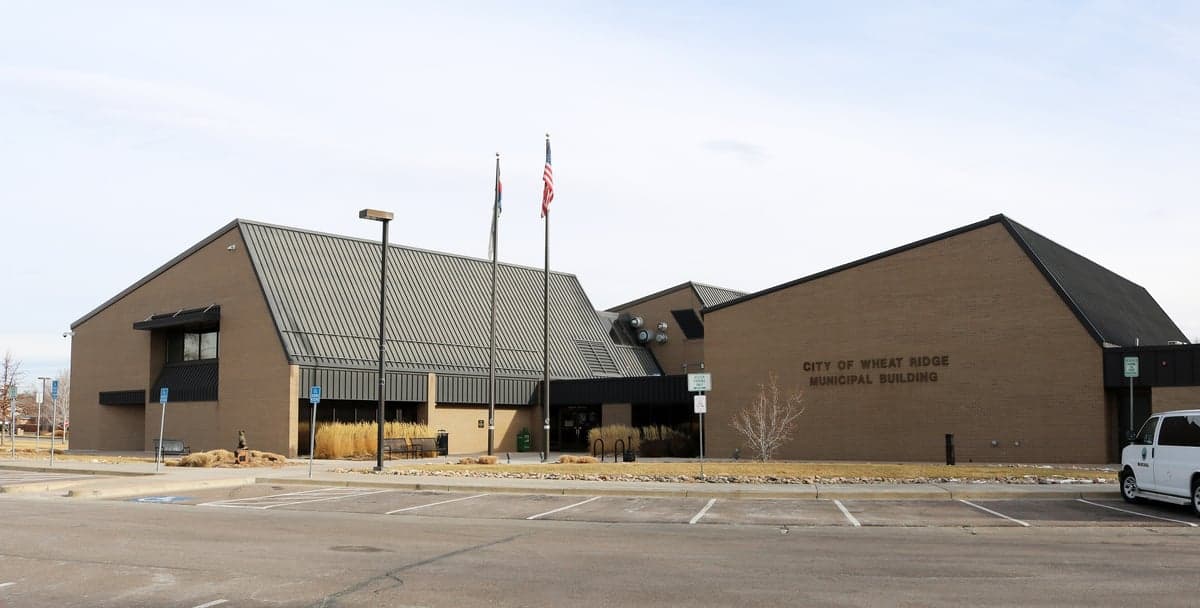
Photo: Wikipedia
Political ClimatePolitical Climate in Wheat Ridge, CO
District shown is the primary district for this city’s centroid. Cities may span multiple districts.
Local Political AnalysisPolitical Analysis of Wheat Ridge, CO
Wheat Ridge, Colorado, has a Cook PVI of D+8, meaning it leans significantly more Democratic than the national average, and that shift has been accelerating over the past decade. If you’ve lived here as long as I have, you remember when this was a quiet, middle-class suburb where folks mostly kept to themselves and the local government stayed out of your business. Now, the political energy is dominated by progressive activists who’ve pushed the city council and county commissioners further left with every election cycle. The trajectory is clear: what was once a reliably purple or even light-red area in Jefferson County is now solidly blue, and the policies coming out of Denver—just 15 minutes east—are bleeding into our community faster than most long-time residents are comfortable with.
How it compares
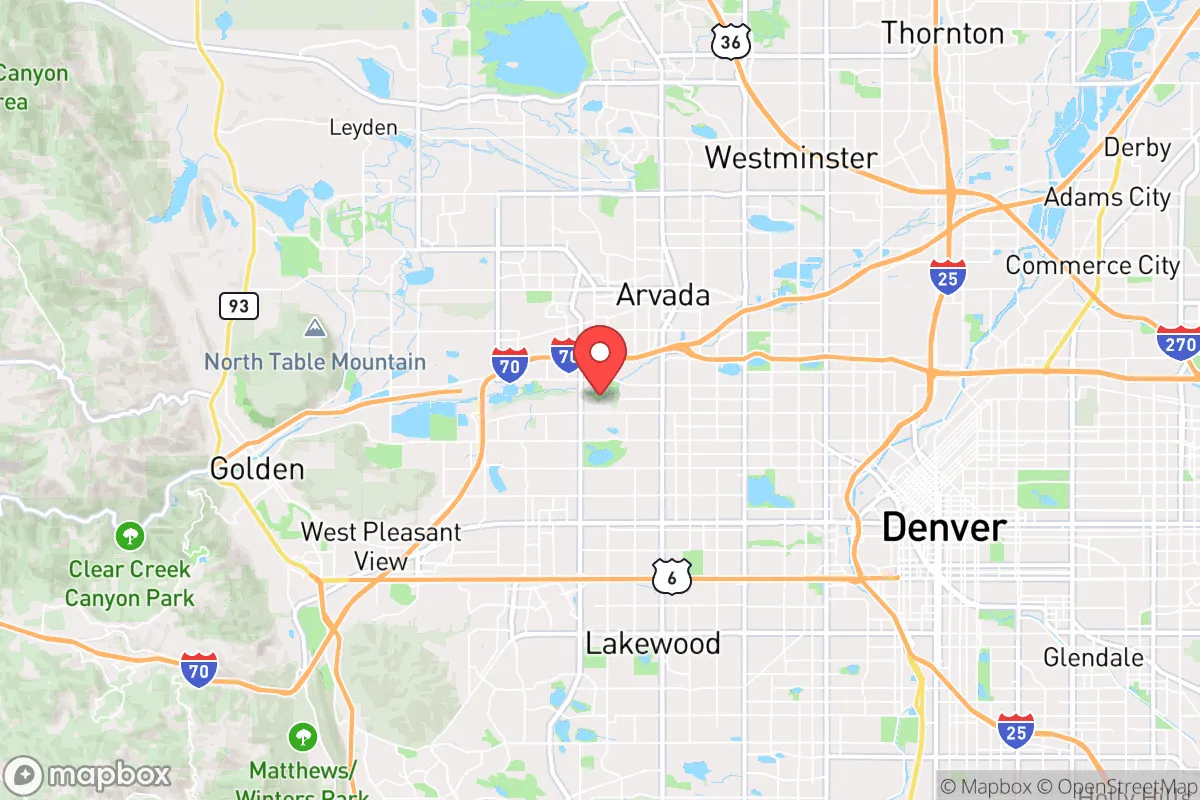
Wheat Ridge sits in a weird political sandwich. To the east, Denver is a deep-blue stronghold (PVI D+29) where the city council has embraced rent control, sanctuary city policies, and a massive expansion of social programs. To the west, places like Golden and Evergreen still hold onto a more independent, libertarian-leaning streak—Golden’s city council has pushed back on some of the county’s more aggressive land-use mandates. But Wheat Ridge itself has become a battleground where the county’s progressive agenda meets suburban resistance. Jefferson County as a whole is trending left, but Wheat Ridge is now one of the most reliably Democratic suburbs in the county, outpacing Lakewood (D+5) and Arvada (D+3) in its partisan shift. The contrast is stark: drive 10 minutes west to Applewood, and you’ll find neighborhoods where “Keep Government Out of My Healthcare” signs still pop up; in Wheat Ridge, you’re more likely to see “Defund the Police” yard signs near the 38th Avenue corridor.
What this means for residents
For those of us who value personal freedom and limited government, the practical effects are already showing up. The city council has adopted a “progressive zoning” framework that overrides single-family neighborhood preferences, allowing duplexes and triplexes on lots that were traditionally reserved for detached homes—whether the neighbors like it or not. Property taxes have climbed steadily as the county funds new social programs, and the local sales tax rate now sits at 8.5%, one of the highest in the metro area. On the plus side, if you’re a renter or a young progressive, you’ll find plenty of like-minded neighbors and city-funded bike lanes. But if you’re a homeowner who values your property rights, your voice in local land-use decisions, or your ability to keep your tax burden low, the trend is concerning. The city has also adopted a “welcoming city” ordinance that limits cooperation with federal immigration enforcement, which has stirred real tension in a community that used to pride itself on being a safe, quiet place for families of all backgrounds.
Culturally, Wheat Ridge has lost a lot of its old-school, blue-collar identity. The annual Wheat Ridge Carnation Festival still draws crowds, but the political conversations at the booths are more about climate action and equity audits than about local business or neighborhood safety. The long-term trajectory, unless there’s a serious pushback from moderate and conservative residents, is toward more regulation, higher taxes, and a government that sees itself as a solution to every problem rather than a referee for personal liberty. If that sounds like your kind of place, you’ll fit right in. If not, you might want to look west of Highway 93 before the next election cycle locks in the current direction for good.

State Political ClimatePolitical Climate in Colorado
State Political AnalysisPolitical Environment in the State
Colorado has shifted from a classic purple swing state to a solidly blue-leaning state over the past two decades, with Democrats now controlling the governorship, both U.S. Senate seats, and both chambers of the state legislature. The state voted for Hillary Clinton by 5 points in 2016, Joe Biden by 13 points in 2020, and Kamala Harris by roughly 11 points in 2024, reflecting a durable leftward tilt driven by explosive growth in the Denver-Boulder-Aurora metroplex and the Front Range corridor. For a conservative considering relocation, the state’s political trajectory is a cautionary tale of how rapid in-migration, combined with progressive governance, has reshaped a once-independent Western state into a laboratory for left-wing policy experiments.
Urban vs. rural divide
The political map of Colorado is a stark story of two Colorados. The urban Front Range—Denver, Boulder, Fort Collins, and Colorado Springs—contains roughly 85% of the state’s population and votes overwhelmingly Democratic. Denver County gave Biden 80% of the vote in 2020, while Boulder County hit 78%. Colorado Springs, home to the Air Force Academy and a heavy military presence, is the one major city that remains a Republican stronghold, though even El Paso County has been trending purple, voting for Trump by only 6 points in 2020. Meanwhile, the rural Eastern Plains, Western Slope, and San Luis Valley are deeply red—counties like Kit Carson, Yuma, and Moffat routinely deliver 75-80% for Republican candidates. The divide is not just cultural but economic: urban areas thrive on tech, aerospace, and government jobs, while rural counties depend on agriculture, energy extraction, and tourism. This geographic split means that state-level elections are decided almost entirely by the Front Range suburbs, particularly Jefferson, Arapahoe, and Adams counties, which have flipped from swing to reliably blue over the last decade.
Policy environment
Colorado’s policy environment has become aggressively progressive under unified Democratic control. The state income tax rate is a flat 4.4%, but that’s paired with a state sales tax of 2.9% that can balloon to over 10% when local levies are added in cities like Denver and Boulder. Property taxes are relatively low compared to Texas, but the state has no TABOR-style spending cap on local governments, meaning mill levies and bond measures are routinely approved. In 2023, Governor Jared Polis signed a sweeping family leave program funded by a new payroll tax, and the state has adopted California-style emissions mandates requiring all new cars sold to be electric by 2035. Education policy is dominated by the Colorado Department of Education, which has pushed critical race theory-aligned curriculum standards and gender identity mandates in K-12 schools. Healthcare is heavily regulated, with a state-run insurance exchange and Medicaid expansion under the ACA. Election laws have been dramatically loosened: Colorado was one of the first states to adopt universal mail-in voting, same-day registration, and automatic voter registration, which critics argue undermines election integrity. The state also has a “red flag” gun law (HB 19-1177) that allows courts to temporarily seize firearms from individuals deemed a risk, and in 2024, the legislature passed a ban on the sale of many semi-automatic firearms, which is currently being challenged in court.
Trajectory & freedom
Colorado is becoming demonstrably less free, particularly in the areas of gun rights, parental rights, and economic liberty. The 2024 semi-auto firearm ban (HB24-1292) is the most aggressive gun control measure in the state’s history, effectively banning the sale of AR-15s and similar rifles. Parental rights have been eroded by the 2019 “comprehensive human sexuality” education law, which mandates that sex ed curricula include LGBTQ+ topics and prohibits schools from notifying parents if a child changes their gender identity or pronouns. Medical autonomy has been curtailed by vaccine mandates for healthcare workers and schoolchildren, though the state stopped short of a universal mandate. Property rights are under pressure from the 2021 “right to repair” law for farm equipment, which while popular, also opened the door to more state intervention in private contracts. On the positive side for conservatives, Colorado remains a right-to-work state, and the state’s energy industry—oil and gas in Weld County and the Western Slope—still employs tens of thousands, though new drilling permits have been slashed under the Polis administration. The state’s Taxpayer Bill of Rights (TABOR) still provides a constitutional check on tax increases, but Democrats have repeatedly found ways to bypass it through “fees” and enterprise fund maneuvers.
Civil unrest & political movements
Colorado has seen significant civil unrest and political organizing, particularly in the Denver metro area. The 2020 George Floyd protests in Denver turned violent, with looting and fires in the Capitol Hill neighborhood, and the city’s progressive district attorney, Beth McCann, declined to prosecute many rioters. The state has a robust sanctuary policy—the 2019 “Protect Colorado Residents from Federal Government Overreach” law limits cooperation between local law enforcement and ICE, which has made Colorado a destination for illegal immigration. In 2023, the city of Denver spent over $40 million on shelter and services for migrants bused from Texas, straining local budgets. On the right, the Colorado Republican Party has fractured between establishment and populist factions, but grassroots movements like the Colorado Freedom Coalition and the El Paso County GOP have been active in school board races and county-level fights over election integrity. The 2020 election saw widespread allegations of irregularities in Denver’s mail-in ballot processing, though no court cases succeeded. The “secession” movement in the Eastern Plains—the 2013 attempt to form the 51st state of “North Colorado”—fizzled but reflected deep rural frustration with Front Range domination. Immigration politics are a flashpoint: the town of Aurora has seen a surge in Venezuelan gang activity, with the Tren de Aragua gang reportedly operating in apartment complexes, leading to increased police presence and local political backlash.
Projection
Over the next 5-10 years, Colorado will likely continue its leftward drift, driven by demographic trends that favor Democrats. The Front Range is adding 100,000 new residents annually, most of whom are young, college-educated, and left-leaning. The state’s Hispanic population, concentrated in the San Luis Valley and Denver metro, is growing and voting increasingly Democratic. Republicans have a path back to relevance only if they can win back suburban swing voters in Jefferson and Arapahoe counties, but the party’s internal divisions and the state’s changing demographics make that a long shot. The most likely scenario is that Colorado becomes a solidly blue state like Oregon or Washington, with occasional Republican wins in down-ballot races. A new resident moving in now should expect higher taxes, more gun restrictions, and a continued erosion of parental rights and local control. The one wild card is the energy transition: if the state’s oil and gas industry collapses under regulatory pressure, rural counties could face economic devastation, accelerating out-migration and further concentrating power in the urban core.
For a conservative considering Colorado, the bottom line is this: the state offers stunning natural beauty, a strong economy, and a relatively low tax burden compared to the coasts, but the political climate is hostile to traditional values and individual freedoms. If you’re willing to fight for your rights at the local level—in school boards, county commissions, and city councils—you can carve out a life in places like Colorado Springs, Douglas County, or the Western Slope. But if you’re looking for a state that respects gun rights, parental authority, and limited government, Colorado is no longer that place. The trajectory is clear, and it’s not turning back anytime soon.
* Values derived from national, state, county, city and local statistics and may differ in a specific area. Last updated: 2026-04-23T02:20:42.000Z
Narrative content on this page is AI-generated and may contain mistakes. Verify any details that matter before acting on them.
ReloMaps may earn a commission from affiliate links at no extra cost to you.

