 Popular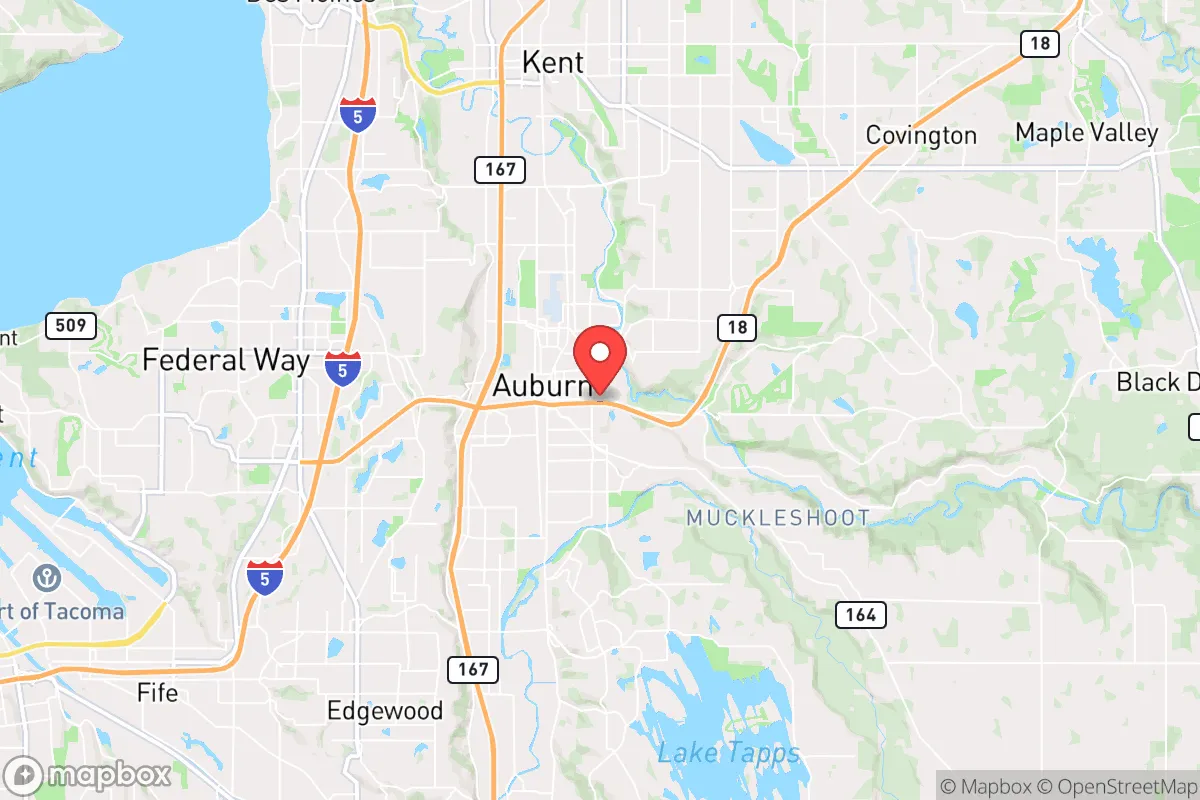
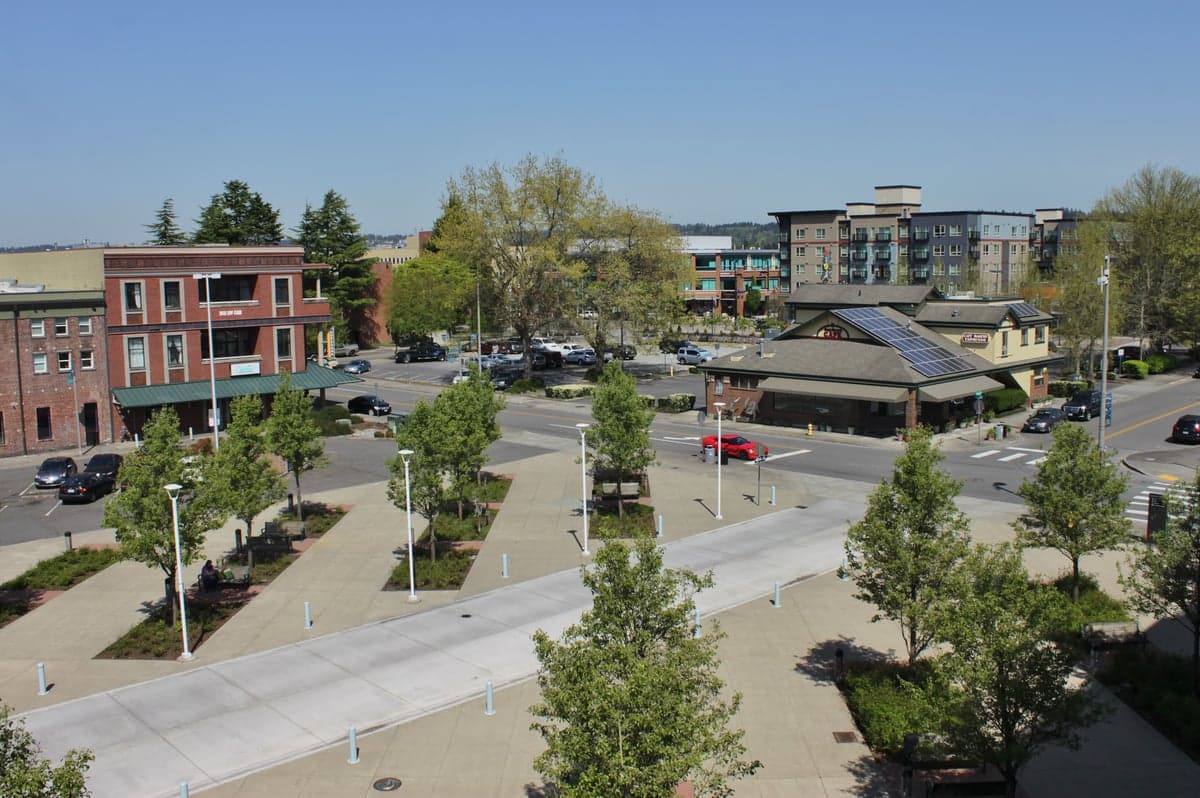
Photo: Wikipedia
Political ClimatePolitical Climate in Auburn, WA
District shown is the primary district for this city’s centroid. Cities may span multiple districts.
Local Political AnalysisPolitical Analysis of Auburn, WA
Auburn, Washington, has shifted hard to the left over the past decade, and the numbers back it up. The Cook Partisan Voting Index (PVI) now sits at D+22, meaning the city votes 22 points more Democratic than the national average. That’s a far cry from the blue-collar, independent streak this town used to have. If you’ve been here a while, you’ve watched the local politics move from a live-and-let-live attitude to something that feels a lot more like top-down control, especially on issues like housing mandates, business regulations, and public safety priorities.
How it compares
To really understand Auburn’s shift, you have to look at the surrounding areas. Drive 15 minutes east to Enumclaw or up to Black Diamond, and you’ll find communities that still lean conservative or at least purple. Those towns have resisted the kind of density pushes and progressive tax policies that have taken root in Auburn. Even neighboring Kent and Federal Way, while also blue, don’t feel as uniformly progressive as Auburn does now. The contrast is stark: Auburn’s city council and school board have moved decisively left, while the rural areas just outside city limits still vote for limited government and local control. It’s like two different worlds separated by a few miles of highway.
What this means for residents
For folks who value personal freedoms and want government to stay out of their lives, the trend here is concerning. You’re seeing more ordinances that tell businesses what they can and can’t do, from plastic bag bans to paid sick leave mandates that hit small shops harder than big chains. Property taxes and utility fees have crept up to fund new programs that not everyone asked for. The school district has leaned into social-emotional learning and equity initiatives that some parents feel push a specific worldview rather than focusing on reading and math. If you’re the kind of person who thinks the best government is the one closest to the people—and the smallest—Auburn’s trajectory is heading the wrong direction. The long-term worry is that these policies become permanent, making it harder for families who want more freedom to afford to stay.
On the cultural side, Auburn still has a strong sense of community, especially around the annual Auburn Days festival and the local farmers market. But the political climate has created some friction. You’ll hear longtime residents grumble that the city feels less like a place where neighbors help neighbors and more like a place where the city council decides what’s best for everyone. The push for more transit-oriented development along the Sounder train line and the state-mandated housing density targets are bringing in new people who may not share the old values of self-reliance and fiscal restraint. If you’re considering moving here, just know that the political winds are blowing hard left, and the days of Auburn being a quiet, independent-minded town are fading fast. Keep an eye on the next few election cycles—if the trend continues, the character of this place could change even more.

State Political ClimatePolitical Climate in Washington
State Political AnalysisPolitical Environment in the State
Washington State has undergone a dramatic political transformation over the past two decades, shifting from a competitive purple state to a solidly Democratic stronghold where Republicans rarely win statewide office. The state’s overall partisan lean is now roughly D+8 to D+10 in presidential elections, driven overwhelmingly by the Seattle metropolitan area, which casts nearly 60% of the state’s votes. While the 2024 presidential race saw Washington vote +10 for the Democratic candidate, down-ballot races tell a more nuanced story: Republicans hold competitive seats in the legislature and control several county commissions east of the Cascades, but the state’s trajectory since 2000 has been a steady march leftward, accelerated by massive in-migration to King County and the tech-driven transformation of the Puget Sound region.
Urban vs. rural divide
The political map of Washington is a textbook case of the urban-rural chasm. King County (Seattle) alone delivers roughly 30% of the state’s total vote and votes about 75% Democratic, making it the engine of the state’s blue lean. Neighboring Snohomish County (Everett) and Pierce County (Tacoma) are more competitive but have trended left in recent cycles, with Snohomish now reliably Democratic and Pierce leaning blue by about 5 points. The real action is in the suburban and exurban ring: Spokane County, once a Republican stronghold, has become a battleground—it voted for Trump in 2020 and 2024 but by shrinking margins, and Democrats now hold the county executive seat. Clark County (Vancouver), just across the river from Portland, has flipped from red to purple to light blue over the past decade, driven by California and Oregon transplants. The rural eastern half of the state—places like Yakima, Walla Walla, and the Tri-Cities (Kennewick, Pasco, Richland)—remains deeply Republican, with some precincts voting 70-80% for Trump. But these areas simply don’t have the population to counterbalance the Seattle metro. The Olympic Peninsula and Whatcom County (Bellingham) are reliably blue, while Kitsap County (Bremerton) leans Democratic but has a strong military and working-class conservative presence.
Policy environment
Washington’s policy environment is a mixed bag that reflects its progressive urban centers and its more libertarian rural roots. The state has no personal income tax—a major draw for conservatives—but makes up for it with high property taxes, a 6.5% state sales tax (with local add-ons pushing it to 10%+ in Seattle), and a new capital gains tax on high earners that was upheld by the state Supreme Court in 2023. The regulatory climate is heavy: Washington has a strict state-level environmental policy (the Growth Management Act), a carbon cap-and-invest program that began in 2023, and some of the nation’s strongest labor protections, including mandatory paid family leave and a $16.28 minimum wage. On education, the state’s public schools are well-funded but struggle with achievement gaps, and a 2023 law requires all public schools to adopt comprehensive sex education curricula. Healthcare is dominated by the state’s public option (Cascade Care) and a strong Medicaid expansion. Election laws are among the most accessible in the country: all-mail voting, same-day registration, and automatic voter registration at the DMV. Gun rights have been significantly curtailed: in 2023, the legislature passed a ban on assault weapons, a 10-day waiting period, and a requirement for a permit to purchase a firearm. A 2024 law also banned magazines over 10 rounds. These laws are currently being challenged in court, but they remain in effect.
Trajectory & freedom
On the freedom index, Washington is clearly trending downward for conservatives. The state has moved aggressively on parental rights: a 2023 law prohibits school districts from notifying parents if a child changes their gender identity or pronouns, overriding local school board policies. On medical autonomy, the state has codified abortion rights into law and expanded access to gender-affirming care for minors, including shielding providers from out-of-state lawsuits. Property rights have been eroded by the Growth Management Act, which limits development in rural areas and has driven up housing costs. The state’s speech environment is also shifting: a 2024 law expanded the definition of “unfair practices” to include discriminatory harassment in public accommodations, which critics argue could chill protected speech. On the positive side for conservatives, the state’s tax structure remains income-tax-free, and a 2023 ballot initiative to repeal the capital gains tax failed, but a 2024 initiative to require voter approval for any future income tax passed overwhelmingly. The gun rights restrictions are the most visible flashpoint: the 2023 assault weapons ban and magazine capacity limits have sparked a wave of lawsuits and a surge in gun sales, with many rural counties declaring themselves “Second Amendment sanctuaries.”
Civil unrest & political movements
Washington has a long history of political activism, from the 1999 WTO protests in Seattle to the 2020 CHOP/CHAZ occupation in Capitol Hill. The 2020 protests were particularly intense: Seattle saw nightly demonstrations for months, with the city council cutting the police budget by 14% and the mayor eventually resigning after a series of scandals. The CHOP zone, a six-block area in Capitol Hill that was occupied by protesters for three weeks, became a national symbol of progressive governance gone awry. On the right, the Washington State Republican Party has been fractured between establishment and populist factions, but grassroots movements like the Washington Gun Rights group and the Moms for Liberty chapters in suburban counties like Clark and Spokane have gained traction. Immigration politics are a flashpoint: Washington is a sanctuary state, with a 2019 law prohibiting state and local law enforcement from cooperating with federal immigration authorities. The Tri-Cities area has seen tensions over immigration enforcement, with local sheriffs in Benton and Franklin counties resisting the state’s sanctuary policies. Election integrity remains a live issue: the state’s all-mail voting system was challenged by Republicans after the 2020 election, but multiple audits found no evidence of widespread fraud. A 2024 law requiring signature verification and post-election audits has been praised by both parties, but distrust persists in rural areas.
Projection
Over the next 5-10 years, Washington is likely to become more Democratic and more progressive, driven by continued in-migration from California, Oregon, and other blue states. The Seattle metro area is expected to add another 500,000 residents by 2035, while rural counties are projected to stagnate or decline. This demographic shift will likely lead to further restrictions on gun rights, expansion of the state’s carbon cap program, and possibly a state income tax if the capital gains tax is upheld. However, there are countervailing forces: the 2024 initiative requiring voter approval for any income tax suggests that voters are wary of new taxes, and the state’s housing crisis is pushing some residents to more affordable, conservative-leaning areas like Spokane and the Tri-Cities. The Yakima Valley and Walla Walla are also seeing growth from remote workers seeking lower costs. The political divide will likely sharpen: expect more “sanctuary county” movements on the right and more state preemption of local control on the left. A new resident moving in now should expect a state where their vote in statewide races will be largely irrelevant, but where local elections—especially for county commissions, school boards, and city councils—will remain competitive and consequential.
For a conservative considering relocation, Washington offers a genuine trade-off. The lack of a state income tax and the stunning natural beauty are real draws, but the state’s policy trajectory is clearly toward greater government involvement in your daily life—from what you can own (guns) to what your children learn in school (sex ed, gender identity) to how you heat your home (carbon pricing). If you’re moving here, focus on the counties east of the Cascades or the more rural parts of the Olympic Peninsula, where local politics still lean right and your vote matters more. But be prepared: the state government in Olympia will continue to push policies that many conservatives find intrusive, and the cultural and political center of gravity will only move further left as Seattle’s influence grows. It’s a beautiful state to live in, but it’s no longer a place where conservative values are reflected in state law.
* Values derived from national, state, county, city and local statistics and may differ in a specific area. Last updated: 2026-04-21T11:11:02.000Z
Narrative content on this page is AI-generated and may contain mistakes. Verify any details that matter before acting on them.
ReloMaps may earn a commission from affiliate links at no extra cost to you.

