 Popular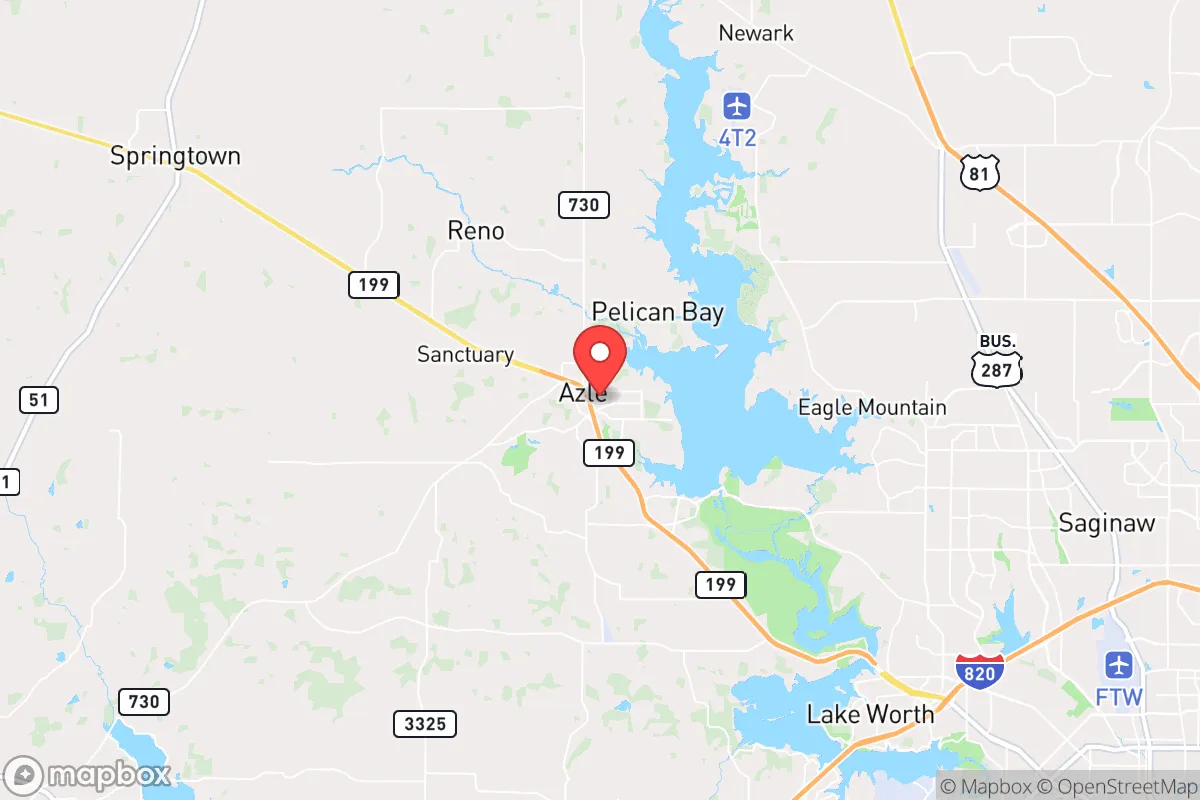
Political ClimatePolitical Climate in Azle, TX
District shown is the primary district for this city’s centroid. Cities may span multiple districts.
Local Political AnalysisPolitical Analysis of Azle, TX
Azle has long been a solidly conservative community, and that hasn't changed much even as the Dallas-Fort Worth metroplex creeps closer. The area sits in a Cook PVI of R+11, which means it's reliably Republican by a comfortable margin—about 11 points more conservative than the national average. In practice, that translates to local elections where school board and city council races are won or lost on traditional values, not progressive experiments. You still see more pickup trucks with American flags than electric cars with bumper stickers around here, and that's not an accident. The trajectory, though, is worth watching: as more folks move out from Fort Worth looking for cheaper land, some bring big-city voting habits with them, and that's starting to show in tighter margins in a few precincts near the lake.
How it compares
Drive ten miles east into Fort Worth proper, and you're in a completely different political world—Tarrant County as a whole has been trending purple for years, with some precincts voting blue in recent cycles. Head south toward Weatherford, and you'll find a similar conservative vibe, though maybe a bit more establishment Republican. The real contrast is north and west: places like Boyd, Springtown, and Bridgeport are even more deeply red, with Cook PVIs that push R+15 or higher. Azle sits in a kind of buffer zone—conservative enough to feel safe, but close enough to the metroplex that you can't take it for granted. The Parker County side of Azle tends to vote a few points more conservative than the Tarrant County side, which is a split you can actually see in local precinct results. If you're worried about government overreach, you'd rather be in the Parker County portion, where the county commission is more skeptical of state and federal mandates.
What this means for residents
For someone who values personal freedom and limited government, Azle is still a pretty good place to be. The city council and school board have generally resisted the kind of progressive overreach you see in larger districts—no mask mandates that lasted years, no critical race theory in the curriculum, no zoning fights over high-density apartments that would change the character of the town. The local sheriff's office and police department take a common-sense approach to enforcement, not the kind of activist policing you hear about in big cities. Property taxes are a constant headache, but that's Texas-wide, not an Azle-specific problem. The real concern for the long term is whether the influx of new residents from blue areas will shift the school board and city council elections in the next five to ten years. If you're paying attention, you'll notice more "Vote for Change" yard signs popping up in the newer subdivisions, and that's something worth keeping an eye on.
Culturally, Azle still holds onto its small-town, self-reliant character. The annual Azle FFA livestock show is a bigger deal than any political rally, and the local churches are the real community centers. There's no push for things like sanctuary city policies or defunding the police here—those ideas would get laughed out of a town hall meeting. The biggest policy distinction you'll notice is the strong support for Second Amendment rights; you can still open carry without getting sideways looks, and the local gun shops do steady business. If you're looking for a place where the government mostly stays out of your business and your neighbors share your values, Azle is still that place. Just keep an eye on those city council races—that's where the real fight for the town's future will happen.

State Political ClimatePolitical Climate in Texas
State Political AnalysisPolitical Environment in the State
Texas remains a solidly Republican state, but the margin has tightened noticeably over the past decade. In 2024, Donald Trump carried the state by about 5.5 points, down from 9 points in 2020 and 16 points in 2012. The dominant coalition is still conservative—rural voters, suburban families, and the oil-and-gas economy—but explosive growth in the blue-leaning metros of Austin, Dallas, Houston, and San Antonio is slowly shifting the map. For a conservative relocating here, the big picture is encouraging: the state legislature and governor’s mansion are firmly in GOP hands, and the policy environment remains one of the most freedom-oriented in the country. But the demographic tide is real, and the political future depends on how well the state’s conservative base holds its ground.
Urban vs. rural divide
The political map of Texas is a study in contrasts. The vast rural and exurban areas—places like Lubbock, Midland, and the Panhandle—vote Republican by margins of 70-80%. These regions anchor the state’s conservative majority. Meanwhile, the major metros are increasingly blue. Austin and Travis County are deep blue, with Biden winning 72% of the vote there in 2020. Dallas County, Harris County (Houston), and Bexar County (San Antonio) have all trended Democratic over the past two cycles, driven by younger, more diverse populations and transplants from out of state. The suburbs are the real battleground. Places like Collin County (north of Dallas) and Fort Bend County (southwest of Houston) were once reliably red but are now competitive. In 2024, Collin County still went for Trump, but by a much narrower margin than a decade ago. For a conservative moving in, the safest bets are the smaller cities and exurbs—places like Katy, Frisco, or New Braunfels—where the political culture still leans heavily Republican.
Policy environment
Texas’s policy environment is a major draw for conservatives. There is no state income tax, which keeps more money in your pocket. Property taxes are high—around 1.6-2.0% of assessed value—but the state has no plans to introduce a state income tax. The regulatory posture is business-friendly, with minimal red tape for starting a business or building a home. On education, the state has expanded school choice through the Texas Education Savings Account program (HB 3, 2023), allowing parents to use state funds for private school or homeschooling. Healthcare policy is mixed: Texas did not expand Medicaid under Obamacare, keeping the system leaner, but rural hospitals have struggled. Election laws were tightened with SB 1 (2021), which banned 24-hour and drive-through voting, added ID requirements for mail ballots, and empowered poll watchers. For conservatives, this is seen as protecting election integrity; for critics, it’s voter suppression. The bottom line: Texas’s policy environment is designed to maximize personal freedom and economic opportunity, with a strong emphasis on local control and limited government.
Trajectory & freedom
On the freedom front, Texas has been moving in a decidedly conservative direction over the past five years. The state passed constitutional carry (HB 1927, 2021), allowing Texans to carry a handgun without a license. Parental rights were strengthened with HB 900 (2023), which requires book vendors to rate materials for sexually explicit content before selling them to schools. Medical autonomy took a hit with the near-total abortion ban (SB 8, 2021), which prohibits abortion after a fetal heartbeat is detected—roughly six weeks—and allows private citizens to sue violators. Property rights were bolstered by SB 147 (2023), which restricts certain foreign entities from buying land near military installations. On the other hand, some conservatives worry about the growth of local government overreach. Dallas and Austin have passed local ordinances on paid sick leave and minimum wage hikes, which the state has fought in court. The trend is clear: the state government is expanding freedom in key areas—guns, school choice, parental rights—while pushing back against progressive local policies. For a new resident, this means more personal liberty at the state level, but you’ll need to check your local city council’s leanings.
Civil unrest & political movements
Texas has seen its share of political flashpoints. The 2020 Black Lives Matter protests in Austin, Dallas, and Houston were large and sometimes violent, leading to property damage and a lasting sense of unease among conservatives. The immigration crisis at the southern border has been a constant source of tension. Governor Abbott’s Operation Lone Star has deployed state troopers and National Guard to the border, busing migrants to sanctuary cities like New York and Chicago. This has been popular with conservatives but has drawn legal challenges. There’s also a growing secessionist movement—the Texas Nationalist Movement—which advocates for Texas independence, though it remains fringe. Election integrity remains a hot-button issue. After the 2020 election, many conservatives in rural counties expressed distrust in the results, leading to the passage of SB 1. In 2024, there were scattered reports of voter roll irregularities, but no widespread fraud was proven. For a new resident, the most visible sign of political tension is likely the border issue—you’ll see state troopers and National Guard vehicles if you travel near the Rio Grande Valley. In the cities, you might encounter activist groups on both sides, but daily life is generally peaceful.
Projection
Over the next 5-10 years, Texas is likely to remain a Republican-controlled state, but the margin will continue to shrink. The key driver is in-migration: Texas gained over 4 million new residents between 2010 and 2020, and many of them come from blue states like California and New York. These transplants tend to be younger and more diverse, and they often bring their political leanings with them. The suburbs of Dallas, Houston, and Austin are the front lines. If Republicans can hold places like Collin County and Fort Bend County, the state will stay red. If those suburbs flip, Texas could become a swing state by 2032. The state legislature is likely to continue passing conservative policies—more school choice, tighter election laws, and further restrictions on abortion—but the battles will get harder. For a conservative moving in now, the advice is to pick your location carefully. The exurbs and smaller cities—places like Tyler, College Station, or San Angelo—will remain conservative strongholds for the foreseeable future. The big metros will become more politically mixed, but the state’s overall trajectory is still one of freedom and limited government, provided the conservative base stays engaged.
For a new resident, the bottom line is this: Texas offers a high degree of personal freedom, low taxes, and a business-friendly environment, but the political landscape is shifting. If you’re a conservative looking for a place where your values are reflected in state policy, Texas is still one of the best bets in the country. Just be aware that the cities are becoming more progressive, and the suburbs are the battleground. Choose your community wisely, get involved in local politics, and you’ll find a state that rewards hard work and self-reliance. The freedom is real, but it’s not guaranteed—it has to be defended every election cycle.
* Values derived from national, state, county, city and local statistics and may differ in a specific area. Last updated: 2026-04-28T18:24:06.000Z
Narrative content on this page is AI-generated and may contain mistakes. Verify any details that matter before acting on them.
ReloMaps may earn a commission from affiliate links at no extra cost to you.

