
Photo: Wikipedia
Political ClimatePolitical Climate in Bastrop, TX
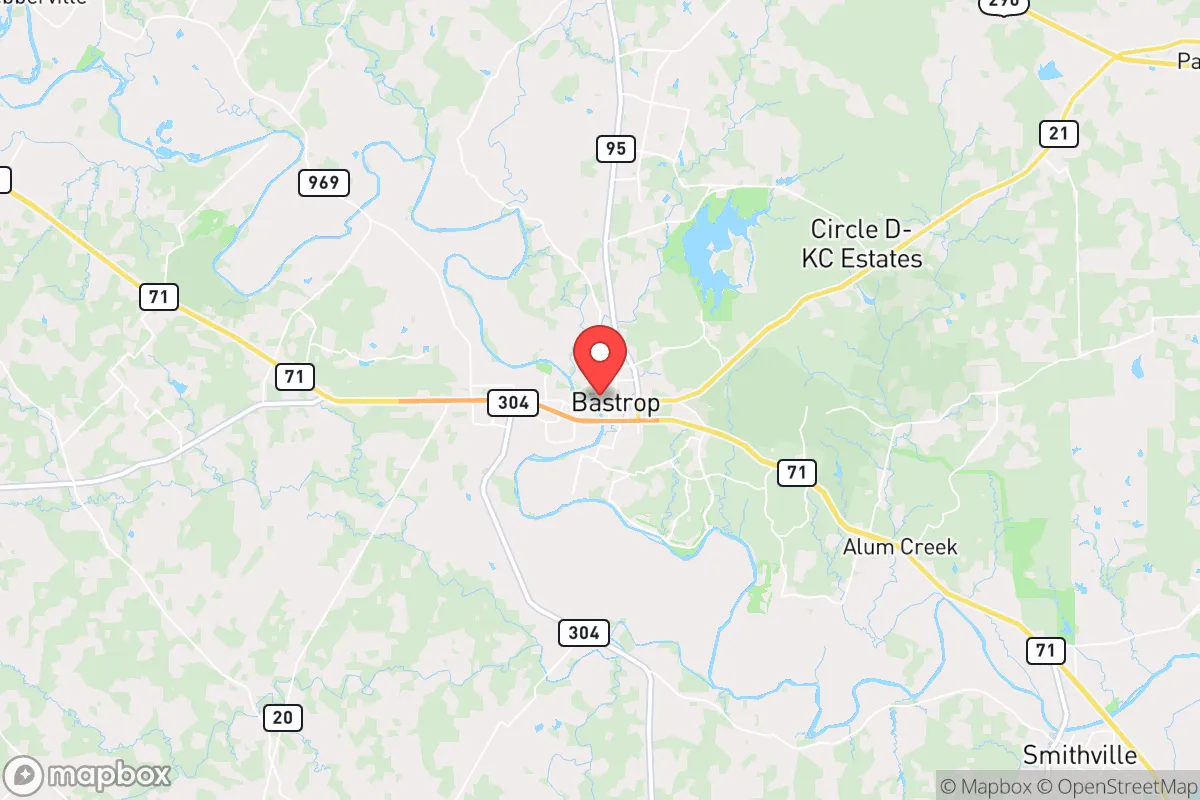
District shown is the primary district for this city’s centroid. Cities may span multiple districts.
Local Political AnalysisPolitical Analysis of Bastrop, TX
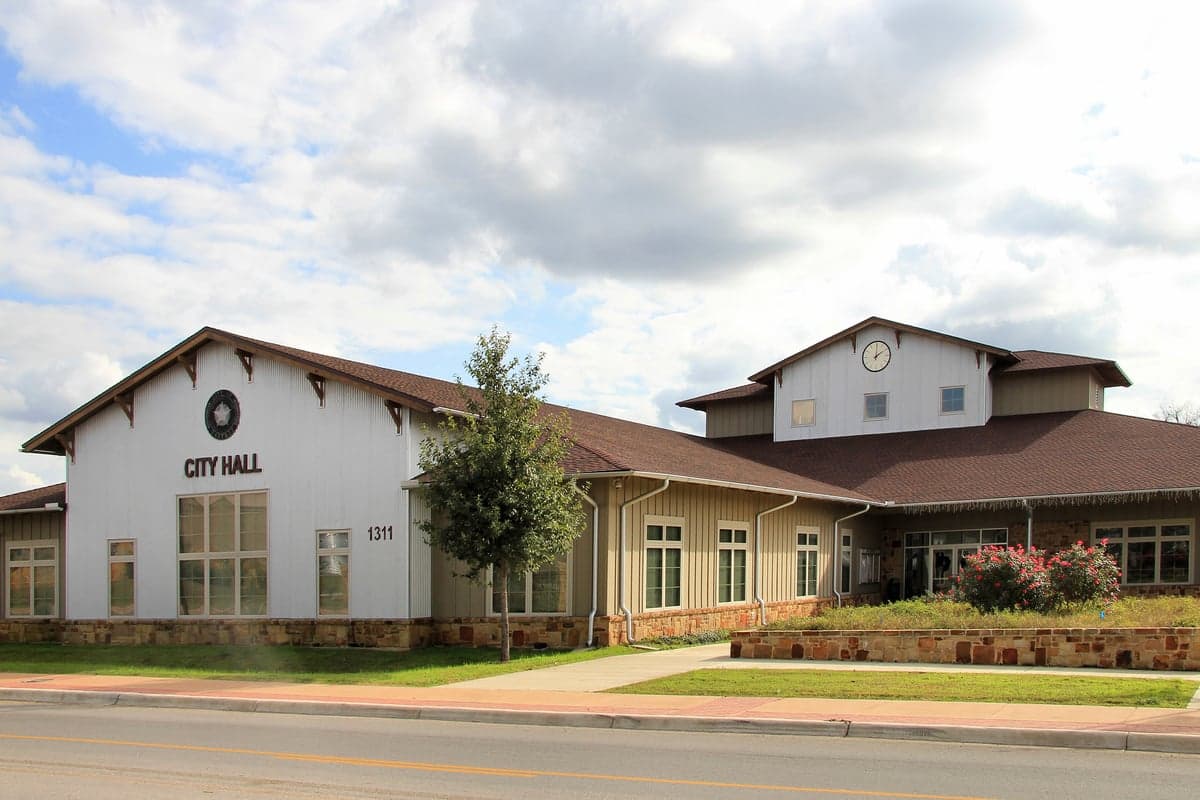
Bastrop, Texas, has long been a reliably conservative community, and the numbers back that up. The area carries a Cook PVI of R+12, meaning it votes a solid twelve points more Republican than the national average. That’s a stark contrast to the state of Texas as a whole, which sits at R+4. For a long time, this place was a quiet, no-nonsense town where folks just wanted to be left alone to live their lives. But over the last decade or so, you’ve seen the Austin sprawl creeping down Highway 21, and with it, a slow but noticeable shift in the local political vibe. It’s not that Bastrop has flipped—far from it—but the conversations at the coffee shop and the school board meetings have gotten a lot more heated than they used to be.
How it compares
When you compare Bastrop to the rest of Texas, the difference is pretty stark. The state as a whole is already a red-leaning place, but Bastrop is in a whole other league of conservative. That R+12 rating puts it in the same ballpark as places like rural East Texas, not the suburbs of a major metro. But here’s the thing: you don’t have to drive far to see the contrast. Head west on 71 into Austin, and you’re in a deep blue stronghold where the city council is pushing things like sanctuary city policies and heavy-handed zoning regulations. Go south to Lockhart or east to Smithville, and you’re back in familiar, conservative territory. The real tension is right here in Bastrop County itself, where the unincorporated areas and smaller towns like Elgin still vote overwhelmingly red, but the city of Bastrop itself has started to see a trickle of progressive influence from new arrivals. It’s a classic story of urban spillover, and it’s making the local politics a lot more interesting—and a lot more concerning for those of us who value limited government.
What this means for residents
For the folks who’ve been here a while, the biggest worry is government overreach creeping into daily life. We’ve seen it in other parts of Texas—counties that used to be free and easy suddenly adopting strict building codes, noise ordinances, and even trying to dictate what you can do with your own property. So far, Bastrop has held the line pretty well. The county commissioners and city council are still mostly folks who believe in personal responsibility and keeping the government out of your business. But the pressure is mounting. There’s been talk of more zoning restrictions to manage growth, and some new residents are pushing for things like “complete streets” policies that sound nice but often mean more red tape for homeowners and small businesses. The real test will be the next few election cycles. If the progressive wave from Austin keeps washing over us, you could see Bastrop start to mirror some of the more restrictive policies that have made life in Travis County a bureaucratic nightmare.
Culturally, Bastrop still feels like a place where your word is your bond and neighbors help each other out without a government program. The annual Bastrop County Fair and the Lost Pines heritage are still the heart of the community. But there’s a growing divide between the old-timers and the newcomers, especially on issues like property rights and local control. The long-term outlook is uncertain. If the growth continues at this pace, and if the political newcomers manage to get a foothold, Bastrop could lose the very character that made it a great place to escape the Austin machine. For now, it’s still a solid conservative haven, but you’d better keep an eye on those city council meetings—that’s where the future of this town is really being decided.

State Political ClimatePolitical Climate in Texas
State Political AnalysisPolitical Environment in the State
Texas has been a reliably Republican state for decades, with a Cook PVI of R+4, but the coalition that keeps it red is shifting under your feet. The dominant political force remains a mix of fiscal conservatives, social traditionalists, and libertarian-leaning independents, but the last 15 years have seen a slow, steady erosion of the GOP’s grip as massive in-migration from blue states and explosive growth in the urban cores have tightened margins. In 2020, Donald Trump still won Texas by about 5.5 points, but that was down from 9 points in 2016 and 16 points in 2012—a trajectory that has conservatives in places like Lubbock and Midland watching the suburbs of Dallas and Houston with growing unease.
Urban vs. rural divide
The political map of Texas is a tale of two worlds. The major metros—Austin, Dallas, Houston, San Antonio, and El Paso—are the engines of the state’s blue shift. Austin is the most liberal city in the South, with a city council that has embraced defund-the-police rhetoric and sanctuary city policies. Harris County (Houston) flipped from red to blue in 2018 and has only gotten bluer, while Dallas County and Bexar County (San Antonio) are now solidly Democratic. Meanwhile, the rural expanse—the Panhandle around Amarillo, the Permian Basin around Midland, and the Piney Woods of East Texas—votes 70-80% Republican. The real battleground is the suburban ring: Collin County (north of Dallas) and Fort Bend County (southwest of Houston) were once GOP strongholds but are now competitive. In 2020, Trump won Collin by only 4 points, down from 24 points in 2012. That’s where the fight for Texas’s future is happening.
Policy environment
Texas’s policy environment is a mixed bag for conservatives. On the plus side, there is no state income tax—a massive draw for families and businesses fleeing California and New York. Property taxes are high (among the top 10 in the nation), but the 2023 property tax cut package, which included a $12.5 billion relief plan and a higher homestead exemption, was a genuine win. The regulatory posture remains business-friendly, with minimal zoning in most cities and a right-to-work law that keeps unions weak. On education, the state has pushed school choice hard: the 2023 legislative session saw a near-pass of a universal education savings account (ESA) program, though it failed in the House due to rural Republican opposition. Expect it to pass in 2025. Healthcare is a sore spot: Texas has the highest uninsured rate in the country, and the state has refused Medicaid expansion under Obamacare. Election laws tightened after 2020 with Senate Bill 1, which banned drive-through voting and 24-hour polling places, and added ID requirements for mail ballots. For a conservative, the policy environment is largely friendly, but the property tax burden and lack of healthcare access are real concerns.
Trajectory & freedom
On personal liberty, Texas has been a mixed bag over the last five years. The good news: the state passed constitutional carry (permitless carry) in 2021, meaning law-abiding adults can carry a handgun without a license. The Heartbeat Act (SB 8) in 2021 effectively banned abortion after six weeks, and the trigger law after Dobbs made it a felony. Parental rights were strengthened with the 2023 law banning gender transition procedures for minors (SB 14) and a law requiring school libraries to remove books deemed “sexually explicit.” The bad news: the same legislature that expanded gun rights also expanded government surveillance. The 2023 law requiring age verification for adult websites (HB 1181) was sold as child protection but sets a precedent for internet censorship. And the state’s aggressive use of the “public nuisance” doctrine to shut down businesses during COVID—including churches—was a massive overreach that still rankles many conservatives. On property rights, Texas is generally strong, but cities like Austin have imposed short-term rental bans and tree ordinances that feel like HOA rules on steroids. The trajectory is toward more freedom on guns and family issues, but more government control on speech and property in the blue cities.
Civil unrest & political movements
Texas has seen its share of political flashpoints. The 2020 Black Lives Matter protests in Austin were among the largest and most destructive in the country, with the city council later cutting the police budget by $150 million (since partially restored). The “Defund the Police” movement has been a major wedge issue, with suburban voters in places like Katy and Frisco recoiling at the chaos. On the right, the “Texas Nationalist Movement” (Texit) has been a fringe but persistent force, though it has no real chance of success. Immigration is the hottest button: Governor Abbott’s Operation Lone Star has bused over 100,000 migrants to blue cities, and the state has sued the Biden administration over border policies. The 2023 law allowing state police to arrest illegal border crossers (SB 4) is currently tied up in court but signals the state’s intent to take border security into its own hands. Election integrity remains a live issue: the 2020 election saw lawsuits over Harris County’s drive-through voting, and the 2022 primaries were marred by a massive voter registration scandal in the Rio Grande Valley. A new resident in San Antonio or El Paso will see the border crisis daily; in Lubbock or Midland, it’s a distant but angry talking point.
Projection
Over the next 5-10 years, Texas is likely to become a true swing state. The in-migration from California, New York, and Illinois—roughly 1,000 people per day—is overwhelmingly from blue states, and while not all are Democrats, the net effect is a slow leftward drift. The suburbs of Dallas, Houston, and San Antonio will continue to flip, while the rural areas will hold but lose population share. The state’s growing Hispanic population, long a GOP target, is not breaking red as hoped; younger Hispanic voters are trending blue. The 2024 election will be a test: if Trump wins Texas by less than 3 points, the state will be a toss-up by 2028. For conservatives, the key battleground will be the state legislature: if Democrats flip the Texas House, the policy environment will shift dramatically—think Medicaid expansion, legalized gambling, and a rollback of election integrity laws. The freedom trajectory will depend on who controls the levers in Austin.
For a new resident, the bottom line is this: Texas is still a red state with a conservative policy framework, but it’s a red state in transition. If you’re moving here for lower taxes, gun rights, and school choice, you’ll find those things—for now. But the politics of your local city or county will matter more than the state’s overall lean. If you settle in Frisco or Katy, you’ll be in a purple suburb where every election is a fight. If you choose Lubbock or Midland, you’ll be in deep red territory where the culture feels like 1990s America. The state is still freer than most, but the margin for error is shrinking. Keep your eyes on the Texas House races and the border—those will tell you everything about where this state is headed.
* Values derived from national, state, county, city and local statistics and may differ in a specific area. Last updated: 2026-05-12T00:00:19.000Z
Narrative content on this page is AI-generated and may contain mistakes. Verify any details that matter before acting on them.
ReloMaps may earn a commission from affiliate links at no extra cost to you.

