Photo: Wikipedia
Political ClimatePolitical Climate in Bellingham, WA
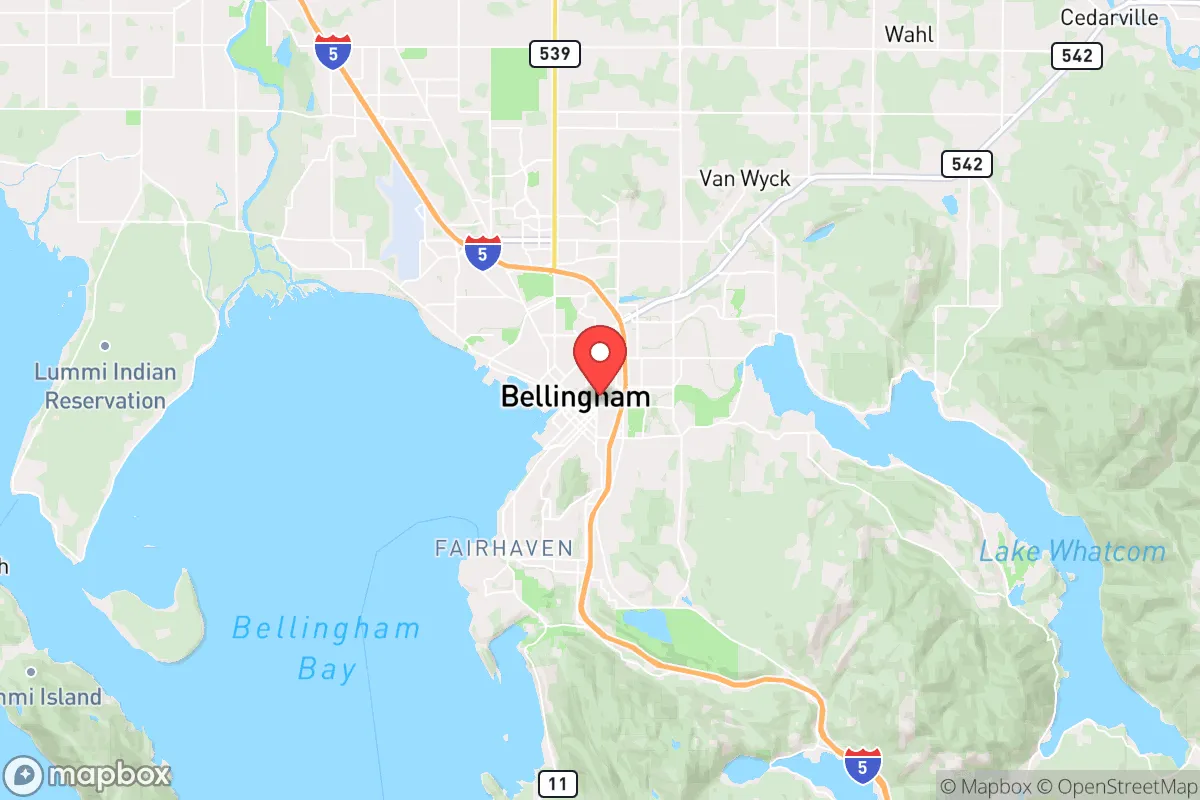
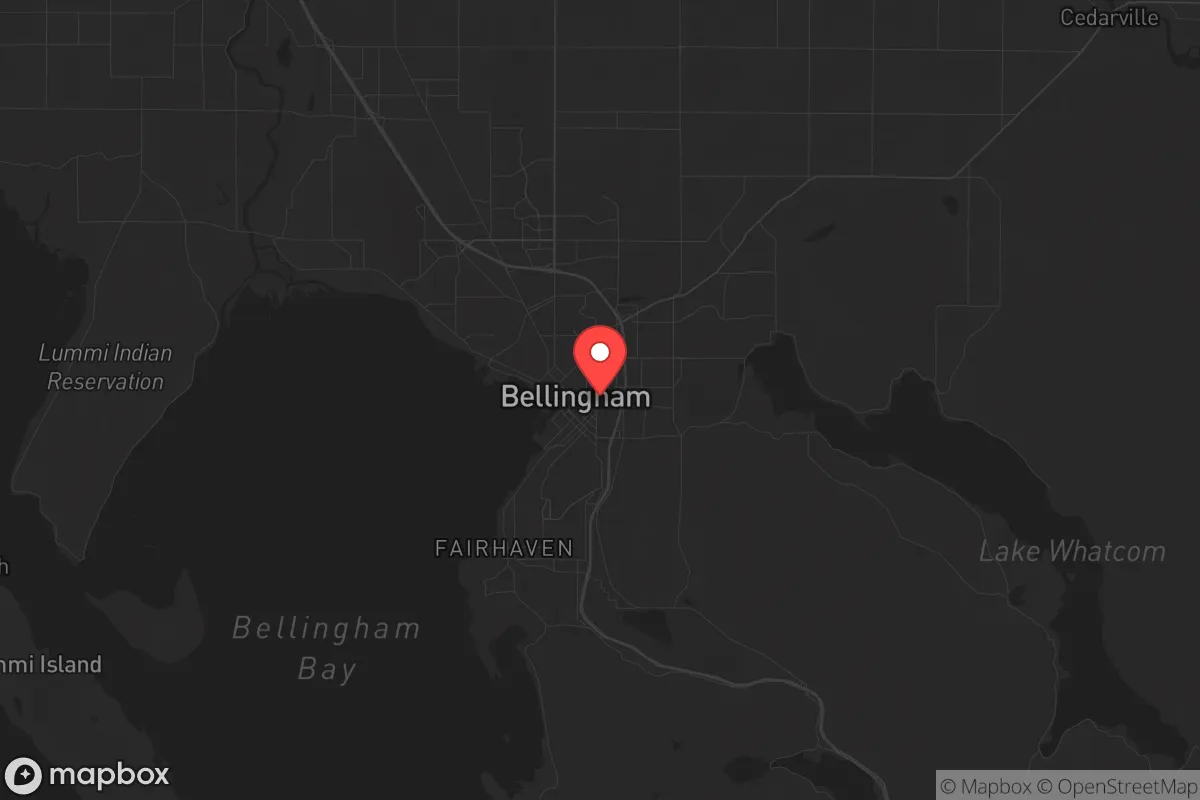
District shown is the primary district for this city’s centroid. Cities may span multiple districts.
Local Political AnalysisPolitical Analysis of Bellingham, WA
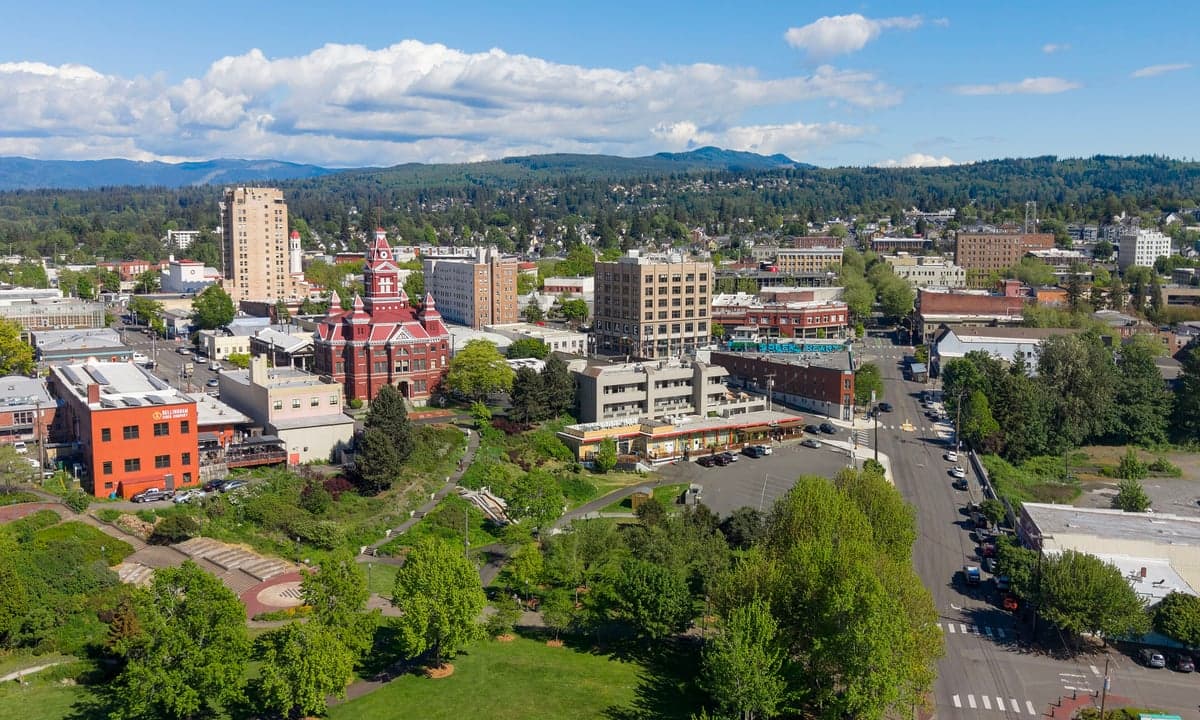
Bellingham’s political climate has shifted hard to the left over the past decade, and if you’ve lived here as long as I have, you’ve watched it happen in real time. The city now carries a Cook PVI of D+12, meaning it votes about 12 points more Democratic than the national average—a number that would have seemed extreme even 15 years ago. What was once a pragmatic, working-class town with a mix of loggers, fishermen, and small-business owners has become a stronghold for progressive activism, where local elections are often decided by who can promise the most aggressive climate mandates or the most expansive social programs. The trajectory is clear: each election cycle pushes the Overton window further left, and moderate voices have been squeezed out of local government.
How it compares
Drive 20 minutes south to Skagit County and you’ll find a completely different world. Towns like Burlington and Mount Vernon lean more conservative, with a stronger agricultural and industrial base that keeps local politics grounded in property rights and tax restraint. Even within Whatcom County, the contrast is stark: rural communities like Lynden and Ferndale vote reliably Republican, and their residents often feel like they’re being governed by a city council that doesn’t understand their way of life. Bellingham’s D+12 rating puts it in the same league as Seattle’s suburbs, not the rest of the county. That disconnect has real consequences—countywide ballot measures on land use, housing density, and tax increases often split along this urban-rural fault line, with Bellingham’s votes overriding the preferences of the surrounding area.
What this means for residents
For anyone who values personal freedom and limited government, the trend here is genuinely concerning. The city council has passed a series of ordinances that reach deep into daily life: strict rental regulations that limit what landlords can charge and when they can evict, a natural gas ban for new construction that effectively dictates how you heat your home, and zoning changes that eliminate single-family zoning citywide. Each policy is sold as progressive reform, but the cumulative effect is a loss of local control. Small property owners are selling out to corporate landlords because they can’t navigate the red tape. Homeowners who wanted to pass a house to their kids find themselves fighting a permitting process that takes months. The city’s budget has ballooned with new social programs and climate initiatives, and property taxes have risen accordingly—yet basic services like road maintenance and police response times have not kept pace.
The cultural shift is just as pronounced. Bellingham used to be a place where you could disagree with your neighbor over a beer and still help him haul firewood the next day. Now, public discourse is dominated by ideological litmus tests. School board meetings, city council hearings, and even neighborhood association gatherings have become battlegrounds over issues like critical race theory, gender policy, and police funding. The progressive majority on the council has shown little appetite for compromise, and dissenting voices—whether from the business community, religious groups, or longtime residents—are often dismissed as out of touch. If you’re considering a move here, understand that Bellingham’s politics are not a background issue; they shape everything from your tax bill to what your kids learn in school to whether you can afford to keep your home. The city is beautiful, but the political direction is something you’ll have to decide if you can live with.

State Political ClimatePolitical Climate in Washington
State Political AnalysisPolitical Environment in the State
Washington State has undergone a dramatic political transformation over the past two decades, shifting from a competitive purple state with a strong independent streak to a solidly Democratic stronghold where Republicans rarely win statewide office. The state’s overall partisan lean is now roughly D+8 to D+10 in presidential elections, driven almost entirely by the explosive growth of the Seattle metropolitan area and its surrounding suburbs. While the state voted for the Democratic presidential candidate by an average of 19 points in the last two cycles, this masks a deeply fractured geography: the Puget Sound region has become a progressive powerhouse, while vast swaths of Eastern Washington and even parts of the rural west remain deeply conservative. For a conservative considering relocation, the key question isn’t whether Washington is red or blue—it’s whether you can find a pocket of freedom that fits your values.
Urban vs. rural divide
The political map of Washington is essentially a tale of two states. The western third, dominated by King County (Seattle) and its satellite counties like Snohomish (Everett) and Pierce (Tacoma), generates roughly 60% of the state’s vote and leans heavily Democratic. King County alone cast more votes for Joe Biden in 2020 than the entire eastern half of the state. Meanwhile, the eastern two-thirds—places like Spokane, the Tri-Cities (Kennewick, Pasco, Richland), and Yakima—vote reliably Republican, often by margins of 20-30 points. The real story, however, is the suburban shift. Places like Redmond and Bellevue, once reliably Republican suburbs east of Seattle, have flipped hard to the left as tech workers flooded in. Conversely, Spokane Valley and Wenatchee have held firm as conservative strongholds, while Vancouver (across the river from Portland) has become a political battleground, trending blue as California and Oregon transplants arrive. The rural-urban divide is so stark that some eastern counties, like Ferry and Garfield, have discussed secession movements, though none have gained serious traction.
Policy environment
Washington’s policy environment is a mixed bag that should give any freedom-minded person pause. The state has no personal income tax—a major plus—but relies heavily on a regressive sales tax (averaging 9-10% in many areas) and high property taxes that have risen sharply with home values. The regulatory posture is among the most aggressive in the nation: the state has a strict capital gains tax (passed in 2021, upheld by the state supreme court), a cap-and-trade program for carbon emissions (the Climate Commitment Act), and a long-term care payroll tax (the WA Cares Fund) that took effect in 2023. On education, Washington has a mixed record: it spends above the national average per pupil, but school choice is virtually nonexistent, and parental rights have been under sustained assault. The state’s election laws are among the most progressive—universal mail-in voting, same-day registration, and no voter ID requirement at the polls—which has fueled ongoing concerns about election integrity among conservatives. Healthcare is heavily regulated, with a state-based insurance exchange and strict abortion protections codified into law.
Trajectory & freedom
Washington is unequivocally becoming less free by any objective measure, especially for conservatives. The last five years have seen a cascade of legislation that expanded government control over personal decisions. The state banned the sale of most semi-automatic rifles and high-capacity magazines in 2023 (HB 1240), effectively ending new gun purchases for many law-abiding citizens. It also passed a “red flag” law (the Extreme Risk Protection Order Act) that allows for firearm confiscation without a criminal conviction. On parental rights, the state has moved aggressively to shield minors’ medical decisions from parents, including gender transition procedures, and has passed laws that allow schools to withhold information about a child’s gender identity from parents. Medical autonomy took a hit with the state’s COVID-19 vaccine mandates, which were among the strictest in the nation and led to thousands of healthcare workers and state employees losing their jobs. Property rights have been eroded by the state’s Growth Management Act, which heavily restricts rural development and has driven up housing costs. The only bright spot for freedom advocates is the lack of an income tax, but that’s under constant threat from progressive legislators who see it as the next frontier.
Civil unrest & political movements
Washington has been a flashpoint for political unrest, particularly in Seattle. The 2020 CHOP/CHAZ occupation in Seattle’s Capitol Hill neighborhood—where protesters seized several city blocks and established an autonomous zone—was a national symbol of progressive overreach and lawlessness. The city’s response, or lack thereof, led to a massive exodus of residents and businesses from downtown Seattle, a trend that has only partially reversed. On the right, the Washington State Republican Party has struggled to gain traction, but grassroots movements like the “Moms for Liberty” chapters in Spokane and Vancouver have organized around school board races and parental rights. The state’s sanctuary policies—Washington is a “sanctuary state” that limits cooperation with federal immigration enforcement—have created tension in border communities like Blaine and Sumas, where illegal border crossings have surged. Election integrity remains a hot-button issue: the 2020 and 2022 cycles saw numerous allegations of ballot harvesting and irregularities in King County, though no court cases have overturned results. The state’s all-mail voting system, while convenient, has eroded trust among conservatives who see it as ripe for abuse.
Projection
Over the next 5-10 years, Washington is likely to continue its leftward drift, driven by two unstoppable forces: demographic change and economic concentration. The Seattle metro area is absorbing tens of thousands of new residents annually, most from California and other blue states, who bring their progressive politics with them. The rural eastern counties are losing population and political influence, meaning the state legislature will only become more Democratic. Expect more gun control, a push for a state income tax (likely through a constitutional amendment or a graduated tax on high earners), and further erosion of parental rights. The one wild card is a potential backlash: if the state’s cost of living continues to skyrocket and quality of life in Seattle deteriorates, some conservatives may find refuge in places like Spokane or the Tri-Cities, which could become more politically influential. But for now, the trajectory is clear: Washington is becoming a one-party state where conservative voices are increasingly marginalized.
For a conservative considering a move to Washington, the bottom line is this: you can find a community that aligns with your values, but you’ll be swimming against a strong political current. The lack of an income tax is a real financial advantage, but it comes with high sales and property taxes, a suffocating regulatory environment, and a state government that is actively hostile to gun rights, parental authority, and religious liberty. If you’re willing to live in a red pocket like Spokane Valley or Yakima, you can carve out a decent life—but don’t expect the state to protect your freedoms. You’ll need to be vigilant, engaged, and prepared to fight for your values at the local level, because the state government in Olympia is not on your side.
* Values derived from national, state, county, city and local statistics and may differ in a specific area. Last updated: 2026-04-21T11:02:35.000Z
Narrative content on this page is AI-generated and may contain mistakes. Verify any details that matter before acting on them.
ReloMaps may earn a commission from affiliate links at no extra cost to you.

