 Popular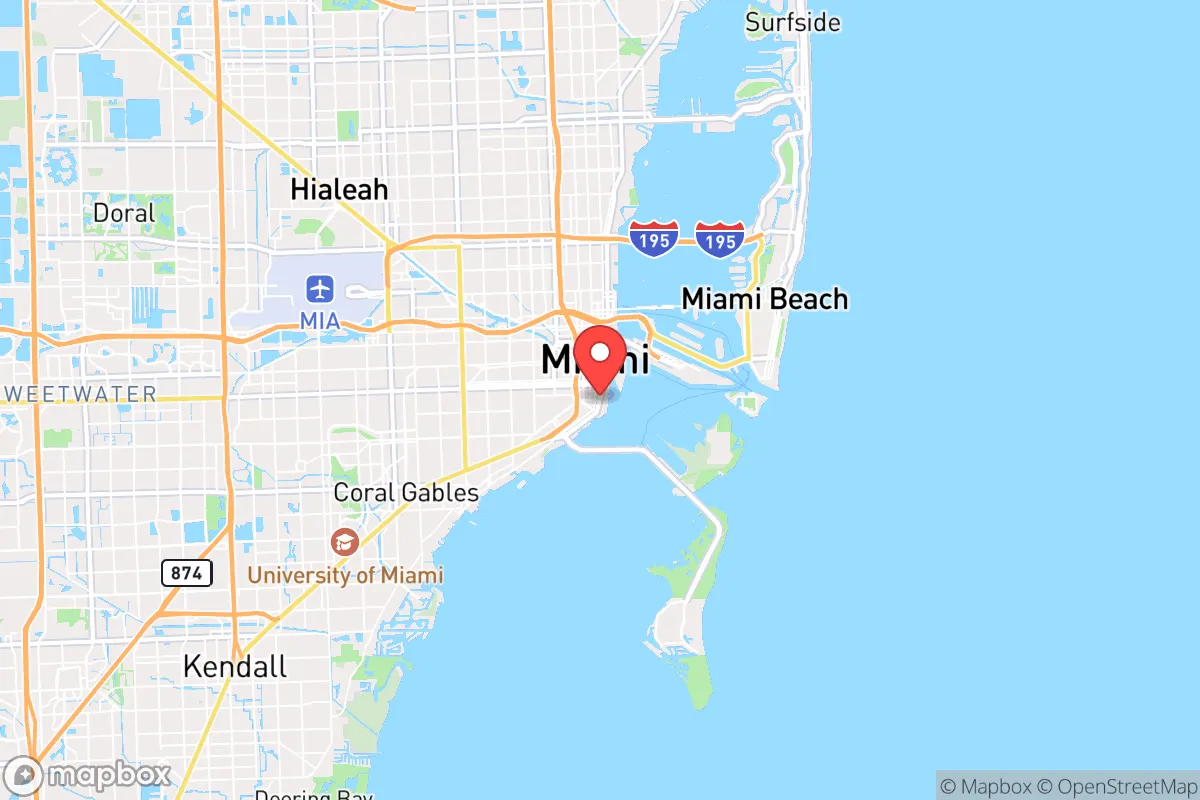
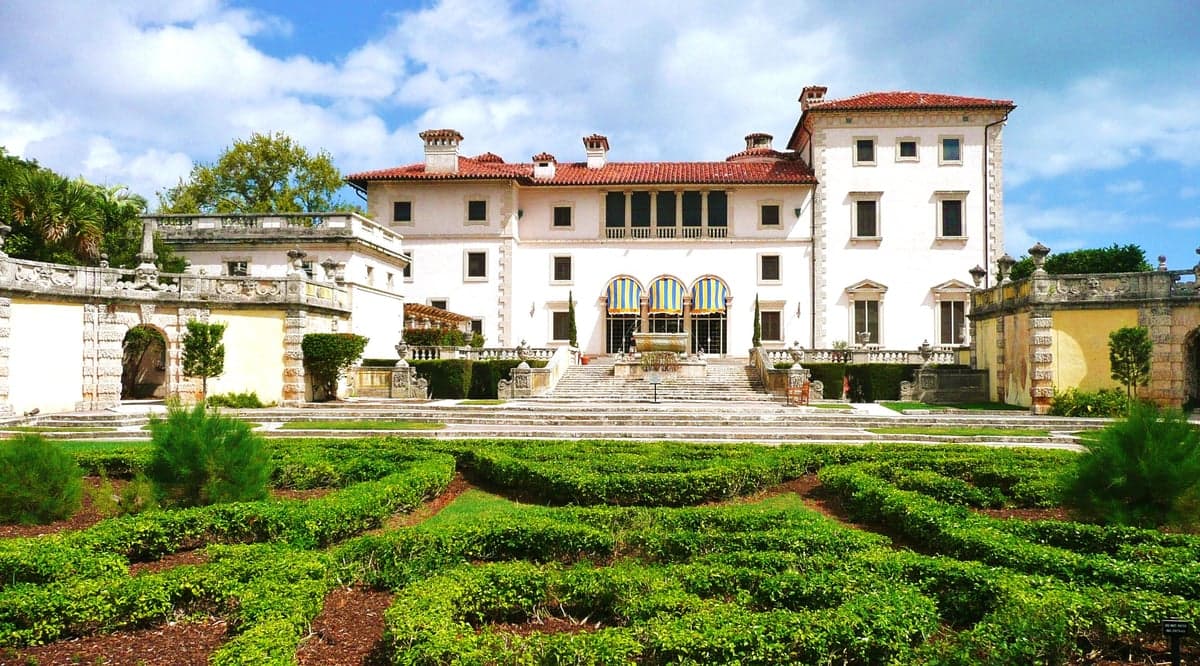
Photo: Wikipedia
Political ClimatePolitical Climate in Miami, FL
District shown is the primary district for this city’s centroid. Cities may span multiple districts.
Local Political AnalysisPolitical Analysis of Miami, FL
Miami’s political identity is a fascinating contradiction. On paper, the city sits in a county (Miami-Dade) that has trended rightward for years, but the city itself remains a Democratic stronghold in a state that’s now solidly Republican. The Cook Partisan Voting Index (PVI) for the Miami media market is R+6, meaning it votes about six points more Republican than the national average—but that’s a regional number that includes the sprawling suburbs and exurbs. Inside the city limits, especially in neighborhoods like Coral Gables, Coconut Grove, and Little Havana, you’ll find a mix of moderate Democrats and conservative-leaning independents, while the surrounding state of Florida as a whole carries a Cook PVI of R+5. The real story is the shift: Miami-Dade County, once a reliable blue anchor for Democrats in Florida, has been moving right since 2016, driven largely by Cuban-American and Venezuelan voters who prioritize anti-socialist rhetoric and economic conservatism.
How it compares
Compared to the rest of Florida, Miami is a political outlier. While the state leans R+5 overall, Miami’s R+6 rating masks a deep urban-suburban divide. The city of Miami itself is still more Democratic than the surrounding suburbs like Hialeah, Kendall, and Doral, which have become reliably Republican. Drive 30 minutes north to Fort Lauderdale (Broward County), and you’re in a D+10 area—a stark contrast. Head west to Naples or Sarasota, and you’re in deep red territory. The key difference is that Miami’s conservatism is not the same as the Panhandle’s or Central Florida’s. It’s a culturally conservative, pro-business, and often socially moderate brand of Republicanism, shaped by immigrant communities who fled leftist regimes. For a liberal resident, this means you’ll find plenty of like-minded neighbors in the urban core, but you’ll feel the shift as soon as you cross into the suburbs. For a conservative, Miami offers a rare urban environment where your views are mainstream, not fringe.
What this means for residents
In practice, Miami’s political climate creates a unique lived experience. Conservative residents often feel more comfortable expressing their views here than in other major U.S. cities, especially on economic and foreign policy issues. You’ll hear Spanish-language radio stations openly endorsing Republican candidates, and local politics in places like Doral or Hialeah are dominated by conservative-leaning figures. Liberal residents, meanwhile, still hold sway in city government and cultural institutions—Miami Beach, for instance, is reliably blue, and the city’s art scene and LGBTQ+ community are vibrant and protected. The trajectory is toward a more competitive two-party dynamic: Miami-Dade County flipped to Trump in 2020 after backing Clinton in 2016, but local Democrats have held onto key mayoral and commission seats. Long-term, expect the suburbs to keep pulling right, while the urban core stays a blue island, making Miami a bellwether for how Latino voters reshape national politics.
Culturally, this split means Miami is a place where policy debates are unusually personal. You’ll hear neighbors argue about Cuba, Venezuela, and Nicaragua at dinner parties—not as abstract foreign policy, but as family history. The city’s strong support for school choice, charter schools, and low taxes reflects its immigrant entrepreneurial ethos, while its embrace of climate resilience funding and public transit shows a pragmatic streak that crosses party lines. For a conservative, Miami feels like a place where your values are reflected in local ordinances and tax rates. For a liberal, it’s a city where you can still win elections and shape culture, but you’ll have to work harder and compromise more than in, say, Portland or New York. The bottom line: Miami is not a red city or a blue city—it’s a purple city in a red state, and that tension is exactly what makes it politically fascinating.

State Political ClimatePolitical Climate in Florida
State Political AnalysisPolitical Environment in the State
Florida is a solidly Republican-leaning state with a Cook PVI of R+5, but calling it a simple red state misses the real story. The state’s political identity is a volatile mix of a fast-growing, diverse population, a powerful conservative exurban and rural base, and a shrinking but still potent Democratic coalition anchored in the urban cores of Miami-Dade, Broward, and Orange counties. Over the last 20 years, Florida has shifted from a quintessential swing state—decided by 537 votes in 2000—to a state where Republicans now hold a trifecta in government and consistently win statewide races by 3-5 points. The key driver has been the massive influx of domestic migrants from the Northeast and Midwest, many of whom are culturally conservative or fiscally moderate, and a simultaneous rightward shift among Hispanic voters, particularly Cuban-Americans and Venezuelans in South Florida.
Urban vs. rural divide
The political map of Florida is a study in stark contrasts. The Democratic strongholds are the dense, diverse urban cores: Miami-Dade County (though it has been trending right, with Trump winning it in 2024 by 11 points after Biden won it by 7 in 2020), Broward County (Fort Lauderdale, still reliably blue), and Orange County (Orlando, a Democratic anchor in Central Florida). These three counties alone deliver roughly 40% of the Democratic vote. The Republican base is anchored in the sprawling exurbs and rural counties: Pasco County north of Tampa, Clay County southwest of Jacksonville, and Collier County (Naples) in the southwest, all of which routinely vote 65-70% Republican. The I-4 corridor, stretching from Tampa through Lakeland to Orlando, remains the ultimate battleground—Hillsborough County (Tampa) is a pure swing county, while Polk County (Lakeland) has shifted hard right. The Panhandle, from Pensacola to Tallahassee, is deeply conservative outside of the capital city itself. The biggest political story of the last decade has been the collapse of Democratic performance in Miami-Dade, where a once-30-point Democratic margin has shrunk to single digits, driven by Cuban, Venezuelan, and Nicaraguan voters who view the GOP as more aligned with their anti-communist and pro-business values.
Policy environment
Florida’s policy environment is aggressively conservative on most fronts, with a few notable exceptions. There is no state income tax, a major draw for relocators, and the state relies on sales tax (6% state rate, with local options up to 8.5%) and tourism taxes. Property taxes are moderate, but homeowners insurance has become a crisis due to litigation and hurricane risk. The regulatory posture is business-friendly: Florida is a right-to-work state, with weak unions and minimal labor protections. Education policy has been a flashpoint: Governor Ron DeSantis signed the Parental Rights in Education Act (HB 1557, often called the "Don't Say Gay" law) in 2022, restricting classroom instruction on sexual orientation and gender identity through third grade, and later expanded it through 12th grade. The state has also expanded school choice aggressively, with universal Education Savings Accounts (ESAs) available to all K-12 students. On healthcare, Florida did not expand Medicaid under the ACA, leaving roughly 800,000 low-income adults in the coverage gap. Election laws have been tightened: the 2023 SB 7050 imposed stricter voter ID requirements, limited drop boxes, and restricted third-party voter registration. On guns, Florida is a "shall issue" state for concealed carry, and in 2023, permitless carry (HB 543) was signed into law, allowing most adults to carry a concealed firearm without a permit. The state also has a "Stand Your Ground" law and a preemption statute that prevents local governments from enacting stricter gun ordinances.
Recent policy direction
The last five years have seen a dramatic acceleration of conservative policy, driven by Governor DeSantis and a supermajority Republican legislature. On gun and self-defense law, the 2023 permitless carry law was the biggest shift, removing the training and background check requirement for concealed carry (though background checks at point of sale remain). On parental and education rights, the state has banned DEI programs in public universities (SB 266, 2023), restricted the teaching of Critical Race Theory (HB 7, 2022), and passed the "Stop WOKE Act" (HB 7) which limits workplace and classroom discussions about race and gender. On speech and privacy, the state has targeted social media platforms with laws (SB 7072, 2021) that allow users to sue for deplatforming, though these have been partially blocked by courts. On medical and bodily autonomy, Florida enacted a 6-week abortion ban (HB 5, 2023) after the Dobbs decision, with exceptions for rape, incest, and the life of the mother. The state has also banned gender-affirming care for minors (SB 254, 2023). On property rights, Florida has preempted local rent control ordinances and limited local authority over short-term rentals (like Airbnb). On taxation, the state has cut the corporate income tax rate and expanded the sales tax holiday for back-to-school and disaster preparedness. On voting and ballot access, the 2023 law restricted drop boxes to early voting sites only, banned the mass mailing of vote-by-mail applications, and made it a felony for third-party groups to handle a voter's completed ballot. The overall direction is toward a more libertarian-leaning conservative model: low taxes, minimal regulation, strong individual rights on guns and property, but with significant government intervention on social and cultural issues.
Civil unrest & political movements
Florida has seen its share of political flashpoints, though large-scale civil unrest has been less common than in states like Oregon or Minnesota. The most visible recent movement has been the anti-immigration protests in the Florida Keys and along the Gulf Coast, where local residents have clashed with state and federal authorities over the influx of migrants from Cuba and Haiti. Governor DeSantis's 2022 decision to fly migrants from Texas to Martha's Vineyard was a deliberate provocation that drew national attention. On the left, the #StopCopCity movement in Miami and the Black Lives Matter protests in 2020 in Orlando and Jacksonville were significant but did not sustain long-term organizing. The state has seen a rise in election integrity activism from the right, with the creation of the Office of Election Crimes and Security in 2022, which has prosecuted a handful of cases of double voting. There is no serious secession or nullification movement in Florida, though some rural counties have passed symbolic "Second Amendment sanctuary" resolutions. The most visible political flashpoint for a new resident would be the culture war battles in schools: school board meetings in counties like Broward and Palm Beach have become heated over book bans, LGBTQ+ curriculum, and library content. The state's immigration politics are also front and center: Florida passed the toughest anti-sanctuary city law in the country (SB 1718, 2023), which requires businesses with 25+ employees to use E-Verify, makes it a felony to transport undocumented immigrants into the state, and invalidates out-of-state driver's licenses for undocumented residents. This has created a palpable tension in agricultural communities like Immokalee and Homestead, where many farmworkers are undocumented.
Projection
Over the next 5-10 years, Florida is likely to become more Republican, not less. The demographic trends driving this are clear: domestic in-migration from blue states (New York, California, Illinois) continues to bring in voters who are often fiscally conservative or culturally moderate, but who are fleeing high taxes and crime. These new arrivals tend to register as Republicans or independents. The Hispanic vote, which now makes up over 20% of the electorate, is shifting rightward, particularly among younger Cuban-Americans and Venezuelans. The Democratic Party's base in Florida is aging and geographically concentrated in the urban cores, while the exurbs and rural areas are growing faster. The state's political geography is also changing: Osceola County (south of Orlando) and Lake County (northwest of Orlando) are becoming more competitive, but the overall trend is a slow but steady rightward drift. The wild card is climate change: rising sea levels and hurricane risk could eventually slow growth in coastal areas, but for now, the state's population is projected to grow by another 3-4 million by 2035. A new resident moving in today should expect to live in a state where Republicans control all levers of government, where social conservatism is the dominant cultural force, and where the political debate is focused on education, immigration, and property rights. The Democratic Party will remain competitive in local races in Miami-Dade, Broward, and Orange counties, but statewide elections will be uphill battles.
For a new resident, the bottom line is this: Florida is a state where conservative policies are the norm and are likely to stay that way. If you value low taxes, gun rights, school choice, and a business-friendly environment, you will find a welcoming political climate. If you are a liberal, you will find your views represented in the major cities, but you will be in the minority in state government and in most suburban and rural areas. The state's political culture is assertive and often confrontational—Florida's leaders are not shy about using the state's power to push back against federal policies or to make national headlines. The practical takeaway is to choose your community carefully: Miami Beach and Orlando feel like blue islands, while Naples and Pensacola are deeply red. The state's politics are not subtle, and they are not likely to change direction anytime soon.
* Values derived from national, state, county, city and local statistics and may differ in a specific area. Last updated: 2026-07-03T04:15:42.000Z
Narrative content on this page is AI-generated and may contain mistakes. Verify any details that matter before acting on them.
ReloMaps may earn a commission from affiliate links at no extra cost to you.

