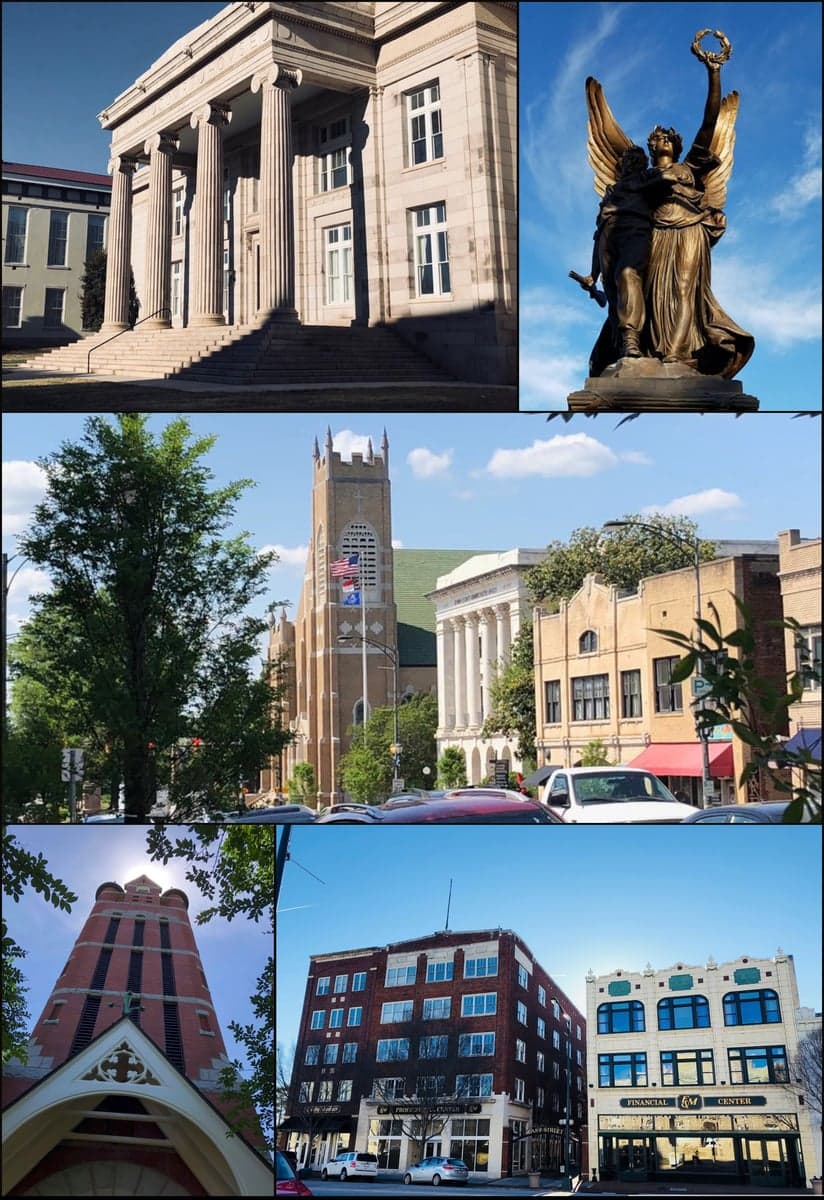
Photo: Wikipedia
Political ClimatePolitical Climate in Salisbury, NC
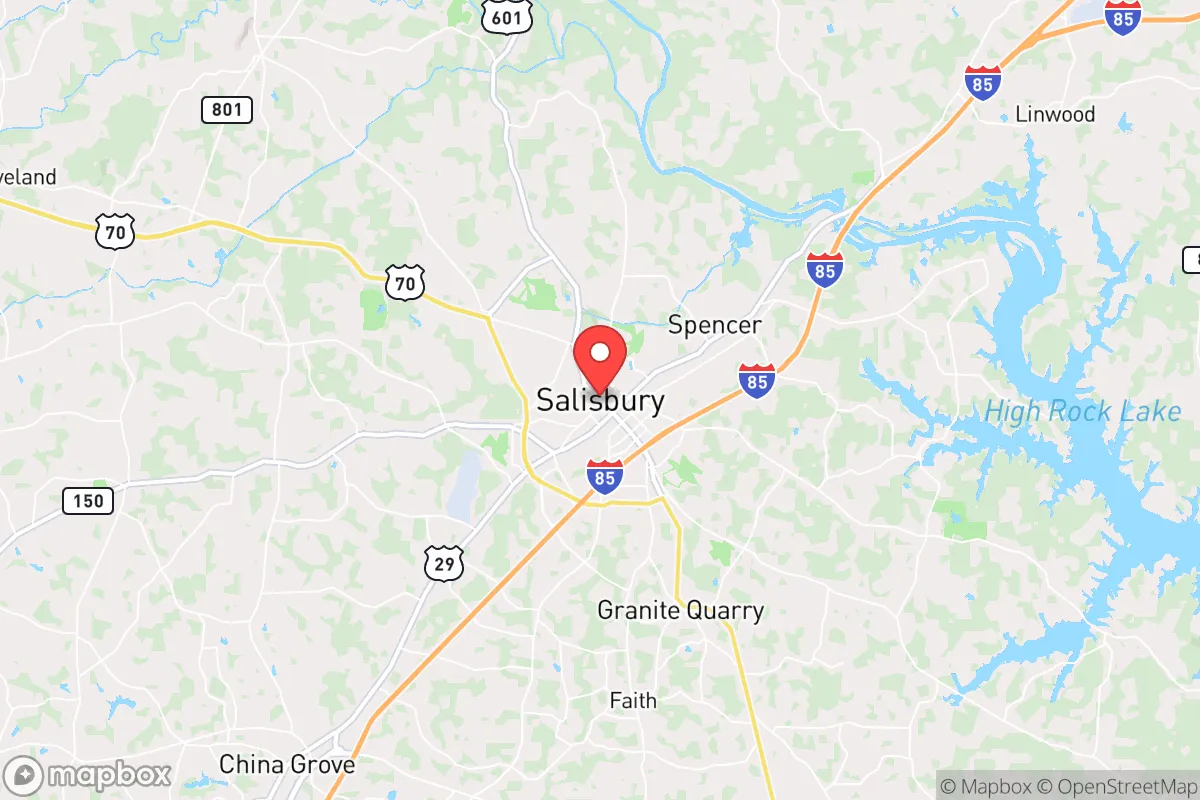
District shown is the primary district for this city’s centroid. Cities may span multiple districts.
Local Political AnalysisPolitical Analysis of Salisbury, NC
Salisbury, North Carolina, has long been a reliably conservative community, and the numbers back that up with a Cook PVI of R+9, meaning the area votes about nine points more Republican than the national average. But if you've lived here as long as I have, you've watched that political identity get tested, especially as Rowan County grows and new folks move in from places like Charlotte or Greensboro. The local elections and school board races are where you really feel the shift, with some candidates pushing progressive policies that would have been unthinkable a decade ago. It's still a red area, no doubt, but the shade of red is getting lighter, and that's something worth keeping an eye on.
How it compares
Drive 20 minutes south to Concord or Kannapolis, and you'll find a similar conservative lean, though those cities are more suburban and tied to Charlotte's economic orbit, which brings a slightly more moderate vibe. Head east to Rockwell or Granite Quarry, and you're in deep red territory where the old-school values are still the norm. The real contrast is with Salisbury's own downtown, which has seen an influx of younger, more progressive residents drawn to the historic homes and arts scene. That creates a noticeable split: the county as a whole votes solidly Republican, but the city council races can get surprisingly competitive, with some candidates pushing for things like defunding police or implementing DEI initiatives in local government. It's a classic urban-rural divide, but within a single town, which makes for some interesting town hall meetings.
What this means for residents
For those of us who value personal freedoms and limited government, the trend is concerning. You see it in small ways first: a new ordinance about short-term rentals, a push for more restrictive zoning, or a school board member suggesting critical race theory training for teachers. The bigger worry is that as Salisbury tries to attract more businesses and young professionals, it might adopt the same overreach we see in Charlotte—higher taxes, more regulations, and a general attitude that government knows best. Property taxes have already crept up, and there's talk of a new bond for "equity initiatives" that sounds a lot like a slush fund for pet projects. If you're a longtime resident, you remember when the biggest political debate was about the speed limit on Main Street, not about which pronouns to use in city documents.
On the cultural side, Salisbury still holds onto its traditions—the annual Cheerwine Festival, the historic rail yard, and a strong sense of community that doesn't tolerate nonsense. But the political climate is shifting, and it's happening faster than most people realize. The local GOP is still active, but they're fighting an uphill battle against out-of-state money and a media that paints conservative values as outdated. If you're thinking about moving here, know that you'll find plenty of like-minded neighbors who believe in personal responsibility and keeping government out of your life. Just don't expect that to be the only voice in the room anymore. The next few election cycles will tell us whether Salisbury stays true to its roots or follows the path of so many other small Southern towns into the progressive fold.

State Political ClimatePolitical Climate in North Carolina
State Political AnalysisPolitical Environment in the State
North Carolina has long been considered a quintessential swing state, but over the past decade, it has settled into a reliably red-leaning posture, particularly in statewide and legislative elections. The state voted for Donald Trump in both 2016 and 2024 (by roughly 1.4 points in 2024), while also electing a Democratic governor in the same cycles—a split that reflects its deep internal tensions. Over the last 10-20 years, the dominant coalition has been a mix of rural conservatives, suburban moderates, and a growing exurban population, but the state’s political center of gravity has shifted rightward on cultural and economic issues, even as the Research Triangle (Raleigh-Durham-Chapel Hill) and Charlotte metros have become more liberal. For a conservative-leaning newcomer, the state offers a mixed bag: solid GOP control of the legislature and courts, but a governor’s mansion that has been a Democratic veto point since 2017.
Urban vs. rural divide
The political map of North Carolina is a textbook case of the urban-rural chasm. The state’s three major metro areas—Charlotte, the Raleigh-Durham-Chapel Hill Research Triangle, and Greensboro-Winston-Salem in the Piedmont Triad—are the Democratic strongholds, driven by transplants, university populations, and corporate headquarters. Mecklenburg County (Charlotte) and Wake County (Raleigh) alone account for roughly 30% of the state’s population and vote reliably blue. Meanwhile, the vast rural and exurban counties—like Union County (southeast of Charlotte), Johnston County (southeast of Raleigh), and Cabarrus County (north of Charlotte)—have been trending redder, often flipping from purple to deep red over the last two cycles. The coastal counties, including Wilmington’s New Hanover County, are a battleground: the city itself leans left, but the surrounding beach towns and rural areas are solidly conservative. The mountain counties in the west, like Watauga (Boone) and Buncombe (Asheville), are notable outliers—Asheville is a liberal enclave, while the rest of the western region is deeply red. For a conservative, the safest bets are the exurban rings around Charlotte and Raleigh, or the rural counties in the eastern and central parts of the state.
Policy environment
North Carolina’s policy environment is a study in divided government. The state has a flat income tax rate of 4.5% (down from 7% in 2013), with a scheduled phase-down to 3.99% by 2027—a clear win for fiscal conservatives. Sales tax is around 6.75% in most counties, with local options adding up to 2.25%. The regulatory posture is business-friendly, with right-to-work laws and a tort reform system that caps non-economic damages in medical malpractice cases. On education, the state has a robust school choice landscape: the Opportunity Scholarship Program provides vouchers for low- and middle-income families to attend private schools, and there are over 200 charter schools. However, the Democratic governor, Roy Cooper, has vetoed several school choice expansions, only to be overridden by the GOP supermajority in the legislature. Healthcare is a mixed bag: the state expanded Medicaid in 2023 under a bipartisan deal, but the legislature has resisted a full state-run exchange. Election laws have been a flashpoint: the state requires photo ID to vote (upheld by the courts in 2024), has strict absentee ballot rules, and has drawn congressional maps that have been litigated repeatedly. For a conservative, the legislature is the primary driver of policy, and it has been reliably pro-life, pro-Second Amendment, and pro-tax cuts.
Trajectory & freedom
On the freedom front, North Carolina has been a net positive for conservatives over the last five years, but with some concerning backslides. The state expanded gun rights significantly in 2023 with the passage of HB 189, which eliminated the requirement for a permit to purchase a handgun (permitless carry) and preempted local gun ordinances—a major win for Second Amendment advocates. Parental rights were strengthened with the Parents’ Bill of Rights (SB 49) in 2023, which requires schools to notify parents about instructional materials involving sexuality and to get consent before changing a child’s name or pronouns. However, the state has seen a push for medical autonomy that went the wrong way: in 2024, the legislature overrode the governor’s veto to ban gender transition procedures for minors (SB 460), which conservatives view as a protection of children, not a restriction of freedom. Property rights remain strong, with no statewide rent control and a low property tax rate (average 0.72% of assessed value). The biggest red flag for freedom-minded newcomers is the growing influence of the state’s urban counties, which have passed local ordinances on housing, zoning, and environmental regulations that can feel intrusive—especially in Orange County (Chapel Hill) and Durham County, where progressive policies on land use and policing are common. The state’s trajectory is toward more legislative conservatism, but the cultural drift in the cities is undeniable.
Civil unrest & political movements
North Carolina has seen its share of political flashpoints, but they are largely localized. The Moral Monday protests, which began in 2013 against the GOP’s legislative agenda (voter ID, abortion restrictions, tax cuts), were a recurring feature in Raleigh for years, but have faded as the legislature’s supermajority solidified. The Confederate monument debates in Durham and Chapel Hill led to protests and topplings in 2017-2020, but the state’s 2015 law protecting monuments (HB 2) was partially repealed in 2020. Immigration politics are relatively quiet: the state is not a sanctuary state, and local law enforcement cooperates with ICE in most counties, though Orange County and Durham County have declared themselves “welcoming” jurisdictions. Election integrity has been a hot topic: the 2020 and 2024 cycles saw lawsuits over absentee ballot rules and voter ID, but no major fraud scandals. The most visible flashpoint for a new resident would be the “Unite the Right” rally in Charlotte in 2017 (a smaller echo of Charlottesville) and the ongoing pro-Palestinian protests at UNC-Chapel Hill and Duke in 2024, which were met with counter-protests. Overall, the state is not a hotbed of civil unrest, but the urban campuses and progressive enclaves can feel tense during election cycles.
Projection
Looking ahead 5-10 years, North Carolina’s political trajectory is a slow but steady rightward shift at the state level, with the urban centers becoming more liberal and the exurbs and rural areas hardening. The key demographic driver is in-migration: the state is adding about 100,000 new residents per year, many from blue states like New York, California, and Illinois. These newcomers tend to settle in the metro areas (Charlotte, Raleigh, Wilmington), which will continue to push those counties leftward. However, the state’s legislative maps are drawn to favor rural and exurban districts, so the GOP supermajority in the General Assembly is likely to persist through 2030, even if the governor’s race flips back to red. The wild card is the 2026 gubernatorial election, where the Democratic incumbent is term-limited—a Republican win could unlock the veto pen and accelerate conservative policy on school choice, tax cuts, and election integrity. For a conservative moving in now, expect to see continued fights over school curriculum (critical race theory, LGBTQ issues), further expansion of school choice, and a push for a constitutional carry law (permitless carry is already law, but full constitutional carry is not). The biggest risk is that the urban counties’ cultural influence seeps into state policy through ballot initiatives or court rulings—North Carolina has no initiative process, so the legislature remains the final word.
Bottom line for a new resident: If you’re a conservative looking for a state where your values are reflected in law, North Carolina is a solid bet—especially if you settle in the exurbs of Charlotte (like Weddington or Waxhaw) or Raleigh (like Clayton or Fuquay-Varina). You’ll get low taxes, strong gun rights, school choice, and a legislature that fights for parental rights and religious freedom. But you’ll also live in a state where the cities are increasingly progressive, and you’ll need to stay engaged to keep the legislature from being overrun by urban votes. It’s not Texas or Florida in terms of red intensity, but it’s a competitive state where conservatives have the upper hand—for now.
* Values derived from national, state, county, city and local statistics and may differ in a specific area. Last updated: 2026-05-03T20:27:02.000Z
Narrative content on this page is AI-generated and may contain mistakes. Verify any details that matter before acting on them.
ReloMaps may earn a commission from affiliate links at no extra cost to you.

