 Popular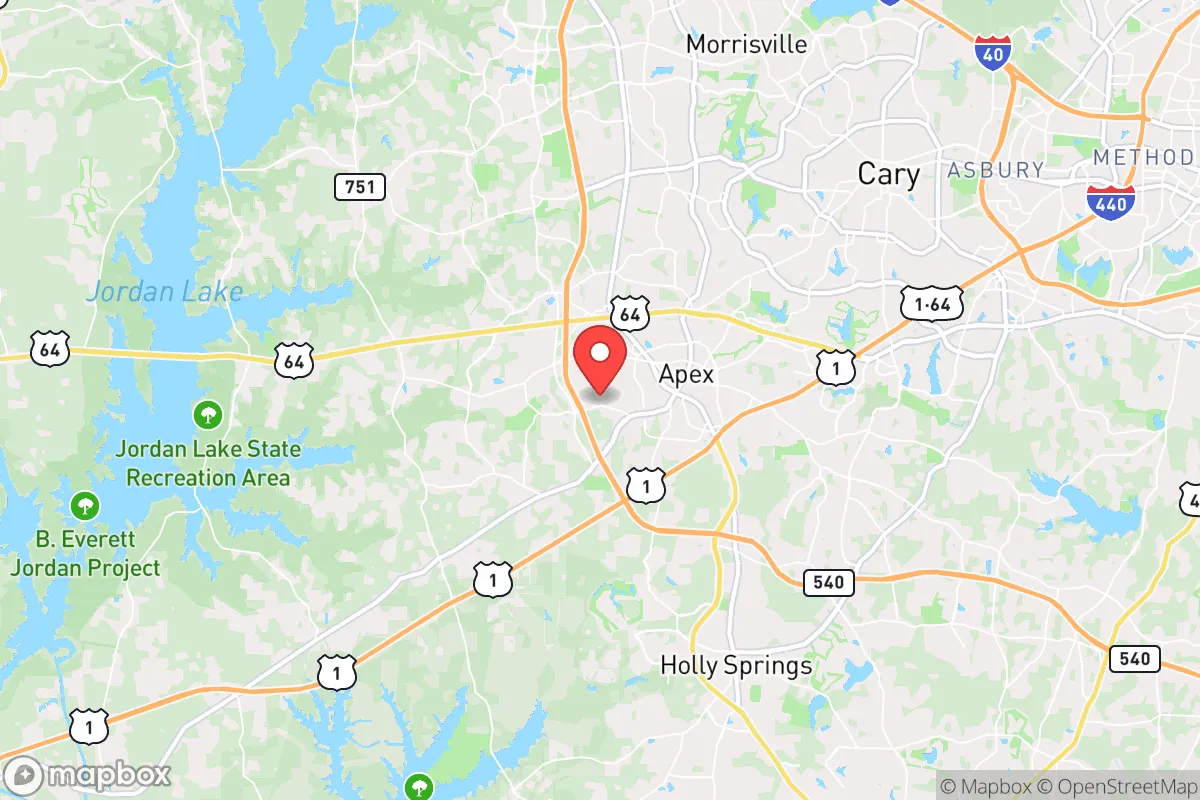
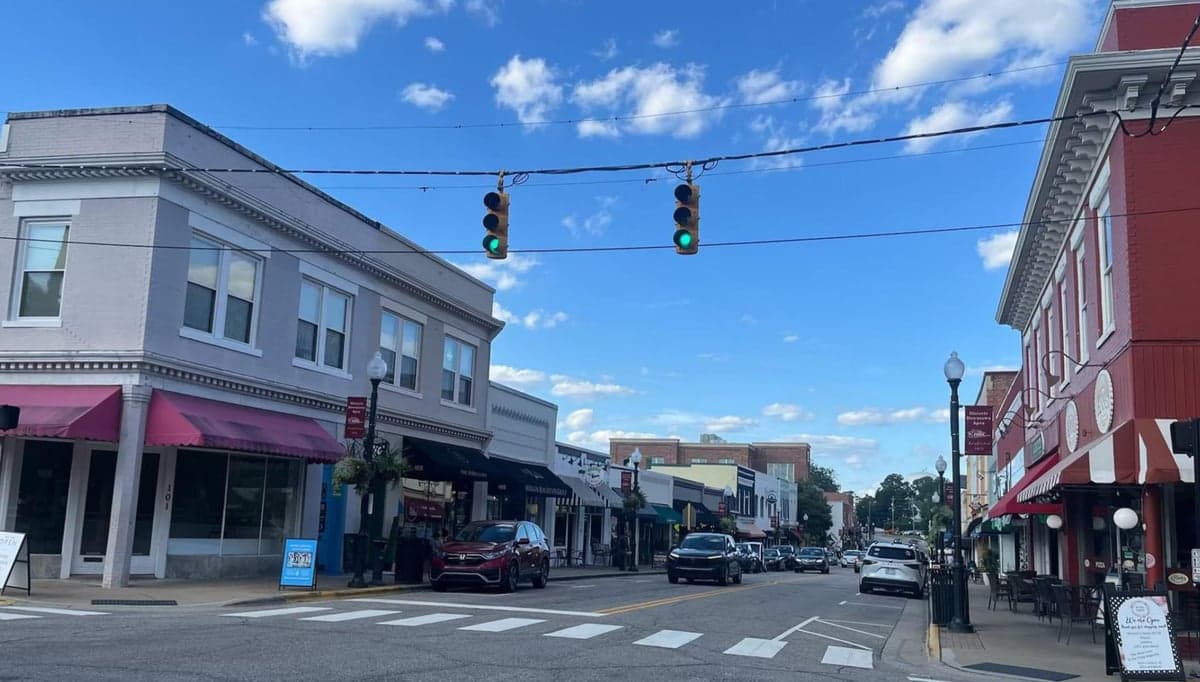
Photo: Wikipedia
Political ClimatePolitical Climate in Apex, NC
District shown is the primary district for this city’s centroid. Cities may span multiple districts.
Local Political AnalysisPolitical Analysis of Apex, NC
Apex, North Carolina, has a Cook PVI of D+23, which tells you right off the bat that this town has shifted hard and fast to the left. It wasn't always this way. Twenty years ago, Apex was a sleepy, conservative-leaning bedroom community where folks minded their own business and the biggest political debate was about the annual PeakFest parade route. Now, it's a Democratic stronghold, driven by an influx of out-of-state transplants from places like New York, New Jersey, and California who brought their voting habits with them. The local elections have become a rubber stamp for progressive policies, and the old-school, live-and-let-live vibe is getting squeezed out by a more activist, government-knows-best mentality.
How it compares
To understand just how blue Apex has become, you have to look at the towns right next door. Hop over to Cary, and you'll find a similar story — also heavily Democratic, also packed with transplants, and also pushing the same kind of top-down planning. But drive just 15 minutes west to Holly Springs or Fuquay-Varina, and the political landscape changes noticeably. Those towns still have a stronger conservative backbone, with more residents pushing back on tax hikes and zoning overreach. Go a bit further out to Angier or Lillington, and you're in solidly red territory where people still wave the Gadsden flag. Apex used to be in that camp. Now, it's an island of progressive politics surrounded by more balanced communities. The contrast is stark — you can literally see the difference in yard signs and local government agendas as you cross the town line.
What this means for residents
For the folks who've been here a while, the biggest concern is the steady creep of government overreach into daily life. The town council has gotten comfortable with heavy-handed zoning rules that tell you what you can and can't do with your own property. There's been talk of mandatory affordable housing quotas for new developments, which sounds nice in theory but usually means higher taxes and less freedom for homeowners. The school board has also shifted, pushing curriculum changes that prioritize social agendas over core academics. If you value personal freedoms — like the right to choose your own healthcare, send your kid to the school you want, or run a small business without a mountain of permits — Apex is becoming a tougher place to exercise those rights. The tax burden is climbing too, as the town spends big on bike lanes, public art, and other pet projects that look good on a brochure but don't do much for the average family trying to make ends meet.
On the cultural side, Apex has lost a lot of its small-town character. The old hardware store on Salem Street is gone, replaced by a boutique selling $50 candles. The Fourth of July parade used to be a simple, patriotic affair; now it's a carefully curated event with diversity checklists and corporate sponsors. The long-term trajectory is concerning — if current trends hold, Apex will continue to mirror the most progressive suburbs of the Northeast, with all the regulations and restrictions that come with it. For conservatives, it's not a lost cause yet, but the window to push back is closing fast. If you're thinking of moving here, just know what you're signing up for: a pretty town with a pretty price tag on your personal liberties.

State Political ClimatePolitical Climate in North Carolina
State Political AnalysisPolitical Environment in the State
North Carolina has long been considered a classic battleground state, but over the past decade it has settled into a reliably right-of-center posture, though not without significant internal tension. The state leans Republican at the statewide level, with the GOP holding both legislative chambers and a supermajority until recently, and consistently voting for Republican presidential candidates since 2012, with the exception of Barack Obama’s narrow win in 2008. However, the margin has tightened: Donald Trump won the state by just 1.3 points in 2020, and the 2024 race is expected to be similarly close. The dominant coalition is a mix of rural conservatives, suburban moderates, and a growing population of transplants from blue states, creating a dynamic where the state’s political future is very much up for grabs.
Urban vs. rural divide
The political map of North Carolina is a textbook study in the urban-rural split. The major metros—Charlotte (Mecklenburg County), the Raleigh-Durham-Chapel Hill triangle (Wake, Durham, Orange counties), and Greensboro-Winston-Salem (Guilford, Forsyth counties)—are increasingly blue, driven by tech, finance, and university populations. Mecklenburg County went for Biden by 30 points in 2020, while Wake County gave him a 25-point margin. These areas are the engine of the state’s Democratic growth. Meanwhile, the rural and exurban counties—places like Union County (just southeast of Charlotte), Johnston County (southeast of Raleigh), and Iredell County (north of Charlotte)—are deeply red, often voting 65-70% Republican. The real battlegrounds are the suburban and exurban counties that are still in flux: Cumberland County (Fayetteville), Buncombe County (Asheville), and New Hanover County (Wilmington) are all trending left but remain competitive. The 2022 midterms saw Republicans flip two House seats in the state, but Democrats held the governor’s mansion and the attorney general’s office, underscoring the state’s split personality.
Policy environment
North Carolina’s policy environment is a mixed bag for conservatives, but the trend is positive in key areas. The state has a flat income tax rate of 4.5%, which is being phased down to 3.99% by 2027, and no state tax on Social Security benefits—a big draw for retirees. The corporate income tax rate is 2.5%, one of the lowest in the nation. The regulatory climate is business-friendly, with right-to-work laws and a tort reform system that caps non-economic damages in medical malpractice cases. On education, the state has a robust school choice program: the Opportunity Scholarship Program provides vouchers for low-income students to attend private schools, and in 2023 the legislature expanded eligibility to all families, regardless of income. However, the state’s public school system remains a point of contention, with teacher pay below the national average and ongoing battles over curriculum and library books. On healthcare, North Carolina did expand Medicaid in 2023 under a bipartisan deal, which was a win for the left but came with work requirements and a sunset clause. Election laws are a bright spot: the state requires voter ID, has early voting, and has resisted mail-in ballot expansions pushed by the left. The 2023 election integrity law tightened absentee ballot rules and banned private funding of election administration—a direct response to the 2020 Zuckerberg-funded “grants” that many conservatives saw as corrupting the process.
Trajectory & freedom
On the freedom front, North Carolina has been a net positive over the past five years, but there are warning signs. The state passed a constitutional carry law in 2023, allowing permitless concealed carry for adults 18 and older, which was a major win for gun rights. Parental rights were strengthened with the 2023 Parents’ Bill of Rights, which requires schools to notify parents of any changes to a child’s health or well-being and prohibits instruction on gender identity and sexual orientation in K-4 classrooms. On speech, the state has not gone as far as Florida or Texas, but it has banned critical race theory from K-12 classrooms and prohibited state funding for diversity, equity, and inclusion programs at public universities. However, the state’s medical autonomy record is mixed: the 2023 law banning most abortions after 12 weeks (with exceptions for rape, incest, and fetal anomalies) was a win for the pro-life movement, but the law also included a provision that allows the state health department to create a “maternal mortality review committee” that could potentially recommend loosening restrictions. Property rights are generally strong, with no state-level rent control and a relatively low property tax burden (average effective rate of 0.78%). The biggest threat to freedom is the influx of blue-state transplants who are bringing their voting habits with them—the Raleigh-Durham area has seen a 20% population increase since 2020, and many of those newcomers are from New York, California, and Illinois.
Civil unrest & political movements
North Carolina has seen its share of political flashpoints, but they are less intense than in many other states. The 2020 protests in Charlotte and Raleigh over George Floyd’s death were large but largely peaceful, though there were isolated incidents of looting and property damage. The state has a strong organized conservative movement, with groups like the North Carolina Republican Party and the John Locke Foundation pushing for limited government. On the left, the NAACP and the state’s Democratic Party are well-funded and active, particularly on voting rights and criminal justice reform. Immigration politics are relatively quiet compared to border states, but there is a growing tension in rural areas over the influx of migrant labor in agriculture and construction. The state has no sanctuary city policies, and in 2023 the legislature passed a law requiring sheriffs to cooperate with ICE detainers. Election integrity remains a hot-button issue: the 2020 election in North Carolina was relatively smooth, but the 2022 midterms saw a controversy in Bladen County over absentee ballot irregularities, which led to a state investigation and new safeguards. The most visible flashpoint for a new resident would be the ongoing culture war over school boards—particularly in Wake County and Mecklenburg County, where conservative parents have been vocal about library books and curriculum content.
Projection
Looking ahead 5-10 years, North Carolina is likely to become more competitive, but it is not destined to turn blue. The key demographic shift is the continued in-migration of people from blue states, who tend to vote Democratic but are often more moderate than the coastal progressives they left behind. The state’s rural areas are depopulating, while the suburbs and exurbs are growing—this will make places like Union County and Johnston County more purple over time. The 2030 redistricting cycle will be critical: if Republicans can hold the legislature, they can draw maps that preserve their advantage. The wild card is the state’s growing Hispanic population, which currently leans Democratic but is not monolithic—many are socially conservative and could be swayed by a GOP that focuses on economic opportunity and family values. The most likely scenario is that North Carolina remains a lean-Republican state for the next decade, but with a margin that narrows to 2-3 points in presidential elections. For a conservative moving in now, the state will feel increasingly like a battleground, but the policy environment will remain favorable as long as the GOP holds the legislature.
For a new resident, the bottom line is this: North Carolina offers a strong economy, low taxes, and a conservative policy framework that protects gun rights, parental rights, and election integrity. The urban areas are becoming more liberal, but the state as a whole is still a safe bet for someone who values freedom and limited government. The key is to choose your county wisely—stick to the exurbs and rural areas if you want to avoid the culture wars, or get involved in the suburbs if you want to fight for the state’s soul. Either way, you’re moving to a state that is still worth fighting for.
* Values derived from national, state, county, city and local statistics and may differ in a specific area. Last updated: 2026-10-10T16:26:26.000Z
Narrative content on this page is AI-generated and may contain mistakes. Verify any details that matter before acting on them.
ReloMaps may earn a commission from affiliate links at no extra cost to you.

